Mastering IaC Management 2026: Essential Strategies for IT Success
March 12, 2026|8:36 AM
Unlock Your Digital Potential
Whether it’s IT operations, cloud migration, or AI-driven innovation – let’s explore how we can support your success.
Home /
Work /
Blogs /
Mastering IaC Management 2026: Essential Strategies for IT Success
Navigating the Future of IaC Management
Infrastructure as Code (IaC) has become an indispensable practice for modern IT operations, transforming how organizations provision and manage their infrastructure. As technology continues its rapid evolution, so too must our approach to IaC. This comprehensive guide explores the strategic imperatives for effective iac management 2026, equipping you with insights to future-proof your infrastructure strategy.
Understanding the evolving landscape of IaC is crucial for sustained success. We will delve into key trends, best practices, and emerging technologies that will define the next generation of infrastructure automation. Preparing your team and processes for the future of IaC management ensures agility, security, and scalability in an increasingly complex digital world.
The Evolving Landscape of IaC
The operational environment for IaC is experiencing constant transformation, driven by cloud-native architectures, containerization, and microservices. Organizations are increasingly leveraging multiple cloud providers and hybrid setups, demanding more sophisticated and adaptable IaC solutions. This complexity necessitates a proactive approach to managing infrastructure programmatically.
Traditional IaC methods, while foundational, may not fully address the nuanced challenges of highly distributed and dynamic systems. Predicting IaC evolution involves anticipating shifts in tooling, security paradigms, and operational methodologies. Teams must stay agile and ready to adopt new practices to maintain efficiency and security.
Shifting Paradigms in Infrastructure Provisioning
The move from mutable to immutable infrastructure is a significant paradigm shift, enhancing consistency and reducing configuration drift. Immutable infrastructure means that once an instance is deployed, it is never modified. Instead, any changes require deploying a new instance from a new base image.
This approach significantly simplifies debugging and rollback processes. It also aligns perfectly with continuous delivery pipelines, promoting greater reliability and predictability in deployments. Embracing immutability is a cornerstone for robust iac management 2026.
The Imperative for Advanced Automation and Orchestration
Beyond basic provisioning, the demand for advanced automation and orchestration is intensifying. Complex applications require coordinated deployment across multiple layers, from networking to compute and storage. Orchestration tools integrate these disparate components into seamless, automated workflows.
These tools streamline deployment, scaling, and management of distributed systems, minimizing manual errors and accelerating time to market. Implementing robust orchestration capabilities is critical for any organization seeking to optimize its IaC roadmap. It drives efficiency across the entire infrastructure lifecycle.
Core Principles for Strategic IaC Planning
Successful iac management 2026 hinges on a solid foundation of strategic planning. This involves more than just selecting the right tools; it encompasses establishing robust governance, integrating comprehensive security measures, and fostering a collaborative team culture. These principles ensure that IaC efforts are scalable, secure, and sustainable.
Without a clear strategic framework, IaC initiatives can quickly become unwieldy, leading to inconsistencies and security vulnerabilities. A well-defined strategy provides direction, clarifies responsibilities, and aligns IaC practices with broader business objectives. It prepares the organization for the next wave of infrastructure challenges.
Implementing Robust Governance and Compliance
Effective governance is paramount for maintaining control and consistency across IaC deployments. This includes defining clear standards, policies, and approval workflows for all infrastructure changes. Governance frameworks help prevent unauthorized modifications and ensure adherence to best practices.
Compliance with regulatory requirements is another critical aspect, especially for sensitive industries. Integrating compliance checks directly into IaC pipelines automates validation and reduces the risk of non-compliance. Establishing strong governance forms a vital part of strategic IaC planning.
Securing Your Infrastructure as Code
Security must be a continuous concern throughout the entire IaC lifecycle, not an afterthought. Vulnerabilities in IaC templates can expose vast portions of your infrastructure to attacks. Implementing security best practices from the initial code commit is essential.
This involves static analysis of IaC code, dependency scanning, and ensuring least privilege access for all automation accounts. Shift-left security, where security concerns are addressed early in the development process, is crucial for secure iac management 2026. Prioritizing security hardens your entire infrastructure.
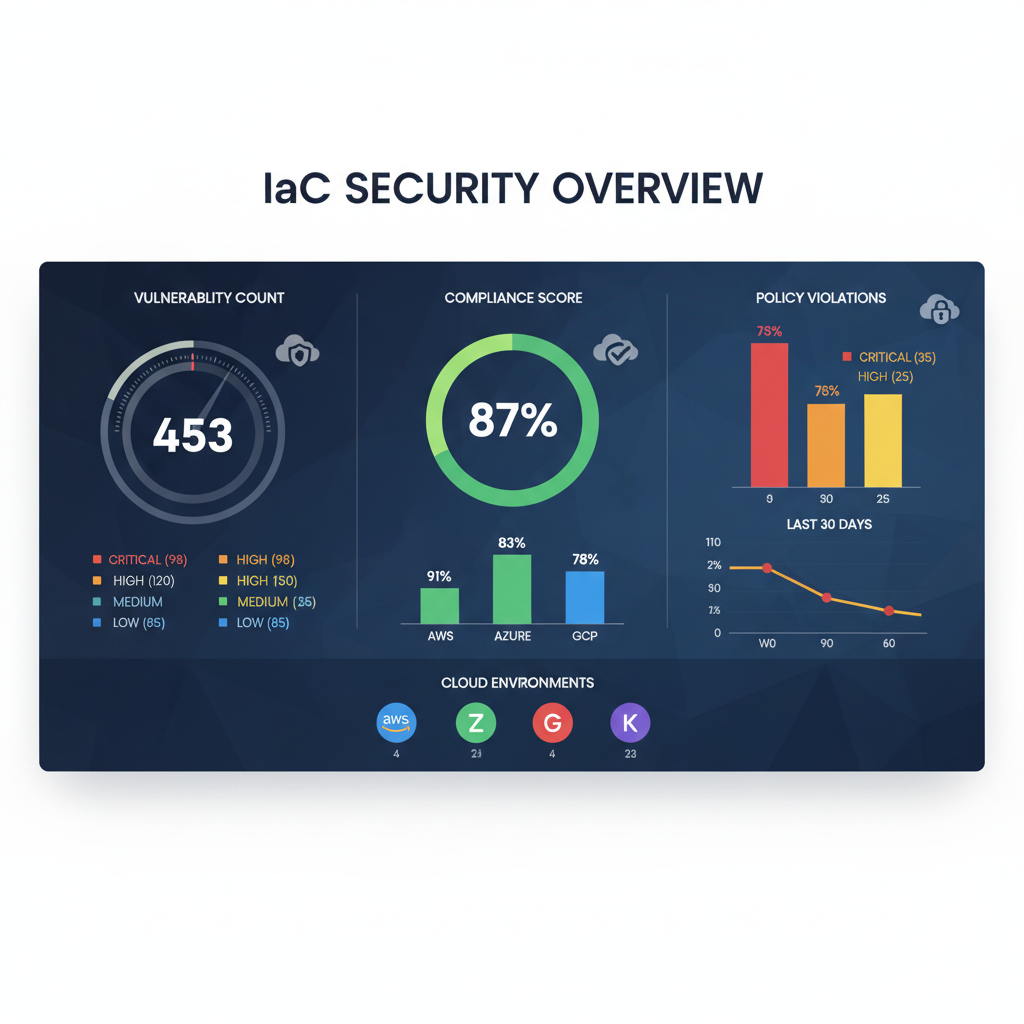
A dashboard showing various IaC security metrics like vulnerability count, compliance score, and policy violations across different cloud environments.
Fostering Collaboration and a DevOps Culture
IaC thrives in environments that promote strong collaboration between development and operations teams. Breaking down silos and encouraging shared responsibility leads to more efficient and reliable infrastructure deployments. A true DevOps culture is the backbone of effective IaC.
Tools that facilitate shared code repositories, peer reviews, and automated testing pipelines are vital. Empowering teams with the necessary skills and fostering a culture of continuous learning ensures that your IaC practices remain cutting-edge. Collaborative efforts significantly enhance the infrastructure as code outlook.
✓ Free consultation ✓ No commitment required ✓ Trusted by experts
Emerging IaC Technologies and Best Practices
The rapid pace of technological innovation constantly introduces new tools and methodologies for IaC. Staying abreast of emerging IaC technologies is essential for maintaining a competitive edge and optimizing infrastructure management. These advancements promise greater efficiency, enhanced security, and improved automation capabilities.
From leveraging artificial intelligence to adopting advanced policy enforcement, the horizon for IaC is rich with potential. Integrating these best practices into your operational framework will define the future of IaC management. Organizations must carefully evaluate and strategically adopt relevant innovations.
Leveraging AI and Machine Learning for Predictive IaC
Artificial intelligence and machine learning are poised to revolutionize iac management 2026 by enabling predictive capabilities and intelligent automation. AI can analyze vast amounts of operational data to identify patterns, predict potential issues, and suggest optimizations for IaC configurations. This proactive approach significantly reduces downtime.
ML algorithms can learn from historical deployments to improve the efficiency of resource provisioning and anomaly detection. These smart systems can even auto-remediate common infrastructure problems, freeing up engineers for more complex tasks. Incorporating AI is a key component of next-gen IaC solutions.
The Rise of Policy as Code
Policy as Code (PaC) is gaining significant traction as a method for defining, managing, and enforcing organizational policies using machine-readable code. Instead of manual audits, policies can be automatically checked against IaC configurations before deployment. This ensures compliance from the very beginning.
PaC tools integrate seamlessly into CI/CD pipelines, automatically rejecting non-compliant changes. This proactive enforcement enhances security, governance, and regulatory adherence without slowing down development. Embracing PaC is a fundamental step in securing and standardizing your IaC deployments.
Adopting GitOps Workflows for Operational Excellence
GitOps extends the principles of IaC by using Git as the single source of truth for declarative infrastructure and applications. All changes to infrastructure are made via Git pull requests, which are then automatically applied to the target environment. This brings version control, auditability, and collaboration benefits to operations.
This methodology enhances operational security and reliability by providing a clear audit trail of every change. It simplifies rollbacks and ensures that the desired state of the infrastructure is always reflected in the Git repository. Adopting GitOps is a crucial aspect of predicting IaC evolution.
Building a Resilient IaC Roadmap
Developing a clear and adaptable IaC roadmap is vital for navigating the complexities of modern infrastructure management. This roadmap should outline your organization’s journey from current IaC practices to a more mature and future-proof state. It involves continuous assessment, strategic tool selection, and an unwavering commitment to improvement.
A well-defined roadmap provides a structured approach to evolving your IaC capabilities, ensuring investments align with business goals. It acts as a guide for implementing emerging IaC technologies and best practices. This forward-looking approach safeguards your infrastructure against unforeseen challenges.
Assessing Current IaC Maturity and Capabilities
The first step in building a resilient roadmap is to thoroughly assess your current IaC maturity. This involves evaluating your existing tools, processes, team skills, and the level of automation achieved. Identify strengths, weaknesses, and areas ripe for improvement.
Understanding your current state provides a baseline and helps prioritize initiatives for the future of IaC management. It reveals gaps in security, compliance, or efficiency that need immediate attention. A comprehensive assessment forms the bedrock for any successful IaC strategy.
Selecting Next-Gen IaC Solutions
Choosing the right tools is paramount for effective iac management 2026. This selection process should go beyond basic functionality to consider factors like scalability, integration capabilities, community support, and alignment with your technology stack. Evaluate how potential solutions fit into your broader ecosystem.
Consider tools that offer advanced features such as policy enforcement, drift detection, and multi-cloud support. Prioritize solutions that promote collaboration and provide strong security features. The right tools empower your teams to build and manage infrastructure efficiently and securely.
Embracing Continuous Feedback and Improvement
An effective IaC roadmap is not static; it’s a living document that evolves with your organization and the technological landscape. Establish mechanisms for continuous feedback from engineering teams, security personnel, and business stakeholders. This feedback loop is essential for refining your strategy.
Regularly review performance metrics, conduct post-mortems on incidents, and solicit suggestions for improvement. Iterative enhancements based on real-world experience ensure that your IaC practices remain optimized and responsive to changing needs. This commitment to continuous improvement is key to successful iac management 2026.
Measuring Success and ROI in IaC Management
Demonstrating the value of IaC initiatives is crucial for securing ongoing investment and executive support. Measuring success involves tracking key performance indicators (KPIs) and quantifying the return on investment (ROI) derived from your IaC efforts. This provides tangible evidence of IaC’s impact on efficiency, reliability, and cost savings.
Effective measurement helps refine your strategy, identify areas for further optimization, and communicate achievements across the organization. It transforms IaC from a technical endeavor into a clear business advantage. Proving the value solidifies your strategic IaC planning.
Key Performance Indicators for IaC
To effectively measure your IaC strategy, establish clear KPIs that track various aspects of your operations. These metrics should cover efficiency, reliability, security, and compliance. Examples include deployment frequency, lead time for changes, mean time to recovery (MTTR), and infrastructure configuration drift.
Tracking these KPIs provides objective data on the health and performance of your IaC implementation. It helps identify bottlenecks, measure the impact of new tools or processes, and validate the effectiveness of your overall iac management 2026 strategy. Regular reporting on these metrics is vital.
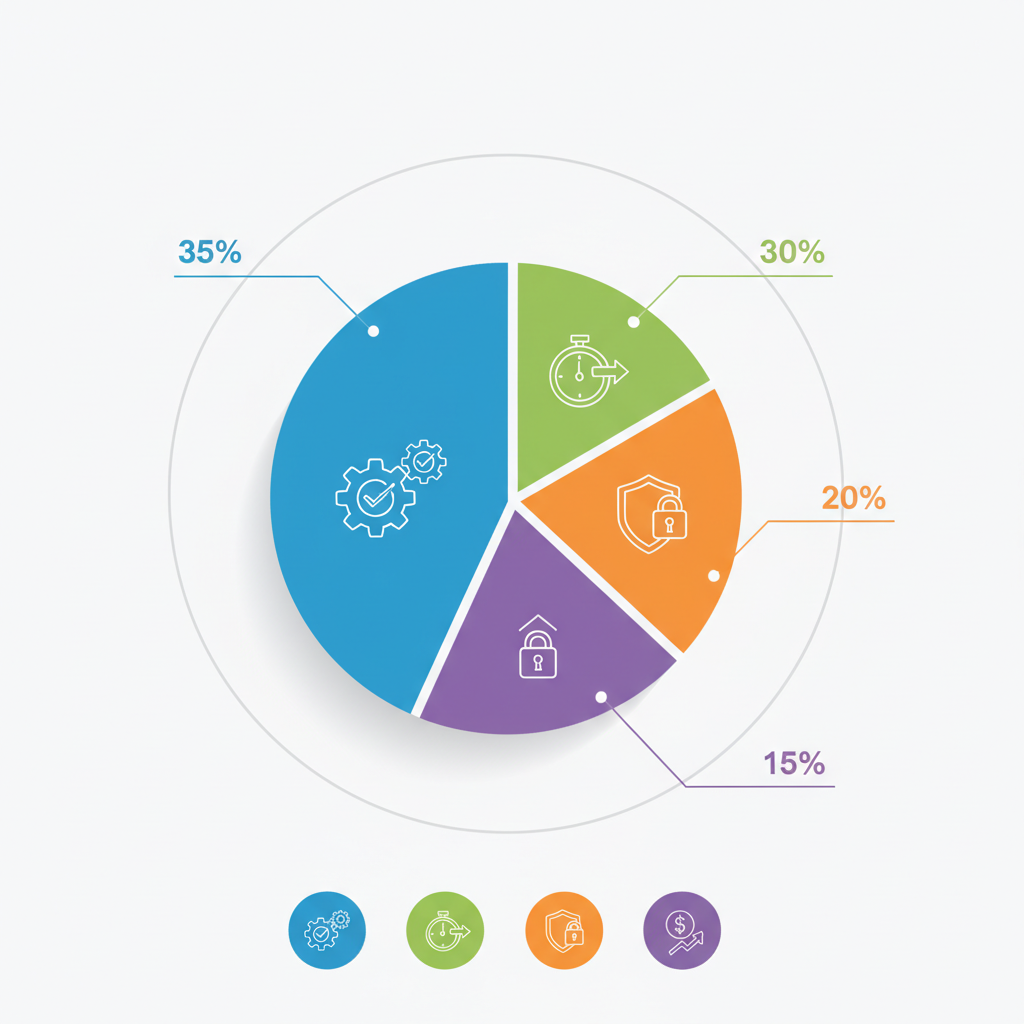
A pie chart showing the breakdown of IaC benefits, such as “Reduced Manual Errors,” “Faster Deployments,” “Improved Security,” and “Cost Savings,” with percentages.
Demonstrating Business Value and ROI
Translating technical achievements into tangible business value is essential. Highlight how IaC reduces operational costs by minimizing manual effort and optimizing resource utilization. Showcase improvements in time-to-market for new features or products due to faster infrastructure provisioning.
Emphasize how enhanced security and compliance reduce business risk and protect revenue. Quantify reductions in downtime and improvements in system reliability. By articulating these benefits clearly, you can demonstrate a compelling ROI for your investment in next-gen IaC solutions.
Frequently Asked Questions
What is the core challenge for iac management 2026?
The core challenge for iac management 2026 is managing increasing complexity across hybrid and multi-cloud environments while ensuring security, governance, and rapid innovation. Organizations need to balance agility with control and compliance. This requires sophisticated tooling and strategic planning.
How do emerging IaC technologies impact current practices?
Emerging IaC technologies, such as AI-driven automation, Policy as Code, and GitOps, significantly enhance current practices by introducing greater intelligence, stronger security enforcement, and more streamlined operational workflows. They automate more complex tasks and embed governance directly into the code. These advancements push the infrastructure as code outlook forward.
What are the key benefits of adopting a strong IaC roadmap?
A strong IaC roadmap provides a clear strategy for evolving your infrastructure automation, ensuring consistent governance, improved security, and enhanced collaboration. It enables predictable scaling, reduces operational costs, and accelerates innovation by streamlining infrastructure provisioning. This systematic approach is crucial for the future of IaC management.
Why is security a critical component of iac management 2026?
Security is critical because vulnerabilities in IaC templates or processes can expose an entire infrastructure to significant risks. Proactive security measures, such as static code analysis and policy as code, ensure that security is built into the infrastructure from the ground up, protecting against breaches and compliance failures. It’s foundational to strategic IaC planning.
How can organizations measure the success of their IaC initiatives?
Organizations can measure success by tracking key performance indicators (KPIs) like deployment frequency, lead time for changes, mean time to recovery, and infrastructure drift. Quantifying cost savings, reduced downtime, and faster time-to-market demonstrates the tangible business value and ROI of their IaC management efforts. This data-driven approach supports continued investment.
✓ Free consultation ✓ No commitment required ✓ Trusted by experts
Conclusion
The journey towards effective iac management 2026 is an ongoing process of adaptation, innovation, and strategic planning. By embracing emerging IaC technologies, implementing robust governance, and fostering a collaborative culture, organizations can build resilient, secure, and highly automated infrastructure. The future of IaC management demands a proactive approach to challenges and a commitment to continuous improvement.
Investing in a well-defined IaC roadmap and continuously evaluating your strategies will ensure your infrastructure remains agile and competitive. This forward-looking perspective will not only streamline operations but also drive significant business value. Prepare your organization today to thrive in the dynamic world of infrastructure as code.
Johan Carlsson is a cloud architecture specialist and frequent speaker focused on scalable workloads, AI/ML, and IoT innovation. At Opsio, he helps organizations harness cutting-edge technology, automation, and purpose-built services to drive efficiency and achieve sustainable growth. Johan is known for enabling enterprises to gain a competitive advantage by transforming complex technical challenges into powerful, future-ready cloud solutions.