Mastering best iac management for Agile Infrastructure
March 12, 2026|7:46 AM
Unlock Your Digital Potential
Whether it’s IT operations, cloud migration, or AI-driven innovation – let’s explore how we can support your success.
Home /
Work /
Blogs /
Mastering best iac management for Agile Infrastructure
Unlocking the Power of best iac management
Infrastructure as Code (IaC) has revolutionized how organizations provision and manage their IT infrastructure. Moving from manual processes to automated, version-controlled code brings immense benefits in speed, consistency, and reliability. However, simply adopting IaC tools is not enough; true success hinges on implementing the best iac management practices.
This comprehensive guide delves into the strategies and principles necessary to master your IaC lifecycle. We will explore how to establish robust governance, streamline deployments, and foster a culture of automation. By understanding and applying these leading practices, your organization can fully realize the transformative potential of IaC.
Understanding the Core Principles of best iac management
Effective IaC management begins with a solid foundation of core principles that guide its implementation and ongoing use. These principles ensure that your infrastructure code remains reliable, secure, and scalable. Adopting these tenets is crucial for long-term success.
The primary goal is to treat infrastructure configuration like application code. This means embracing version control, continuous integration, and automated testing throughout the infrastructure lifecycle. Such an approach fosters consistency and reduces human error significantly.
Another fundamental principle is immutability, where once an infrastructure component is deployed, it is never modified in place. Instead, any changes trigger the provisioning of a new, updated component, ensuring predictable states. This drastically simplifies troubleshooting and rollback procedures.
Idempotency is also critical; applying the same IaC script multiple times should yield the same result without unintended side effects. This guarantees consistent deployments and allows for safe re-runs of code. These principles form the bedrock of any successful IaC strategy.
Key Pillars for Effective IaC Governance
Establishing robust governance is paramount for effective IaC governance and maintaining control over your automated infrastructure. Without clear policies and standards, IaC can quickly lead to sprawl, security vulnerabilities, and inconsistencies across environments. Governance defines the guardrails for your IaC adoption.
This includes defining clear roles and responsibilities within your teams. Who can approve changes? Who is responsible for security audits of the code? Establishing an ownership matrix ensures accountability and streamlined decision-making processes regarding infrastructure modifications.
Policy as Code is a powerful tool within IaC governance. By writing policies directly into your code, you can automatically enforce compliance rules at deployment time. This prevents non-compliant resources from being provisioned, enhancing security and regulatory adherence significantly.
Mandating standardized naming conventions, tagging strategies, and modular structure for your IaC repositories is another vital aspect. These standards improve readability, maintainability, and allow for easier automation of cost allocation and resource management. Regular audits against these standards ensure ongoing compliance.
Implementing Leading Practices in IaC Development
To achieve the best iac management, organizations must adopt leading practices in IaC development that mirror those found in modern software development. This ensures high-quality, maintainable, and secure infrastructure code. Your development workflow for infrastructure should be as rigorous as for applications.
Version control is non-negotiable; all IaC must reside in a Git repository. This provides a complete history of changes, enables collaboration, and facilitates rollbacks to previous stable states. Branching strategies, pull requests, and code reviews are essential for quality control.
Modularity is another cornerstone, encouraging the creation of reusable IaC components. Instead of monolithic scripts, break down your infrastructure into smaller, independent modules for virtual machines, networks, or databases. This promotes reusability, reduces redundancy, and simplifies maintenance.
Testing your IaC is just as important as testing application code. Implement unit tests, integration tests, and end-to-end tests to validate your infrastructure configurations before deployment. Automated testing pipelines catch errors early, preventing costly issues in production environments.
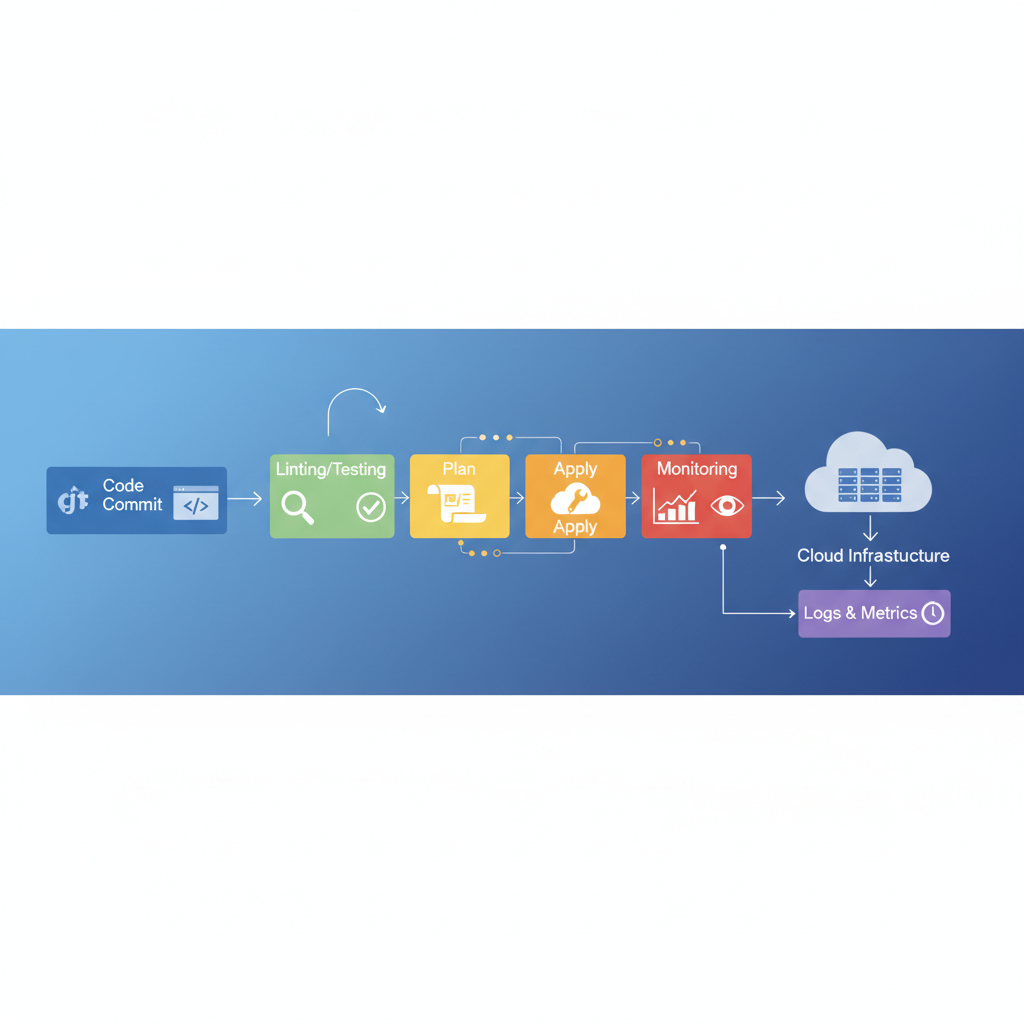
A diagram showing a CI/CD pipeline for IaC, with stages like “Code Commit,” “Linting/Testing,” “Plan,” “Apply,” and “Monitoring,” all connected by arrows, illustrating automated infrastructure deployment.
✓ Free consultation ✓ No commitment required ✓ Trusted by experts
Strategies for Efficient IaC Deployment and Management
Achieving efficient IaC deployment requires embracing automation and continuous processes. The goal is to move infrastructure changes from development to production seamlessly and reliably. Manual steps introduce delays and opportunities for errors that IaC aims to eliminate.
A robust Continuous Integration/Continuous Delivery (CI/CD) pipeline is central to these top IaC management strategies. When a developer commits changes to IaC, the pipeline should automatically trigger linting, testing, and a plan phase to preview infrastructure changes. Approval gates can be integrated for sensitive deployments.
Automation goes beyond initial deployment. Implementing automated drift detection mechanisms is crucial for maintaining desired state. Tools can regularly scan your live infrastructure and compare it against your IaC definition, flagging any unauthorized or manual changes.
Automated remediation can then be configured to either revert unauthorized changes or alert teams for review. This proactive approach ensures your infrastructure always matches its code definition, which is a hallmark of optimizing infrastructure as code.
Leveraging Advanced IaC Solutions and Tools
The market offers a wide array of advanced IaC solutions and tools, each with unique strengths. Choosing the right set of tools is critical for implementing the best iac management practices. Your selection should align with your cloud providers, team expertise, and specific infrastructure needs.
Terraform, for instance, is widely adopted for its multi-cloud and multi-provider capabilities, allowing you to manage resources across various platforms with a single workflow. It excels at provisioning and orchestrating diverse infrastructure components efficiently.
Ansible, Chef, and Puppet are configuration management tools often used for installing software, managing services, and enforcing desired state on existing servers. While they can provision, their strength lies more in ongoing server configuration after initial setup.
Cloud-native IaC tools like AWS CloudFormation, Azure Resource Manager (ARM) templates, and Google Cloud Deployment Manager offer deep integration with their respective cloud ecosystems. These provide fine-grained control and often incorporate new cloud features quickly, making them indispensable for single-cloud strategies. Evaluating the strengths and weaknesses of each tool against your operational requirements is vital for high-performance IaC.
Ensuring Successful IaC Adoption and Team Enablement
Technical solutions alone are insufficient; successful IaC adoption also hinges on people and processes. Fostering a culture that embraces automation and empowers teams with the necessary skills is paramount. Change management is a critical component of this transition.
Start with pilot projects to demonstrate the value of IaC within specific teams. Success stories build momentum and help overcome resistance to new workflows. Providing clear documentation and easy-to-follow examples can accelerate learning curves.
Invest heavily in training and upskilling your teams. Developers need to understand infrastructure concepts, and operations teams need to learn coding practices. Workshops, online courses, and mentorship programs can bridge these skill gaps effectively.
Establish a community of practice where teams can share knowledge, best practices, and collaborate on common IaC modules. This collaborative environment promotes consistent application of IaC principles and helps standardize practices across the organization, leading to more advanced IaC solutions.
Achieving High-Performance IaC for Scalability and Reliability
Achieving high-performance IaC involves more than just speed; it encompasses scalability, reliability, and cost-effectiveness. The infrastructure you define must be capable of meeting demanding workloads while remaining stable and secure. This requires careful planning and continuous optimization.
Design your IaC to be modular and composable, allowing different components to scale independently. This prevents bottlenecks and ensures that individual services can handle increased load without affecting the entire system. Think about how your infrastructure can grow with your business.
Implement robust monitoring and alerting for your infrastructure deployed via IaC. Track key performance indicators (KPIs) and set up alerts for deviations. This proactive approach helps identify potential issues before they impact users, contributing to optimizing infrastructure as code.
Regularly review and refactor your IaC to eliminate redundancies, improve efficiency, and adopt newer, more optimized cloud services. Cost optimization is a continuous effort, and well-structured IaC can play a significant role in reducing cloud spend by ensuring resources are right-sized and ephemeral resources are properly terminated.
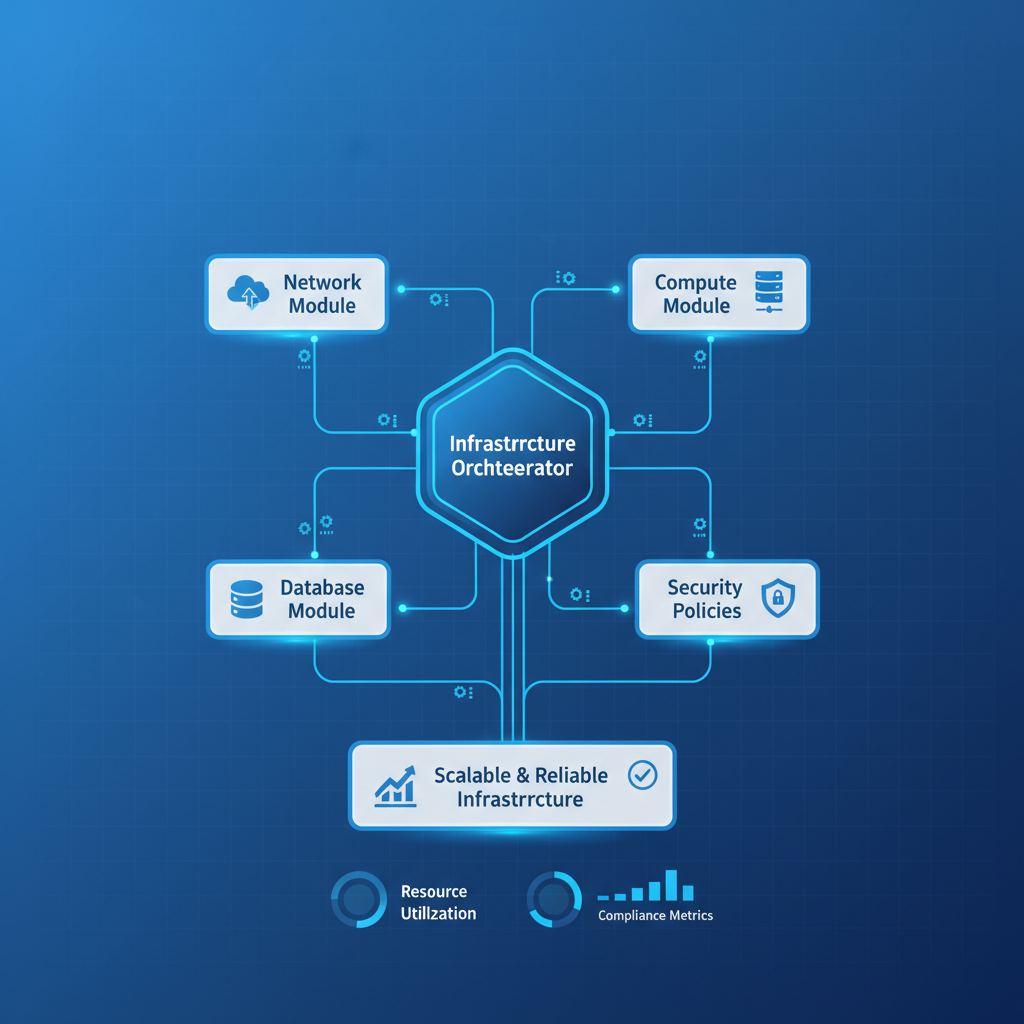
A conceptual diagram showing interconnected modular IaC components like “Network Module,” “Compute Module,” “Database Module,” and “Security Policies,” demonstrating how they work together to build a scalable and reliable infrastructure.
Frequently Asked Questions
What is best iac management?
best iac management refers to the comprehensive set of practices, strategies, and tools used to effectively design, develop, deploy, and maintain infrastructure using code. It encompasses principles like version control, automation, testing, and governance to ensure consistency, reliability, and security of infrastructure.
Why is effective IaC governance important?
Effective IaC governance is crucial because it establishes the rules, policies, and standards that guide IaC usage. It prevents configuration drift, enhances security by enforcing compliance policies, ensures accountability, and reduces the risk of errors and unauthorized changes across your infrastructure.
How do I optimize infrastructure as code for performance?
Optimizing infrastructure as code involves several steps, including designing modular and scalable IaC configurations, implementing robust monitoring, regularly reviewing and refactoring code for efficiency, and leveraging cloud-native features for cost and performance. Automated testing and drift detection also play a key role.
What are some leading practices in IaC development?
Leading practices in IaC development include using version control systems like Git for all code, adopting modular design principles for reusability, implementing comprehensive testing (unit, integration, end-to-end), and integrating IaC into CI/CD pipelines for automated deployments and validation.
Can IaC help with security compliance?
Yes, IaC significantly aids security compliance through “Policy as Code.” By embedding security policies directly into your IaC, you can automatically enforce compliance rules and prevent non-compliant resources from being provisioned. This ensures a consistent security posture and simplifies audits.
What role does automation play in top IaC management strategies?
Automation is central to top IaC management strategies. It drives efficient IaC deployment by automating provisioning, configuration, and updates. It also enables continuous integration/continuous delivery (CI/CD), drift detection, and automated remediation, leading to faster, more reliable, and consistent infrastructure management.
✓ Free consultation ✓ No commitment required ✓ Trusted by experts
Conclusion
Mastering best iac management is no longer an option but a necessity for organizations seeking agility, reliability, and security in their cloud and on-premises environments. By embracing core principles, establishing robust governance, and adopting advanced tools and practices, you can transform your infrastructure operations.
The journey to high-performance, resilient infrastructure is continuous, requiring a commitment to automation, collaboration, and ongoing learning. By consistently applying these leading practices in IaC, your organization will build a foundation that not only scales with demand but also drives innovation and competitive advantage.
Jacob Stålbro is a seasoned digitalization and transformation leader with over 20 years of experience, specializing in AI-driven innovation. As Head of Innovation and Co-Founder at Opsio, he drives the development of advanced AI, ML, and IoT solutions. Jacob is a sought-after speaker and webinar host known for translating emerging technologies into real business value and future-ready strategies.