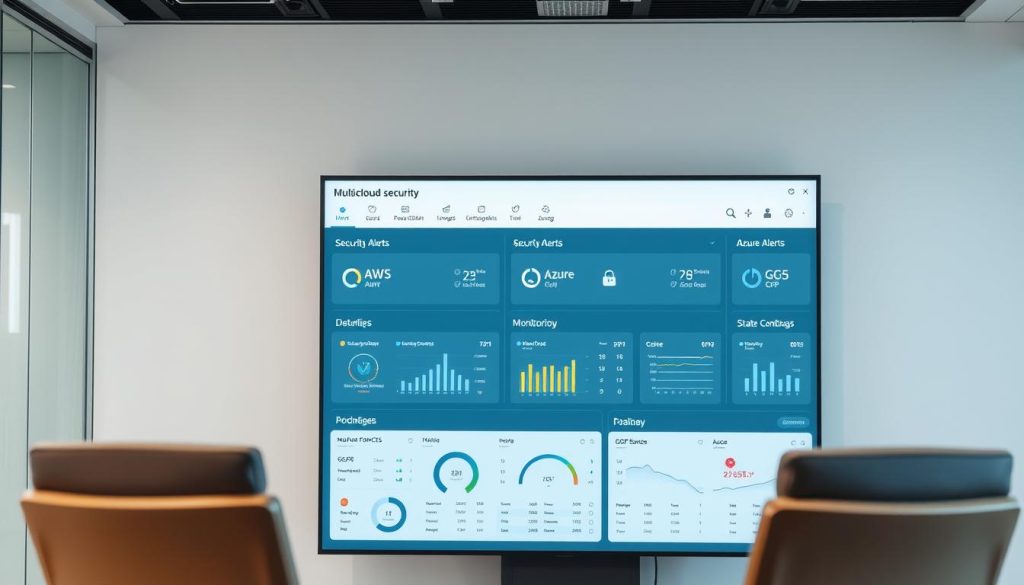
Cloud environments have transformed how organizations operate, but they’ve also introduced unique security challenges. When incidents occur in the cloud, traditional response approaches often fall short. The distributed nature of cloud resources, shared responsibility models, and ephemeral infrastructure demand specialized incident response strategies. This guide will help you develop a comprehensive cloud incident response plan that addresses these unique challenges while ensuring regulatory compliance and business continuity.

Understanding the Need for a Cloud Incident Response Plan
Cloud environments change the game for incident response. Traditional on-premises assumptions — physical access, complete control of logs and hardware, predictable network perimeters — no longer always apply in Infrastructure-as-a-Service (IaaS), Platform-as-a-Service (PaaS), and Software-as-a-Service (SaaS) models.
Why Cloud Incidents Require a Specialized Approach
Shared responsibility: Cloud providers and customers split security responsibilities. You must know what you control (e.g., data, access permissions) versus what the provider manages (e.g., hypervisor security, physical data center controls).
Ephemeral infrastructure: Containers and serverless functions can exist for seconds. Evidence collection and containment tactics must adapt quickly.
Multi-tenant and vendor ecosystems: Third-party integrations, managed services, and APIs increase attack surface and complicate vendor coordination.
Distributed resources: Cloud workloads often span multiple regions, availability zones, and even cloud providers, making incident scope determination challenging.
Treat cloud incident response as both a technical and a contractual exercise — you’re responding to an attacker and working with vendors.
Core Objectives of an Effective Cloud Security Incident Response Framework
A focused cloud incident response plan should aim to:
- Minimize downtime and data loss by rapidly detecting, isolating, and recovering affected workloads.
- Preserve evidence and support forensics so you can analyze root cause, meet legal obligations, and learn to prevent recurrence.
- Protect customer trust and regulatory standing through timely, accurate communications and required breach reporting.
- Coordinate effectively with cloud service providers and third-party vendors during incident management.
Key Terms and Concepts in Incident Response Cloud Security
| Term |
Definition |
| Incident |
Any event that compromises confidentiality, integrity, or availability of cloud systems. |
| Breach |
A confirmed compromise of data or systems with potential legal or regulatory implications. |
| Containment |
Actions to stop an incident from spreading or causing further damage. |
| Recovery |
Restoring services and validating integrity after eradication. |
| Forensic Readiness |
Preparations that ensure evidence is preserved and admissible. |
Preparing for Incidents: Policies, Roles, and Architecture
Effective incident response begins long before an incident occurs. Preparation includes defining governance structures, assigning clear roles and responsibilities, and designing cloud architecture with security and response in mind.
Defining Scope and Governance for the Cloud Incident Response Plan
Your cloud incident response plan scope should be explicit:
- Cover workloads and services across IaaS, PaaS, SaaS, and multi-cloud footprints.
- Include data classification boundaries: which datasets are subject to stricter controls and faster escalation.
- Align policy with organizational risk tolerance and regulatory obligations (e.g., GDPR, HIPAA).
Governance items to address:
- Maintain a single source of truth for the incident response plan.
- Assign sign-off authorities and review cadence (quarterly or after major incidents).
- Ensure alignment with business continuity and disaster recovery plans.
Assigning Roles and Building an Incident Response Team
A practical team structure typically includes:
| Role |
Responsibilities |
| Incident Commander |
Makes tactical decisions and escalates when needed. Coordinates overall response efforts. |
| Cloud Ops / Platform Engineers |
Implement containment and recovery steps. Manage cloud infrastructure changes. |
| Forensics Lead |
Collects evidence and works with legal on chain-of-custody. Analyzes root cause. |
| Security Analysts / SOC |
Detect, triage, and coordinate alerts and logs. Monitor for ongoing threats. |
| Communications / PR |
Prepares internal and external messaging. Manages stakeholder communications. |
| Legal & Compliance |
Advises on breach notification, data protection, and regulatory timelines. |
| Third-party Liaison |
Manages cloud provider and vendor engagement. Coordinates external support. |
Need Help Building Your Cloud IR Team?
Our experts can help you define roles, responsibilities, and workflows tailored to your organization’s cloud environment and security needs.
Schedule a Consultation
Designing Resilient Cloud Architecture to Support Response
Design for response from day one:
- Centralized logging: Ensure all logs (application, OS, cloud audit logs) stream to a hardened, centralized repository or SIEM (security information and event management).
- Segmentation: Use network and workload segmentation to limit blast radius.
- Immutable recovery points: Use versioned backups and snapshots to enable clean restore points.
- Least privilege and identity controls: Implement role-based access control (RBAC), MFA, and session logging.
- Detection and response points: Instrument endpoints, containers, and serverless functions with telemetry and alerting.
Example architecture elements: CloudTrail and GuardDuty on AWS, Azure Monitor and Sentinel on Azure, Google Cloud Operations and Chronicle in GCP environments.
Detection and Analysis: Early Warning and Triage
Effective detection is the foundation of incident response. Without visibility into your cloud environment, incidents can go unnoticed for extended periods, increasing potential damage and recovery costs.
Building Detection Capabilities in the Cloud
Detection must be centralized and scalable:
- Centralized logging & SIEM integration: Ingest cloud provider audit logs, VPC flow logs, authentication logs, and application logs into your SIEM.
- Cloud-native alerts: Use provider-native services (e.g., AWS GuardDuty, Azure Sentinel analytics) to flag misconfigurations, suspicious API calls, and privilege escalations.
- Threat intelligence and anomaly detection: Combine internal heuristics and external feeds to identify anomalous behavior such as unusual data exfiltration patterns or unexpected cryptominer activity.
- Automated response workflows: Configure automated playbooks to take initial containment actions for common incident types.
Incident Triage and Prioritization Techniques
Use a simple, repeatable triage matrix:
| Factor |
Considerations |
| Impact |
Data sensitivity, number of users affected, operational criticality |
| Urgency |
Ongoing attack vs. historical log artifact |
| Confidence |
Validated vs. potential alerts (false positives) |
Tip: Maintain concise runbooks per incident type (e.g., credential compromise, container escape, misconfiguration exposure).
Example triage runbook snippet:
Runbook: Suspicious API Key Use
1. Verify unusual API calls in last 60 minutes.
2. Revoke compromised credentials immediately.
3. Snapshot affected instances and export logs for forensics.
4. Notify Incident Commander and Legal if data access detected.
Evidence Collection and Forensic Readiness in Cloud Environments
Forensics in cloud settings requires planning:
- Preserve logs and snapshots: Set retention policies that meet legal and investigative needs.
- Chain-of-custody: Log who accessed evidence and when. Use immutable storage where possible.
- API access with providers: Understand CSP processes for retrieving preserved artifacts or historical snapshots; include these procedures in contracts.
- Time synchronization: Ensure all systems use NTP and consistent timezones to make event correlation reliable.
According to the IBM Cost of a Data Breach Report, the average time to identify and contain a breach was 277 days in recent years — faster detection and robust forensics reduce cost and impact significantly.

Containment, Eradication, and Recovery Strategies
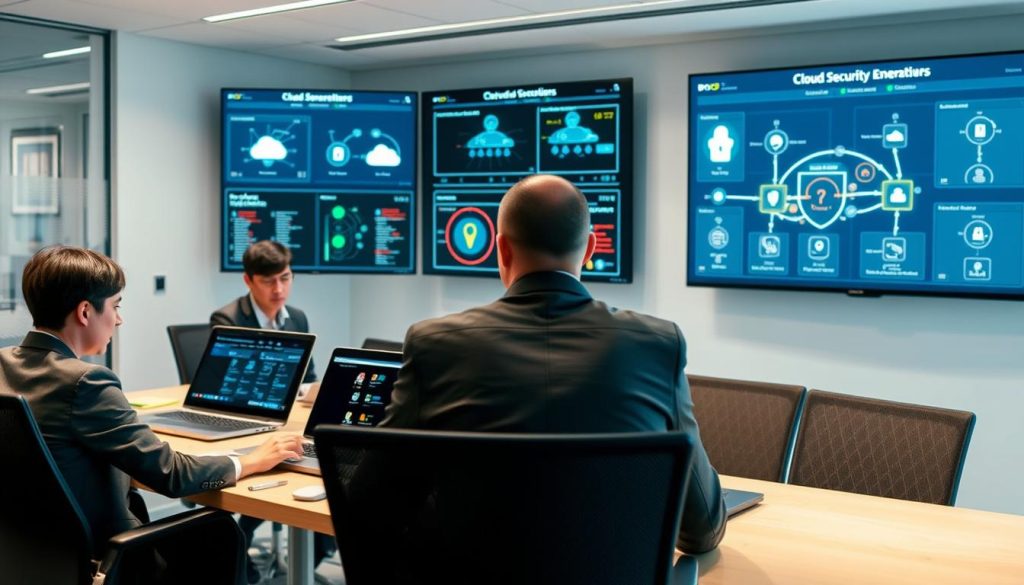
When a cloud security incident is confirmed, swift and effective containment is crucial to limit damage. Your cloud incident response plan must include clear strategies for containment, eradication of threats, and recovery of affected systems.
Containment Tactics for Cloud Incidents
Short-term Containment (Stop the Bleeding)
- Isolation: Quarantine affected instances or containers, restrict VPC routes or security group rules.
- Access revocation: Rotate and revoke compromised credentials or keys.
- Network controls: Implement firewall rules, WAF protections, and rate limits.
Long-term Containment (Prevent Recurrence)
- Patch and configuration changes: Fix vulnerable images, apply least privilege to IAM roles.
- Segmentation and micro-segmentation: Reduce lateral movement surface.
- Policy enforcement: Automate guardrails (e.g., IaC checks, policy-as-code) to prevent reintroduction.
Eradication and Remediation Best Practices
Eradication focuses on removing malicious artifacts and closing attack vectors:
- Remove backdoors, malicious containers, and unauthorized accounts.
- Rebuild compromised images from known-good sources.
- Coordinate with development teams on code vulnerabilities and fix CI/CD pipelines.
- Document remediation steps and verify fixes in staging before production rollout.
- Use post-remediation scans to ensure the environment is clean.
Recovery Planning and Validation
Recovery must balance speed and safety:
- Restore services using validated backups or rebuild from immutable images.
- Validate integrity: Run file integrity checks, re-run acceptance tests, and validate access controls.
- Phased recovery: Bring critical services online first, monitor for abnormal behavior, then restore less-critical services.
- Rollback strategies: Keep rollback plans ready if recovery causes regressions.
Post-recovery, increase monitoring for a defined period (e.g., 30 days) and require a post-incident review.
Strengthen Your Cloud Recovery Capabilities
Our team can help you develop and test effective containment and recovery strategies tailored to your specific cloud environment.
Request a Recovery Assessment
Communication, Legal, and Compliance Considerations
Effective communication during a cloud security incident is as critical as the technical response. Your cloud incident response plan must address internal and external communications, legal obligations, and coordination with cloud service providers.
Internal and External Communication Protocols
Clear communication reduces confusion:
- Define notification thresholds (who gets alerted at what severity level).
- Prepare templates for internal updates, customer notifications, and press statements.
- Ensure timely but measured external messaging to protect reputation and comply with disclosure laws.
Example stakeholder notification matrix:
| Incident Severity |
Internal Stakeholders |
External Stakeholders |
Timeframe |
| Critical |
Executive leadership, Legal, Security, IT, affected business units |
Customers, regulators, law enforcement (if required) |
Immediate (within hours) |
| High |
Department heads, Security, IT, affected business units |
Affected customers, regulators (if required) |
Within 24 hours |
| Medium |
Security, IT, affected business units |
Affected customers (if required) |
Within 48 hours |
| Low |
Security, IT |
None typically required |
Standard reporting cycle |
Always coordinate with Legal before broad public statements to ensure compliance with breach notification laws.
Regulatory, Contractual, and Legal Response Elements

Legal responsibilities can be complex:
- Determine breach notification rules by jurisdiction (e.g., GDPR in EU requires notifications within 72 hours).
- Maintain evidence retention policies to support investigations and potential litigation.
- Understand cross-border data transfer implications and lawful access constraints.
- Cite contractual SLAs with CSPs and vendors that define responsibilities for incident handling and evidence preservation.
Coordination with Cloud Providers and Third-Party Vendors
Often you’ll need to work with your cloud service provider:
- Maintain direct escalation paths and account managers for emergency response.
- Include joint incident response exercises in vendor contracts where possible.
- Ensure contracts include clauses for forensic support, data preservation, and notification assistance.
Practical tip: Keep a vendor contact card with phone numbers, escalation tiers, and expected response windows.
Testing, Metrics, and Continuous Improvement
A cloud incident response plan is only effective if it’s regularly tested, measured, and improved. This section covers strategies for testing your plan, measuring its effectiveness, and continuously enhancing your response capabilities.
Tabletop Exercises and Live Drills for the Cloud Incident Response Plan
Testing ensures plans work under pressure:
- Tabletop exercises: Walk through scenarios (e.g., API key leak, container ransomware) with stakeholders to validate roles and communications.
- Live drills: Conduct controlled incidents in staging or using chaos engineering techniques (e.g., simulate loss of a service) to practice containment and recovery.
- Measure readiness: Rate participants’ timeliness, adherence to playbooks, and decision-making.

Metrics to Evaluate Incident Response Effectiveness
Key metrics to track:
| Metric |
Description |
Target |
| MTTD (Mean Time to Detect) |
Average time between incident start and detection |
|
| MTTR (Mean Time to Recovery) |
Average time from detection to full service restoration |
|
| Containment Time |
Time from detection to containment |
|
| False Positive Rate |
Percentage of alerts that are not actual incidents |
|
| Business Impact |
Financial, customer downtime, regulatory fines |
Decreasing trend |
Use these metrics to prioritize investments in tooling and staff training. For example, reducing MTTD by 50% can significantly lower breach costs.
Automating and Evolving Incident Response Capabilities
Automation reduces manual steps and speeds response:
- Playbooks and runbooks implemented as automated workflows can revoke keys, isolate resources, or rotate secrets.
- Infrastructure as Code (IaC) checks and policy-as-code help prevent misconfigurations.
- Continuously monitor threat landscape and adapt detections for new cloud-specific attack vectors.
Example automation snippet (pseudocode):
on_alert:
if alert.type == “compromised_key”:
– revoke_key(key_id)
– create_new_key(user)
– notify(stakeholders)
Enhance Your Cloud IR Testing Program
Our experts can help you design and facilitate effective tabletop exercises and live drills tailored to your cloud environment.
Schedule a Testing Workshop
Managing Cloud IR Across Multi-Cloud Architectures
Many organizations operate across multiple cloud platforms, which introduces additional complexity for incident response. Your cloud incident response plan must address these challenges to ensure consistent and effective response regardless of where an incident occurs.
Overcoming Platform Silos
The main weakness in multi-cloud response is visibility. Logs are scattered, alerts don’t align, and response actions aren’t always compatible across platforms. Closing those gaps means:
- Normalizing telemetry: Aggregate logs from all providers into a single SIEM or SOAR, where correlation rules and enrichment can be applied consistently.
- Federating tooling: Use automation that can take containment actions in any cloud from the same interface.
- Keeping APIs current: Document and regularly test provider-specific API calls in your automation.
The Role of XDR and Threat Intelligence Feeds
XDR helps unify the picture by combining provider-specific telemetry with endpoint and network data, letting you follow an incident across different environments without losing context.
Paired with curated threat intelligence feeds, this also sharpens prioritization. If an alert is linked to an active campaign or a known malicious actor, it goes straight to the top of the queue.
Conclusion: Building a Resilient Cloud Security Posture
A comprehensive cloud incident response plan is essential for organizations operating in today’s complex cloud environments. By following the guidance in this article, you can develop a plan that addresses the unique challenges of cloud security while ensuring rapid and effective response to incidents.
Summary of Key Steps to Building a Resilient Cloud Incident Response Plan
A strong cloud security incident response framework blends preparation, detection, swift response, and continuous improvement. Focus on:
- Clear scope and governance across IaaS, PaaS, SaaS, and multi-cloud.
- Defined roles, escalation paths, and vendor coordination.
- Instrumented architecture with centralized logs, segmentation, and immutable recovery points.
- Tested runbooks, automated playbooks, and measurable metrics (MTTD, MTTR).
Final Recommendations for Maintaining Readiness
- Run regular tabletop exercises and at least one live drill per year.
- Keep runbooks current and perform quarterly reviews or after any cloud architecture change.
- Invest in telemetry, threat intelligence, and a SIEM tuned for cloud telemetry.
- Maintain strong contracts with cloud providers that include incident support clauses.

Ready to Strengthen Your Cloud Incident Response Capabilities?
Our team of cloud security experts can help you develop, implement, and test a comprehensive cloud incident response plan tailored to your organization’s unique needs.
References and Further Reading