Your Essential AWS Migration Strategy Guide for Cloud Success
March 11, 2026|8:48 AM
Unlock Your Digital Potential
Whether it’s IT operations, cloud migration, or AI-driven innovation – let’s explore how we can support your success.
Home /
Work /
Blogs /
Your Essential AWS Migration Strategy Guide for Cloud Success
Understanding the Core Principles of an aws migration strategy guide
Embarking on a cloud migration journey to Amazon Web Services (AWS) requires more than just technical execution. A well-defined aws migration strategy guide is the foundational blueprint for success, ensuring your transition is smooth, efficient, and aligns with your business objectives. This guide will walk you through developing a robust strategy, offering practical insights and best practices.
Developing an effective aws migration strategy guide involves comprehensive strategic planning from the outset. It encompasses evaluating your current IT landscape, understanding your desired future state, and outlining the precise steps to bridge that gap. Without a clear strategy, organizations risk unexpected costs, performance issues, and security vulnerabilities during the migration process.
A strong strategy goes beyond mere infrastructure relocation; it’s a transformation strategy for your entire organization. It considers how cloud adoption will impact your operations, security posture, application architecture, and even your company culture. This holistic view is essential for realizing the full benefits of the cloud.
Key Phases of an Effective AWS Migration
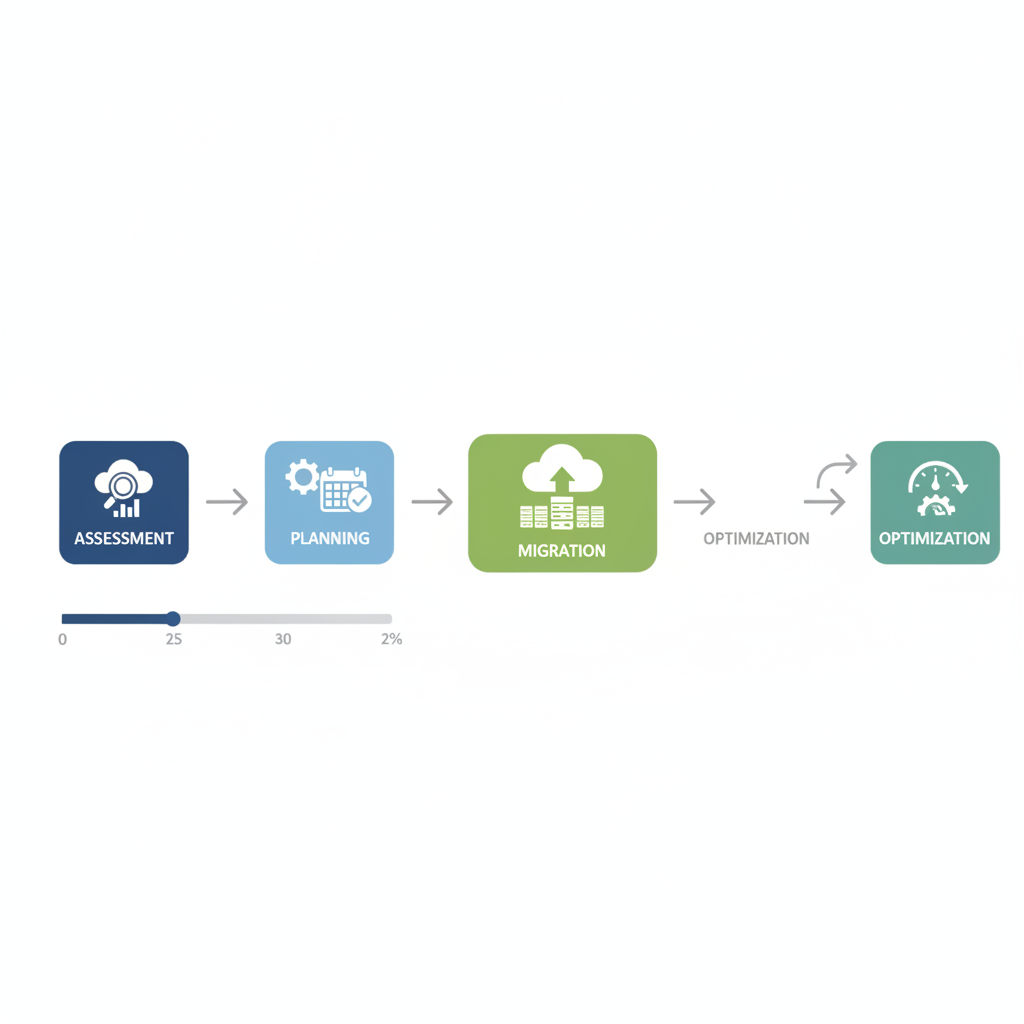
A successful AWS migration typically follows a structured, phased approach, moving from initial assessment to ongoing optimization. This systematic process ensures that every aspect of the migration is thoroughly considered and executed, minimizing risks and maximizing the chances of success. Understanding these phases is crucial for any effective aws migration strategy guide guide.
1. Discovery and Assessment
The initial phase involves a deep dive into your existing IT environment. This includes cataloging all applications, databases, servers, and network components. Crucially, it also means understanding dependencies between applications, their performance requirements, and data storage needs.
A thorough assessment identifies workloads suitable for migration, their complexity, and potential challenges. It helps in calculating the Total Cost of Ownership (TCO) for your current setup versus a potential AWS cloud environment, laying the groundwork for your migration blueprint. This step is critical for informed decision-making and setting realistic expectations.
2. Planning and Design
Once the assessment is complete, the planning and design phase begins. This involves defining the target AWS architecture for each application, including compute, storage, networking, and security services. A detailed migration roadmap is developed here, outlining timelines, resource allocation, and responsibilities.
This phase also covers data migration strategies, security controls, compliance requirements, and identifying necessary skill sets within your team. Establishing a clear governance model and defining key performance indicators (KPIs) for the migration itself are also vital components of this stage.
A flowchart illustrating the different phases of an AWS migration journey, starting from assessment, planning, migration, and finally optimization, with arrows indicating the flow between stages.
3. Migration Execution
With a solid plan in place, the actual migration execution can commence. This often involves utilizing various AWS migration tools and services, such as AWS Migration Hub, AWS Application Migration Service (MGN), and AWS Database Migration Service (DMS). Data transfer mechanisms are chosen based on volume and network capacity.
Applications are moved to AWS, rigorously tested, and validated against performance and security benchmarks. This phase is typically iterative, often starting with non-critical workloads as pilot projects to refine processes and gain experience before moving on to more complex systems.
4. Post-Migration Optimization
Migration doesn’t end once everything is running in AWS; optimization is an ongoing process. This phase focuses on fine-tuning your AWS environment for cost efficiency, performance, security, and operational excellence. Regularly reviewing resource utilization and implementing automation are key aspects.
This also includes continuous monitoring, performance tuning, and exploring new AWS services to further enhance your cloud footprint. Adopting a long-term strategy for cloud governance and management ensures sustained value from your AWS investment, making this a critical component of any best aws migration strategy guide.
Choosing the Right aws migration strategy guide for Your Business
Selecting the appropriate migration approach is pivotal to the success of your cloud journey. AWS outlines six common migration strategies, often referred to as the “6 Rs,” each offering distinct benefits and complexities. Understanding these options is essential for tailoring the best aws migration strategy guide for your specific business needs and application portfolio.
The Six R’s of Migration
Rehost (Lift-and-Shift): This strategy involves moving applications to AWS without significant changes. It’s often the fastest approach, ideal for organizations seeking rapid cloud adoption and cost savings from infrastructure consolidation. It provides immediate benefits by reducing data center footprints.
Replatform (Lift-Tinker-and-Shift): Here, applications are moved to AWS with minor modifications to leverage cloud-native features, such as managed databases (e.g., Amazon RDS) or containerization. This strategy offers more cloud benefits than rehosting without a full re-architecture.
Refactor/Re-architect: This involves fundamentally changing an application’s architecture to fully embrace cloud-native capabilities, like microservices and serverless functions (e.g., AWS Lambda). This approach maximizes agility, scalability, and cost efficiency but requires significant development effort.
Repurchase (Drop-and-Shop): This strategy means replacing an existing application with a SaaS solution available on AWS Marketplace or directly from a vendor. It’s suitable when off-the-shelf solutions meet business needs more effectively, simplifying management and reducing operational overhead.
Retain (Revisit): Some applications might not be suitable or ready for migration due to compliance, technical dependencies, or other reasons. In such cases, the decision is to keep them in the on-premises environment and revisit their migration potential later as part of a long-term strategy.
Retire: Identifying and decommissioning applications that are no longer needed or used is a crucial part of streamlining your IT portfolio. Retiring these systems reduces costs and complexity, ensuring resources are focused on valuable assets.
The choice of strategy should align with your business drivers, application criticality, technical complexity, and desired cloud benefits. Often, a hybrid approach combining several of these strategies proves to be the most practical and effective solution, guided by your comprehensive cloud adoption framework.
✓ Free consultation ✓ No commitment required ✓ Trusted by experts
Best Practices for a Seamless AWS Migration
Achieving a smooth and successful AWS migration requires adherence to proven best practices. These aws migration strategy guide tips are designed to mitigate risks, optimize performance, and ensure your investment in the cloud yields maximum returns. Implementing these practices will help in establishing a robust migration blueprint.
1. Secure Executive Buy-in and Sponsorship: A successful migration needs strong support from senior leadership. Executive sponsorship ensures resources, budget, and organizational alignment are in place, driving the strategic planning forward. This commitment helps overcome internal resistance and prioritizes the migration efforts.
2. Start with a Pilot Project: Before attempting to migrate critical or complex applications, begin with a less critical, relatively simple workload. This pilot project allows your team to gain experience with AWS services, refine migration processes, and identify potential issues in a low-risk environment. It’s an excellent way to test your migration roadmap.
3. Automate Wherever Possible: Leverage automation tools for infrastructure provisioning, configuration management, and deployment. AWS services like CloudFormation, AWS Config, and AWS Systems Manager can significantly reduce manual effort, minimize human error, and accelerate the migration process. Automation is key for efficient, repeatable migrations.
4. Prioritize Data Security and Compliance: Security must be a primary consideration throughout the entire migration lifecycle. Implement strong access controls, encryption for data at rest and in transit, and robust monitoring. Ensure your migration plan adheres to all relevant industry regulations and compliance standards from the outset.
5. Invest in Training and Upskilling: Your team will need new skills to manage and operate applications in the AWS cloud. Provide comprehensive training on AWS services, cloud architecture, security best practices, and FinOps principles. A knowledgeable team is essential for long-term cloud success and continuous optimization.
6. Implement Robust Monitoring and Logging: Establish comprehensive monitoring and logging solutions from day one using AWS CloudWatch, CloudTrail, and other tools. This allows you to track application performance, security events, and resource utilization, enabling proactive issue resolution and informed optimization decisions post-migration.
7. Plan for Data Migration Carefully: Data migration is often one of the most challenging aspects. Assess data volumes, network bandwidth, and downtime tolerance. Use appropriate AWS data migration services like AWS Database Migration Service (DMS) or AWS DataSync. Consider hybrid cloud storage solutions if needed for large datasets.
A diagram showing various AWS services involved in migration such as AWS Migration Hub, AWS DMS, AWS Application Migration Service, with arrows indicating their roles in different migration stages.
Common Challenges and How to Overcome Them
Despite careful strategic planning, AWS migrations can present various challenges. Anticipating these hurdles and having a plan to address them is crucial for a successful transformation strategy. Understanding these common pitfalls helps in refining your migration blueprint.
Cost Management Unexpectedly Surging
Many organizations find managing cloud costs difficult initially. Without proper governance and optimization, expenses can escalate. Solution: Implement FinOps practices from the start. Use AWS Cost Explorer and Budgets to monitor spending. Right-size instances, leverage reserved instances or savings plans, and continuously optimize resource utilization post-migration. Automated cost-optimization tools can also be highly beneficial.
Data Gravity and Transfer Issues
Migrating large volumes of data, especially across geographies, can be time-consuming and impact network performance. Data gravity refers to the difficulty of moving data, particularly large datasets, due to its sheer volume and dependencies. Solution: Utilize AWS Snowball or Snowmobile for petabyte-scale data transfers offline. For online transfers, use AWS DataSync for secure, fast data movement, or AWS Direct Connect for dedicated network connectivity, ensuring a robust migration roadmap.
Skill Gaps Within Teams
Operating in a cloud environment requires different skills than traditional on-premises IT. A lack of cloud-proficient staff can hinder progress and operational efficiency. Solution: Invest heavily in training and certification programs for your existing IT staff. Consider bringing in external AWS experts or managed service providers for critical phases. Foster a culture of continuous learning to build internal cloud expertise.
Security and Compliance Concerns
Ensuring data security and maintaining compliance during and after migration is a significant concern for many businesses. Misconfigurations can lead to vulnerabilities. Solution: Adopt a “security first” mindset. Implement AWS security best practices, leverage services like AWS WAF, Security Hub, and GuardDuty. Conduct regular security audits and penetration testing. Work closely with compliance experts to map regulatory requirements to AWS controls, ensuring your cloud adoption framework is secure.
Performance Degradation Post-Migration
Applications might not perform as expected in the cloud if they are not adequately designed or optimized for the AWS environment. Solution: Conduct thorough performance testing before and after migration. Monitor key metrics using AWS CloudWatch and identify bottlenecks. Optimize application architecture, choose appropriate instance types, and leverage AWS services designed for high performance and scalability. This is a crucial aws migration strategy guide tip.
Measuring Success and Continuous Optimization
A successful aws migration strategy guide extends beyond simply moving workloads; it involves defining clear metrics for success and establishing a framework for continuous optimization. This long-term strategy ensures that the cloud investment delivers sustained value and aligns with evolving business goals.
Defining Success Metrics
Before migration, identify tangible metrics that will define success. These could include:
Cost Savings: Reduction in operational expenses, infrastructure costs, and energy consumption.
Security Posture: Enhanced security, fewer incidents, and easier compliance adherence.
Business Agility: Faster time-to-market for new features and services, improved innovation capabilities.
Regularly track these metrics against baselines established during the discovery phase. This data provides objective insights into the benefits realized from your transformation strategy.
The Cycle of Continuous Optimization
Cloud optimization is not a one-time event but an ongoing process, a vital part of any best aws migration strategy guide. Once applications are running in AWS, continuous monitoring and analysis are essential to identify areas for improvement.
Cost Optimization: Regularly review AWS bills, identify idle or underutilized resources, and right-size instances. Leverage cost-saving features like Reserved Instances, Savings Plans, and Spot Instances.
Performance Optimization: Monitor application performance, identify bottlenecks, and consider architectural changes or the adoption of new AWS services to enhance speed and responsiveness.
Security Enhancement: Continuously review security configurations, update policies, and integrate new security services as they become available. Conduct regular vulnerability assessments.
Operational Excellence: Automate more processes, refine incident response, and improve monitoring capabilities. Embrace a DevOps culture to streamline operations and deployments.
This continuous feedback loop ensures that your cloud environment remains efficient, secure, and aligned with your long-term strategy, demonstrating the true value of your aws migration strategy guide.
Frequently Asked Questions
What is an aws migration strategy guide?
An aws migration strategy guide is a comprehensive plan outlining the systematic process of moving an organization’s applications, data, and IT infrastructure from on-premises environments or other cloud platforms to Amazon Web Services. It defines objectives, identifies workloads, selects migration methods, and establishes a roadmap for successful cloud adoption.
Why is an aws migration strategy guide important?
A well-defined aws migration strategy guide is crucial because it minimizes risks, reduces costs, and ensures a smooth transition to the cloud. It provides a clear direction, aligns migration efforts with business goals, and helps in managing technical complexities, resource allocation, and security considerations, ultimately leading to a more successful outcome.
What are the common migration strategies for AWS?
AWS commonly refers to six migration strategies, known as the “6 Rs”: Rehost (lift-and-shift), Replatform (lift-tinker-and-shift), Refactor/Re-architect, Repurchase (drop-and-shop), Retain, and Retire. Each strategy offers different levels of complexity and cloud benefits, allowing organizations to choose the best approach for individual applications.
How long does an AWS migration typically take?
The duration of an AWS migration varies significantly based on factors such as the number and complexity of applications, data volume, organizational readiness, and the chosen migration strategy. Simple migrations of a few applications might take weeks, while large-scale enterprise migrations involving hundreds of applications can span several months to over a year.
How can I ensure data security during migration?
Ensuring data security during migration involves several critical steps: encrypting data at rest and in transit, implementing robust access controls, using secure network connections (like AWS Direct Connect or VPNs), regularly auditing security configurations, and adhering to compliance standards. AWS services like KMS, VPC, and GuardDuty play a vital role in securing data throughout the process.
What is the AWS Cloud Adoption Framework (CAF)?
The AWS Cloud Adoption Framework (CAF) provides guidance and best practices to help organizations build a comprehensive plan for cloud adoption. It organizes guidance into six perspectives: Business, People, Governance, Platform, Security, and Operations, helping stakeholders across the organization understand and plan for necessary changes when moving to the cloud.
✓ Free consultation ✓ No commitment required ✓ Trusted by experts
Conclusion
Developing a robust aws migration strategy guide is an indispensable step for any organization looking to leverage the power and flexibility of Amazon Web Services. It’s not merely a technical exercise but a strategic business initiative that requires meticulous planning, a clear understanding of objectives, and a commitment to continuous improvement. By following a phased approach, choosing the right migration strategies, and adhering to best practices, businesses can navigate the complexities of cloud adoption with confidence.
Embrace the journey with a well-thought-out migration roadmap and a long-term strategy for optimization, ensuring your AWS environment evolves with your business needs. This comprehensive approach will unlock the full potential of the cloud, driving innovation, efficiency, and sustained competitive advantage.
Jacob Stålbro is a seasoned digitalization and transformation leader with over 20 years of experience, specializing in AI-driven innovation. As Head of Innovation and Co-Founder at Opsio, he drives the development of advanced AI, ML, and IoT solutions. Jacob is a sought-after speaker and webinar host known for translating emerging technologies into real business value and future-ready strategies.