Whether it’s IT operations, cloud migration, or AI-driven innovation – let’s explore how we can support your success.
Home /
Work /
Blogs /
Optimize Database Cloud SLA Monitoring: Performance & Uptime
Understanding database Cloud SLA Monitoring in 2026
In the rapidly evolving digital landscape, maintaining high performance and availability for your data infrastructure is paramount. Effective database Cloud sla monitoring is no longer a luxury but a fundamental necessity for businesses leveraging cloud-hosted databases. This comprehensive guide delves into the nuances of monitoring Service Level Agreements (SLAs) for cloud databases, providing actionable insights for 2026 and beyond.
Organizations must ensure their cloud database services consistently meet defined performance and availability targets. This proactive approach helps in preventing costly downtime, mitigating performance bottlenecks, and upholding customer trust. Understanding and implementing robust database SLA tracking mechanisms is crucial for operational excellence.
What are Database Cloud SLAs?
Service Level Agreements (SLAs) are formal contracts between a service provider and a customer, outlining the agreed-upon level of service. For cloud databases, these agreements typically specify metrics like uptime, response times, throughput, and data durability. Adhering to these SLAs is a critical aspect of cloud database performance monitoring.
Cloud providers offer varying SLA commitments for their database services, whether it’s for SQL database SLA or NoSQL SLA monitoring. These agreements protect both parties by setting clear expectations and establishing consequences for non-compliance. Comprehensive monitoring ensures these expectations are consistently met.
The Shift to Cloud Database Environments
The migration of databases to cloud environments, such as AWS RDS, Azure SQL Database, or Google Cloud Spanner, has introduced new complexities. While cloud providers manage much of the underlying infrastructure, customers remain responsible for monitoring application-level performance and ensuring data store SLA compliance. This shared responsibility model demands sophisticated monitoring solutions.
Traditional on-premise monitoring tools often fall short in dynamic cloud environments. New approaches are required to effectively track performance, availability, and resource utilization across distributed cloud database architectures. This guide provides a database Cloud sla monitoring guide to navigate these challenges.
Why database Cloud SLA Monitoring is Critical for Modern Businesses
In today’s competitive market, even brief database outages or slowdowns can have severe repercussions, impacting revenue, reputation, and customer satisfaction. Robust database Cloud sla monitoring ensures your critical data infrastructure remains reliable and performs optimally under all conditions. It’s an essential component of modern IT strategy.
Maintaining stringent database SLA tracking is vital for demonstrating accountability to stakeholders and customers alike. It provides tangible evidence that your cloud database services are delivering on their promises. This commitment to performance and availability builds trust and enhances brand perception.
Ensuring Business Continuity and Performance
Downtime in a critical database can bring an entire business to a standstill, leading to lost transactions and decreased productivity. Effective cloud database performance monitoring allows businesses to identify and address potential issues before they escalate into major incidents. This proactive stance is fundamental for business continuity.
Performance degradation, even without full outages, can significantly impair user experience and operational efficiency. Slow queries, high latency, or unresponsive applications directly affect customer satisfaction and employee productivity. Monitoring helps to quickly pinpoint and resolve these subtle performance dips.
Meeting Regulatory and Compliance Requirements
Many industries operate under strict regulatory frameworks that mandate specific levels of data availability, security, and performance. Achieving data store SLA compliance is often a non-negotiable requirement for regulatory adherence. Robust monitoring provides the necessary audit trails and reporting.
Failure to meet these compliance requirements can result in significant financial penalties, legal repercussions, and severe reputational damage. Comprehensive database service level management ensures that all regulatory standards are continuously observed. This proactive approach safeguards the organization against potential liabilities.
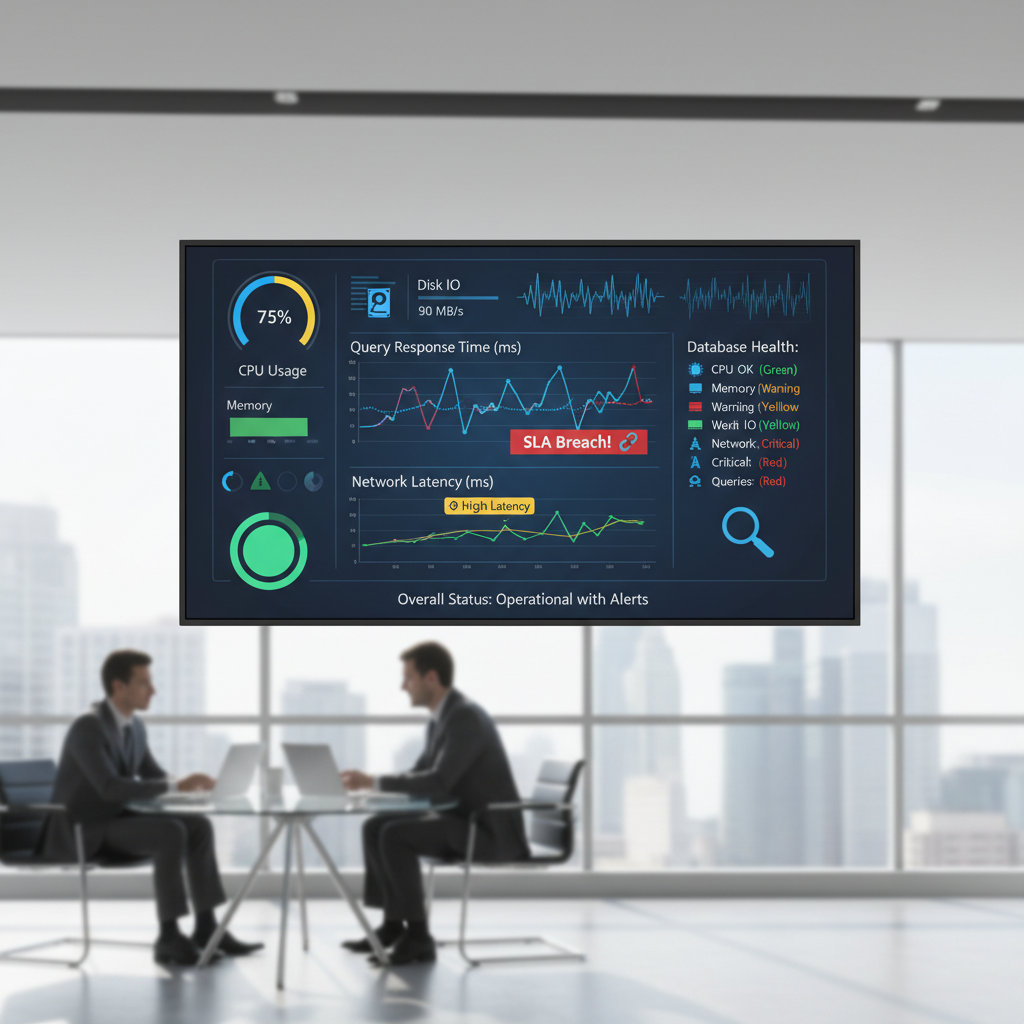
A dashboard showing various cloud database performance metrics like CPU usage, memory, disk I/O, network latency, and query response times, with color-coded alerts for SLA breaches.
Key Metrics and KPIs for Effective database Cloud SLA Monitoring
To effectively monitor and manage your cloud database SLAs, it’s crucial to identify and track the right Key Performance Indicators (KPIs). These metrics provide a clear picture of your database’s health, performance, and compliance status. A well-defined set of KPIs forms the backbone of your database Cloud sla monitoring strategy.
Understanding what to measure is the first step towards actionable insights. Different types of cloud databases, whether SQL database SLA or NoSQL SLA monitoring, will have common core metrics but also specific indicators unique to their architecture. Tailoring your monitoring approach ensures comprehensive coverage.
Availability and Uptime
Availability is arguably the most critical SLA metric, often expressed as a percentage of operational time over a given period (e.g., 99.9% uptime). This metric directly reflects whether your database service is accessible and responsive to applications and users. Continuous monitoring is essential to detect any dips.
Monitoring uptime involves tracking service reachability and the ability to process requests successfully. Alerts should be configured for any unexpected downtime or periods of unavailability. This ensures immediate notification and swift resolution to maintain your service level commitments.
Performance Metrics
Performance metrics measure how efficiently your database is processing requests and delivering data. These are crucial for understanding the user experience and application responsiveness.
Key performance indicators include:
Latency/Response Time: The time taken for a query or transaction to complete. High latency directly impacts user experience.
Throughput: The number of transactions or queries processed per second. Low throughput can indicate bottlenecks.
Error Rates: The percentage of failed queries or transactions. An increase signals underlying issues within the database or application.
Query Execution Time: The duration individual queries take to run. Identifying slow queries is vital for optimization.
Resource Utilization
Monitoring resource utilization helps ensure your cloud database instances are appropriately sized and performing efficiently. Over-utilization can lead to performance degradation, while under-utilization wastes cloud spend.
Important resource metrics include:
CPU Utilization: The percentage of processor capacity being used. Consistently high CPU can indicate a need for scaling or query optimization.
Memory Usage: The amount of RAM consumed by the database. Memory contention can severely impact performance.
Disk I/O: The rate of read/write operations to storage. Slow disk I/O can be a bottleneck for data-intensive applications.
Network Throughput: The amount of data transmitted over the network. High network traffic can impact latency.
ENSURE UNINTERRUPTED SERVICE
Ensure uninterrupted service delivery and proactively prevent costly SLA breaches. Leverage our automated, real
✓ Free consultation ✓ No commitment required ✓ Trusted by experts
Strategies for Achieving Robust database Cloud SLA Compliance
Achieving and maintaining robust database Cloud sla monitoring compliance requires a multifaceted strategy that encompasses proactive planning, continuous monitoring, and agile response mechanisms. Simply setting an SLA is not enough; active management is paramount. Businesses must adopt a systematic approach to database service level management.
Effective strategies prevent issues before they impact services, ensuring that your cloud databases consistently meet their defined performance and availability targets. This proactive posture minimizes risks and supports uninterrupted business operations. Implementing these strategies is key to a successful database Cloud sla monitoring guide.
Define Clear and Realistic SLAs
The first step is to establish clear, measurable, and achievable SLAs with your cloud provider and internally within your organization. These agreements should specify precise metrics for availability, performance, and data durability. Ambiguous SLAs can lead to disputes and unmet expectations.
Ensure that your internal database SLA tracking aligns with your external provider’s commitments and your business’s operational needs. Regularly review and update these SLAs as your business requirements or cloud environment evolves. This iterative process ensures relevance and effectiveness.
Implement Comprehensive Monitoring Tools
Investing in a robust cloud database performance monitoring solution is non-negotiable. The chosen tool should provide real-time insights into all critical KPIs, offer customizable dashboards, and support various database technologies, including both SQL database SLA and NoSQL SLA monitoring. Integration with other IT systems is also beneficial.
The best database Cloud sla monitoring tools offer advanced analytics, anomaly detection, and predictive capabilities. They should be able to collect metrics from multiple cloud providers and on-premise sources, providing a unified view of your entire data estate. This holistic perspective is crucial for identifying complex interdependencies.
Proactive Alerting and Incident Management
Configure intelligent alerting mechanisms that notify relevant teams immediately when SLA thresholds are approached or breached. Alerts should be categorized by severity and routed to the appropriate personnel based on the nature of the issue. This ensures a swift and coordinated response.
An effective incident management process, including clear escalation paths and predefined runbooks, is essential for rapid problem resolution. Regularly review past incidents to identify root causes and implement preventative measures. This continuous improvement cycle strengthens your database service level management.
Choosing the Best Tools for database Cloud SLA Monitoring
Selecting the right tools is a pivotal decision for establishing effective database Cloud sla monitoring. The market offers a wide array of solutions, from cloud-native services to third-party platforms, each with distinct features and capabilities. Your choice should align with your specific database environment, scale, and budget.
The goal is to find a solution that not only tracks key metrics but also provides actionable insights, streamlines incident response, and supports your overall database service level management objectives. This section offers guidance on choosing the best database Cloud sla monitoring tools.
Key Features to Look For
When evaluating database Cloud sla monitoring tools, consider the following essential features:
Multi-Cloud Support: The ability to monitor databases across different cloud providers (AWS, Azure, GCP) from a single pane of glass. This is crucial for hybrid or multi-cloud strategies.
Real-time Performance Monitoring: Continuous collection and visualization of metrics like CPU, memory, I/O, and query performance, ensuring up-to-the-minute insights.
Historical Data Analysis: Capabilities to store and analyze historical performance data, allowing for trend analysis, capacity planning, and post-incident investigation.
Customizable Dashboards and Reporting: Flexible dashboards that allow users to visualize critical KPIs relevant to their roles and generate comprehensive SLA compliance reports.
Intelligent Alerting: Configurable alerts based on threshold breaches, anomalies, or predictive indicators, with integration into existing notification systems (email, Slack, PagerDuty).
Automated Root Cause Analysis: Features that help pinpoint the exact cause of performance issues, reducing mean time to resolution (MTTR).
Scalability: The ability of the tool to scale with your growing database infrastructure without compromising performance or increasing complexity.
Support for Diverse Database Types: Compatibility with various SQL database SLA and NoSQL SLA monitoring requirements, including popular engines like MySQL, PostgreSQL, SQL Server, Oracle, MongoDB, and Cassandra.
Popular Tool Categories
Tools for database Cloud sla monitoring generally fall into a few categories:
Cloud Provider Native Tools: Each major cloud provider (AWS CloudWatch, Azure Monitor, Google Cloud Monitoring) offers services specifically designed to monitor their respective database offerings. These are often deeply integrated and cost-effective within a single cloud.
Third-Party APM/Observability Platforms: Solutions like Datadog, New Relic, Dynatrace, and AppDynamics offer comprehensive application performance monitoring (APM) with robust database monitoring capabilities across multiple clouds and on-premise environments. They often provide more advanced analytics and correlation.
Specialized Database Monitoring Tools: Products from vendors like SolarWinds Database Performance Analyzer or VividCortex focus specifically on deep database performance insights, often offering more granular visibility into query plans and database internals.
Implementing an Effective database Cloud SLA Monitoring Strategy
Implementing an effective database Cloud sla monitoring strategy is a systematic process that transforms theoretical understanding into practical, actionable outcomes. It involves several key stages, from initial planning to continuous refinement. This section provides a step-by-step database Cloud sla monitoring guide for successful deployment.
Following these steps ensures a comprehensive and well-integrated monitoring framework that supports your business objectives. Consistent execution and adaptation are crucial for long-term success in database service level management. These database Cloud sla monitoring tips will help streamline your process.
Step 1: Define Monitoring Objectives and Scope
Start by clearly defining what you aim to achieve with your monitoring strategy. Identify critical databases, their associated business services, and the specific SLAs you need to uphold. Determine the scope, including which metrics are most important for SQL database SLA and NoSQL SLA monitoring.
Establish baseline performance levels for your databases under normal operating conditions. This baseline will serve as a reference point for detecting anomalies and performance deviations. Involve stakeholders from operations, development, and business teams to ensure alignment.
Step 2: Select and Configure Monitoring Tools
Based on your objectives and infrastructure, choose the appropriate database Cloud sla monitoring tools. Install and configure agents or connectors to collect data from your cloud databases. Ensure proper authentication and network connectivity for seamless data ingestion.
Customize your monitoring dashboards to display the most critical KPIs prominently. Configure data retention policies to balance historical analysis needs with storage costs. The best database Cloud sla monitoring tools allow for extensive customization to fit unique organizational needs.
Step 3: Set Up Alerts and Notification Channels
Define clear thresholds for each monitored metric that signify an impending or actual SLA breach. Implement intelligent alerts that trigger when these thresholds are crossed. Distinguish between warning alerts (pre-emptive) and critical alerts (SLA breach).
Integrate your alerting system with your incident management platform and communication channels. This ensures that the right teams are notified instantly through preferred methods, such as email, Slack, PagerDuty, or SMS. Provide detailed context within alerts for faster diagnosis.
Step 4: Establish Reporting and Review Processes
Regularly generate and review reports on SLA compliance, performance trends, and incident summaries. These reports should be shared with relevant stakeholders to ensure transparency and accountability. Automated reporting can save significant time and effort.
Conduct periodic performance reviews with operations, development, and business teams. Use these sessions to discuss findings, identify areas for improvement, and adjust monitoring configurations or SLAs as needed. This feedback loop is vital for continuous optimization.
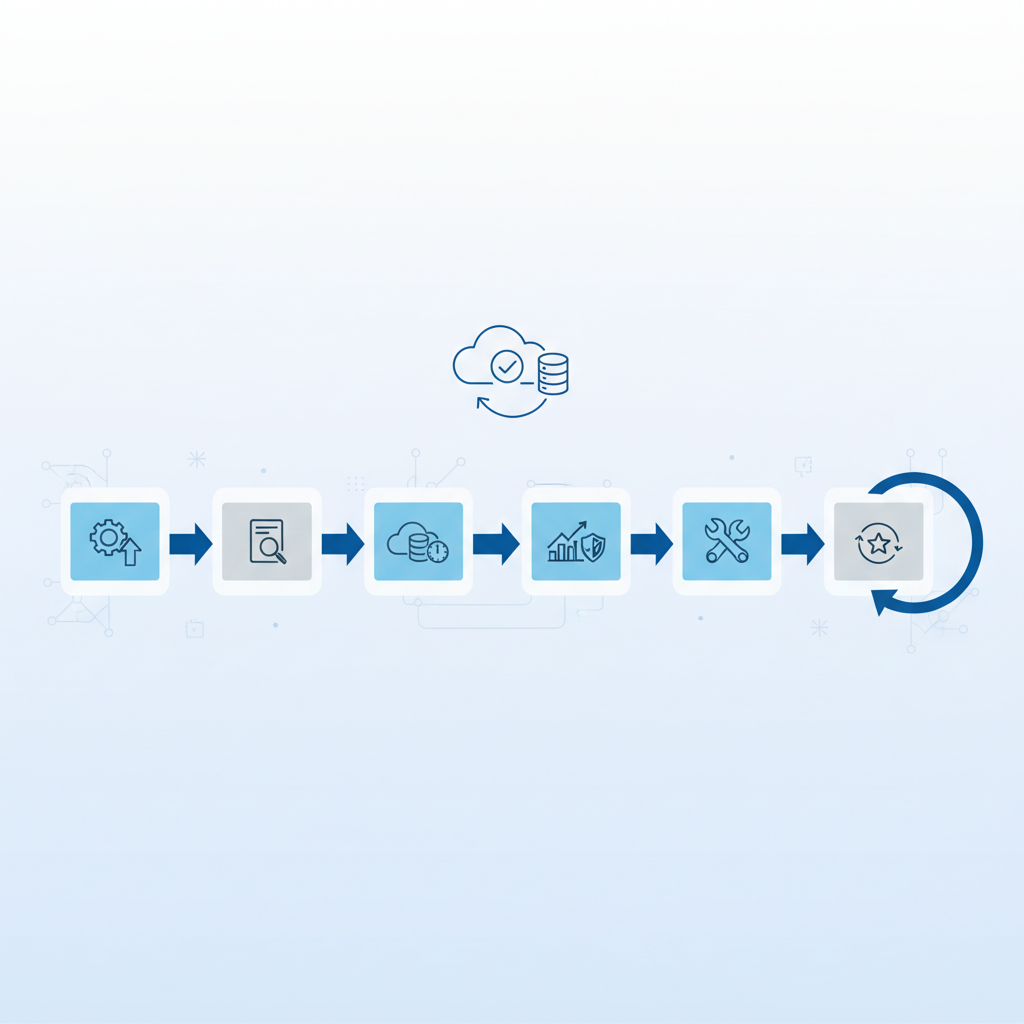
A flowchart illustrating the steps of implementing a database Cloud SLA monitoring strategy, from defining objectives to continuous improvement, with arrows indicating the flow.
Advanced database Cloud SLA Monitoring Tips and Best Practices
Moving beyond basic monitoring, advanced techniques and best practices can significantly enhance your database Cloud sla monitoring strategy. These tips focus on optimizing performance, proactively preventing issues, and leveraging cutting-edge technologies. Incorporating these practices will elevate your database service level management.
By embracing these sophisticated approaches, organizations can not only meet their SLAs but also exceed them, providing superior service delivery and gaining a competitive edge. These database Cloud sla monitoring tips draw on years of industry experience and foresight for 2026.
Proactive Capacity Planning and Scaling
Don’t wait for your database to hit resource limits before scaling. Utilize historical performance data and trend analysis from your cloud database performance monitoring tools to predict future capacity needs. Implement proactive scaling strategies, whether manual or automated, to ensure resources are available before demand spikes.
Cloud environments offer elasticity, allowing you to scale resources up or down as needed. Leverage features like auto-scaling groups or serverless database options to dynamically adjust capacity. This ensures consistent performance without over-provisioning and excessive costs.
Leveraging Automation and AI/ML for Anomaly Detection
Automate routine monitoring tasks and incident responses wherever possible. Use scripting or infrastructure-as-code tools to deploy and manage monitoring configurations consistently. Automation reduces manual error and frees up engineering teams for more complex tasks.
Integrate Artificial Intelligence (AI) and Machine Learning (ML) capabilities for anomaly detection. These technologies can identify subtle deviations from normal behavior that might be missed by static thresholds, often predicting potential issues before they cause an SLA breach. This is a key advantage for best database Cloud sla monitoring solutions.
Regular Performance Tuning and Optimization
Continuous performance tuning of your databases and applications is essential. Regularly analyze slow queries, optimize database schemas, and fine-tune indexing strategies. Even small improvements in query efficiency can have a significant impact on overall database performance and SQL database SLA compliance.
Perform periodic database health checks and reviews. Look for opportunities to optimize configurations, streamline stored procedures, and ensure efficient data access patterns. These ongoing efforts contribute significantly to overall data store SLA compliance.
Disaster Recovery and High Availability Testing
While monitoring focuses on preventing issues, prepare for the unexpected. Regularly test your disaster recovery (DR) plans to ensure they can be executed effectively and within defined recovery time objectives (RTO) and recovery point objectives (RPO). This includes failover mechanisms for high availability setups.
Verify that your monitoring tools can effectively track the state and performance of your databases during and after a DR event. This validates your ability to restore service within SLA boundaries. These database Cloud sla monitoring examples highlight practical applications.
Cross-Team Collaboration and Communication
Foster a culture of collaboration between database administrators, developers, network engineers, and application teams. Performance issues often involve multiple layers of the stack, and effective communication is crucial for rapid diagnosis and resolution. Shared understanding improves overall database service level management.
Regularly share database Cloud sla monitoring reports and insights across teams. This promotes transparency, builds collective ownership, and ensures everyone understands the impact of database performance on business outcomes.
Frequently Asked Questions About database Cloud SLA Monitoring
This section addresses common questions about database Cloud sla monitoring, providing clear and concise answers to help clarify key concepts and practices. Understanding these fundamentals is crucial for any organization looking to optimize its cloud database operations in 2026.
What is a database Cloud SLA?
A database Cloud Service Level Agreement (SLA) is a contractual commitment from a cloud provider regarding the performance and availability of their hosted database services. It specifies key metrics like uptime percentage, response times, and data durability, along with penalties for non-compliance.
Why is database Cloud SLA monitoring important?
database Cloud sla monitoring is critical because it ensures that your cloud databases consistently meet agreed-upon performance and availability targets. It helps prevent downtime, identifies performance bottlenecks, ensures data store SLA compliance, mitigates business risks, and maintains customer trust by verifying service commitments.
What are the key metrics to monitor for database Cloud SLAs?
Key metrics include database availability (uptime percentage), performance indicators like latency, throughput, and error rates, and resource utilization metrics such as CPU usage, memory consumption, disk I/O, and network throughput. These provide a holistic view of database health and compliance.
How do I choose the best database Cloud SLA monitoring tool?
To choose the best database Cloud sla monitoring tool, look for features like multi-cloud support, real-time and historical performance monitoring, customizable dashboards, intelligent alerting, and compatibility with various SQL database SLA and NoSQL SLA monitoring needs. Consider scalability and integration capabilities.
What is the difference between SQL database SLA and NoSQL SLA monitoring?
While both aim for database SLA tracking, SQL database SLA monitoring often focuses on metrics relevant to relational structures like query execution times, deadlock rates, and transaction consistency. NoSQL SLA monitoring may emphasize metrics like read/write latency for distributed operations, data replication status, and eventual consistency across clusters.
Can database Cloud SLA monitoring prevent all outages?
While robust database Cloud sla monitoring significantly reduces the likelihood and impact of outages by enabling proactive issue detection, it cannot prevent all unforeseen events. It provides the visibility and alerting mechanisms necessary for rapid response and recovery, minimizing downtime and supporting continuous improvement.
ENSURE UNINTERRUPTED SERVICE
Ensure uninterrupted service delivery and proactively prevent costly SLA breaches. Leverage our automated, real
✓ Free consultation ✓ No commitment required ✓ Trusted by experts
Conclusion: Mastering database Cloud SLA Monitoring for Future Success
In the dynamic world of cloud computing, mastering database Cloud sla monitoring is fundamental for any organization’s long-term success. It transitions the approach from reactive problem-solving to proactive performance management, ensuring your critical data infrastructure consistently meets business demands and user expectations. By embracing the strategies and best practices outlined in this database Cloud sla monitoring guide, businesses can achieve unparalleled reliability and efficiency.
Implementing a comprehensive database SLA tracking system, leveraging the best database Cloud sla monitoring tools, and continuously refining your approach are not just technical endeavors; they are strategic imperatives. For 2026 and beyond, prioritizing robust database service level management will be the cornerstone of resilient, high-performing, and compliant cloud operations.
Jacob Stålbro is a seasoned digitalization and transformation leader with over 20 years of experience, specializing in AI-driven innovation. As Head of Innovation and Co-Founder at Opsio, he drives the development of advanced AI, ML, and IoT solutions. Jacob is a sought-after speaker and webinar host known for translating emerging technologies into real business value and future-ready strategies.