Master Cloud SLA Monitoring: Essential Strategies for Uptime
March 6, 2026|1:52 PM
Unlock Your Digital Potential
Whether it’s IT operations, cloud migration, or AI-driven innovation – let’s explore how we can support your success.
Home /
Work /
Blogs /
Master Cloud SLA Monitoring: Essential Strategies for Uptime
Understanding Cloud SLA Monitoring: A Foundational Overview
Cloud computing has revolutionized how businesses operate, offering unprecedented scalability and flexibility. However, relying on external cloud providers necessitates a clear understanding and rigorous oversight of service quality. This is where the crucial practice of learn Cloud sla monitoring comes into play.
Effective monitoring ensures that the services you consume from the cloud meet the agreed-upon performance and availability standards. It acts as a vital safeguard, protecting your business operations from potential disruptions. Without robust SLA monitoring, businesses are left vulnerable to unforeseen service degradations.
What is Cloud SLA Monitoring?
Cloud Service Level Agreement (SLA) monitoring involves the continuous measurement, validation, and reporting of performance metrics defined within an SLA. These agreements legally bind cloud providers to specific levels of service quality. Monitoring provides the objective data needed to verify compliance.
The process of monitoring encompasses tracking various key performance indicators (KPIs) relevant to cloud service delivery. These often include uptime, latency, data throughput, and error rates. The goal is to ensure that the actual service performance aligns with the promised terms.
Why is learn Cloud sla monitoring Critical for Your Business?
Implementing learn Cloud sla monitoring is fundamental for maintaining business continuity and operational excellence. It offers transparency into vendor performance, allowing organizations to make informed decisions. This proactive approach helps avoid costly downtime and reputational damage.
Moreover, effective SLA monitoring provides leverage for contract negotiations and ensures accountability. If a cloud provider fails to meet their obligations, the documented evidence from monitoring supports dispute resolution and potential compensation claims. It’s an essential aspect of governance.
Benefits of Effective SLA Monitoring
Adopting a comprehensive strategy to learn Cloud sla monitoring brings numerous advantages to any organization utilizing cloud services. These benefits extend beyond simple compliance, impacting financial health and operational efficiency. Understanding these benefits is key.
Ensures Business Continuity: By detecting performance issues early, organizations can mitigate risks before they impact critical operations. This proactive stance minimizes downtime and keeps essential services running smoothly.
Optimizes Cloud Spend: Monitoring helps identify underperforming or over-provisioned resources, allowing for better resource allocation. You only pay for the performance levels you actually receive and need.
Enhances Vendor Accountability: It provides objective data to hold cloud providers accountable for their contractual obligations. This fosters a relationship built on transparency and trust, backed by verifiable metrics.
Improves User Experience: Consistent service delivery, ensured by monitoring, directly translates to a better experience for your end-users and customers. Reduced latency and higher availability are directly noticeable.
Facilitates Performance Optimization: Insights gained from monitoring data enable teams to identify bottlenecks and areas for improvement. This leads to continuous enhancement of service delivery and infrastructure.
Key Components of Cloud SLAs
To effectively understand cloud SLA monitoring, it’s essential to first grasp the core components that constitute a Service Level Agreement itself. These elements define what is promised and what is measured. Without clear definitions, monitoring becomes ambiguous.
The relationship between Service Level Indicators (SLIs), Service Level Objectives (SLOs), and Service Level Agreements (SLAs) forms the bedrock of any successful monitoring strategy. Each plays a distinct yet interconnected role. Mastering these concepts is part of the SLA monitoring basics.
Defining Service Level Objectives (SLOs)
Service Level Objectives (SLOs) are specific, measurable targets for service performance that are agreed upon with your cloud provider. They represent the desired level of service quality for a particular metric. For instance, an SLO might state “99.9% uptime for the primary database service.”
SLOs transform abstract performance goals into concrete, quantifiable benchmarks. They are crucial because they set the internal expectations for what “good” service looks like. These objectives often form the basis for internal team performance and external vendor agreements.
Understanding Service Level Indicators (SLIs)
Service Level Indicators (SLIs) are the actual metrics you use to measure the performance of your cloud services. They are the raw data points that indicate how well a service is performing against its SLOs. Examples include request latency, error rate, or system uptime percentage.
SLIs are objective and quantifiable measurements that directly reflect service health. Choosing the right SLIs is crucial for accurate monitoring; they must be relevant to the service’s function and easily collectible. Without proper SLIs, effective SLA monitoring is impossible.
Service Level Agreements (SLAs) Explained
A Service Level Agreement (SLA) is a formal contract between a cloud provider and a customer, outlining the expected level of service. It specifies the SLOs, the SLIs used to measure them, and the consequences (e.g., penalties or credits) if those objectives are not met. SLAs are legally binding.
SLAs provide a comprehensive framework for accountability and service quality assurance. They typically cover aspects like availability, performance, security, and support. A robust SLA is the ultimate goal of the entire monitoring process, ensuring service delivery and recourse.
Core Principles of learn Cloud sla monitoring
Embarking on a journey to learn Cloud sla monitoring requires adherence to several core principles that guide effective implementation. These principles ensure that monitoring efforts are not just reactive but also strategic and proactive. They are the backbone of any successful learn Cloud sla monitoring guide.
Establishing clear baselines, selecting appropriate tools, and understanding data analysis methods are paramount. These principles apply whether you are just starting with SLA monitoring basics or refining an existing system. They lay the groundwork for reliable insights.
Establishing Baselines and Metrics
Before you can effectively monitor your cloud services, you need to establish clear performance baselines. A baseline represents the normal operating performance of a service under typical load conditions. Without a baseline, it’s difficult to identify what constitutes an anomaly or degradation.
This involves collecting historical data over a period to understand usual performance ranges for your chosen SLIs. Once baselines are set, any deviation from these norms can trigger alerts, signaling potential issues. Defining precise metrics is the first step in robust monitoring.
Choosing the Right Monitoring Tools
The landscape of cloud monitoring tools is vast and constantly evolving, making the selection process critical. The right tools should align with your cloud environment, specific SLAs, and monitoring requirements. They should provide comprehensive visibility and actionable insights.
Consider factors like integration capabilities with your existing infrastructure, support for multi-cloud or hybrid environments, and the ability to customize dashboards and alerts. Robust tools are essential for the best learn Cloud sla monitoring outcomes. This decision significantly impacts the efficiency and effectiveness of your monitoring efforts.
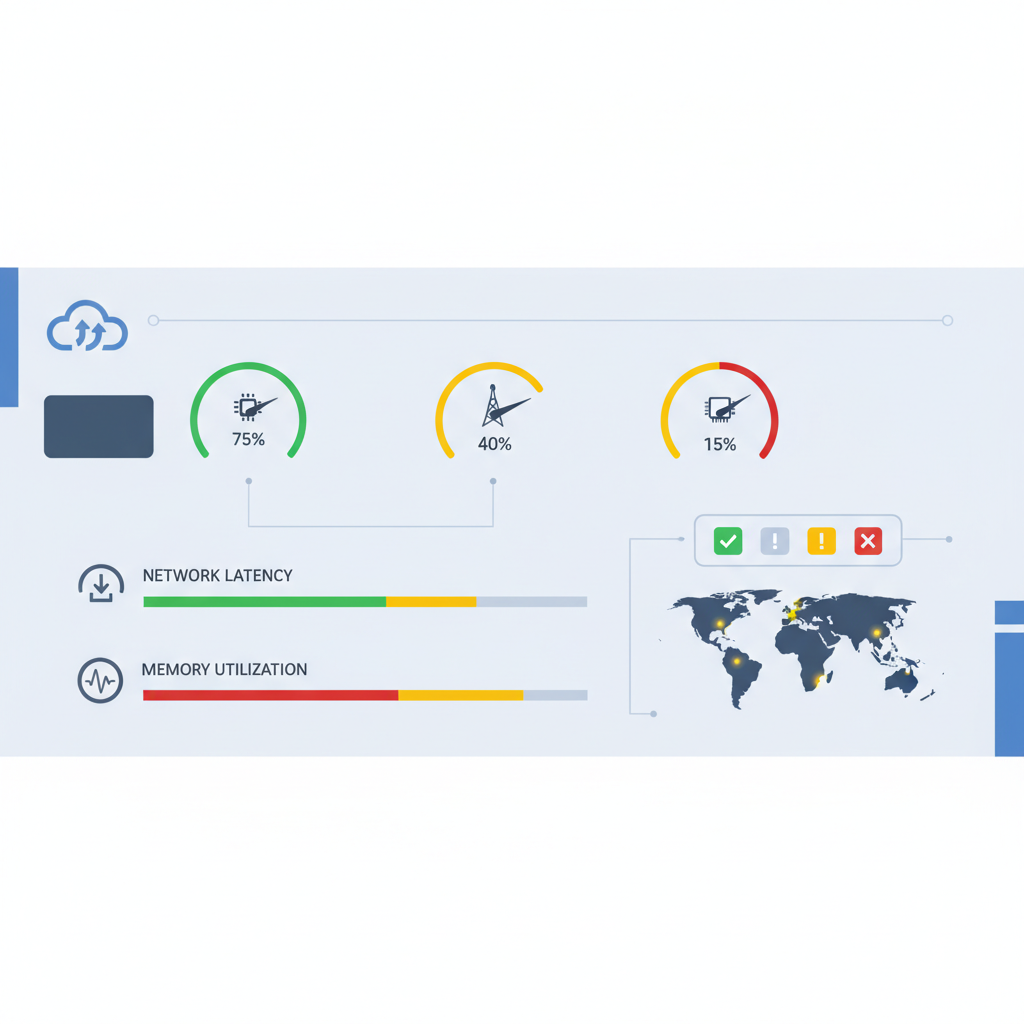
A dashboard displaying various cloud service performance metrics like CPU usage, network latency, and memory utilization, with green, yellow, and red indicators for SLA compliance.
Real-time vs. Historical Data Analysis
Effective learn Cloud sla monitoring relies on both real-time and historical data analysis. Real-time monitoring provides immediate insights into current service performance, enabling rapid response to incidents. This is critical for maintaining high availability.
Historical data, on the other hand, allows for trend analysis, capacity planning, and long-term performance optimization. It helps identify recurring patterns, understand the root causes of past issues, and refine future SLOs. A balanced approach using both types of analysis offers the most comprehensive view.
ENSURE UNINTERRUPTED SERVICE
Ensure uninterrupted service delivery and proactively prevent costly SLA breaches. Leverage our automated, real
✓ Free consultation ✓ No commitment required ✓ Trusted by experts
Practical Steps for How to Do SLA Monitoring
Successfully implementing cloud SLA monitoring involves a systematic approach, ensuring all critical aspects are covered. These steps provide a clear roadmap for organizations looking to establish or improve their monitoring capabilities. Following this structured process helps demystify how to do SLA monitoring.
Each step builds upon the previous one, leading to a robust and reliable monitoring system. This section offers a comprehensive framework, providing learn Cloud sla monitoring examples and actionable advice for each stage. It serves as a practical guide.
Step 1: Identify Critical Services and Dependencies
Begin by cataloging all your cloud services and identifying which ones are critical to your business operations. This involves understanding their purpose, their impact on end-users, and any dependencies they have on other services, both cloud and on-premise. A clear understanding of your service landscape is crucial.
Prioritize services based on their business impact. A failure in a highly critical service will have a far greater consequence than a disruption in a non-essential one. This prioritization helps allocate monitoring resources effectively and focus on what truly matters.
Step 2: Define and Document SLAs
Collaborate with your cloud providers and internal stakeholders to clearly define and document your Service Level Agreements. Ensure that these SLAs include specific, measurable SLOs and the corresponding SLIs. Ambiguity here can lead to disputes and ineffective monitoring.
Beyond external provider agreements, consider defining internal SLAs for different departments or applications. This fosters a culture of accountability internally and ensures everyone understands performance expectations. Clear documentation is vital for compliance.
Step 3: Implement Monitoring Solutions
Based on your identified critical services and defined SLAs, select and deploy appropriate monitoring tools. These tools should be capable of collecting the necessary SLI data from your cloud environment. Ensure they integrate seamlessly with your cloud provider’s APIs and other relevant systems.
Configuration is key in this step. Set up your monitoring solution to collect data at the right intervals, from the correct endpoints, and with the necessary granularity. This forms the technical backbone of your learn Cloud sla monitoring strategy.
Step 4: Collect and Analyze Data
Once your monitoring solutions are in place, start collecting data on your chosen SLIs. Continuously gather performance metrics such as availability, response times, error rates, and resource utilization. This data forms the basis for evaluating SLA compliance.
Regularly analyze this collected data to identify trends, performance anomalies, and potential breaches of your SLOs. Use dashboards and reports to visualize key metrics and make the information easily digestible for various stakeholders. Data analysis transforms raw data into actionable insights.
Step 5: Alerting and Incident Management
Establish a robust alerting system that notifies relevant teams when SLIs deviate from established thresholds or baselines. Alerts should be actionable, providing enough context to help resolve the issue quickly. Define clear escalation paths for different types of incidents.
Integrate your monitoring system with your incident management tools. This ensures that detected issues are automatically logged, assigned, and tracked through to resolution. Prompt and efficient incident management is crucial for minimizing the impact of service degradations.
Step 6: Regular Review and Optimization
SLA monitoring is not a set-it-and-forget-it process. Regularly review your SLAs, SLOs, and monitoring strategy to ensure they remain relevant to your evolving business needs and cloud landscape. Cloud environments are dynamic, so your monitoring must adapt.
Analyze historical data and post-mortem reports to identify areas for improvement in both your services and your monitoring processes. This continuous feedback loop drives optimization, making your learn Cloud sla monitoring more effective over time. Embrace a culture of continuous improvement.
SLA Monitoring Best Practices and learn Cloud sla monitoring tips
To truly excel in learn Cloud sla monitoring, organizations should adopt a set of best practices that elevate their approach beyond basic tracking. These tips focus on proactive measures, comprehensive coverage, and clear communication. They contribute to the best learn Cloud sla monitoring outcomes.
Implementing these practices helps ensure that your cloud services consistently meet or exceed expectations. These strategies are born from extensive experience in managing complex cloud environments. They are crucial for sustained success.
Proactive vs. Reactive Monitoring
While reactive monitoring addresses issues after they occur, the best approach to learn Cloud sla monitoring is predominantly proactive. Proactive monitoring involves setting up predictive analytics and early warning systems to detect potential problems before they impact users. This includes monitoring resource utilization, capacity trends, and anomaly detection.
By identifying subtle shifts in performance or resource consumption, you can often intervene and mitigate risks before a full-blown outage. This shift from reactive firefighting to proactive prevention saves significant time and resources. Implement predictive analytics to anticipate potential issues.
Granularity of Metrics
The level of detail in your collected metrics significantly impacts the insights you can gain. While aggregate metrics provide a high-level overview, granular metrics (e.g., per-user, per-transaction, or per-region data) offer deeper diagnostic capabilities. Higher granularity allows for precise problem identification.
Strive for a balance between collecting sufficient detail for troubleshooting and avoiding data overload. Too much granularity can be overwhelming and resource-intensive, but too little will hinder root cause analysis. Adjust granularity based on the criticality of the service.
Communication and Reporting
Clear and consistent communication of SLA performance is vital for all stakeholders. This includes regular reports for management, detailed performance dashboards for technical teams, and transparent updates for end-users during incidents. Effective communication builds trust and alignment.
Reports should clearly indicate compliance status, highlight any breaches, and explain the impact. They should also provide insights into ongoing performance trends and any actions taken to improve service quality. Transparency ensures everyone is informed.
Automating Workflows
Manual monitoring and incident response can be slow and error-prone. Automate as many aspects of your SLA monitoring workflow as possible. This includes automated data collection, alert generation, incident creation in ITSM systems, and even automated remediation actions for common issues.
Automation reduces human error, speeds up response times, and frees up your technical teams to focus on more complex problems. Look for opportunities to integrate your monitoring tools with orchestration and automation platforms. Automate repetitive tasks to enhance efficiency and accuracy.
Challenges and Solutions in Cloud SLA Monitoring
Despite its critical importance, learn Cloud sla monitoring is not without its challenges. Cloud environments introduce complexities that can make traditional monitoring approaches insufficient. Addressing these challenges is key to effective and reliable monitoring.
Understanding these hurdles and implementing appropriate solutions is a crucial part of developing expertise in this field. Organizations must be prepared to adapt their strategies to the unique characteristics of cloud computing.
Complexity of Cloud Environments
Modern cloud environments are dynamic, distributed, and often multi-faceted, involving a mix of IaaS, PaaS, and SaaS components. This inherent complexity makes comprehensive SLA monitoring challenging, as services can span multiple regions, providers, and technologies. Tracing performance across such an environment is difficult.
Solution: Adopt monitoring solutions that offer end-to-end visibility across your entire cloud footprint. Leverage distributed tracing, synthetic monitoring, and API monitoring to get a holistic view of service performance. Centralized dashboards are essential.
Data Volume and Velocity
Cloud services generate massive volumes of telemetry data at high velocity, including logs, metrics, and traces. Processing, storing, and analyzing this data effectively to identify SLA compliance issues can be overwhelming. Traditional systems may struggle with the scale.
Solution: Utilize scalable monitoring platforms designed for cloud-native observability. Employ data filtering, aggregation, and anomaly detection techniques to focus on relevant information. Leverage AI/ML-driven insights to cut through the noise.
Integration with Existing Systems
Many organizations have existing on-premise monitoring tools and IT service management (ITSM) systems. Integrating new cloud SLA monitoring solutions with these legacy systems can be complex, leading to data silos and inefficient workflows. A fragmented view hinders effective management.
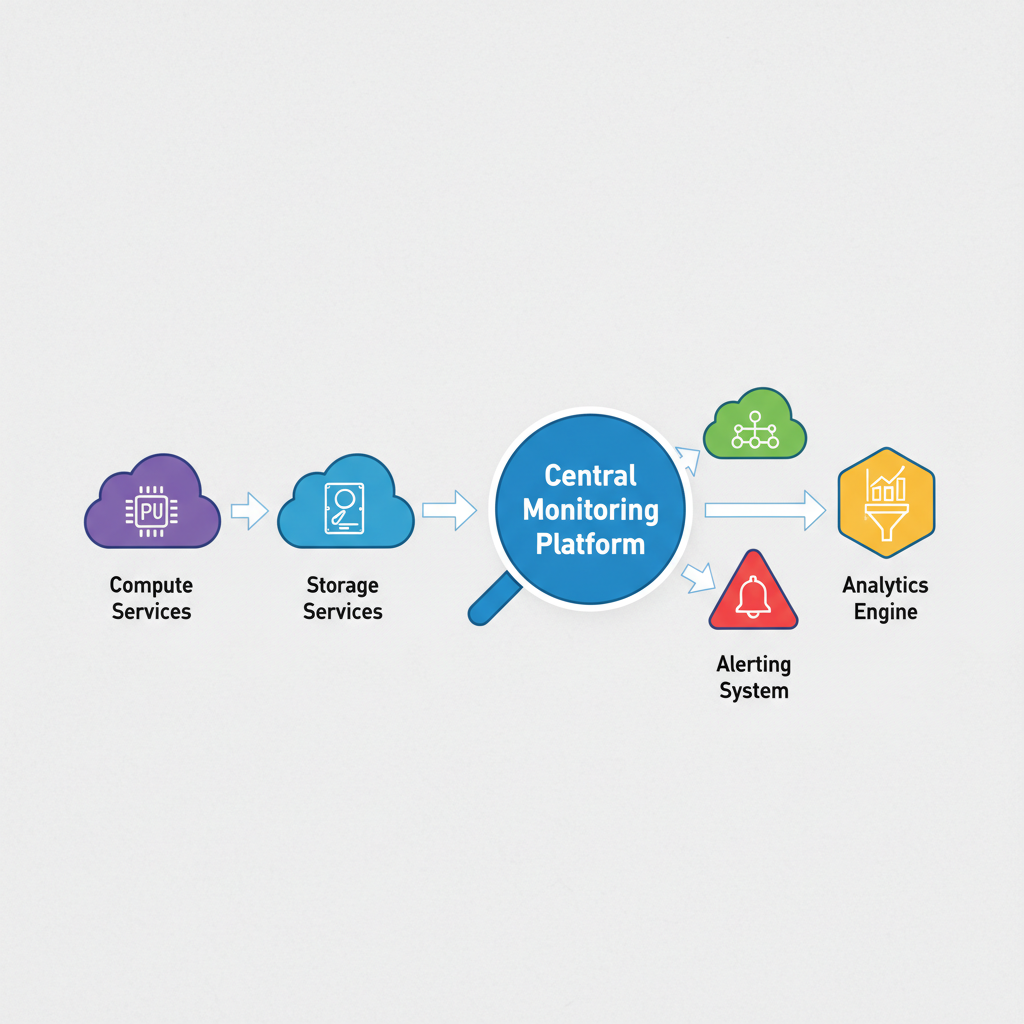
A diagram showing various cloud services (e.g., compute, storage, networking) connected to a central monitoring platform, which then feeds data to an analytics engine and an alerting system.
Solution: Prioritize monitoring tools that offer robust APIs and connectors for seamless integration with your current IT ecosystem. Consider a unified observability platform that can ingest data from both cloud and on-premise sources. This creates a single pane of glass.
Educational Resources for SLA and Training for Cloud SLA
For individuals and teams looking to deepen their expertise, a wealth of educational resources and training for cloud SLA monitoring is available. Investing in knowledge and skills is paramount for mastering this critical domain. These resources can help you build expertise.
From structured courses to community-driven learning, various avenues exist to enhance your understanding and practical application of monitoring principles. Continuous learning is essential in the fast-evolving cloud landscape. Seek out the best learn Cloud sla monitoring materials.
Online Courses and Certifications
Many reputable platforms offer specialized online courses on cloud computing, DevOps, and site reliability engineering (SRE) that include modules on SLA monitoring. Certifications from cloud providers (e.g., AWS, Azure, Google Cloud) often cover aspects of monitoring and operations.
These structured programs provide in-depth knowledge and hands-on experience, making them excellent educational resources for SLA. They can help you gain a formal understanding and validation of your skills. Explore courses from leading industry experts.
Industry Whitepapers and Blogs
Stay updated with the latest trends and insights by regularly consulting whitepapers from cloud providers and monitoring solution vendors. Industry blogs often provide practical advice, case studies, and tutorials on specific aspects of learn Cloud sla monitoring.
These resources offer valuable real-world perspectives and deep dives into technical challenges and solutions. They are often updated frequently, providing the most current information. They are excellent for keeping your knowledge current.
Community Forums and Peer Learning
Engaging with online communities, forums (like Stack Overflow, Reddit’s cloud subreddits), and professional networks can be an invaluable way to learn. You can ask questions, share experiences, and learn from the collective wisdom of practitioners. Peer learning offers practical insights.
Participating in webinars, conferences, and local meetups also provides opportunities for networking and knowledge exchange. These interactions offer unique insights into learn Cloud sla monitoring examples and common challenges faced by others.
Frequently Asked Questions
What is the difference between SLI, SLO, and SLA?
A Service Level Indicator (SLI) is a specific metric used to measure service performance, such as uptime percentage. A Service Level Objective (SLO) is a target value for one or more SLIs, like “99.9% uptime.” A Service Level Agreement (SLA) is the formal contract that includes the SLOs, SLIs, and the consequences of not meeting them.
Why is proactive Cloud SLA monitoring important?
Proactive Cloud SLA monitoring allows organizations to detect and address potential performance issues before they impact end-users or breach contractual agreements. It helps prevent downtime, maintain customer satisfaction, and ensure business continuity, moving beyond just reacting to problems. This approach minimizes the negative impact on operations and reputation.
Can I monitor multi-cloud environments for SLAs?
Yes, monitoring multi-cloud environments for SLAs is not only possible but increasingly necessary. It requires advanced monitoring solutions that can integrate with various cloud providers and provide a unified view of performance across different platforms. Such tools consolidate data and provide insights regardless of where your services reside.
What tools are commonly used for learn Cloud sla monitoring?
Commonly used tools for learn Cloud sla monitoring include cloud provider-native monitoring services (e.g., AWS CloudWatch, Azure Monitor, Google Cloud Monitoring), third-party observability platforms (e.g., Datadog, New Relic, Dynatrace), and open-source solutions (e.g., Prometheus, Grafana). The choice depends on your specific cloud architecture and needs.
How often should SLAs be reviewed?
SLAs should be reviewed regularly, typically annually or semi-annually, to ensure they remain relevant to current business needs and technological changes. Significant changes in cloud usage, business objectives, or provider offerings may also necessitate an earlier review. This ongoing process ensures agreements stay aligned with operational realities.
ENSURE UNINTERRUPTED SERVICE
Ensure uninterrupted service delivery and proactively prevent costly SLA breaches. Leverage our automated, real
✓ Free consultation ✓ No commitment required ✓ Trusted by experts
Conclusion
Mastering learn Cloud sla monitoring is no longer optional but a strategic imperative for any organization leveraging cloud services. From understanding the foundational concepts of SLIs, SLOs, and SLAs to implementing robust monitoring practices, a comprehensive approach is vital. The insights gained from effective monitoring empower businesses to optimize performance, manage costs, and uphold vendor accountability.
By adopting best practices, embracing automation, and continuously learning through available educational resources, you can build a resilient and high-performing cloud infrastructure. The journey to the best learn Cloud sla monitoring is an ongoing one, demanding constant vigilance and adaptation to the dynamic nature of cloud computing. Invest in these capabilities to secure your digital future.
Jacob Stålbro is a seasoned digitalization and transformation leader with over 20 years of experience, specializing in AI-driven innovation. As Head of Innovation and Co-Founder at Opsio, he drives the development of advanced AI, ML, and IoT solutions. Jacob is a sought-after speaker and webinar host known for translating emerging technologies into real business value and future-ready strategies.