In today’s dynamic digital landscape, cloud services underpin much of modern business operations. Ensuring these services consistently meet performance expectations is paramount for business continuity and user satisfaction. Effective Cloud sla monitoring tips are not just helpful; they are absolutely essential for maintaining service reliability. This comprehensive guide will explore the best practices for cloud SLA, offering expert tips for SLA and practical Cloud sla monitoring tips to optimize your cloud environment.
Understanding and implementing robust SLA monitoring advice can significantly impact your operational efficiency and customer trust. We will delve into various strategies, from defining key metrics to leveraging advanced tools, all designed to help you master SLA tracking recommendations. By the end of this guide, you will have a clear roadmap for enhancing your cloud performance monitoring tricks and securing your service level agreements.
Understanding Cloud Service Level Agreements (SLAs)
A Cloud Service Level Agreement (SLA) is a contract between a cloud service provider and a customer, outlining the expected level of service. These agreements typically cover performance, availability, and responsibilities, providing a crucial framework for cloud service delivery. Comprehending the nuances of your cloud SLAs is the foundational step for any effective Cloud sla monitoring tips strategy.
SLAs are designed to set clear expectations and provide recourse if those expectations are not met. They specify measurable metrics, such as uptime percentages, response times, and data recovery objectives. Without a well-defined SLA, it becomes challenging to hold providers accountable or to manage internal expectations regarding cloud service performance.
Components of a Cloud SLA
Cloud SLAs typically encompass several key areas, each requiring careful attention during monitoring. These components form the basis of what you need to track to ensure compliance. A thorough understanding of these elements is vital for effective SLA management guidance.
Availability metrics, often expressed as a percentage of uptime, are central to any SLA. This includes both planned and unplanned downtime. Performance metrics cover aspects like network latency, throughput, and application response times, directly impacting user experience.
Data integrity and security assurances are also critical components, outlining how data is protected, backed up, and restored. Disaster recovery plans and recovery time objectives (RTO) and recovery point objectives (RPO) specify how quickly services can be restored and how much data loss is acceptable after an incident. Support and issue resolution terms dictate response times for technical issues, outlining communication channels and escalation procedures.
Why Cloud SLAs are Crucial
Cloud SLAs serve as the bedrock for reliable cloud service consumption. They provide a legal and operational framework that protects both the service consumer and the provider. Without clear SLAs, businesses would operate with significant uncertainty regarding their cloud infrastructure’s stability.
These agreements instill confidence, allowing organizations to plan their operations knowing the expected level of service. They also define financial penalties or credits for non-compliance, incentivizing providers to maintain high standards. Robust SLA tracking recommendations are therefore essential for validating these agreements.
Why Effective Cloud SLA Monitoring is Essential
Effective Cloud sla monitoring tips go beyond mere compliance checks; they are fundamental to proactive service management and continuous improvement. Monitoring ensures that the promises made in an SLA are consistently upheld, translating directly into tangible business benefits. This involves a diligent approach to SLA monitoring advice, ensuring all key metrics are under constant observation.
Without vigilant monitoring, businesses risk unforeseen outages, performance bottlenecks, and potential financial losses due to missed service levels. Proactive monitoring transforms reactive problem-solving into predictive maintenance, keeping operations smooth and efficient. It also helps in identifying trends and potential issues before they escalate into major problems, making it a cornerstone of best practices for cloud SLA.
Ensuring Business Continuity
Business continuity is directly tied to the reliability and performance of cloud services. Disruptions can lead to significant financial losses, reputational damage, and customer dissatisfaction. Effective Cloud sla monitoring tips provide the visibility needed to avert such scenarios.
By continuously tracking critical metrics against SLA thresholds, organizations can detect anomalies early. This allows for prompt intervention, minimizing downtime and ensuring that essential business processes remain operational. Robust cloud performance monitoring tricks are therefore indispensable for maintaining uninterrupted service delivery.
Optimizing Cost and Performance
Monitoring cloud SLAs also plays a crucial role in cost optimization and performance tuning. Understanding how your cloud resources are performing relative to their cost helps in making informed decisions. This allows businesses to avoid over-provisioning or under-provisioning resources, ensuring optimal expenditure.
Tracking performance against SLA targets reveals areas where services might be underperforming or where resources are being underutilized. This data empowers IT teams to fine-tune configurations, scale resources appropriately, and negotiate better terms with providers based on actual usage and performance. These expert tips for SLA help refine resource allocation.
Maintaining Vendor Accountability
One of the primary reasons for robust Cloud sla monitoring tips is to maintain vendor accountability. Cloud providers commit to specific service levels, and monitoring provides the objective data to verify these commitments. It serves as an unbiased audit trail of service performance.
Should an SLA be breached, comprehensive monitoring data provides the necessary evidence to initiate service credits or discussions with the provider. This transparency fosters a healthier relationship based on trust and clear performance metrics. Strong SLA tracking recommendations are crucial for this aspect.
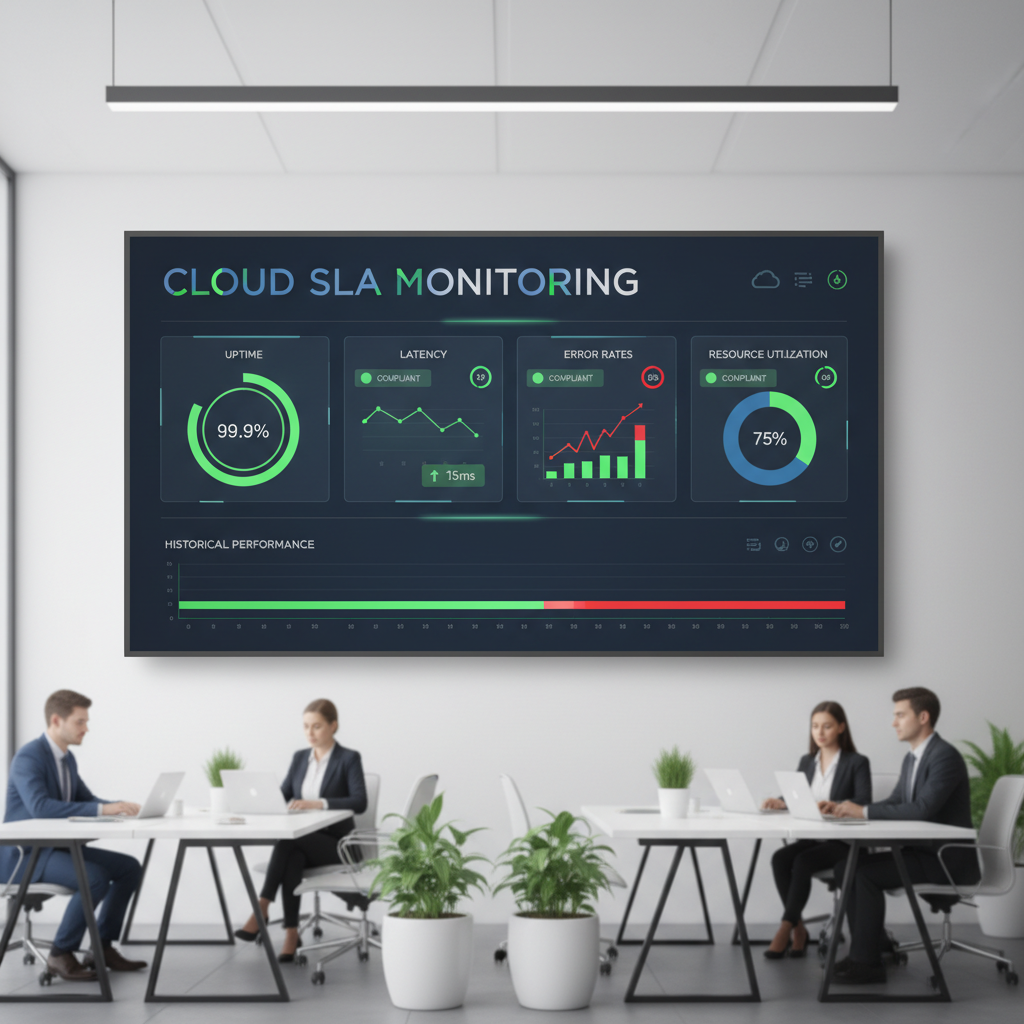
A dashboard displaying various cloud SLA monitoring metrics like uptime, latency, error rates, and resource utilization, with a clear indication of green (compliant) and red (breach) status indicators.
ENSURE UNINTERRUPTED SERVICE
Ensure uninterrupted service delivery and proactively prevent costly SLA breaches. Leverage our automated, real
✓ Free consultation ✓ No commitment required ✓ Trusted by experts
Key Cloud sla monitoring tips for Success
Implementing successful cloud SLA monitoring requires a strategic approach, blending technology with well-defined processes. These best Cloud sla monitoring tips provide actionable guidance to ensure your cloud services consistently meet or exceed expectations. Each tip emphasizes a specific aspect of effective SLA management guidance.
Adopting a comprehensive strategy that integrates these Cloud sla monitoring tips examples into your daily operations will yield significant benefits. From setting up foundational metrics to advanced analysis, each step contributes to a more resilient and high-performing cloud environment. This section offers practical cloud performance monitoring tricks.
Define Clear Metrics and Thresholds
The cornerstone of any effective monitoring strategy is defining clear, measurable metrics and precise thresholds. Without these, determining whether an SLA is being met becomes subjective and difficult to quantify. This initial step is critical for all SLA monitoring advice.
Identify key performance indicators (KPIs) relevant to your business operations and align them directly with your cloud SLAs. For example, if your SLA guarantees 99.9% uptime, set a threshold that triggers an alert well before this percentage is at risk. Clearly defined metrics enable objective evaluation and quick identification of issues.
Leverage Automated Monitoring Tools
Manual monitoring is impractical and error-prone in complex cloud environments. Automated monitoring tools are indispensable for continuous, real-time tracking of SLA metrics. These tools can collect vast amounts of data efficiently.
These platforms offer capabilities like performance dashboards, historical data analysis, and customizable reporting. Investing in robust monitoring solutions that integrate seamlessly with your cloud providers is a key expert tip for SLA. Automation ensures consistent data collection and reduces the burden on IT staff.
Implement Proactive Alerting
Monitoring data is only useful if it leads to timely action. Proactive alerting is a critical component of effective Cloud sla monitoring tips. Configure alerts to notify relevant personnel immediately when performance metrics approach or cross predefined thresholds.
Alerts should be tiered based on severity, ensuring that critical issues receive immediate attention while minor deviations can be addressed systematically. Integrating these alerts with incident management systems streamlines the response process. This ensures that potential SLA breaches are addressed before they impact users.
Establish Baselines and Trend Analysis
Understanding what constitutes “normal” performance for your cloud services is vital for effective anomaly detection. Establish performance baselines by collecting data over a significant period under typical operating conditions. These baselines provide a reference point for all future monitoring.
Trend analysis involves examining historical data to identify patterns, seasonality, and long-term performance shifts. This helps in predicting potential issues before they occur, allowing for proactive scaling or optimization. These best practices for cloud SLA enable predictive maintenance.
Monitor End-to-End User Experience
While server-side metrics are important, the ultimate measure of service quality is the end-user experience. Implement monitoring that simulates user interactions or collects data directly from user devices. This provides a holistic view of service performance.
Focus on metrics like page load times, transaction success rates, and application responsiveness from various geographical locations. This comprehensive approach ensures that even if backend systems appear healthy, any client-side issues affecting users are identified. Such Cloud sla monitoring tips tips are crucial for customer satisfaction.
Regularly Review and Update SLAs
Cloud environments are constantly evolving, with new services, features, and configurations emerging regularly. Your SLAs, and consequently your monitoring strategy, must keep pace with these changes. Regularly review your agreements to ensure they remain relevant.
Schedule periodic meetings with both internal stakeholders and your cloud service provider to discuss performance trends, identify areas for improvement, and update SLA terms if necessary. This iterative process is a core part of effective SLA management guidance. Static SLAs can quickly become outdated and ineffective.
A flowchart illustrating the continuous process of cloud SLA monitoring, from data collection and analysis to alerting, incident response, and regular SLA review and update cycles.
Understand Cloud Provider Dashboards
Cloud providers typically offer their own monitoring dashboards and tools. Familiarize yourself thoroughly with these native capabilities. They often provide valuable insights into infrastructure performance, resource utilization, and compliance status specific to their platform.
While third-party tools offer aggregated views, provider-specific dashboards can offer granular detail and real-time metrics that are essential for deep-diving into issues. Integrate data from these dashboards with your own monitoring solutions for a complete picture. This is a fundamental aspect of Cloud sla monitoring tips.
Use Synthetic Monitoring
Synthetic monitoring involves simulating user interactions with your cloud applications from various locations globally. This proactive approach helps in identifying performance issues before real users encounter them. It’s an excellent way to test the availability and responsiveness of your services around the clock.
By setting up synthetic transactions, you can continuously measure critical paths, such as login processes or checkout flows. This provides consistent, predictable data that is invaluable for benchmarking and early detection of degradations. Incorporating synthetic monitoring is one of the expert tips for SLA.
Focus on Data Security and Compliance
Cloud SLAs often include clauses related to data security, privacy, and regulatory compliance. Your monitoring strategy must extend to these critical areas to ensure continuous adherence. This includes monitoring access logs, security configurations, and audit trails.
Implement tools that scan for vulnerabilities, track changes to security policies, and ensure data encryption standards are met. Non-compliance can lead to severe penalties and reputational damage. These comprehensive Cloud sla monitoring tips address all facets of cloud service delivery.
Plan for Incident Response and Recovery
Even with the best monitoring in place, incidents can still occur. A well-defined incident response and disaster recovery plan is crucial for mitigating the impact of an SLA breach. Your monitoring data should feed directly into these plans.
The plan should outline clear steps for identifying, escalating, resolving, and documenting incidents. It should also detail backup and recovery procedures, along with communication protocols for informing stakeholders. Effective SLA management guidance extends to how you react when things go wrong.
Best Practices for Cloud SLA Implementation
Beyond individual tips, a holistic approach to implementing Cloud sla monitoring tips ensures long-term success. These overarching best practices for cloud SLA integrate monitoring into the broader organizational strategy. They provide a framework for sustained excellence in cloud operations.
Successful implementation relies on thoughtful planning, careful tool selection, and effective communication across teams. It transforms monitoring from a technical task into a strategic enabler for the business. This section provides critical SLA tracking recommendations for organizational success.
Selecting the Right Monitoring Tools
Choosing the appropriate monitoring tools is a pivotal decision. The ideal solution should offer comprehensive coverage, scalability, and seamless integration with your existing cloud environment and IT ecosystem. Consider tools that support multi-cloud or hybrid cloud scenarios if applicable.
Evaluate tools based on their ability to provide real-time data, customizable dashboards, robust alerting capabilities, and historical reporting. Look for solutions that offer a unified view across different services and providers. This critical step sets the stage for effective cloud performance monitoring tricks.
Integrating Monitoring with Operations
For Cloud sla monitoring tips to be truly effective, they must be deeply integrated into your daily IT operations and DevOps pipelines. Monitoring should not be an isolated function but rather an intrinsic part of how you design, deploy, and manage cloud services.
This involves incorporating monitoring checks into CI/CD pipelines, automating remediation actions where possible, and using monitoring data to drive continuous improvement. Establishing a feedback loop between monitoring insights and development teams is essential. This fosters a culture of proactive management.
Reporting and Communication
Regular, transparent reporting on SLA performance is vital for all stakeholders. This includes both internal teams (IT, management) and external parties (customers, if applicable). Reports should clearly articulate compliance status, highlight any breaches, and detail corrective actions taken.
Effective communication ensures everyone is aware of the cloud service health and any potential risks. Presenting data in an easy-to-understand format, such as dashboards or summary reports, helps in making informed decisions. Clear SLA management guidance includes how performance is communicated.
Challenges in Cloud SLA Monitoring
Despite the numerous benefits, implementing and maintaining effective Cloud sla monitoring tips comes with its own set of challenges. Cloud environments are inherently complex, and navigating these complexities requires careful consideration and robust strategies. Recognizing these hurdles is the first step towards overcoming them.
Addressing these challenges demands a combination of advanced tooling, expert knowledge, and a commitment to continuous adaptation. It’s not just about what to monitor, but how to effectively manage the monitoring process itself.
Complexity of Cloud Environments
Modern cloud architectures are highly distributed, dynamic, and often involve multiple services from different providers. This inherent complexity makes comprehensive SLA monitoring a significant challenge. Pinpointing the root cause of an issue within such an intricate web of dependencies can be difficult.
Each cloud service, whether IaaS, PaaS, or SaaS, has its own unique monitoring requirements and metrics. Integrating data from these diverse sources into a single, cohesive view demands sophisticated tools and expertise. This is where best practices for cloud SLA become crucial.
Data Granularity and Standardization
Different cloud providers and services often present monitoring data with varying levels of granularity and in different formats. Standardizing this disparate data for consistent analysis and reporting is a common hurdle. A lack of uniform metrics can complicate cross-platform comparisons.
Ensuring that you are collecting the right level of detail without being overwhelmed by data noise is a delicate balance. Aggregating and normalizing data from various sources requires robust data processing capabilities. These expert tips for SLA emphasize data management.
Multi-Cloud and Hybrid Cloud Scenarios
Many organizations operate in multi-cloud or hybrid cloud environments, utilizing services from several public cloud providers alongside private infrastructure. This further magnifies the complexity of SLA monitoring. Each platform has its own set of APIs, tools, and unique SLA terms.
Achieving a unified view of performance and compliance across these heterogeneous environments is one of the biggest challenges. It necessitates advanced monitoring solutions capable of spanning diverse infrastructures. These Cloud sla monitoring tips are even more critical in such complex setups.
Future of Cloud SLA Monitoring
The landscape of Cloud sla monitoring tips is continuously evolving, driven by advancements in technology and increasing demands for resilient cloud services. Emerging trends promise to make monitoring even more intelligent, proactive, and integrated. Embracing these innovations will be key to future success.
The focus is shifting towards more predictive and autonomous monitoring systems, reducing manual effort and improving reaction times. These developments are shaping the next generation of cloud performance monitoring tricks.
AI/ML in Monitoring
Artificial intelligence and machine learning are revolutionizing cloud SLA monitoring. AI/ML algorithms can analyze vast datasets to identify subtle patterns, predict potential outages, and detect anomalies that human operators might miss. This enables truly proactive problem-solving.
These technologies can also automate root cause analysis, reducing the time to resolution for complex issues. Predictive analytics powered by AI/ML will become a standard component of advanced SLA management guidance.
Observability Platforms
Observability platforms are gaining prominence, offering a more comprehensive approach than traditional monitoring. While monitoring tells you “if” something is broken, observability helps you understand “why” it broke, even for unknown unknowns.
These platforms integrate metrics, logs, and traces from across the entire cloud stack, providing deep insights into system behavior. This holistic view is crucial for troubleshooting complex distributed systems and ensuring continuous SLA compliance. These advanced SLA tracking recommendations represent the cutting edge.
Frequently Asked Questions
This section addresses common inquiries regarding Cloud sla monitoring tips, offering clear and concise answers to help you better understand and implement effective strategies.
What is a Cloud SLA and why is it important to monitor?
A Cloud SLA is a formal agreement defining the service level a cloud provider guarantees to a customer. Monitoring it is crucial to ensure that the provider delivers on its promises regarding uptime, performance, and security. It provides a basis for accountability and ensures your business operations remain uninterrupted.
What are the most critical metrics to monitor for Cloud SLAs?
The most critical metrics often include availability (uptime percentage), performance (latency, response times, throughput), data integrity (backup success rates, recovery times), and security events. These directly impact user experience and business continuity. Monitoring these metrics effectively is a core Cloud sla monitoring tips.
How can I proactively detect potential SLA breaches?
Proactive detection involves setting up clear thresholds and robust alerting mechanisms. Utilizing automated monitoring tools, establishing performance baselines, and employing synthetic monitoring helps identify deviations or degradations before they lead to an actual breach. Trend analysis also aids in predicting issues.
What role do automated tools play in Cloud SLA monitoring?
Automated tools are indispensable for continuous, real-time data collection, analysis, and alerting in complex cloud environments. They provide comprehensive dashboards, automate routine checks, and reduce the likelihood of human error, making monitoring scalable and efficient. They are key to effective SLA management guidance.
How often should I review my Cloud SLAs and monitoring strategy?
Cloud environments are dynamic, so it’s advisable to review your SLAs and monitoring strategy periodically, perhaps quarterly or bi-annually. This ensures they remain relevant to your evolving business needs, cloud deployments, and provider offerings. Regular review is a vital best practice for cloud SLA.
Can I monitor SLAs across multiple cloud providers?
Yes, many advanced monitoring solutions are designed to aggregate data from multi-cloud and hybrid cloud environments. These tools provide a unified view across different providers, enabling consistent SLA tracking and performance analysis regardless of where your services reside. This is a crucial aspect of best Cloud sla monitoring tips in complex setups.
ENSURE UNINTERRUPTED SERVICE
Ensure uninterrupted service delivery and proactively prevent costly SLA breaches. Leverage our automated, real
✓ Free consultation ✓ No commitment required ✓ Trusted by experts
Conclusion
Mastering Cloud sla monitoring tips is no longer optional; it’s a fundamental requirement for any organization leveraging cloud services. From establishing clear metrics and leveraging automated tools to understanding end-user experience and planning for incidents, a comprehensive approach is vital. By adopting the expert tips for SLA outlined in this guide, businesses can ensure their cloud investments consistently deliver the promised performance and reliability.
Effective SLA management guidance empowers organizations to maintain vendor accountability, optimize resource utilization, and ultimately, deliver superior service to their customers. Embrace these best practices for cloud SLA to build a resilient, high-performing cloud ecosystem that drives your business forward.
Jacob Stålbro is a seasoned digitalization and transformation leader with over 20 years of experience, specializing in AI-driven innovation. As Head of Innovation and Co-Founder at Opsio, he drives the development of advanced AI, ML, and IoT solutions. Jacob is a sought-after speaker and webinar host known for translating emerging technologies into real business value and future-ready strategies.