Effortless Replatforming: Boost Your Business Technology
March 10, 2026|9:31 AM
Unlock Your Digital Potential
Whether it’s IT operations, cloud migration, or AI-driven innovation – let’s explore how we can support your success.
Home /
Work /
Blogs /
Effortless Replatforming: Boost Your Business Technology
Understanding Replatforming: A Comprehensive Guide
In today’s fast-paced digital landscape, businesses constantly seek ways to optimize their operations and enhance user experiences. One critical strategy gaining traction is replatforming, a transformative process that can redefine a company’s technological foundation. This comprehensive guide will delve into the intricacies of replatforming, offering insights into its meaning, benefits, and practical steps for a successful transition.
Replatforming involves migrating an existing software application or system to a completely new underlying platform. This strategic move is not merely an upgrade; it often entails a significant architectural overhaul to leverage modern technologies, improve scalability, or reduce operational costs. Understanding the nuances of replatforming is crucial for any organization considering such a significant technological shift.
What is Replatforming? The Core Concept
At its heart, replatforming refers to the act of moving an application from one platform to another, often with minimal changes to its core features and code. Unlike a complete re-architecting, which rebuilds the application from scratch, replatforming focuses on adapting the existing application to function optimally within a new environment. This approach allows businesses to harness new platform capabilities without the immense time and resource investment of a full rewrite.
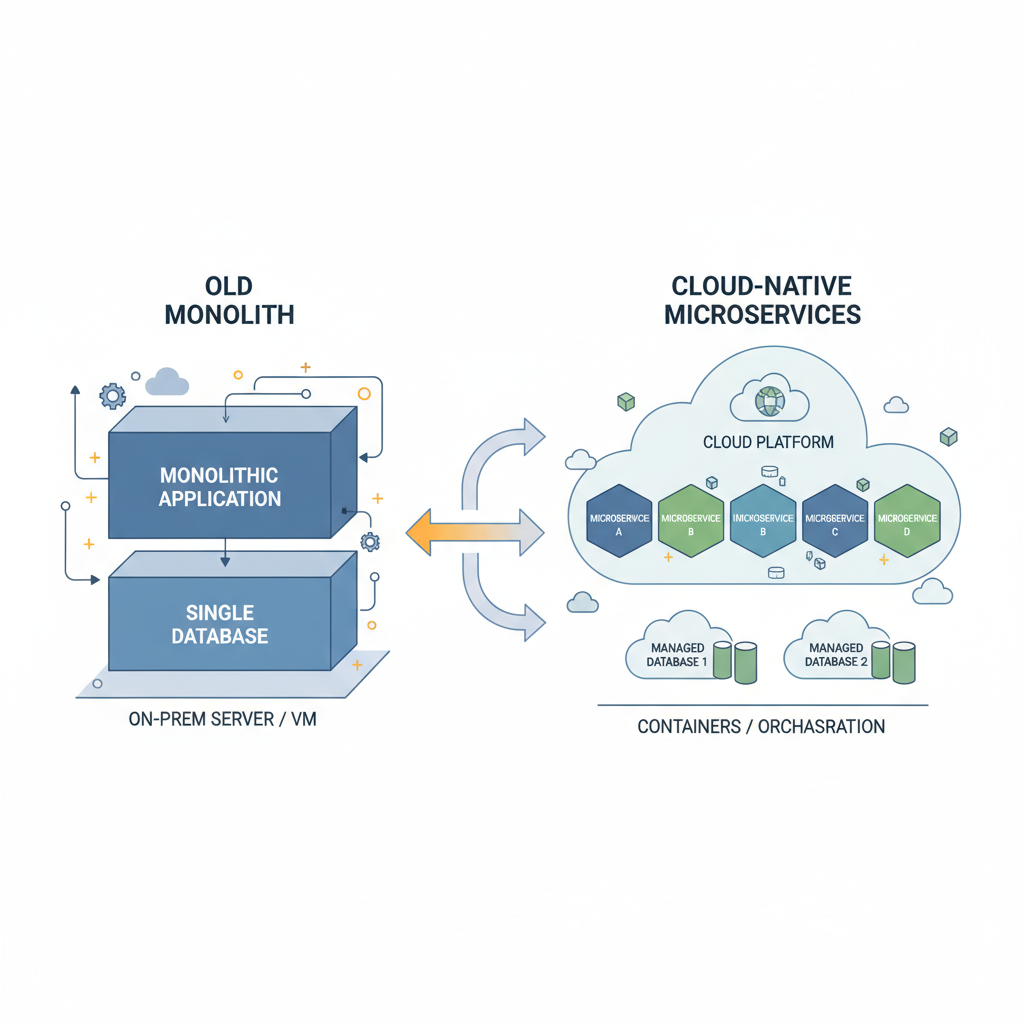
The replatforming meaning extends beyond just shifting infrastructure; it encompasses a strategic decision to embrace more efficient, secure, or scalable environments. For instance, a common replatforming definition involves migrating an on-premise application to a cloud-native infrastructure, thereby accessing cloud benefits like elasticity and managed services. This transition aims to improve performance and maintainability while preserving existing functionalities.
This strategic move is often driven by the desire to modernize outdated systems or escape vendor lock-in from legacy solutions. A thoughtful replatforming guide emphasizes minimizing business disruption during the transition. It ensures that the core application continues to deliver value even as its underlying architecture evolves.
Why Consider Replatforming? Benefits and Drivers
Organizations choose replatforming for a multitude of compelling reasons, primarily centered around improving efficiency, scalability, and cost-effectiveness. The benefits of replatforming can be substantial, offering a significant competitive edge in various industries. These advantages often justify the initial investment and effort required for such a complex undertaking.
One primary driver is the need for enhanced scalability. Legacy platforms often struggle to handle increasing user loads or data volumes, leading to performance bottlenecks and poor user experiences. By moving to a modern, cloud-based platform, applications can automatically scale resources up or down as demand fluctuates, ensuring consistent performance. This elasticity is a cornerstone of modern digital infrastructure.
Cost optimization is another powerful incentive. Maintaining outdated hardware and software can be expensive, requiring specialized knowledge and significant IT overhead. Replatforming to a managed cloud service or a more efficient platform can drastically reduce infrastructure costs, operational expenditures, and licensing fees. This shift allows resources to be redirected towards innovation rather than maintenance.
Improved performance and reliability are also key benefits of replatforming. Newer platforms often come with optimized architectures, robust security features, and built-in redundancy, leading to faster application response times and higher uptime. This translates directly into better user satisfaction and reduced risks of service interruptions. Enhanced security features are increasingly important in safeguarding sensitive data.
Furthermore, replatforming can accelerate innovation and development cycles. Modern platforms typically offer a richer ecosystem of tools, APIs, and services that empower developers to build and deploy new features faster. This agility is vital for businesses looking to stay ahead of market trends and continuously deliver value to their customers. Legacy systems often hinder such rapid development.
Types of Replatforming
Replatforming can manifest in various forms, each tailored to specific business needs and technological landscapes. The choice of replatforming approach often depends on the type of application, the desired future state, and the resources available. Understanding these different types helps in formulating a precise replatforming strategy.
One common replatforming example is migrating an on-premise application to a public cloud environment. This could involve shifting an application from a company’s data center to Amazon Web Services (AWS), Microsoft Azure, or Google Cloud Platform. The primary goal here is to leverage cloud scalability, managed services, and a pay-as-you-go model. This move often involves containerization or serverless adoption.
Another significant type is replatforming an e-commerce store. Many businesses migrate from older, monolithic e-commerce platforms like Magento 1 to newer, more flexible, and scalable solutions such as Shopify Plus, Salesforce Commerce Cloud, or custom-built microservices architectures. This enables better performance, easier integrations, and enhanced customer experiences. These shifts are critical for retail growth.
A diagram showing an old, monolithic application stack on one side transitioning with arrows to a more modern, cloud-native architecture with distinct microservices and managed databases on the other side.
Database replatforming is also a distinct category. This involves migrating a database from one system to another, such as moving from an older relational database to a cloud-native relational database service or a NoSQL database. This can significantly improve database performance, reduce administrative overhead, and enhance data resilience. These migrations require careful planning due to data integrity concerns.
Finally, replatforming can also involve moving between different versions or editions of the same platform to access newer features or security updates. While less drastic than moving to an entirely new vendor, this still constitutes replatforming as it often requires adapting existing code and configurations. Each type of replatforming presents its own unique set of challenges and opportunities.
The Successful Replatforming Process: A Step-by-Step Guide
Embarking on a replatforming journey requires a methodical approach and meticulous planning to ensure a smooth transition and minimize risks. A successful replatforming process follows several distinct phases, each crucial for the overall project’s outcome. This section provides a practical how to replatforming guide, outlining the essential steps.
#### Phase 1: Planning and Assessment
The initial phase is critical for laying a strong foundation for the entire replatforming project. This involves thorough analysis and strategic decision-making before any migration begins. Without proper planning, projects can quickly encounter unforeseen obstacles.
1. Define Clear Objectives: Begin by clearly articulating why replatforming is necessary and what specific business outcomes you aim to achieve. Are you looking for cost savings, improved performance, enhanced scalability, or faster innovation? Establishing these objectives early guides all subsequent decisions. These goals should be measurable to track success later.
2. Conduct a Comprehensive Audit: Thoroughly assess your current application, infrastructure, and dependencies. Document all components, integrations, data structures, and security requirements. This audit helps identify potential complexities and areas needing significant modification. Understand your current state before planning the future.
3. Evaluate Platform Options: Research and compare potential target platforms based on your defined objectives, technical requirements, budget, and team expertise. Consider factors like scalability, security features, vendor support, cost models, and ecosystem of tools. Choose a platform that aligns with your long-term business strategy.
4. Develop a Detailed Migration Plan: Create a step-by-step plan outlining the entire migration process, including timelines, resource allocation, roles and responsibilities, and fallback strategies. Identify critical milestones and define clear success metrics. A robust plan acts as your roadmap throughout the project.
5. Assess Risks and Mitigations: Identify potential risks such as data loss, downtime, compatibility issues, and budget overruns. Develop strategies to mitigate these risks, including creating backup plans and allocating buffer time. Proactive risk management is key to a best replatforming experience.
#### Phase 2: Execution and Migration
With a solid plan in place, the next phase focuses on the actual migration of the application and its data. This requires careful execution to avoid disruption and maintain data integrity. This phase often involves technical teams working closely.
1. Prepare the Target Environment: Set up and configure the new platform, ensuring all necessary infrastructure, databases, and services are in place. Configure networking, security settings, and monitoring tools according to your specifications. A properly prepared environment is crucial.
2. Adapt and Refactor Code: Modify the application code as needed to be compatible with the new platform’s environment and APIs. This might involve updating libraries, changing configuration files, or refactoring certain modules. The goal is to make the application function seamlessly in its new home.
3. Migrate Data: Develop a strategy for migrating your existing data to the new platform’s database. This could involve direct transfers, incremental synchronization, or using specialized data migration tools. Ensure data integrity and minimize downtime during this critical step. Validate all data post-migration.
4. Integrate and Configure Services: Re-establish or reconfigure any external integrations with third-party services, APIs, or other internal systems. Ensure all connections are secure and functional. Test each integration thoroughly to prevent unexpected issues.
#### Phase 3: Testing and Deployment
Thorough testing is paramount to validate the successful migration and ensure the application functions as expected on the new platform. This phase builds confidence before going live.
1. Perform Rigorous Testing: Conduct various tests, including functional testing, performance testing, security testing, and user acceptance testing (UAT). Verify that all features work correctly, performance meets benchmarks, and security vulnerabilities are addressed. Involve end-users in UAT for real-world feedback.
2. Conduct Cutover Planning: Plan the final cutover process, including the exact steps for switching traffic from the old platform to the new one. Define a rollback plan in case issues arise during the deployment. Minimize downtime for end-users during this critical transition.
3. Deploy to Production: Execute the cutover plan, carefully monitoring the application’s performance and stability immediately after deployment. Be prepared to address any unforeseen issues promptly. This is the moment your hard work goes live.
#### Phase 4: Post-Launch Optimization
The replatforming journey doesn’t end after deployment; continuous monitoring and optimization are essential for long-term success. This phase ensures that the new platform delivers expected value.
1. Monitor Performance and Health: Continuously monitor the application’s performance, resource utilization, and error rates on the new platform. Use monitoring tools to identify and resolve any bottlenecks or issues proactively. Proactive monitoring prevents small problems from becoming big ones.
2. Gather Feedback and Iterate: Collect feedback from users and stakeholders, and use it to identify areas for further improvement or optimization. Embrace an iterative approach to fine-tune the application and platform. User feedback is invaluable for continuous improvement.
3. Decommission Old Systems: Once you are confident in the stability and performance of the new platform, strategically decommission the old systems. Ensure all data has been securely migrated and that there are no remaining dependencies. This frees up resources and reduces legacy costs.
Replatforming Strategies and Best Practices
To ensure a best replatforming experience, organizations should adopt specific strategies and adhere to proven best practices. These replatforming tips can significantly reduce risks and accelerate the transition, leading to a more efficient and impactful outcome.
One crucial strategy is to prioritize a “lift and shift” approach when possible, especially for initial cloud migrations. This involves moving an application with minimal changes to the new platform, allowing businesses to gain immediate cloud benefits. Optimization and modernization can then occur iteratively once the application is stable in its new environment. This reduces initial complexity.
Automate everything possible. From infrastructure provisioning to code deployment and testing, leveraging automation tools streamlines the replatforming process and minimizes human error. CI/CD pipelines are essential for continuous integration and delivery, ensuring faster and more reliable deployments. Automation contributes significantly to a successful replatforming process.
Start small and iterate. Rather than attempting a massive, “big bang” replatforming project, consider breaking it down into smaller, manageable phases or migrating less critical components first. This allows your team to gain experience, learn from initial migrations, and refine the process before tackling more complex parts of the system. Incremental steps reduce overall risk.
Invest in team training and upskilling. Your team will need to be proficient with the new platform’s technologies, tools, and best practices. Provide comprehensive training and opportunities for hands-on experience to ensure they are well-equipped to manage and optimize the new environment. A knowledgeable team is a key asset.
Maintain clear communication throughout the project with all stakeholders, including leadership, development teams, and end-users. Transparency about progress, challenges, and timelines builds trust and manages expectations effectively. Regular updates prevent surprises and ensure alignment.
Finally, prioritize data security and compliance at every stage. Ensure that the new platform meets all regulatory requirements and implement robust security measures from the outset. Data protection should be a non-negotiable aspect of any replatforming strategy. Secure your data rigorously during and after migration.
Common Challenges and How to Overcome Them
Despite careful planning, replatforming projects often encounter various challenges. Recognizing these potential pitfalls and preparing mitigation strategies is vital for successful replatforming. Addressing these issues proactively can save significant time and resources.
Data migration complexity is a frequent hurdle. Moving large volumes of data while ensuring integrity, consistency, and minimal downtime can be daunting. To overcome this, use specialized data migration tools, plan for incremental data synchronization, and perform thorough validation checks. A detailed data migration strategy is paramount.
Integration issues can also arise, especially with legacy systems or third-party services that may not easily integrate with the new platform. Mapping out all dependencies upfront and developing custom adapters or APIs can help bridge these gaps. Thorough testing of all integrations is non-negotiable.
Skill gaps within the team can slow down progress. If your team lacks expertise in the new platform’s technologies, invest in training, hire external consultants, or consider a managed service provider. Bridging these skill gaps early is crucial for effective execution. Learning new systems takes time and effort.
Budget overruns and scope creep are common if the project is not managed tightly. Maintain strict budget controls, define a clear project scope, and resist the urge to add new features during the replatforming process. Stick to the core migration objectives first. Discipline is key to staying on track financially.
Finally, managing downtime and business disruption is a major concern. Implement strategies like blue/green deployments, canary releases, or phased migrations to minimize the impact on users. Communicate planned downtimes clearly and provide alternatives where possible. A smooth transition keeps customers happy.
Replatforming Examples: Real-World Scenarios
Understanding replatforming through real-world scenarios can illustrate its practical applications and impact. These replatforming examples highlight how diverse organizations leverage this strategy to achieve their business goals. They demonstrate the versatility of the replatforming process across different industries.
Consider a retail company that was running its e-commerce website on an aging, self-hosted Magento 1 platform. They faced constant performance issues, security vulnerabilities, and high maintenance costs. Their replatforming strategy involved migrating to Magento Commerce Cloud, a managed SaaS solution. This move significantly improved website speed, reduced IT overhead, and provided access to new features like AI-driven product recommendations.
Another common replatforming example involves enterprise applications. A large financial institution had a critical loan processing application running on an on-premise server with an outdated operating system and database. They chose to replatform it to a microservices architecture hosted on a public cloud platform, utilizing containerization technologies. This transition enhanced the application’s scalability, security, and allowed for faster deployment of new features, improving their overall service delivery. These strategic shifts provide long-term benefits.
Frequently Asked Questions
What is the primary difference between replatforming and re-architecting?
Replatforming involves moving an application to a new platform with minimal changes to its core code and functionality. Re-architecting, conversely, means fundamentally redesigning and rebuilding an application, often from scratch, to leverage new architectural patterns or technologies. Replatforming is generally less invasive and faster.
How long does a typical replatforming project take?
The duration of a replatforming project varies widely depending on the application’s complexity, data volume, and the target platform chosen. Simple applications might take a few months, while large enterprise systems could span 6-18 months or even longer. Thorough planning helps establish realistic timelines.
Is replatforming always necessary for modernization?
While replatforming is a powerful modernization strategy, it’s not always the only option. Other approaches include refactoring specific components, encapsulating legacy systems with APIs, or even a full re-architecting for entirely new business needs. The best choice depends on the specific challenges and goals.
What are the main risks associated with replatforming?
Key risks include data loss or corruption during migration, unexpected downtime, compatibility issues between the application and the new platform, budget overruns, and resistance from team members to new technologies. Careful planning, testing, and communication are essential for risk mitigation.
Can replatforming reduce operational costs?
Yes, replatforming often leads to significant reductions in operational costs. By moving to cloud-managed services, businesses can eliminate the need for expensive hardware maintenance, reduce licensing fees, and optimize resource utilization through auto-scaling. This frees up capital for other investments.
What role does cloud computing play in replatforming?
Cloud computing plays a central role in modern replatforming efforts. Migrating to the cloud allows applications to benefit from scalability, flexibility, security, and managed services offered by cloud providers. This shift is a major driver for many replatforming initiatives.
Conclusion
Replatforming is a strategic imperative for businesses aiming to remain competitive and agile in a rapidly evolving digital landscape. By understanding the replatforming meaning, recognizing its profound benefits, and meticulously following a structured replatforming guide, organizations can successfully navigate this complex journey. A well-executed replatforming process not only modernizes technology but also empowers businesses to unlock new levels of efficiency, scalability, and innovation, paving the way for sustained growth and success.
Johan Carlsson is a cloud architecture specialist and frequent speaker focused on scalable workloads, AI/ML, and IoT innovation. At Opsio, he helps organizations harness cutting-edge technology, automation, and purpose-built services to drive efficiency and achieve sustainable growth. Johan is known for enabling enterprises to gain a competitive advantage by transforming complex technical challenges into powerful, future-ready cloud solutions.