Discover Top Managed Cloud Alternatives for Your Business Needs
March 5, 2026|1:20 PM
Unlock Your Digital Potential
Whether it’s IT operations, cloud migration, or AI-driven innovation – let’s explore how we can support your success.
Home /
Work /
Blogs /
Discover Top Managed Cloud Alternatives for Your Business Needs
Understanding the Need for Managed Cloud Alternatives
Organizations today increasingly rely on cloud computing to power their operations, drive innovation, and enhance scalability. While fully managed cloud services offer undeniable convenience and expertise, they are not always the optimal solution for every business requirement or budget. Many enterprises are now actively seeking out effective managed cloud alternatives.
This guide will comprehensively explore various strategies and infrastructures that stand as viable options. It aims to empower you with the knowledge to make informed decisions about your cloud strategy, balancing cost, control, performance, and security needs. We will delve into solutions that offer greater flexibility and ownership, providing a holistic view of the landscape beyond traditional managed services.
Defining Managed Cloud Services and Their Limitations
Managed cloud services typically involve a third-party provider overseeing the daily operation, maintenance, and support of a client’s cloud infrastructure. This can include tasks like patching, monitoring, security management, and technical support. Businesses often choose this model to offload the burden of IT management and focus on core competencies.
While beneficial for many, this approach comes with potential drawbacks. Costs can escalate as services are consumed, and businesses may experience a degree of vendor lock-in. Furthermore, the level of control and customization over the underlying infrastructure can be limited, which might not suit specific regulatory or performance requirements.
Considering managed cloud alternatives allows organizations to reclaim control and tailor their environments more precisely. It opens up opportunities for significant cost savings and optimized performance. Evaluating these alternative pathways is a critical step in building a resilient and efficient IT ecosystem.
Exploring Key Managed Cloud Alternatives
Choosing the right infrastructure strategy is pivotal for long-term success, especially when moving beyond fully managed services. This section details several prominent managed cloud alternatives, each offering unique advantages and considerations. Understanding these options is key to finding a solution that aligns perfectly with your business goals.
Self-Managed Cloud
A self-managed cloud approach gives an organization complete control over its cloud infrastructure, whether it’s hosted on-premise or in a co-location facility. This model requires internal expertise and resources to handle all aspects of setup, maintenance, security, and operations. It is often chosen by companies with specific compliance needs or high customization demands.
The primary benefit of a self-managed cloud is the unparalleled control it offers over every layer of the stack. This can lead to significant cost savings in the long run by eliminating recurring managed service fees. However, it also demands a substantial investment in skilled IT staff and infrastructure management tools, shifting operational responsibility entirely to the internal team.
Private Cloud Solutions
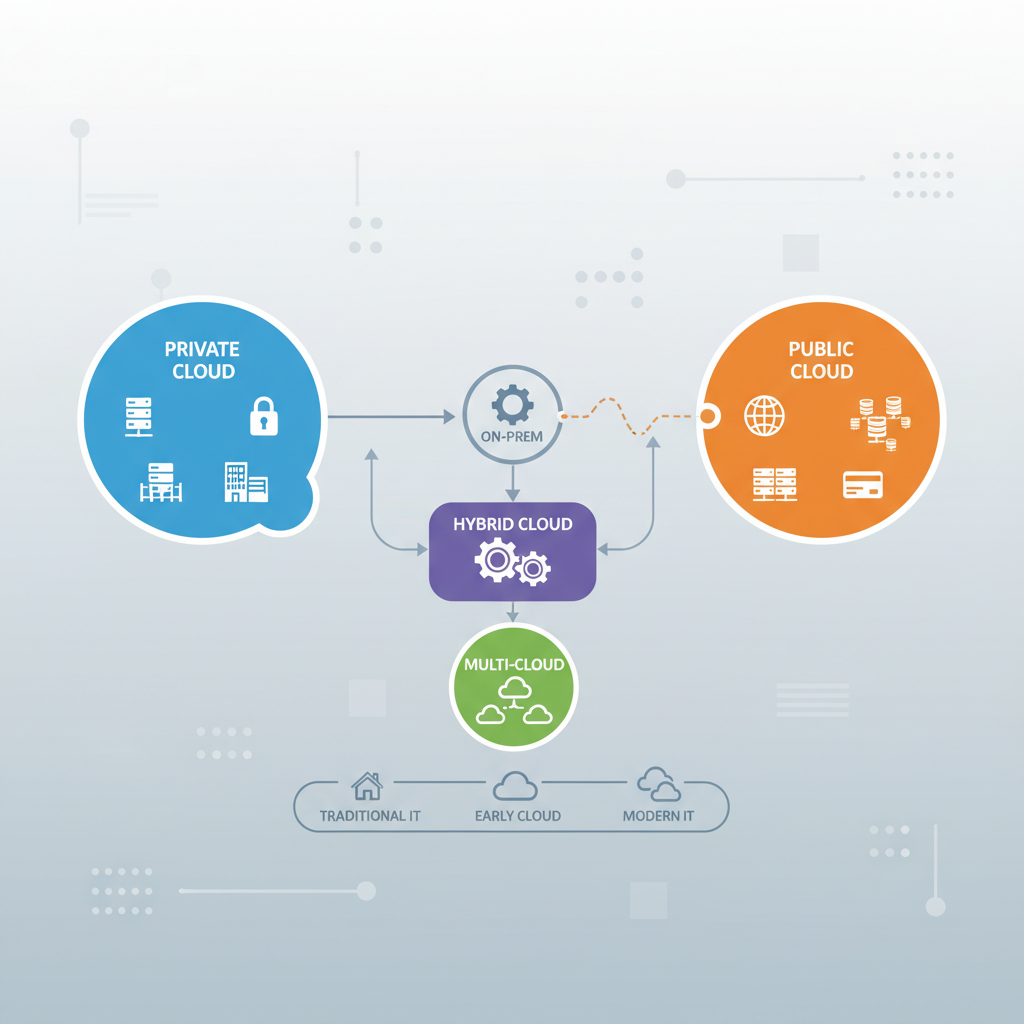
A private cloud refers to a cloud computing environment dedicated exclusively to a single organization. It can be physically located at the company’s on-premise data center or hosted by a third-party provider, offering a secluded and highly secure environment. This alternative is ideal for businesses with stringent security, privacy, or regulatory compliance requirements.
Private clouds offer enhanced performance and customization capabilities, as resources are not shared with other tenants. They provide a level of control that mirrors on-premise solutions but with the added benefits of virtualization and cloud management tools. While the initial investment can be higher, private clouds often deliver superior long-term value for specific workloads.
A diagram showing various cloud deployment models like private cloud, public cloud, and hybrid cloud interconnected.
On-Premise Solutions
Traditional IT infrastructure, or on-premise solutions, involves hosting all hardware, software, and data within an organization’s own physical data center. This approach provides maximum control over data security and compliance, as all assets remain within the company’s direct physical and logical boundaries. It’s a classic managed cloud alternative for those prioritizing absolute ownership.
While requiring significant capital expenditure for hardware, power, and cooling, on-premise solutions eliminate ongoing cloud subscription fees. They are particularly suitable for highly sensitive data or applications that demand extremely low latency and specific hardware configurations. Managing an on-premise setup, however, requires a dedicated and skilled internal IT team.
Hybrid Cloud Deployments
A hybrid cloud strategy integrates an organization’s on-premise private cloud with a public cloud service, allowing data and applications to be shared between them. This approach offers the best of both worlds: the security and control of a private environment combined with the scalability and flexibility of the public cloud. It’s a popular managed cloud alternative for dynamic workloads.
Organizations can leverage the public cloud for bursting capabilities or less sensitive data, while keeping critical applications and data within their private infrastructure. Managing a hybrid cloud can be complex due to the need for seamless integration and consistent security policies across different environments. However, the flexibility it offers often outweighs these challenges.
Co-location Services
Co-location involves an organization renting space for its servers and other computing hardware in a third-party data center. The data center provider supplies the physical facility, power, cooling, and network connectivity, while the organization owns and manages its servers. This is a robust managed cloud alternative for maintaining hardware control without the full burden of a data center.
Choosing co-location allows businesses to benefit from enterprise-grade infrastructure without the massive capital investment of building their own data center. It provides excellent connectivity and often redundancy, ensuring high availability for critical applications. Companies still need to manage their own hardware and software, but the core infrastructure is handled externally.
Bare Metal Servers
Bare metal servers are physical servers dedicated to a single tenant, providing direct access to the server’s underlying hardware. Unlike virtual machines, there is no hypervisor layer between the operating system and the hardware, which translates to superior performance and reduced latency. This direct access is crucial for demanding applications and specific workloads.
As a managed cloud alternative, bare metal servers offer maximum control and raw processing power. They are ideal for high-performance computing, big data analytics, gaming, and other I/O-intensive applications where every ounce of performance matters. The trade-off is the need for more hands-on management, as the user is responsible for the operating system and applications.
Virtual Private Server (VPS)
A Virtual Private Server (VPS) sits between shared hosting and dedicated bare metal servers. It involves a single physical server partitioned into multiple virtual servers, each with its own operating system, dedicated resources (CPU, RAM, storage), and root access. While it shares hardware, each VPS operates in isolation from others, providing a private environment.
VPS hosting is a cost-effective managed cloud alternative offering greater control and flexibility than shared hosting. It’s suitable for small to medium-sized businesses that need more power and customization than shared hosting but aren’t ready for the expense or complexity of a full bare metal server or private cloud. Management responsibilities typically fall between the host and the user.
MAXIMIZE YOUR CLOUDS
Maximize your cloud’s potential with expert management. Discover custom cloud solutions
✓ Free consultation ✓ No commitment required ✓ Trusted by experts
Strategic Considerations for Choosing an Alternative
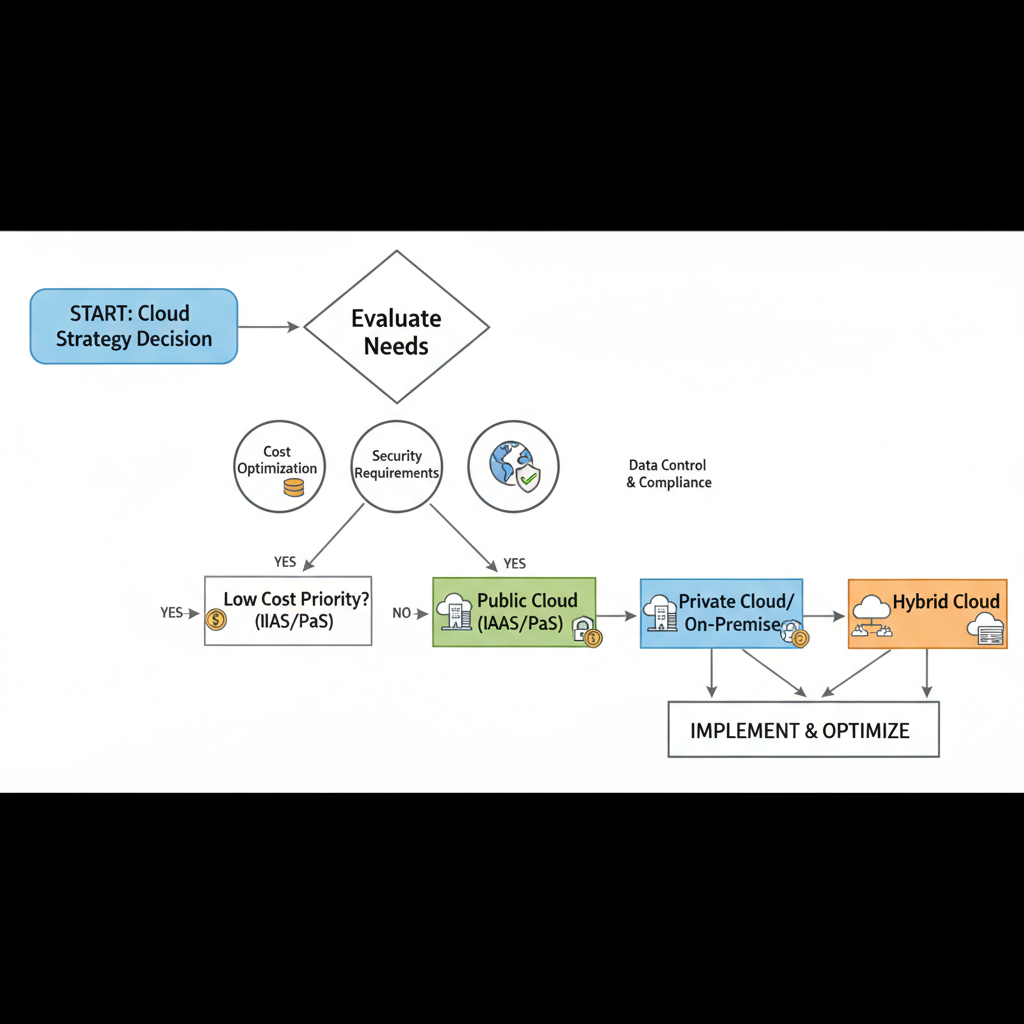
Selecting the right managed cloud alternative requires careful evaluation of several critical factors. A thoughtful assessment ensures that your chosen path aligns with both your current needs and future growth aspirations. Neglecting these considerations can lead to costly missteps and operational inefficiencies.
Cost and Budget Allocation
Evaluate both the initial capital expenditure (CapEx) and ongoing operational expenditure (OpEx). Managed cloud services often have predictable monthly OpEx, while alternatives like on-premise or co-location might involve significant upfront CapEx. Consider the total cost of ownership (TCO) over several years, including staffing, maintenance, and energy.
Performance and Scalability Requirements
Determine the performance demands of your applications, including CPU, RAM, storage I/O, and network throughput. Assess how quickly and easily your chosen alternative can scale resources up or down to meet fluctuating demands. Some alternatives, like hybrid cloud, offer exceptional flexibility in scaling.
Security and Compliance Needs
Understand your industry’s specific security standards, regulations, and compliance mandates (e.g., HIPAA, GDPR, PCI DSS). Evaluate how each managed cloud alternative can help you meet these requirements. Private clouds and on-premise solutions often offer the highest levels of control for sensitive data.
Management Overhead and Internal Expertise
Consider the capabilities and bandwidth of your internal IT team. Self-managed cloud and bare metal solutions demand significant in-house expertise and ongoing management. If your team is lean, alternatives that offload some infrastructure responsibilities, like co-location, might be more suitable.
A flowchart illustrating the decision-making process for choosing a cloud strategy based on factors like cost, security, and control.
Vendor Lock-in and Flexibility
Assess the degree of flexibility and portability offered by each solution. Managed cloud services can sometimes lead to vendor lock-in, making it difficult to migrate away. Managed cloud alternatives often provide greater control over your technology stack, fostering more independence and avoiding dependencies.
Integration with Existing Infrastructure
Evaluate how easily a new alternative can integrate with your current systems, applications, and workflows. Seamless integration is crucial for maintaining operational efficiency and avoiding disruptions. Hybrid cloud models are specifically designed to facilitate this integration between different environments.
A Step-by-Step Guide to Implementing Your Cloud Strategy
Migrating to or establishing a new managed cloud alternative requires a structured approach. Following these steps can help ensure a smooth transition and successful operation, minimizing risks and maximizing benefits. Each phase is critical for laying a solid foundation for your cloud environment.
1. Assess Your Current Environment and Needs: Begin by conducting a thorough audit of your existing applications, data, infrastructure, and workloads. Identify critical performance requirements, security mandates, and long-term business objectives. This initial assessment will clearly define what you need from a managed cloud alternative.
2. Define Your Cloud Strategy and Architecture: Based on your assessment, choose the managed cloud alternative that best fits your specific requirements. Design a detailed architecture that outlines network topology, compute resources, storage solutions, and security protocols. Consider a phased approach for larger migrations.
3. Plan for Data Migration: Develop a comprehensive data migration strategy, including methods, timelines, and rollback plans. Determine whether you will use online migration tools, offline transfer, or a hybrid approach. Data integrity and minimal downtime should be top priorities during this phase.
4. Implement and Configure the New Infrastructure: Proceed with setting up your chosen managed cloud alternative, whether it involves deploying bare metal servers, configuring a private cloud, or establishing co-location space. Ensure all hardware and software components are installed and configured according to your architectural design. This often includes setting up network connectivity and security appliances.
5. Test and Validate Performance and Security: Thoroughly test the new environment to ensure it meets all performance, security, and availability requirements. Conduct load testing, penetration testing, and disaster recovery drills. Validate that all applications function correctly and securely within the new setup.
6. Monitor and Optimize Continuously: Once operational, establish robust monitoring systems to track performance, resource utilization, and security events. Regularly review and optimize your infrastructure to ensure it remains efficient, cost-effective, and secure. Continuous improvement is key to long-term success with any managed cloud alternative.
The Evolving Landscape of Cloud Infrastructure
The world of cloud computing is constantly innovating, with new technologies and approaches emerging regularly. Trends like edge computing, serverless architectures, and advanced containerization are reshaping how businesses deploy and manage their applications. These advancements offer even more diverse managed cloud alternatives than ever before.
As organizations seek greater control and cost-efficiency, the emphasis on hybrid cloud strategies and specialized infrastructure solutions continues to grow. Staying informed about these developments is crucial for adapting your IT strategy. Embracing flexibility and continuous evaluation will be key to navigating future challenges and opportunities in the cloud domain.
Frequently Asked Questions About Managed Cloud Alternatives
What are the main benefits of exploring managed cloud alternatives?
Exploring managed cloud alternatives offers several significant benefits, primarily greater control over your infrastructure, potential cost savings, and enhanced security and compliance capabilities. It allows organizations to tailor their environment precisely to their unique needs, avoiding vendor lock-in and achieving optimal performance for specific workloads.
How do on-premise solutions compare to public cloud services?
On-premise solutions provide complete ownership and control over hardware and data, making them ideal for strict security and compliance requirements. Public cloud services, conversely, offer immense scalability and flexibility with lower upfront costs. Managed cloud alternatives bridge this gap by offering varying degrees of control and shared responsibility.
Is a hybrid cloud a good option for all businesses?
A hybrid cloud is an excellent option for many businesses, especially those needing to balance sensitive data compliance with scalable public cloud resources. However, its complexity in integration and management may not suit smaller organizations with limited IT staff. Careful planning is essential for a successful hybrid cloud deployment.
What is the difference between bare metal servers and a Virtual Private Server (VPS)?
Bare metal servers are single-tenant physical servers providing exclusive access to all hardware resources, delivering maximum performance. A Virtual Private Server (VPS) is a virtualized slice of a physical server, offering dedicated resources within a shared hardware environment. Bare metal provides raw power, while VPS offers a cost-effective balance of control and performance.
How can I ensure security when choosing a self-managed cloud or co-location?
Ensuring security in a self-managed cloud or co-location environment requires a robust internal security strategy. This includes implementing strong access controls, regular patching, robust firewalls, intrusion detection systems, and continuous monitoring. A skilled in-house security team or trusted security partner is crucial.
MAXIMIZE YOUR CLOUDS
Maximize your cloud’s potential with expert management. Discover custom cloud solutions
✓ Free consultation ✓ No commitment required ✓ Trusted by experts
Conclusion: Empowering Your Cloud Journey
Navigating the complex landscape of cloud computing requires a clear understanding of all available options. While managed cloud services offer ease of use, exploring managed cloud alternatives can unlock significant benefits in terms of cost control, performance optimization, and ownership. From the deep control of private cloud and on-premise solutions to the flexibility of hybrid cloud and the raw power of bare metal servers, there’s a tailored solution for every unique business need.
By carefully evaluating factors like cost, scalability, security, and internal expertise, organizations can strategically select and implement the most appropriate managed cloud alternatives. This proactive approach not only optimizes your IT infrastructure but also empowers your business to remain agile and competitive. Embrace the journey of discovery, and build a cloud strategy that truly serves your long-term vision.