Discover Best Cloud SLA Monitoring Alternatives for Enhanced Uptime
March 6, 2026|1:44 PM
Unlock Your Digital Potential
Whether it’s IT operations, cloud migration, or AI-driven innovation – let’s explore how we can support your success.
Home /
Work /
Blogs /
Discover Best Cloud SLA Monitoring Alternatives for Enhanced Uptime
Navigating the Landscape of Cloud SLA Monitoring Alternatives
In the dynamic world of cloud computing, maintaining service level agreements (SLAs) is paramount for ensuring business continuity and customer satisfaction. While traditional cloud SLA monitoring tools offer foundational insights, the evolving complexity of cloud environments often necessitates more advanced and flexible approaches. Understanding the best Cloud sla monitoring alternatives is crucial for organizations looking to gain deeper visibility and proactive control over their cloud services. This comprehensive guide explores various sophisticated solutions that go beyond basic uptime checks, providing a robust framework for performance management.
Many businesses are actively seeking alternative SLA monitoring solutions to address specific challenges within their hybrid or multi-cloud infrastructures. The limitations of relying solely on vendor-provided metrics become apparent as applications become more distributed and interdependent. This exploration will help you identify top cloud performance tracking alternatives that align with modern operational demands.
Why Explore Alternative Cloud SLA Monitoring Solutions?
Traditional cloud SLA monitoring often provides a high-level overview, but it may lack the granularity required for complex, distributed applications. As organizations increasingly adopt microservices architectures, serverless functions, and diverse cloud services, their monitoring needs become more intricate. Relying solely on basic uptime and response time checks can leave critical gaps in understanding true user experience and underlying infrastructure health.
The dynamic nature of cloud environments, with auto-scaling and ephemeral resources, poses significant challenges for static monitoring tools. These older solutions may struggle to adapt to rapid changes, leading to alert fatigue or missed critical incidents. Therefore, exploring other options for cloud SLA becomes essential for maintaining reliable service delivery. These alternatives offer more comprehensive insights into the intricate web of dependencies that characterize modern cloud deployments.
Essential Considerations for Choosing SLA Monitoring Substitutes
Selecting the right alternative SLA monitoring solutions requires careful evaluation of several factors unique to your operational context. A thoughtful approach ensures that the chosen tools effectively address specific performance needs and integrate seamlessly with existing workflows. This guide aims to provide the best Cloud sla monitoring alternatives tips to inform your decision-making process.
Consider these key aspects when evaluating potential solutions:
Scope of Monitoring: Determine if the solution covers infrastructure, application, and end-user experience across all your cloud providers. Comprehensive coverage is vital for holistic visibility.
Integration Capabilities: Assess how well the alternative integrates with your existing observability stack, incident management tools, and CI/CD pipelines. Seamless integration minimizes operational overhead.
Scalability and Flexibility: The chosen solution must scale with your cloud growth and adapt to changes in your architecture, supporting multi-cloud or hybrid environments without significant retooling.
Data Granularity and Retention: Look for solutions that offer detailed metrics, logs, and traces with sufficient historical data retention for effective troubleshooting and trend analysis.
Alerting and Reporting: Evaluate the flexibility of alerting mechanisms, including customization options and integration with communication platforms. Robust reporting capabilities are crucial for demonstrating SLA compliance.
Cost-Effectiveness: Compare pricing models (e.g., per-user, per-resource, data volume) to ensure the solution provides value without exceeding budget constraints. Hidden costs for advanced features should also be considered.
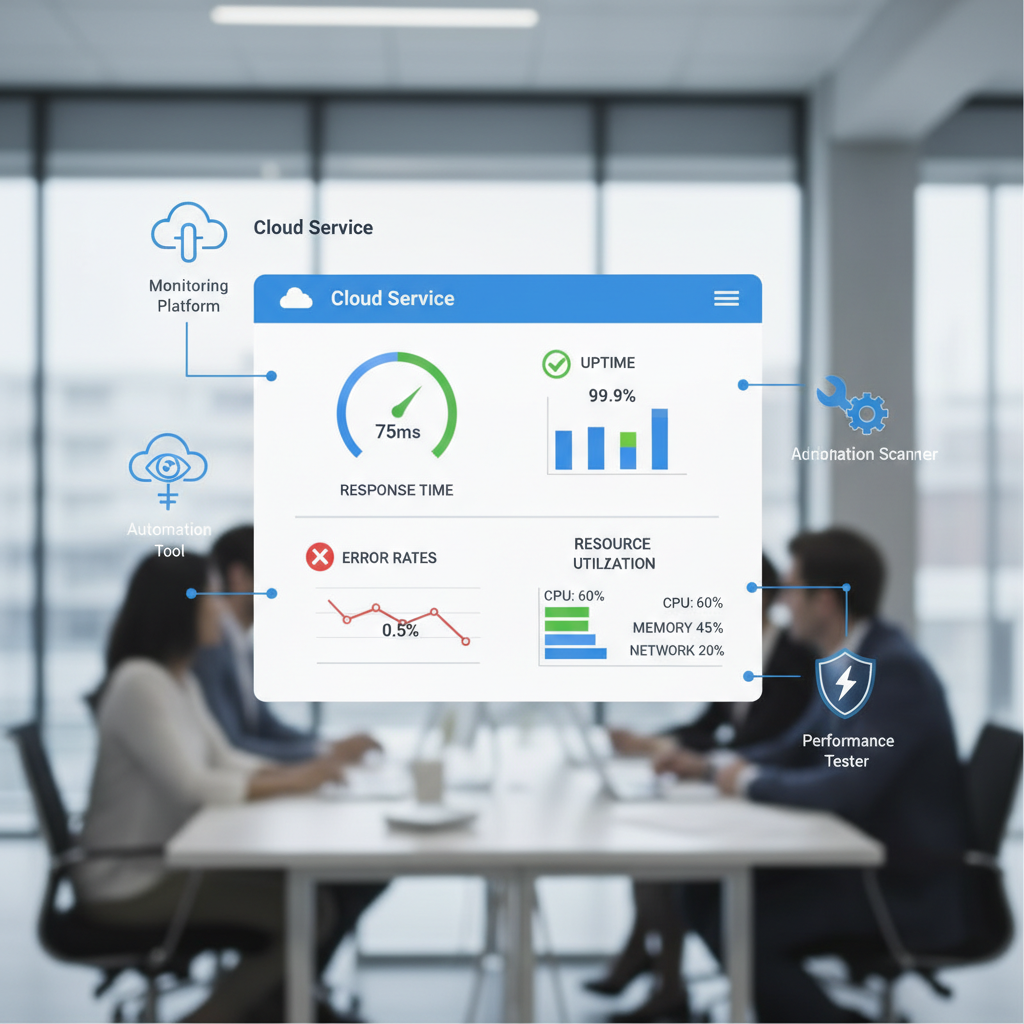
A dashboard showing various cloud service metrics like response time, uptime, error rates, and resource utilization, with different monitoring tools represented as icons.
ENSURE UNINTERRUPTED SERVICE
Ensure uninterrupted service delivery and proactively prevent costly SLA breaches. Leverage our automated, real
✓ Free consultation ✓ No commitment required ✓ Trusted by experts
Top Categories of Cloud SLA Monitoring Alternatives
When organizations seek robust solutions beyond basic checks, several sophisticated categories emerge as strong competitors to cloud SLA monitoring. These different approaches to SLA management offer deeper insights into performance, reliability, and user experience. Understanding these categories is central to finding the best Cloud sla monitoring alternatives.
Synthetic Monitoring Tools
Synthetic monitoring simulates user interactions with your applications from various geographical locations and network conditions. It proactively identifies performance issues before real users encounter them, providing consistent data regardless of actual user traffic. This approach is excellent for monitoring critical user paths and validating SLA performance from an external perspective.
These tools execute automated scripts to check uptime, response times, and transaction completion for web applications, APIs, and microservices. They offer predictable data and baseline performance, making them ideal for tracking consistent SLA metrics. Many providers offer global monitoring networks, allowing checks from numerous points of presence worldwide.
Real User Monitoring (RUM) Solutions
Real User Monitoring (RUM) captures data directly from actual end-user sessions, providing unparalleled insights into their experience. Unlike synthetic tests, RUM reflects the true performance impact of network conditions, device types, and browser variations on your application. It’s an indispensable component of top cloud performance tracking alternatives.
RUM tools track metrics like page load times, JavaScript errors, and user interaction latency, helping identify performance bottlenecks specific to user segments. This data is critical for understanding the actual user experience, which often directly impacts business-critical SLAs. Implementing RUM gives a clear picture of how your services are performing in the hands of your customers.
Application Performance Monitoring (APM) Suites
APM tools provide deep visibility into the internal workings of applications, tracing requests across various services and components. They offer code-level diagnostics, helping pinpoint the root cause of performance issues within complex distributed systems. APM is one of the most comprehensive SLA monitoring substitutes available.
These powerful suites often combine code profiling, transaction tracing, dependency mapping, and infrastructure monitoring. By correlating application performance with underlying infrastructure, APM solutions empower teams to quickly diagnose and resolve performance degradation. They are essential for ensuring that service-level objectives (SLOs) are met across microservices and APIs.
Infrastructure-as-Code (IaC) and Policy-as-Code (PaC)
While not monitoring tools in themselves, IaC and PaC solutions play a critical role in establishing and maintaining consistent cloud environments that adhere to SLA requirements. By defining infrastructure and security policies through code, organizations ensure that resources are provisioned correctly and consistently. This proactive approach minimizes configuration drift that could impact performance.
IaC tools like Terraform or CloudFormation automate resource deployment, while PaC frameworks like Open Policy Agent enforce compliance rules before deployment or at runtime. This combination helps prevent misconfigurations that could lead to SLA breaches. These methods offer different approaches to SLA management by enforcing best practices from the outset.
Specialized Cloud-Native Monitoring Tools
Cloud-native monitoring tools are specifically designed to leverage the unique features and APIs of particular cloud providers (e.g., AWS CloudWatch, Azure Monitor, Google Cloud Monitoring). They offer deep integration and context within their respective ecosystems, often at a lower cost for basic functionalities. These are often the first line of defense among other options for cloud SLA.
These tools excel at collecting metrics, logs, and events directly from cloud services, providing granular data tailored to the cloud platform. While powerful within their native environments, a multi-cloud strategy may require additional layers of abstraction or integration with third-party solutions. Many organizations use these in conjunction with broader observability platforms.
AI/ML-Driven Anomaly Detection
Leveraging Artificial Intelligence and Machine Learning, these advanced solutions automatically detect unusual patterns and deviations from normal behavior in your cloud metrics and logs. This proactive approach helps identify potential SLA breaches before they escalate into major incidents. It’s a cutting-edge among the best Cloud sla monitoring alternatives.
AI/ML algorithms can analyze vast amounts of data, learn normal operational baselines, and surface subtle anomalies that human operators might miss. This significantly reduces alert fatigue by focusing on truly anomalous events. Predictive analytics can even forecast future performance issues, allowing for preventative actions.
Implementing and Optimizing Your Alternative SLA Monitoring Solutions
Successfully integrating alternative SLA monitoring solutions requires a strategic approach beyond simply deploying new tools. Effective implementation ensures you maximize their value and truly enhance your cloud service delivery. Here are some of the best Cloud sla monitoring alternatives tips to guide your process.
Start by clearly defining your key performance indicators (KPIs) and service level objectives (SLOs) that directly map to your business SLAs. This clarity will inform which metrics are most critical to monitor across your chosen solutions. Aligning monitoring efforts with business goals is fundamental.
Next, prioritize gradual adoption and integration with existing tools rather than a complete overhaul. Begin with a pilot project to test the new solution on a critical but contained service. This allows your team to gain experience and fine-tune configurations without disrupting widespread operations.
Steps for Effective Implementation
1. Define Your Monitoring Strategy: Outline what you need to monitor, why it’s important, and what actions will be taken when thresholds are breached. This clear strategy forms the backbone of your monitoring efforts. 2. Select the Right Tools: Based on your strategy, choose a combination of the best Cloud sla monitoring alternatives that offer comprehensive coverage for your specific cloud architecture. Consider a blend of synthetic, RUM, and APM tools for full visibility. 3. Integrate with Existing Workflows: Ensure the new monitoring solution connects with your incident management, ticketing, and communication platforms. Automated alerts and workflows streamline response times. 4. Establish Baselines and Thresholds: Configure alerts based on historical performance data and your defined SLOs. Regularly review and adjust these baselines as your system evolves. 5. Educate Your Team: Provide training to your operations, development, and support teams on how to use the new tools and interpret the data. Empowering users ensures consistent adoption and effective utilization. 6. Regularly Review and Refine: Cloud environments are constantly changing. Periodically review your monitoring configurations, metrics, and alerting rules to ensure they remain relevant and effective.
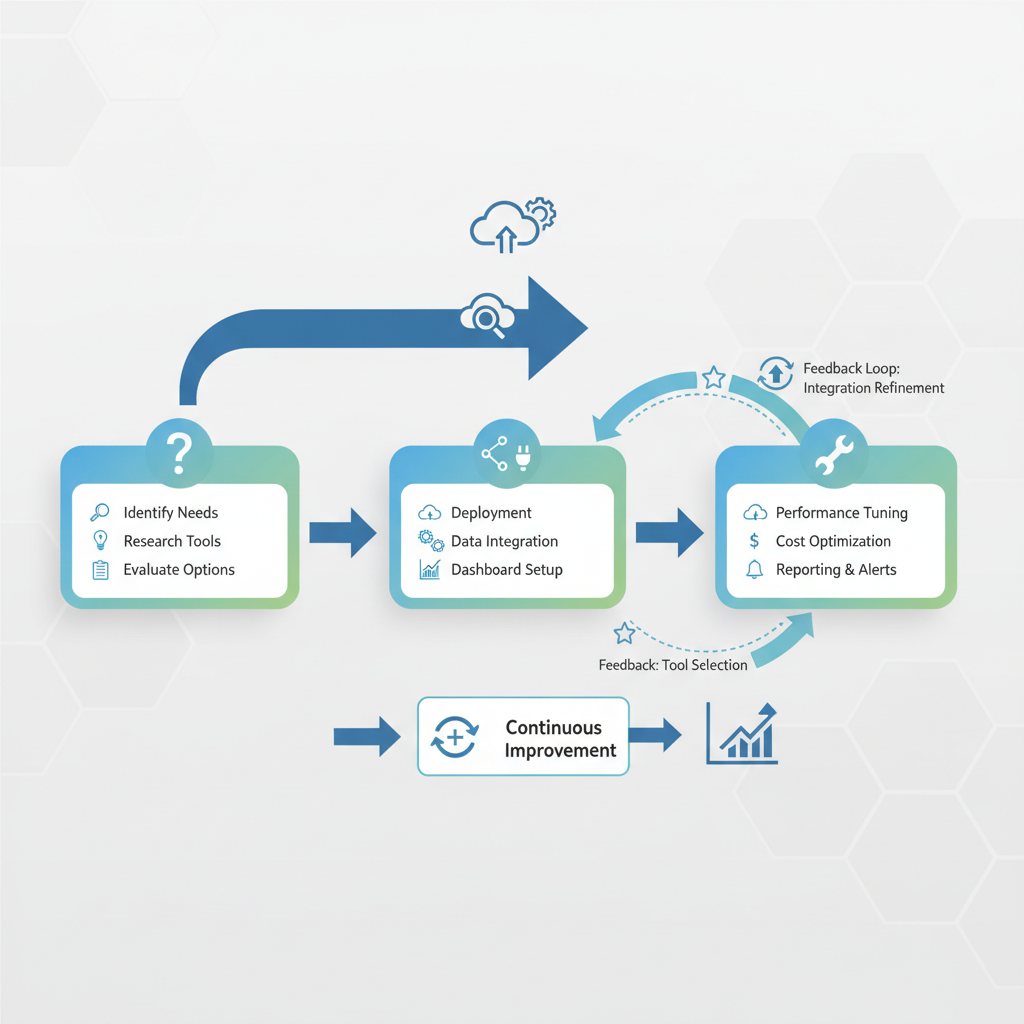
A flowchart illustrating the process of selecting, integrating, and optimizing cloud monitoring tools, showing feedback loops for continuous improvement.
Real-World Examples of Alternative SLA Monitoring in Action
Exploring best Cloud sla monitoring alternatives examples can provide tangible insights into how various organizations leverage advanced tools to maintain high service standards. These scenarios highlight the practical application of different approaches to SLA management across diverse industries. Learning from these examples can help tailor your own strategy.
Consider a large e-commerce platform that relies heavily on microservices deployed across multiple cloud regions. They utilize a combination of APM tools and RUM solutions. The APM suite traces transactions through their complex backend, identifying performance bottlenecks in specific services or database queries.
Meanwhile, their RUM solution continuously monitors the experience of shoppers globally, providing real-time data on page load times and conversion funnels. If a region experiences slow checkout processes, the RUM data immediately flags it, and APM helps drill down to the exact service causing the delay, ensuring their checkout SLA is met. This integrated approach ensures both backend health and frontend experience are optimized.
Another example comes from a SaaS provider offering a critical financial application. They employ synthetic monitoring to proactively test their login page and core application functionalities from major financial hubs worldwide. These synthetic tests run every minute, ensuring their authentication service and key features are always available and responsive according to strict compliance SLAs. Any deviation triggers immediate alerts.
They complement this with specialized cloud-native monitoring for their serverless functions and managed databases, using built-in cloud provider tools. This combination of external validation (synthetics) and internal component health (cloud-native) provides a robust defense against potential SLA breaches, ensuring high availability and compliance. These examples demonstrate the power of a layered monitoring strategy.
Future Trends in Cloud Performance Tracking
The landscape of cloud performance tracking is continuously evolving, driven by advancements in AI, automation, and distributed computing. Staying abreast of these trends is essential for organizations aiming to implement the best Cloud sla monitoring alternatives and proactively manage their cloud services. Future developments promise even more intelligent and autonomous monitoring capabilities.
One significant trend is the increasing shift towards observability platforms that unify metrics, logs, and traces into a single pane of glass. This holistic approach provides a comprehensive view of system health, moving beyond siloed monitoring tools. These platforms often incorporate AI/ML to correlate events and predict potential issues.
Another key trend involves the deeper integration of monitoring into the development lifecycle (DevOps and SRE practices). “Shift-left” monitoring means performance considerations are built into the design and testing phases, reducing issues downstream. Policy-as-Code and automated remediation are becoming more prevalent, turning insights into automated actions. This represents a significant evolution in different approaches to SLA management.
Furthermore, the rise of intelligent automation for remediation is transforming how organizations respond to performance issues. Instead of merely alerting, future systems will increasingly leverage AI to automatically diagnose and even resolve common problems, such as scaling resources or restarting services. This move towards self-healing systems will be a game-changer for maintaining aggressive SLAs. These top cloud performance tracking alternatives will redefine operational efficiency.
Frequently Asked Questions
This section addresses common inquiries about the best Cloud sla monitoring alternatives, offering clarity and practical advice. Understanding these aspects is key to making informed decisions for your cloud environment.
What is the primary difference between synthetic and real user monitoring?
Synthetic monitoring simulates user interactions from predefined locations, offering consistent, proactive checks even without live traffic. Real User Monitoring (RUM) collects actual performance data from real users, reflecting genuine experience variations. Synthetic is proactive and controlled, while RUM is reactive and reflects reality.
Why are APM tools considered crucial for modern cloud environments?
APM tools provide deep visibility into application internals, tracing requests across microservices and identifying code-level performance bottlenecks. They are crucial because modern cloud applications are distributed and complex, making traditional infrastructure-only monitoring insufficient for diagnosing performance issues effectively.
Can I use multiple alternative SLA monitoring solutions together?
Yes, combining multiple solutions is often the most effective strategy. For instance, using synthetic monitoring for external availability checks, RUM for actual user experience, and APM for backend diagnostics creates a comprehensive observability stack. This layered approach provides robust coverage for your entire service delivery chain.
How do Infrastructure-as-Code (IaC) tools contribute to better SLA management?
IaC tools ensure consistent and correct provisioning of cloud resources by defining infrastructure through code. This reduces configuration errors and drift, which are common causes of performance degradation and SLA breaches. By enforcing best practices from deployment, IaC proactively supports SLA adherence.
What role does AI/ML play in next-generation cloud monitoring?
AI/ML is pivotal for anomaly detection, predictive analytics, and automated root cause analysis. It helps identify subtle performance deviations, predict potential outages before they occur, and reduce alert fatigue by focusing on significant events. This intelligence transforms reactive monitoring into proactive incident prevention and faster resolution.
What are some common pitfalls to avoid when implementing new monitoring solutions?
Common pitfalls include not clearly defining SLOs, failing to integrate new tools with existing workflows, suffering from alert fatigue due to poor thresholding, and neglecting team training. Avoiding these requires careful planning, iterative implementation, and continuous refinement of your monitoring strategy.
ENSURE UNINTERRUPTED SERVICE
Ensure uninterrupted service delivery and proactively prevent costly SLA breaches. Leverage our automated, real
✓ Free consultation ✓ No commitment required ✓ Trusted by experts
Conclusion
The pursuit of the best Cloud sla monitoring alternatives is a strategic imperative for any organization operating in today’s intricate cloud landscape. Moving beyond basic tools allows for a deeper, more proactive understanding of cloud service performance and user experience. By embracing a combination of synthetic monitoring, RUM, APM, and cloud-native solutions, businesses can gain unparalleled visibility into their distributed applications.
Adopting these alternative SLA monitoring solutions empowers teams to not only identify and resolve issues faster but also to anticipate problems before they impact end-users. This comprehensive approach to monitoring is fundamental for maintaining stringent SLAs, ensuring customer satisfaction, and driving operational excellence in the cloud. Continuously adapting your monitoring strategy to incorporate these different approaches to SLA management will be key to long-term success.
Jacob Stålbro is a seasoned digitalization and transformation leader with over 20 years of experience, specializing in AI-driven innovation. As Head of Innovation and Co-Founder at Opsio, he drives the development of advanced AI, ML, and IoT solutions. Jacob is a sought-after speaker and webinar host known for translating emerging technologies into real business value and future-ready strategies.