Develop Your Replatforming Strategy for Modern Tech Stacks
March 10, 2026|11:56 AM
Unlock Your Digital Potential
Whether it’s IT operations, cloud migration, or AI-driven innovation – let’s explore how we can support your success.
Home /
Work /
Blogs /
Develop Your Replatforming Strategy for Modern Tech Stacks
Understanding Your replatforming strategy Needs
Embarking on a replatforming journey is a significant undertaking for any organization. It involves migrating an existing system, such as an e-commerce platform, CMS, or CRM, to a new, more suitable technology stack. A well-defined replatforming strategy is crucial for success, ensuring minimal disruption and maximum benefit.
This comprehensive guide explores the essential components of building an effective replatforming strategy. We will delve into planning, execution, and post-launch considerations to help you navigate this complex process. Understanding your specific needs forms the foundational step in this transformative process.
Organizations typically consider replatforming when their current systems no longer meet business demands. This could be due to outdated technology, escalating maintenance costs, poor performance, or a lack of scalability. Identifying these core pain points is paramount.
A clear understanding of why you need a new platform will inform every decision throughout the replatforming process. It helps in setting realistic expectations and aligning all stakeholders on the project’s ultimate goals. Without this clarity, a replatforming strategy can quickly lose direction.
Defining the Scope and Objectives of Your replatforming strategy
Defining the scope and objectives is the bedrock of any successful replatforming strategy. This initial phase involves a thorough assessment of your existing ecosystem and a clear vision for the future. Without precise objectives, your replatforming efforts risk becoming unfocused and inefficient.
Start by clearly articulating what you aim to achieve with the new platform. Are you looking to improve user experience, reduce operational costs, enhance scalability, or integrate new functionalities? These specific goals will serve as your guiding principles.
Setting Clear Business Objectives
Every replatforming strategy must begin with well-defined business objectives. These objectives should be SMART: Specific, Measurable, Achievable, Relevant, and Time-bound. They provide a clear roadmap and criteria for evaluating success.
For instance, an objective might be “increase mobile conversion rates by 15% within 12 months post-launch.” Such a specific goal allows for precise measurement and accountability, ensuring that your replatforming strategy is aligned with broader business aspirations. These objectives contribute significantly to a successful replatforming checklist.
Establishing Project Scope and Requirements
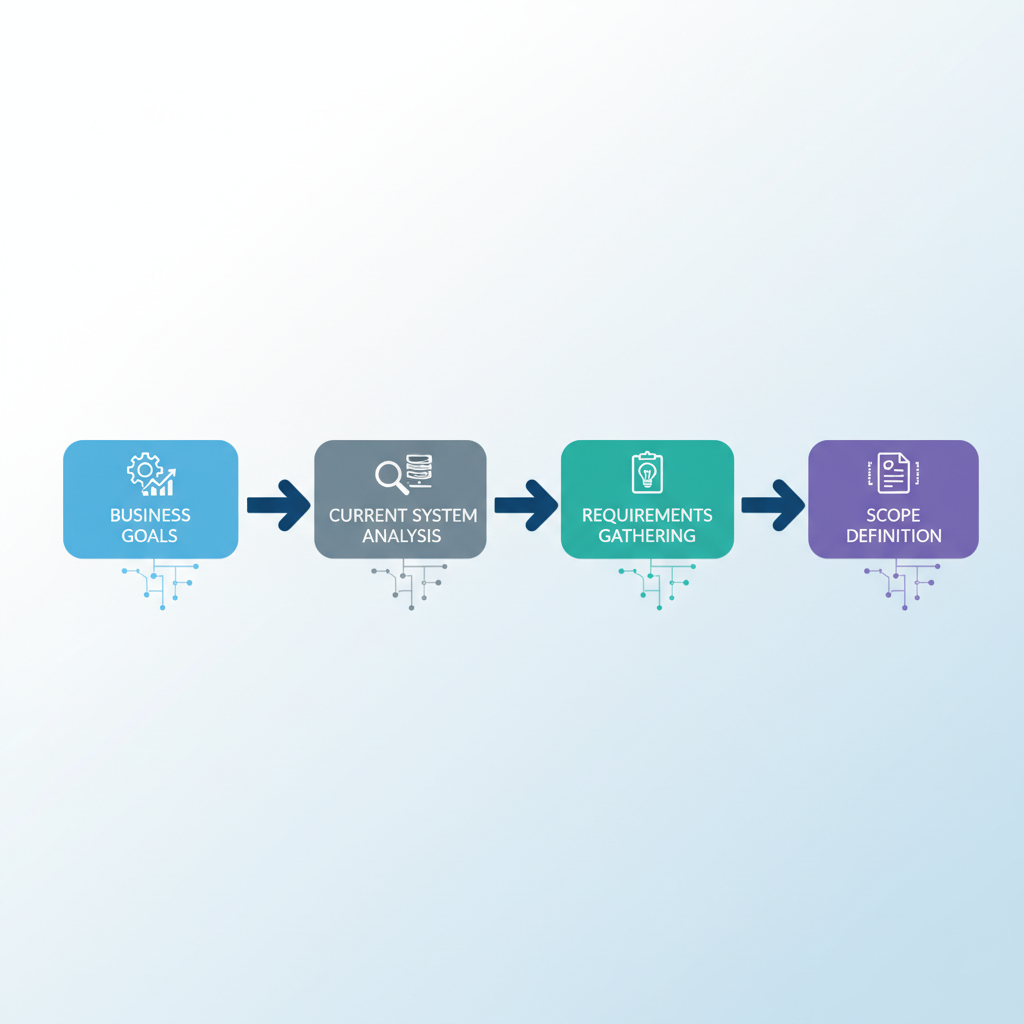
Once objectives are clear, define the project scope. This includes identifying which systems, features, and data will be migrated or re-architected. A detailed scope prevents scope creep and ensures the replatforming project management team remains focused.
Gather comprehensive requirements from all relevant stakeholders, including marketing, sales, IT, and customer service. Documenting these needs meticulously is vital for designing a platform that addresses current deficiencies and supports future growth. This forms a critical part of a robust replatforming strategy guide.
A flowchart showing the stages of defining a replatforming strategy, starting with business goals, moving to current system analysis, then requirements gathering, and finally scope definition, with arrows connecting each step.
Identifying Key Performance Indicators (KPIs)
To measure the success of your replatforming strategy, establish clear Key Performance Indicators (KPIs) upfront. These metrics should directly correlate with your business objectives. Examples include website load time, conversion rates, customer satisfaction scores, and total cost of ownership (TCO).
Regularly track these KPIs throughout the replatforming process and after launch. This ongoing monitoring provides valuable insights into the new platform’s performance and allows for continuous optimization. A well-chosen set of KPIs ensures that your best replatforming strategy delivers tangible value.
Key Phases of a replatforming strategy
Executing a replatforming strategy involves several distinct phases, each critical for ensuring a smooth transition and successful outcome. Approaching these phases systematically helps manage complexity and mitigate risks. This structured replatforming process ensures that no critical step is overlooked.
Phase 1: Discovery and Planning
The initial phase is about comprehensive data gathering and meticulous planning. This involves auditing your existing systems, identifying bottlenecks, and documenting all current functionalities. Engage key stakeholders to understand their pain points and future requirements.
During discovery, conduct a thorough market analysis to evaluate potential new platforms and vendors. Select technology that aligns with your long-term business goals and technical capabilities. Developing a detailed project plan, including timelines, budget, and resource allocation, is crucial in this phase.
Phase 2: Design and Development
With a solid plan in place, the next step in your replatforming strategy is to design the new platform’s architecture and begin development. This includes creating detailed technical specifications, data models, and user experience (UX) designs. Prioritize modular and scalable architecture to ensure future flexibility.
Development typically involves building custom features, integrating third-party tools, and configuring the new platform according to the defined requirements. Implement robust coding standards and conduct regular code reviews to maintain quality. This is where how to replatforming strategy truly takes shape.
Phase 3: Data Migration
Data migration is often one of the most challenging aspects of a replatforming project. It requires a meticulous strategy to extract, transform, and load (ETL) your data from the old system to the new one. Data cleansing and validation are essential to ensure data integrity and accuracy.
Develop a comprehensive data migration plan that includes backup strategies and rollback procedures. Perform multiple test migrations to identify and resolve any issues before the final cutover. A successful replatforming strategy hinges on accurate and complete data transfer.
Phase 4: Testing and Quality Assurance
Thorough testing is paramount to guarantee the new platform’s stability, performance, and security. This phase involves various types of testing, including unit testing, integration testing, performance testing, security testing, and user acceptance testing (UAT). Engage end-users early in the UAT process to gather feedback.
Identify and address any bugs or performance issues discovered during testing. A comprehensive testing strategy ensures that the new platform meets all functional and non-functional requirements before launch. This phase is critical for the overall success of your replatforming strategy strategies.
Phase 5: Launch and Post-Launch Optimization
The launch phase involves the careful deployment of the new platform. Develop a detailed go-live plan, including a rollback strategy in case of unforeseen issues. Monitor the new platform closely immediately after launch to detect and address any critical problems quickly.
Post-launch, enter a “hypercare” period, providing elevated support to users. Gather feedback, analyze performance metrics, and continuously optimize the platform. This ongoing refinement ensures that your investment in a new replatforming strategy tutorial continues to yield benefits.
✓ Free consultation ✓ No commitment required ✓ Trusted by experts
Building Your replatforming project management Team
A successful replatforming strategy relies heavily on a skilled and cohesive project management team. Assembling the right individuals with diverse expertise is crucial for navigating the complexities of the replatforming process. Effective replatforming project management ensures tasks are completed efficiently and objectives are met.
Key Roles and Responsibilities
A typical replatforming team includes several essential roles. A dedicated project manager oversees the entire replatforming strategy, ensuring adherence to timelines, budgets, and scope. Technical architects design the new platform’s infrastructure and ensure its scalability and security.
Developers build and customize the platform, while quality assurance (QA) specialists conduct rigorous testing. Data migration experts manage the crucial transfer of information, and business analysts bridge the gap between technical teams and business stakeholders. Each role plays a vital part in a successful replatforming checklist.
Fostering Cross-Functional Collaboration
Replatforming touches various departments within an organization, making cross-functional collaboration indispensable. Encourage open communication and regular meetings among team members from different departments, such as IT, marketing, sales, and operations. This collaborative approach helps prevent silos and ensures everyone is aligned with the replatforming strategy guide.
Establishing clear communication channels and shared goals fosters a sense of collective ownership. When teams work together seamlessly, potential issues are identified and resolved faster, contributing to a smoother replatforming process. This collaborative spirit is a hallmark of the best replatforming strategy.
Risk Management and Mitigation in replatforming strategy
Any major technological undertaking, especially a replatforming strategy, comes with inherent risks. Proactive risk management is therefore crucial for safeguarding your investment and ensuring a smooth transition. Identifying, assessing, and mitigating these risks effectively can make the difference between success and failure.
Common Risks in replatforming strategy
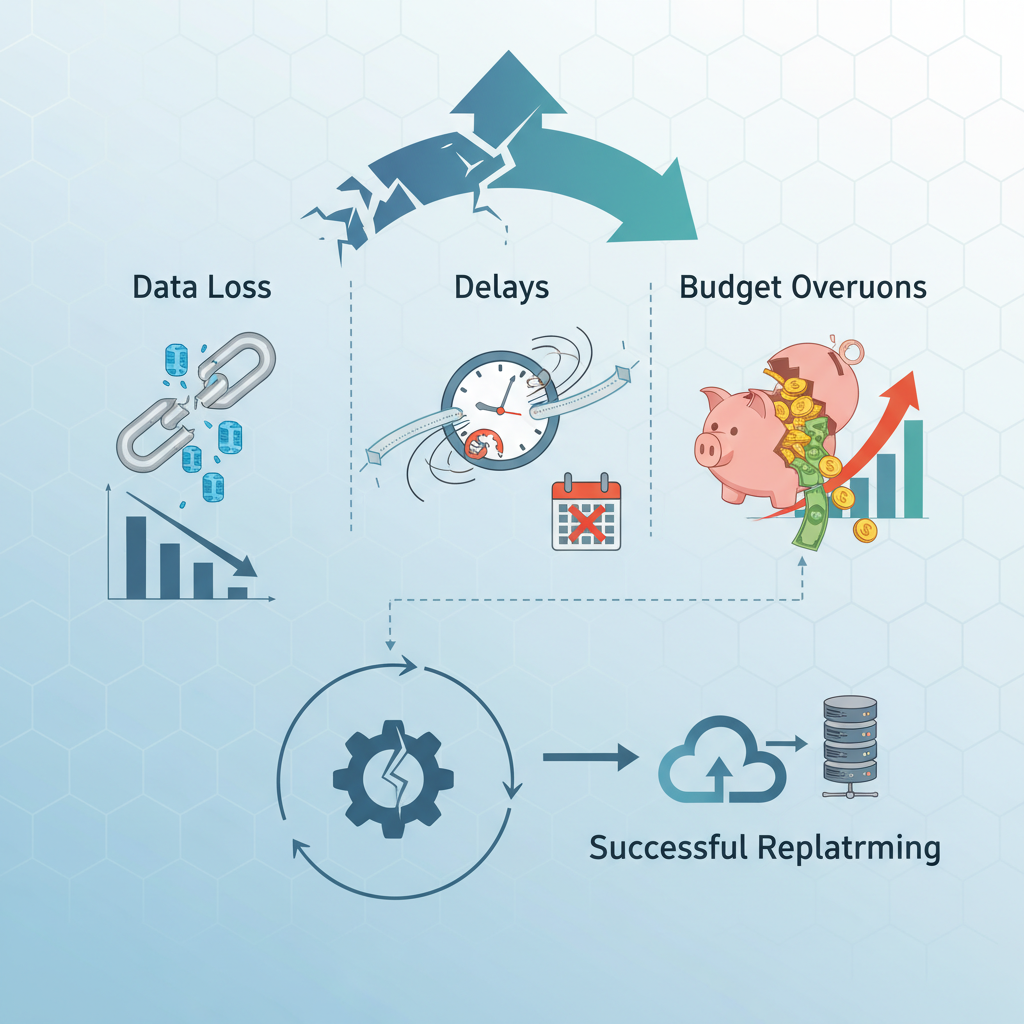
Several common pitfalls can derail a replatforming project. These include budget overruns, timeline delays, data loss or corruption during migration, and poor user adoption of the new system. Technical complexities, integration challenges, and a lack of stakeholder alignment also pose significant threats.
Unforeseen issues with legacy systems or third-party integrations can also emerge, complicating the replatforming process. Recognizing these potential challenges early allows for better planning and resource allocation. Understanding these risks is a key part of developing effective replatforming strategy tips.
A visual representation of common risks in replatforming, such as a broken chain link for data loss, a clock for delays, and a piggy bank with money spilling out for budget overruns.
Strategies for Risk Mitigation
To mitigate risks, start by conducting a comprehensive risk assessment at the project’s outset. Identify potential risks, analyze their likelihood and impact, and develop specific mitigation strategies for each. For instance, creating a detailed data backup and recovery plan addresses data loss concerns.
Implement a phased rollout strategy for complex platforms to minimize disruption and allow for adjustments. Establish clear communication protocols to keep all stakeholders informed of progress and any emerging issues. Regular testing and quality assurance throughout the replatforming process are also vital for uncovering and addressing technical flaws early.
Contingency Planning and Rollback Strategies
Despite best efforts, unexpected issues can still arise. Therefore, a robust replatforming strategy includes comprehensive contingency plans. These plans outline alternative actions to take if primary solutions fail, ensuring that the project can stay on track or recover quickly.
Crucially, develop a clear rollback strategy before initiating the final launch. This plan details the steps required to revert to the old platform if the new one experiences critical failures. A well-defined rollback option provides a safety net, reducing the overall risk associated with your replatforming strategy examples.
Post-replatforming strategy Optimization and Maintenance
The journey doesn’t end with the launch of your new platform; in fact, a critical phase of your replatforming strategy begins thereafter. Post-launch optimization and ongoing maintenance are essential for maximizing your investment and ensuring the long-term success of the replatforming project. This continuous effort enhances performance and user satisfaction.
Continuous Monitoring and Performance Tuning
Immediately after launch, implement robust monitoring tools to track the new platform’s performance, stability, and security. Keep a close eye on KPIs established during the planning phase, such as page load times, error rates, and user engagement metrics. This vigilance helps identify and address any issues promptly.
Regularly analyze performance data to pinpoint areas for improvement. This might involve optimizing database queries, refining server configurations, or enhancing caching mechanisms. Continuous performance tuning ensures the platform operates at peak efficiency, delivering the best possible user experience, which is a key part of how to replatforming strategy.
Gathering User Feedback and Iterating
User feedback is an invaluable resource for refining your replatforming strategy. Implement mechanisms to collect feedback from end-users, such as surveys, feedback forms, and direct communication channels. Pay close attention to their experiences, challenges, and suggestions.
Use this feedback to prioritize iterative improvements and new feature development. Agile development methodologies can be particularly effective in this phase, allowing for rapid cycles of feedback integration and deployment. This iterative approach ensures the platform evolves to meet changing user needs and business demands, showcasing effective replatforming strategy strategies.
Scaling and Future-Proofing
As your business grows, your new platform must be able to scale accordingly. Plan for future scalability by designing an architecture that can handle increased traffic, data volumes, and new functionalities without significant re-engineering. This foresight is crucial for long-term success.
Regularly review emerging technologies and market trends to keep your platform modern and competitive. Invest in ongoing maintenance, including security updates and software patches, to protect your investment. This proactive approach ensures your replatforming strategy tutorial remains relevant and valuable for years to come.
Frequently Asked Questions about replatforming strategy
What is replatforming strategy?
A replatforming strategy is a comprehensive plan for migrating an existing software system or digital platform to a new underlying technology stack or infrastructure. This process aims to improve performance, scalability, security, and functionality, often driven by a need to modernize outdated systems. It involves careful planning, execution, and post-launch optimization.
Why is a replatforming strategy important?
A well-defined replatforming strategy is crucial because it minimizes risks, ensures business continuity, and maximizes the return on investment. It provides a structured approach to a complex process, helping to avoid common pitfalls like budget overruns, data loss, and user adoption issues. Without a clear strategy, replatforming projects can become chaotic and unsuccessful.
What are the main challenges in a replatforming project?
Key challenges in a replatforming project often include data migration complexity, ensuring business continuity during the transition, managing project costs and timelines, and integrating with existing third-party systems. Additionally, resistance to change from users and unforeseen technical issues with legacy systems can pose significant hurdles. Addressing these challenges requires meticulous replatforming project management.
How long does a typical replatforming process take?
The duration of a replatforming process varies significantly based on the complexity, size, and specific requirements of the platform being migrated. Simple migrations might take a few months, while large-scale enterprise replatforming strategies could extend to 12-18 months or even longer. Thorough planning and realistic timelines are essential.
How do you measure the success of a replatforming strategy?
The success of a replatforming strategy is typically measured against predefined Key Performance Indicators (KPIs) established during the planning phase. These can include improved website performance metrics (e.g., load times), increased conversion rates, reduced operational costs, enhanced scalability, better security posture, and positive user feedback. Achieving the initial business objectives is the ultimate measure of success.
✓ Free consultation ✓ No commitment required ✓ Trusted by experts
Conclusion: Mastering Your replatforming strategy
Developing and executing a sound replatforming strategy is a complex but often necessary undertaking for modern businesses. It demands careful planning, diligent execution, and continuous optimization to truly unlock its potential. By following the structured approach outlined in this replatforming strategy guide, organizations can navigate this journey with confidence.
Remember that a successful replatforming strategy goes beyond simply migrating technology; it’s about future-proofing your business and enhancing your digital capabilities. Focus on clear objectives, a strong replatforming project management team, and proactive risk mitigation. Embracing continuous improvement post-launch will ensure your new platform remains a valuable asset.
Johan Carlsson is a cloud architecture specialist and frequent speaker focused on scalable workloads, AI/ML, and IoT innovation. At Opsio, he helps organizations harness cutting-edge technology, automation, and purpose-built services to drive efficiency and achieve sustainable growth. Johan is known for enabling enterprises to gain a competitive advantage by transforming complex technical challenges into powerful, future-ready cloud solutions.