Best Cloud Cost Optimization Tools: How to Find the
March 2, 2026|7:57 AM
Unlock Your Digital Potential
Whether it’s IT operations, cloud migration, or AI-driven innovation – let’s explore how we can support your success.
Home /
Insights /
Best Cloud Cost Optimization Tools: How to Find the
Navigating the complexities of cloud infrastructure can be challenging, especially when it comes to managing costs effectively. As organizations increasingly adopt multi-cloud strategies, controlling expenditures becomes a critical priority. Finding the best cloud cost optimization tools is essential for any business aiming to maximize its cloud investment. This guide will walk you through everything you need to know about these invaluable solutions.
The right cloud cost management approach can transform your operational efficiency and financial health. Without proper oversight, cloud spending can quickly spiral out of control, leading to wasted resources and missed opportunities. Understanding the landscape of available tools is the first step toward achieving significant cost savings and improved resource utilization.
Cloud cost optimization is the practice of reducing your overall cloud spend by identifying waste, right-sizing resources, and taking advantage of pricing models. It’s about getting the most value for your money in the cloud. This continuous process involves a combination of strategies, tools, and cultural shifts within an organization.
The urgency for effective cloud cost management has grown exponentially with widespread cloud adoption. Businesses recognize that simply migrating to the cloud does not automatically guarantee savings; active management is required. This is where dedicated tools become indispensable.
Many organizations face common challenges that make optimization difficult. These include a lack of visibility into spending, decentralized cloud consumption, and the sheer complexity of cloud provider billing. Identifying these pain points is crucial before selecting any solution.
Without a structured approach, organizations risk overprovisioning, idle resources, and inefficient service configurations. Implementing the right strategies with the best cloud cost optimization tools can help mitigate these risks. It ensures that cloud resources align precisely with actual demand, delivering maximum value.
Essential Features of best cloud cost optimization tools
When evaluating different options, a robust set of features is paramount for any solution. The best cloud cost optimization tools offer capabilities that cover every aspect of managing your cloud finances. These features empower teams to gain insights and take action.
Look for solutions that provide comprehensive visibility and actionable recommendations across your entire cloud estate. A truly effective tool goes beyond simple reporting, offering prescriptive guidance. This proactive approach helps prevent unnecessary spending before it occurs.
Cost Visibility and Monitoring
At its core, a strong optimization tool must offer granular visibility into your cloud spending. This includes dashboards that break down costs by service, department, project, and even individual resources. Real-time monitoring allows for immediate detection of anomalies.
Detailed spend analytics help teams understand exactly where their money is going. This foundational insight is critical for making informed decisions about resource allocation and budget adherence. Without clear visibility, optimization efforts are often guesswork.
Anomaly Detection and Alerts
Effective tools can automatically detect unusual spending patterns or sudden cost spikes. They use machine learning algorithms to learn normal behavior and flag deviations. Timely alerts allow teams to investigate and address issues before they escalate.
This proactive capability is a cornerstone of modern cloud cost management. It helps prevent costly surprises and ensures that budgets remain on track. The ability to identify and respond to anomalies quickly is a hallmark of leading finops platforms.
Budgeting and Forecasting Capabilities
Setting budgets and accurately forecasting future cloud spend are vital for financial planning. The best cloud cost optimization tools provide robust features for creating budgets, tracking adherence, and generating reliable forecasts. These predictions help inform strategic decisions.
Forecasts are often based on historical usage patterns, current trends, and planned resource changes. This allows businesses to anticipate future expenses and allocate funds appropriately. Strong forecasting also aids in long-term capacity planning.
Resource Optimization Recommendations
These tools often provide intelligent recommendations for optimizing your cloud resources. This includes identifying overprovisioned instances, suggesting rightsizing opportunities, and highlighting idle resources that can be terminated. These actions directly reduce waste.
Recommendations might also include strategies for scheduling resources to run only when needed. For instance, shutting down development environments overnight or on weekends can lead to significant savings. Such automated suggestions are invaluable for busy teams.
Reserved Instances and Savings Plans Management
Managing Reserved Instances (RIs) or Savings Plans (SPs) can be complex, but these instruments offer substantial discounts. top cloud spend management software helps optimize their utilization by recommending purchases, managing renewals, and ensuring they are applied effectively. This maximizes the discount benefits.
The tools can analyze your historical usage to determine the optimal RI or SP portfolio. They also monitor current usage against commitments, preventing underutilization or expired discounts. This feature is crucial for realizing long-term savings.
Reporting and Analytics
Comprehensive reporting and advanced analytics are essential for continuous improvement. Tools should offer customizable reports that cater to different stakeholders, from engineers to finance teams. Trend analysis and historical comparisons provide deeper insights.
These reports often include chargeback and showback capabilities, enabling organizations to attribute costs accurately. This fosters accountability and encourages cost-conscious behavior across departments. Strong analytics are a must for highest-rated cloud cost analysis tools.
Multi-Cloud Support
For organizations leveraging multiple cloud providers, multi-cloud support is non-negotiable. The best cloud cost optimization tools offer a unified view and management interface across AWS, Azure, GCP, and other cloud environments. This simplifies operations and provides a holistic spending picture.
Managing disparate billing systems and APIs from different providers can be a headache. A tool with robust multi-cloud capabilities consolidates this information into one digestible format. This is crucial for a comprehensive approach to cost management.
A dashboard displaying consolidated cloud spending across AWS, Azure, and GCP, showing cost breakdown by service and project, with a clear trend line for overall spending.
Integration Capabilities
Seamless integration with existing IT and financial systems is highly beneficial. This includes integration with monitoring tools, ITSM platforms, and financial software. Such connectivity streamlines workflows and enhances data accuracy.
API-first approaches ensure that data can flow freely between different systems. This allows for automation of many cost optimization tasks and improves the overall efficiency of your FinOps practice. Robust integration is a key differentiator among recommended cloud expense reduction solutions.
✓ Free consultation ✓ No commitment required ✓ Trusted by experts
Types of best cloud cost optimization tools
The market for cloud cost optimization solutions is diverse, offering options for various needs and budgets. Understanding the different categories can help you narrow down your search. Each type has its own strengths and use cases.
Choosing the right type depends on your specific cloud setup, organizational structure, and desired level of control. It’s not a one-size-fits-all decision, making careful evaluation essential.
Cloud Provider Native Tools
Each major cloud provider offers its own suite of cost management tools.
AWS Cost Explorer and AWS Budgets: Provide detailed cost visualization, forecasting, and budget alerts within the AWS ecosystem.
Azure Cost Management and Billing: Offers similar capabilities for Azure resources, including analysis, budgets, and recommendations.
Google Cloud Cost Management: Features tools for understanding, controlling, and optimizing Google Cloud spend.
These native tools are typically included with your cloud subscription and are tightly integrated with the respective provider’s services. They offer deep insights specific to that cloud environment. However, they may lack multi-cloud capabilities and advanced features found in third-party solutions.
Third-Party Solutions and FinOps Platforms
Dedicated third-party vendors specialize in cloud cost optimization, often offering more advanced features and multi-cloud support. These are frequently referred to as leading finops platforms. They provide a unified view across all your cloud providers.
Examples include CloudHealth by VMware, Apptio Cloudability, Flexera One, and Harness. These solutions typically offer sophisticated analytics, automation, and governance features. They are designed for organizations with complex, multi-cloud environments requiring comprehensive control.
Many of these platforms excel at identifying optimization opportunities and automating corrective actions. They also often provide robust chargeback/showback mechanisms, which are critical for large enterprises. These are often the best best cloud cost optimization tools for complex setups.
Open-Source Tools
For organizations with strong in-house technical capabilities and a desire for customization, open-source tools can be an attractive option. These tools offer flexibility and allow for tailored solutions. However, they require significant development and maintenance effort.
Examples include projects like Kubecost for Kubernetes cost monitoring. While free to use, they often come with an operational cost in terms of engineering time and expertise. They may not offer the same level of support or out-of-the-box features as commercial products.
Factors to Consider When Choosing best cloud cost optimization tools
Selecting the ideal tool requires careful consideration of several key factors that align with your organizational goals and technical landscape. A thorough evaluation process ensures that your chosen solution meets both current and future needs. This section offers a best cloud cost optimization tools guide for making an informed decision.
Think about your current pain points and what you hope to achieve with a new tool. Prioritize features that address your most pressing challenges. This helps in narrowing down the vast array of available options.
Scalability and Multi-Cloud Support
Your chosen tool must be able to scale with your cloud growth and support your current and future cloud providers. If you use or plan to use multiple clouds, robust multi-cloud capabilities are essential for a unified view. A single pane of glass for all costs significantly simplifies management.
Ensure the tool can handle the volume of data generated by your cloud resources without performance issues. Scalability is not just about the number of cloud accounts but also the complexity and diversity of services used.
Ease of Use and User Interface (UI)
An intuitive and user-friendly interface is crucial for widespread adoption across your organization. If the tool is too complex, users may struggle to extract value or adopt its recommendations. Clear visualizations and straightforward navigation enhance usability.
The best cloud cost optimization tools present complex data in an easily digestible format. This allows different user personas, from engineers to finance managers, to quickly find the information they need. A well-designed UI minimizes the learning curve.
Pricing Model
Understand the pricing structure of each tool. Some charge based on a percentage of your total cloud spend, others by the number of resources, and some have tiered subscription models. Compare these models against your budget and expected ROI.
Be aware of hidden costs or limitations that might impact your long-term investment. Transparent pricing is a good indicator of a trustworthy vendor. Consider the overall value proposition, not just the sticker price.
Support and Community
Reliable customer support and an active user community can be invaluable, especially during implementation and ongoing use. Check the vendor’s reputation for support, documentation, and training resources. A strong community can offer peer advice and troubleshooting tips.
Having access to experts can significantly accelerate your learning and problem-solving. This is particularly important for complex FinOps platforms where deep technical knowledge might be required.
Security and Compliance
Cloud cost optimization tools often require access to sensitive billing and resource data. Ensure that any chosen solution adheres to stringent security standards and compliance regulations relevant to your industry. Data privacy and protection should be a top priority.
Look for certifications like ISO 27001, SOC 2, or industry-specific compliance standards. Understanding how the tool handles and stores your data is crucial for maintaining trust and avoiding potential breaches.
Customization and Flexibility
The ability to customize dashboards, reports, and alert rules can tailor the tool to your organization’s unique needs. Every business has specific metrics and reporting requirements. A flexible solution can adapt to these nuances.
This includes the ability to define custom tags, allocate costs based on specific business rules, and integrate with internal data sources. Customization ensures that the tool provides truly relevant insights for your operational context.
Reviews of cloud optimization software
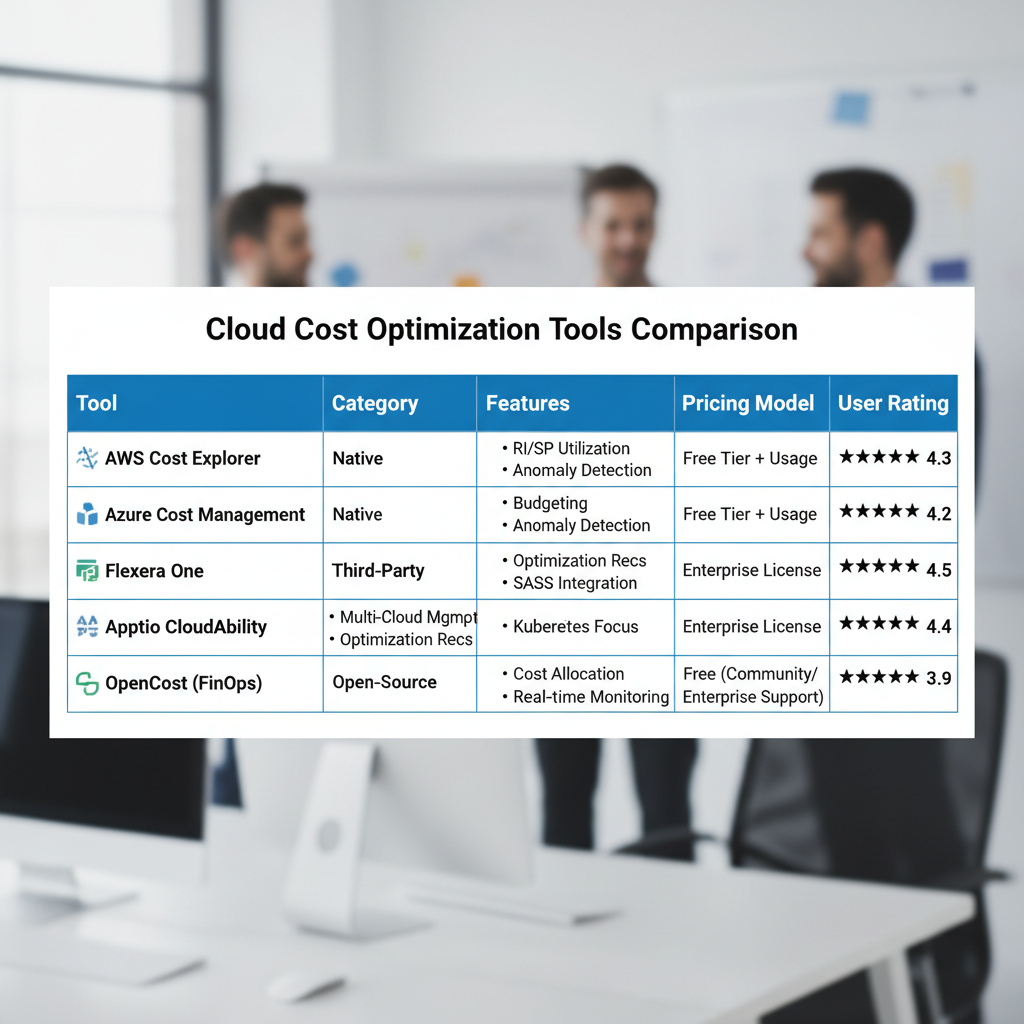
Always check independent reviews and testimonials from other users. Platforms like Gartner Peer Insights, G2, and Capterra offer valuable insights into real-world experiences with different tools. These reviews can highlight strengths, weaknesses, and potential pitfalls.
Pay attention to feedback regarding customer support, ease of integration, and actual cost savings achieved. User experiences provide a practical perspective beyond marketing claims, helping you with comparing cloud cost tools effectively.
A comparative table showing features, pricing models, and average user ratings for several leading cloud cost optimization tools across different categories (e.g., native, third-party, open-source).
Practical Steps to Implementing best cloud cost optimization tools
Once you’ve identified potential candidates, a structured implementation approach will ensure a successful rollout and maximize your investment. These steps outline a clear path from evaluation to continuous optimization. Effective implementation leverages best cloud cost optimization tools tips for quick results.
A thoughtful approach avoids common pitfalls and ensures that your team embraces the new solution. It’s not just about installing software; it’s about integrating a new practice into your operational culture.
Assess Current Needs and Goals
Before looking at tools, clearly define your organization’s specific cloud cost challenges and what you aim to achieve. Are you struggling with visibility, overspending, or inefficient resource allocation? Documenting these needs will guide your search.
Set clear, measurable goals for your optimization efforts. For example, “reduce cloud spend by 15% within six months” or “achieve 90% RI utilization.” These objectives provide a benchmark for success.
Evaluate and Compare Options
Based on your assessed needs, evaluate the shortlisted best cloud cost optimization tools against the factors discussed earlier. Utilize demos, free trials, and documentation to understand each tool’s capabilities. Create a scorecard for comparing cloud cost tools.
Involve key stakeholders from finance, operations, and engineering in the evaluation process. Their input will be crucial for selecting a tool that meets diverse departmental requirements. This collaborative approach ensures broad acceptance.
Pilot Program and Phased Rollout
Consider starting with a pilot program on a smaller scale or for a specific team. This allows you to test the tool’s effectiveness, identify any integration issues, and gather initial feedback without committing fully. A phased rollout minimizes disruption.
A pilot can also help in refining your optimization strategies and training your team. It provides a safe environment to learn and adjust before a full enterprise-wide deployment.
Integration with Existing Workflows
Seamlessly integrate the chosen tool into your existing IT and FinOps workflows. This might involve setting up automated alerts, connecting with ticketing systems, or integrating with CI/CD pipelines for automated resource management. Smooth integration is key for ongoing efficiency.
Automation of routine tasks, such as rightsizing or scheduling, can free up engineering teams to focus on higher-value work. This aspect significantly enhances the overall value of the recommended cloud expense reduction solutions.
Ongoing Monitoring and Refinement
Cloud environments are dynamic, so cost optimization is an ongoing process. Continuously monitor your cloud spend using the tool, review recommendations, and refine your strategies. Regularly assess the tool’s performance against your goals.
Schedule regular reviews with your FinOps team to discuss trends, identify new opportunities, and adjust policies. The best cloud cost optimization tools facilitate this continuous improvement cycle through comprehensive reporting and alerts.
Leveraging Leading FinOps Platforms for Advanced Optimization
Leading finops platforms represent the cutting edge of cloud cost management. They go beyond basic monitoring, offering sophisticated automation, governance, and collaboration features that integrate financial accountability with technical operations. These platforms are designed for mature cloud environments.
They enable a FinOps culture, where everyone in the organization is accountable for cloud spend. This shift moves away from a reactive cost management approach to a proactive, data-driven strategy.
These platforms often provide advanced features like:
Policy-as-Code: Define and enforce cost governance policies automatically across your cloud infrastructure.
Chargeback/Showback Automation: Accurately allocate costs to specific business units, projects, or teams, fostering accountability.
Rightsizing Automation: Automatically adjust resource capacities based on actual usage patterns, ensuring optimal performance at minimal cost.
Predictive Analytics: Utilize machine learning to forecast future spending with higher accuracy and identify potential cost overruns before they happen.
Custom Cost Allocation: Flexibility to define complex rules for how costs are assigned and grouped, reflecting organizational structure.
By integrating these capabilities, top cloud spend management software helps organizations not just save money, but also optimize their operational efficiency and drive innovation more responsibly. They transform cost management from a burden into a strategic advantage. This ensures you’re truly getting the most out of your cloud investments, providing a holistic view of your cloud financial operations.
Maximizing Your Investment with best cloud cost optimization tools
Simply purchasing the best cloud cost optimization tools is only the first step; maximizing their potential requires a strategic approach and continuous effort. Effective utilization transforms the tool from a reporting mechanism into a powerful driver of financial efficiency. It’s about embedding the tool into your daily operations.
Success often hinges on a combination of technology, processes, and people. A culture of cost awareness, supported by the right tools, yields the most significant and sustainable savings. This section offers best cloud cost optimization tools examples for achieving optimal outcomes.
Foster a FinOps Culture
Encourage collaboration between finance, operations, and development teams. The tool should serve as a common ground for discussions around cloud spend. When everyone understands their role in cost management, better decisions are made.
Regular training and communication about the tool’s features and recommendations can empower teams to take ownership of their cloud costs. This cultural shift is arguably the most impactful strategy for long-term optimization.
Automate Where Possible
Leverage the automation capabilities of your chosen tool. Set up automated alerts for budget overruns, schedule automated resource shutdowns, and implement automated rightsizing based on usage data. Automation reduces manual effort and ensures consistent application of policies.
This not only saves time but also reduces the likelihood of human error. Automation is a powerful feature of the highest-rated cloud cost analysis tools, turning insights into immediate actions.
Regularly Review and Optimize
Cloud environments are constantly evolving. What was optimized last month might not be optimal today. Regularly review the recommendations provided by your tools and assess their impact. Adjust your strategies based on new insights and changing business needs.
This iterative process of analysis, action, and review ensures that your cloud infrastructure remains cost-efficient. Think of it as a continuous cycle of improvement, driven by the data from your optimization tool.
Utilize Tagging and Governance Policies
Implement a consistent tagging strategy across all your cloud resources. This allows your cost optimization tools to accurately categorize and attribute costs. Effective tagging is foundational for granular reporting and cost allocation.
Define and enforce clear governance policies for resource provisioning and usage. Use the tool to monitor compliance with these policies. Proactive governance prevents cost sprawl before it starts.
Leverage Reserved Instances and Savings Plans Effectively
Continuously monitor your RI and SP utilization. Your best cloud cost optimization tools will provide insights into how well you are leveraging these discount mechanisms. Adjust your commitments as your usage patterns evolve to avoid waste or missed savings.
These financial commitments require careful planning and ongoing management to realize their full benefit. Tools that simplify this process are invaluable for maximizing long-term savings.
✓ Free consultation ✓ No commitment required ✓ Trusted by experts
Conclusion
Finding the best cloud cost optimization tools is a critical endeavor for any organization looking to manage its cloud expenditures effectively. From gaining granular visibility into spending to automating resource optimization and fostering a FinOps culture, these tools are indispensable for maximizing your cloud ROI. By carefully evaluating features, considering your specific needs, and adopting a continuous optimization mindset, you can transform your cloud financial management.
Embrace the journey of continuous improvement, guided by data and insights from your chosen platform. The right tools empower your teams to make informed decisions, eliminate waste, and drive innovation within budget. Investing in a robust cloud cost optimization solution is an investment in your organization’s financial health and operational agility.