Master Your Hybrid Cloud AWS Migration Strategy Effectively
March 11, 2026|8:33 AM
Unlock Your Digital Potential
Whether it’s IT operations, cloud migration, or AI-driven innovation – let’s explore how we can support your success.
Home /
Work /
Blogs /
Master Your Hybrid Cloud AWS Migration Strategy Effectively
Understanding hybrid cloud aws migration
Embarking on a hybrid cloud aws migration represents a strategic shift for many organizations, combining the agility of AWS with the control of on-premises infrastructure. This approach allows businesses to leverage existing investments while modernizing their IT landscape. A well-executed hybrid cloud aws migration enables seamless data flow and application portability between environments.
This comprehensive guide will walk you through the essential considerations, strategies, and best practices for a successful hybrid cloud aws migration. We aim to provide clear, actionable insights for IT professionals and decision-makers alike. Understanding the nuances of this complex process is key to unlocking its full potential.
Defining Hybrid Cloud Architectures with AWS
A hybrid cloud architecture fundamentally involves connecting on-premises data centers with a public cloud provider like AWS. This creates a unified, flexible environment where workloads can run across both locations. The goal is to achieve seamless on-premises integration with cloud services.
This integration typically relies on secure network connections, such as AWS Direct Connect or VPN, to bridge the gap. It enables resources to be shared and managed consistently across the entire hybrid estate. Such a setup provides greater agility and scalability than traditional single-environment deployments.
Components of an AWS Hybrid Setup
Several key components facilitate a robust hybrid architecture with AWS. These elements ensure secure connectivity, data consistency, and operational efficiency. Understanding them is crucial for any hybrid cloud aws migration.
Connectivity: AWS Direct Connect or VPN establishes dedicated, high-bandwidth network links between your data center and AWS. This ensures low-latency and secure communication.
Compute: Workloads can be distributed between on-premises servers and AWS EC2 instances, allowing for flexible resource allocation. AWS Outposts extends AWS infrastructure and services to your on-premises environment.
Storage: Services like AWS Storage Gateway provide a bridge between on-premises applications and cloud storage, facilitating data synchronization. This includes file, volume, and tape gateway options.
Management & Orchestration: AWS Management Console, AWS Systems Manager, and third-party tools help manage resources consistently across both environments. They offer centralized monitoring and automation.
Identity & Access Management (IAM): Integrating on-premises identity directories with AWS IAM ensures consistent access control and security policies. This simplifies user management.
Key Benefits of hybrid cloud aws migration
The decision to undertake a hybrid cloud aws migration is often driven by a desire to gain significant operational and financial advantages. Organizations can unlock new capabilities by combining the strengths of both environments. This strategic move addresses various business needs, from cost optimization to enhanced resilience.
One of the primary benefits is the ability to maintain compliance requirements while still benefiting from cloud elasticity. Sensitive data or applications can remain on-premises, satisfying regulatory mandates. Other workloads can then leverage the scalable resources of AWS.
Enhanced Agility and Scalability
A hybrid cloud architecture provides unparalleled agility and scalability for your operations. You can quickly provision new resources in AWS to meet fluctuating demand without over-provisioning your on-premises infrastructure. This capability is often referred to as cloud bursting, where peak loads are seamlessly handled by the cloud.
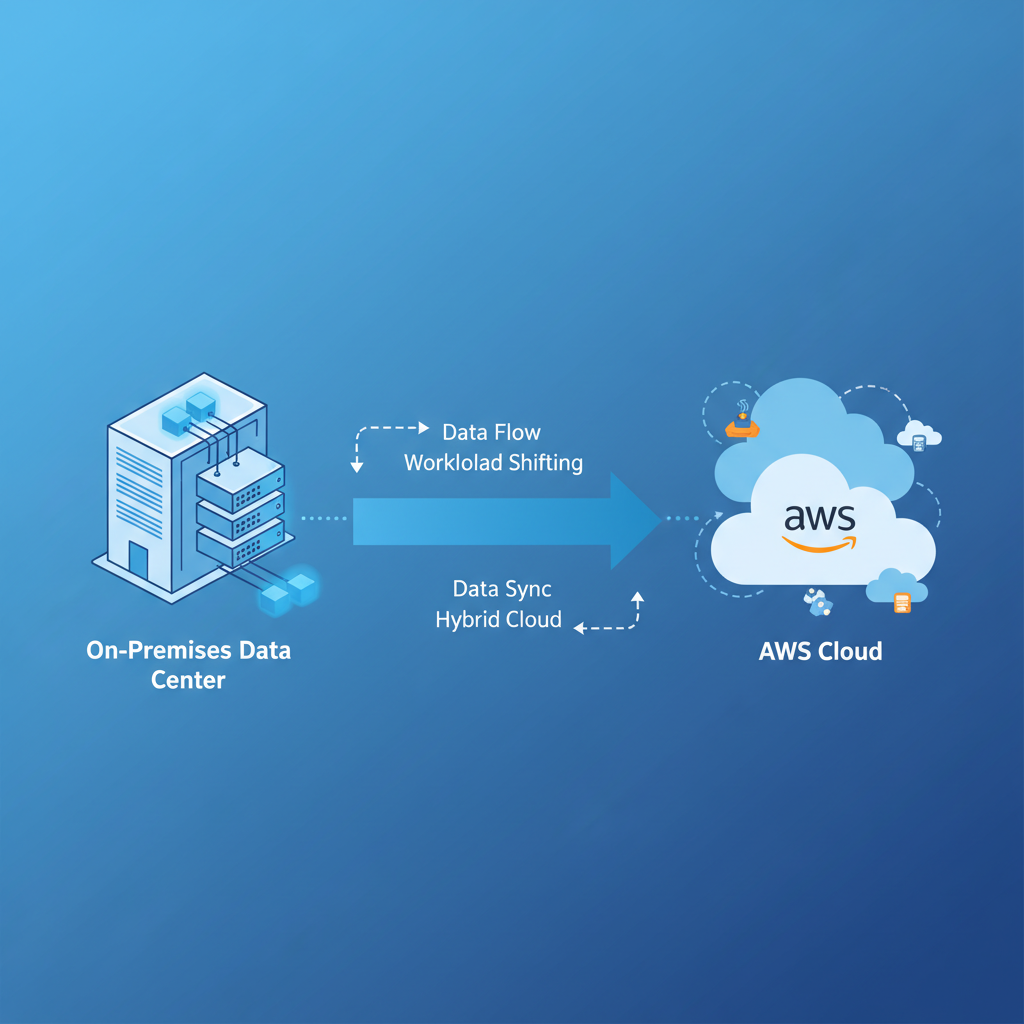
A diagram showing data flowing between an on-premises data center represented by servers in a building, and the AWS cloud represented by interconnected cloud icons, with arrows indicating bidirectional data movement and workload shifting.
This flexibility allows businesses to respond rapidly to market changes or unexpected spikes in traffic. It reduces the lead time for deploying new applications or expanding existing services. The elastic nature of AWS ensures resources are always available when needed.
Cost Optimization
Strategic hybrid cloud aws migration can lead to significant cost savings. By offloading certain workloads to AWS, you can reduce the need for extensive capital expenditure on on-premises hardware. You only pay for the cloud resources you consume, transforming CAPEX into OPEX.
Furthermore, optimizing resource utilization across both environments ensures that expensive on-premises resources are used efficiently. Non-critical or seasonal workloads can be migrated to AWS, freeing up local capacity. This intelligent allocation contributes directly to financial efficiency.
Improved Disaster Recovery and Business Continuity
Leveraging AWS for disaster recovery is a compelling reason for many hybrid deployments. Replicating critical data and applications to AWS provides a robust backup solution far more resilient than traditional on-premises alternatives. In the event of a local outage, workloads can failover to AWS.
This approach significantly enhances business continuity, minimizing downtime and data loss. AWS’s global infrastructure offers multiple availability zones and regions for high availability. It ensures that your operations can continue even under adverse circumstances.
Challenges and Considerations for hybrid cloud aws migration
While the benefits of a hybrid cloud aws migration are substantial, the journey is not without its complexities. Organizations must meticulously plan and address potential hurdles to ensure a smooth transition and successful long-term operation. Overlooking these challenges can lead to increased costs, security risks, or operational inefficiencies.
Understanding these considerations early in the planning phase helps mitigate risks and sets realistic expectations. It requires a thorough assessment of existing infrastructure, applications, and organizational capabilities. A proactive approach is essential for navigating the intricacies of a hybrid environment.
Network Latency and Bandwidth
One significant challenge is ensuring adequate network performance between on-premises and AWS environments. High latency or insufficient bandwidth can severely impact application performance and data synchronization. Applications relying on real-time data exchange require robust connectivity.
Implementing AWS Direct Connect can mitigate these issues by providing a dedicated, high-speed connection. However, proper network design and optimization remain critical. Thorough testing of network performance under anticipated load is indispensable for a successful hybrid architecture.
Data Security and Compliance
Maintaining a consistent security posture across both on-premises and cloud environments is paramount. Data protection, access control, and compliance with industry regulations become more complex in a distributed setup. Organizations must extend their security policies to AWS.
This involves careful configuration of AWS IAM, security groups, network ACLs, and encryption for data at rest and in transit. Understanding shared responsibility models between AWS and the customer is vital. A robust security strategy ensures data integrity and regulatory adherence throughout the hybrid cloud strategy.
Skill Gaps and Operational Complexity
Managing a hybrid environment requires a new set of skills and expertise from your IT team. Familiarity with both on-premises infrastructure and AWS services is necessary. Skill gaps can lead to operational inefficiencies or incorrect configurations.
Organizations might need to invest in training, recruit new talent, or leverage managed services. The increased operational complexity of monitoring and troubleshooting across two distinct environments also demands advanced tools and practices. Streamlining operations through automation is often a key objective.
✓ Free consultation ✓ No commitment required ✓ Trusted by experts
Planning Your hybrid cloud aws migration Strategy
A successful hybrid cloud aws migration begins with meticulous planning. A well-defined strategy ensures that your migration aligns with business objectives and minimizes disruptions. This phase involves assessing your current state, defining future goals, and outlining the path forward.
Consider this section your hybrid cloud aws migration guide for setting a strong foundation. Every step taken here influences the overall efficiency and effectiveness of your future hybrid operations. It is about making informed decisions before committing resources.
Step 1: Assess Your Current Environment
Begin by conducting a comprehensive audit of your existing on-premises infrastructure, applications, and data. Understand dependencies, performance requirements, and data sensitivity for each workload. Identify which applications are suitable for migration, modernization, or remaining on-premises.
Application Inventory: List all applications, their interdependencies, and resource requirements.
Data Assessment: Categorize data by sensitivity, compliance needs, and volume.
Infrastructure Evaluation: Document your current servers, storage, networking, and virtualization platforms.
Performance Baselines: Establish current performance metrics for critical applications to measure post-migration success.
Step 2: Define Your Hybrid Cloud Strategy
Based on your assessment, articulate a clear vision for your hybrid cloud strategy. Determine which workloads will reside where and why. This involves making strategic decisions about cloud bursting, disaster recovery, and data synchronization patterns.
Workload Placement: Decide whether applications will remain on-premises, move to AWS, or operate in a hybrid fashion.
Networking Strategy: Plan your connectivity model (e.g., AWS Direct Connect, VPN) and IP addressing scheme.
Security & Compliance: Outline how you will extend your security framework and meet compliance requirements in AWS.
Operating Model: Define how your teams will manage and operate the hybrid environment, including monitoring and incident response.
Step 3: Design Your Hybrid Architecture
Translate your strategy into a detailed architectural design. This involves selecting appropriate AWS services and integrating them with your on-premises components. Focus on creating an interoperable and resilient solution.
Service Selection: Choose specific AWS services (EC2, S3, RDS, Storage Gateway, Outposts, etc.) for each workload.
Integration Points: Design how on-premises systems will interact with AWS services, considering APIs, databases, and message queues.
Scalability & Resilience: Architect for high availability, fault tolerance, and elasticity in both environments.
Network Topology: Detail your hybrid network design, including routing, firewalls, and subnets.
Step 4: Develop a Migration Plan
Create a phased, actionable plan for migrating your applications and data. Break down the migration into manageable stages, prioritizing critical workloads and leveraging best practices for hybrid cloud aws migration. This forms the backbone of your best hybrid cloud aws migration approach.
Pilot Migration: Start with a small, non-critical application to test your processes and validate your design.
Phased Rollout: Group applications logically and migrate them in phases, minimizing impact on business operations.
Data Migration Strategy: Plan how data will be moved (e.g., AWS DataSync, Snowball, database migration services) and synchronized.
Rollback Plan: Establish clear procedures for rolling back to the previous state if issues arise during migration.
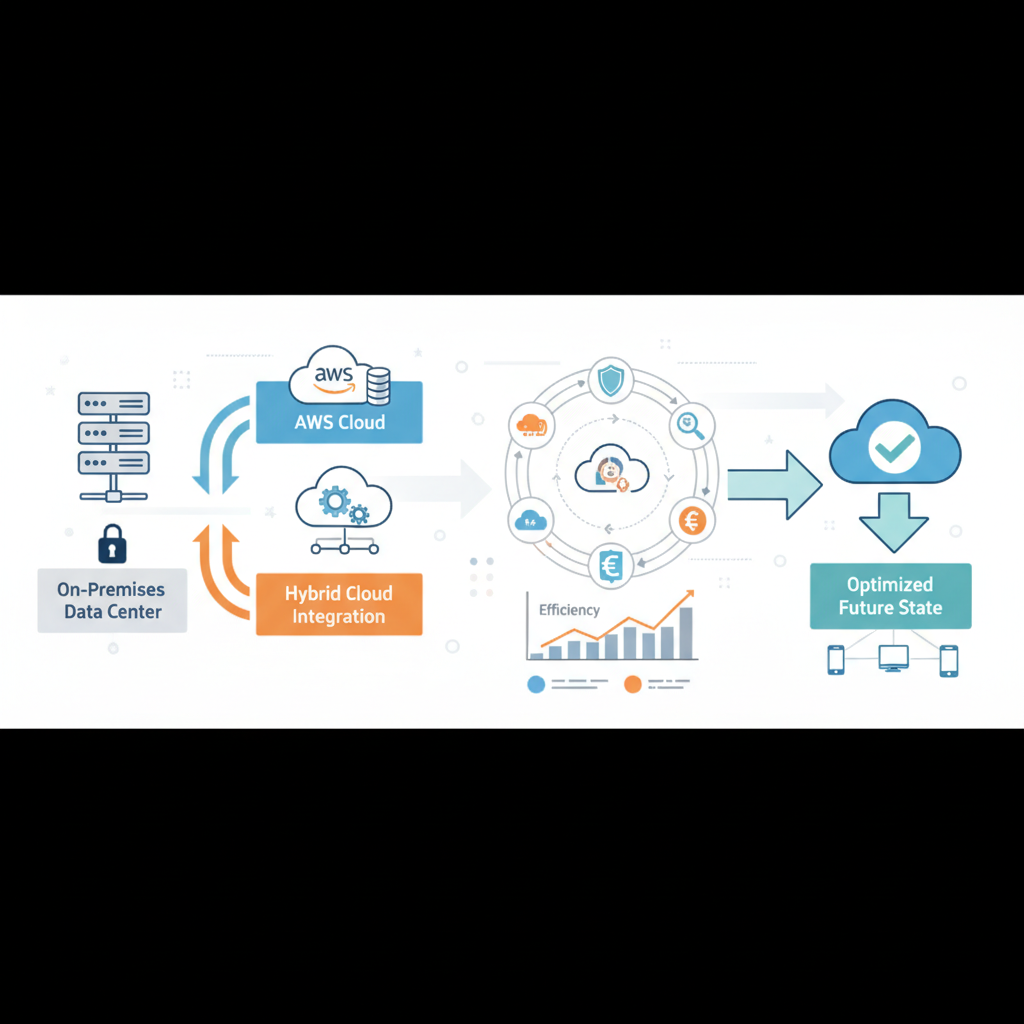
Professional visual illustration related to hybrid cloud aws migration
Phased Approach to hybrid cloud aws migration
Executing your hybrid cloud aws migration plan requires a systematic, phased approach to minimize risk and ensure continuity. Rushing the process can lead to costly errors and downtime. A methodical progression allows for learning and adjustments along the way.
Following a structured methodology is one of the best hybrid cloud aws migration tips. It breaks down a large, complex project into smaller, more manageable steps. Each phase builds upon the success of the previous one, leading to a robust final state.
Phase 1: Preparation and Foundation Building
Before any actual migration occurs, focus on preparing your AWS environment and establishing the foundational connectivity. This phase sets up the technical backbone for your hybrid operations. It ensures that the necessary infrastructure is in place.
1. Establish Network Connectivity: Implement AWS Direct Connect or configure VPN connections between your data center and AWS. Ensure stable and secure communication. 2. Set Up AWS Accounts and IAM: Structure your AWS accounts and define IAM roles and policies. This provides proper access control and security. 3. Configure Core AWS Services: Provision essential services like VPCs, subnets, routing tables, and security groups. Establish a baseline cloud environment. 4. Implement Monitoring and Logging: Set up AWS CloudWatch, CloudTrail, and other logging tools. This provides visibility into your hybrid environment from day one.
Phase 2: Pilot Migration and Testing
Start with a non-critical application or workload to validate your migration strategy and technical design. This pilot phase is crucial for identifying potential issues and refining your processes. It’s a low-risk way to gain experience.
1. Select a Pilot Application: Choose an application that is not overly complex and has minimal dependencies. This limits potential impact. 2. Migrate Pilot Workload: Execute the migration steps for the chosen application, including data transfer and application deployment in AWS. 3. Perform Comprehensive Testing: Rigorously test the migrated application for functionality, performance, security, and interoperability between environments. 4. Evaluate and Refine: Document lessons learned, identify areas for improvement, and adjust your migration plan based on the pilot’s outcome.
Phase 3: Iterative Workload Migration
Once the pilot is successful and your processes are refined, proceed with migrating additional workloads in an iterative fashion. Group similar applications and migrate them in batches. This approach helps maintain momentum and manage complexity.
1. Group Applications: Identify logical groupings of applications with similar requirements or dependencies. This facilitates efficient migration waves. 2. Execute Migration Waves: Follow your refined migration plan for each group, ensuring thorough testing after each wave. 3. Monitor Performance and Health: Continuously monitor the health and performance of migrated applications in the hybrid environment. Address any anomalies promptly. 4. Optimize and Automate: Look for opportunities to optimize migrated resources, automate repetitive tasks, and improve overall efficiency in AWS.
Phase 4: Post-Migration Optimization and Operations
After all planned workloads have been migrated, the focus shifts to ongoing optimization, management, and continuous improvement of your hybrid cloud. This ensures long-term success and maximizes ROI.
1. Refine Cost Management: Continuously monitor AWS costs and optimize resource utilization. Leverage AWS Cost Explorer and budgeting tools. 2. Strengthen Security Posture: Regularly review security configurations, IAM policies, and compliance adherence. Implement automated security checks. 3. Enhance Operational Efficiency: Automate management tasks, implement infrastructure as code (IaC), and streamline operational workflows. 4. Plan for Future Growth: Continuously evaluate new AWS services and evolve your hybrid cloud strategy to meet changing business needs.
Tools and Technologies for AWS Hybrid Cloud
AWS provides a rich ecosystem of services specifically designed to facilitate and manage hybrid cloud deployments. These tools help bridge the gap between on-premises and cloud environments, ensuring seamless operation and data synchronization. Understanding and utilizing these services is key to a successful hybrid cloud aws migration.
Leveraging the right tools can simplify complex tasks, enhance security, and improve overall management efficiency. From network connectivity to storage and compute, AWS offers robust solutions for various hybrid use cases. This section highlights some essential AWS services.
Connectivity and Networking
Establishing reliable and secure network connectivity is fundamental for any hybrid architecture. AWS offers several options to ensure seamless communication between your on-premises data center and AWS. These services are crucial for interoperability.
AWS Direct Connect: Provides a dedicated, private network connection from your premises to AWS. This bypasses the internet, offering consistent network performance, reduced bandwidth costs, and enhanced security.
AWS VPN: Allows you to establish secure IPsec VPN connections over the public internet between your data center and your Amazon VPC. It’s a cost-effective option for less critical workloads or as a backup for Direct Connect.
AWS Transit Gateway: Acts as a network transit hub, simplifying the routing and connectivity between your VPCs, AWS accounts, and on-premises networks. It streamlines complex network architectures.
Compute and Management
Extending compute capabilities and managing resources across both environments is a core aspect of hybrid cloud. AWS provides services that allow you to run AWS infrastructure and services directly within your own data center. This brings the cloud closer to your data.
AWS Outposts: Brings native AWS services, infrastructure, and operating models to virtually any on-premises facility. It allows you to run AWS compute, storage, and database services locally while seamlessly connected to the broader AWS region.
VMware Cloud on AWS: Enables customers to run VMware’s software-defined data center (SDDC) stack directly on AWS bare-metal infrastructure. This facilitates easy migration and extension of existing VMware workloads to AWS.
AWS Systems Manager: Offers a unified interface to view and control your operational data from your AWS resources and on-premises servers. It helps automate operational tasks across your hybrid environment.
Storage and Data Synchronization
Efficient data synchronization and storage management are critical for maintaining consistency and availability in a hybrid setup. AWS offers various services to connect your on-premises storage with cloud storage. This ensures data is where it needs to be.
AWS Storage Gateway: Connects on-premises applications to cloud storage in AWS. It offers file, volume, and tape gateway options, allowing you to store and retrieve data seamlessly from AWS S3, EBS, and Glacier.
AWS DataSync: Simplifies and accelerates data transfer between on-premises storage systems and AWS storage services (S3, EFS, FSx). It handles encryption, integrity checks, and error recovery automatically.
Amazon S3 (Simple Storage Service): Provides highly scalable, durable, and secure object storage for a wide range of uses, including backup, archiving, and data lakes. It’s often a destination for data moved from on-premises.
Post-Migration Optimization and Management
Successfully completing your hybrid cloud aws migration is an important milestone, but it marks the beginning of continuous optimization and ongoing management. The dynamic nature of hybrid environments requires vigilance and proactive strategies. Post-migration activities ensure that your investment continues to deliver maximum value and efficiency.
Effective management focuses on cost control, performance tuning, and maintaining a robust security posture. This continuous improvement mindset is crucial for long-term success. It ensures your hybrid architecture evolves with your business needs.
Continuous Monitoring and Performance Tuning
Maintaining optimal performance across your hybrid environment requires continuous monitoring. Utilize AWS CloudWatch and other monitoring tools to track key metrics for both cloud and on-premises resources. This proactive approach helps identify bottlenecks.
Regularly analyze performance data to identify areas for optimization. This could involve adjusting instance types, optimizing database queries, or fine-tuning network configurations. Consistent performance tuning ensures applications run efficiently.
Cost Management and Optimization
Managing costs in a hybrid environment can be complex, but it’s essential for financial efficiency. Leverage AWS Cost Explorer, AWS Budgets, and tagging strategies to gain visibility into your cloud spending. This helps in understanding where your money is going.
Look for opportunities to optimize your AWS spend by rightsizing instances, utilizing Reserved Instances or Savings Plans, and archiving infrequently accessed data to cheaper storage tiers. Regularly review your resource utilization to avoid unnecessary expenses.
Security Posture Enhancement
Security is an ongoing process, especially in a hybrid landscape. Continuously review and enhance your security posture, ensuring that your on-premises and AWS environments remain protected. Regular audits and vulnerability assessments are vital.
Implement automated security checks using AWS Security Hub and GuardDuty. Keep your IAM policies updated, enforce multi-factor authentication, and ensure data encryption is consistently applied. Staying ahead of potential threats is paramount.
Automation and Infrastructure as Code
Embrace automation to streamline operational tasks and reduce manual effort in your hybrid environment. Use tools like AWS CloudFormation or Terraform to manage your infrastructure as code (IaC). This ensures consistency and reproducibility.
Automate routine tasks such as patching, backups, and resource provisioning. Automation not only improves efficiency but also reduces the likelihood of human error. It fosters a more agile and reliable operational model for your hybrid cloud strategy.
Frequently Asked Questions
This section addresses common queries regarding hybrid cloud aws migration. Understanding these fundamental questions can help clarify concepts and guide your planning process.
What is hybrid cloud aws migration?
Hybrid cloud aws migration is the process of moving or extending applications and data from an on-premises data center to AWS, while maintaining a seamless connection and operational integration between both environments. It combines the benefits of public cloud scalability and agility with the control and security of local infrastructure. This approach allows workloads to run where they make the most sense, based on factors like compliance, performance, and cost.
Why choose a hybrid cloud strategy with AWS?
Organizations choose a hybrid cloud strategy with AWS for several compelling reasons. It offers enhanced flexibility, allowing workloads to be placed optimally. It also provides a robust solution for disaster recovery and business continuity, leveraging AWS’s global infrastructure. Furthermore, it enables cost optimization by reducing capital expenditure and scaling resources as needed, all while helping meet specific regulatory compliance requirements.
What are the key challenges in a hybrid cloud aws migration?
Key challenges in a hybrid cloud aws migration often include managing network latency and bandwidth between environments, ensuring consistent data security and compliance across both platforms, and addressing potential skill gaps within IT teams. The complexity of integrating disparate systems and maintaining interoperability also presents significant hurdles. Careful planning and the right tools are essential to overcome these challenges.
How does AWS Outposts fit into a hybrid cloud strategy?
AWS Outposts is a fully managed service that extends AWS infrastructure, services, APIs, and tools to virtually any on-premises data center, co-location space, or edge location. It enables customers to run AWS compute, storage, and other services locally, while being seamlessly connected to an AWS Region. This allows for running latency-sensitive applications on-premises with native AWS capabilities, making it a critical component for true hybrid architectures.
Is data synchronization critical for hybrid cloud?
Yes, data synchronization is absolutely critical for a successful hybrid cloud. It ensures that data remains consistent and up-to-date across both on-premises and AWS environments. Tools like AWS Storage Gateway and AWS DataSync facilitate this process, enabling applications to access the most current data regardless of their location. Effective data synchronization prevents data inconsistencies and ensures application integrity.
✓ Free consultation ✓ No commitment required ✓ Trusted by experts
Conclusion
Embarking on a hybrid cloud aws migration is a transformative journey that offers immense benefits for modern enterprises. From enhanced agility and scalability to robust disaster recovery and significant cost optimization, the strategic advantages are clear. While challenges exist, a methodical approach, coupled with the right tools and expertise, can ensure a smooth and successful transition.
By carefully planning your hybrid cloud strategy, leveraging AWS’s comprehensive suite of services, and committing to continuous optimization, your organization can build a resilient, flexible, and future-ready IT infrastructure. The insights and best hybrid cloud aws migration tips provided in this guide aim to empower your team to navigate this complex landscape with confidence.
Johan Carlsson is a cloud architecture specialist and frequent speaker focused on scalable workloads, AI/ML, and IoT innovation. At Opsio, he helps organizations harness cutting-edge technology, automation, and purpose-built services to drive efficiency and achieve sustainable growth. Johan is known for enabling enterprises to gain a competitive advantage by transforming complex technical challenges into powerful, future-ready cloud solutions.