

Understand the True Cost of AWS Migration Today

March 11, 2026|7:27 AM
Unlock Your Digital Potential
Whether it’s IT operations, cloud migration, or AI-driven innovation – let’s explore how we can support your success.
March 11, 2026|7:27 AM
Whether it’s IT operations, cloud migration, or AI-driven innovation – let’s explore how we can support your success.
Migrating your infrastructure and applications to the cloud, specifically to Amazon Web Services (AWS), offers numerous benefits, including scalability, flexibility, and innovation. However, a successful transition hinges on a thorough understanding of the cost of aws migration. It’s not merely about lifting and shifting; it involves a detailed financial roadmap.
Calculating the full spectrum of migration expenses is crucial for any business contemplating this significant move. A clear picture helps in budgeting, securing stakeholder buy-in, and ensuring that the anticipated return on investment (ROI) is realistic. Without a precise cost analysis, organizations risk unexpected cloud spending and project delays.
The journey to the cloud involves distinct phases, each carrying its own set of financial implications. Understanding these phases is fundamental to accurately estimating the cost of aws migration. These factors span from initial planning and execution to the ongoing operational realities post-migration.
Careful consideration of these elements will help in developing a comprehensive budgeting plan. It ensures that no major financial component is overlooked, providing a more predictable cloud spending experience. Let’s delve into the specific cost considerations at each stage.
Before any actual data transfer begins, several critical steps need funding. These preparatory stages lay the groundwork for a smooth migration and significantly influence the overall cost of aws migration. Investing wisely here can prevent more expensive issues later.
The actual execution phase involves several direct expenditures that contribute substantially to the cost of aws migration. These are often the most visible expenses and require careful monitoring. Unexpected complexities here can quickly escalate cloud spending.
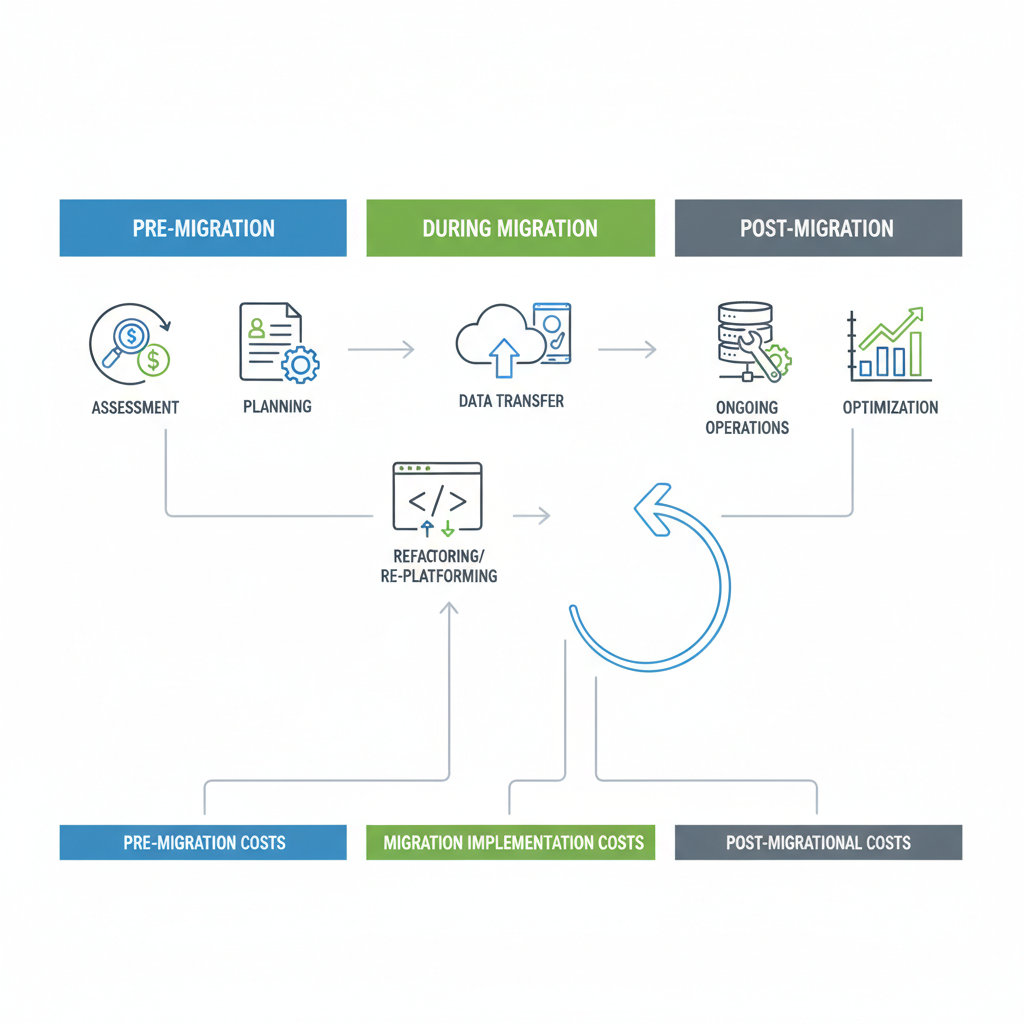
Once your applications and data are successfully in AWS, the focus shifts to ongoing operational costs. These are recurring expenditures that form the bulk of your long-term cloud spending and are critical to understanding the total cost of ownership (TCO). Effective cost optimization strategies become paramount at this stage.
Beyond the direct cost of aws migration, a holistic view requires evaluating the Total Cost of Ownership (TCO). TCO accounts for all direct and indirect expenses associated with the cloud solution over its lifecycle, comparing it against your current on-premises infrastructure. A robust TCO analysis is essential for demonstrating the long-term financial benefits of cloud adoption.
This comprehensive approach goes beyond just comparing infrastructure bills. It encompasses the broader financial impact, including the opportunity costs and potential productivity gains. Understanding TCO helps justify the initial migration expenses and illustrates the strategic value of cloud investment.
Direct costs are easily quantifiable expenditures that directly relate to your IT infrastructure and operations. These are the obvious entries in your budgeting spreadsheet.
Indirect costs are less tangible but can have a substantial impact on your overall financial health. These are often overlooked but are crucial for a complete cost analysis.
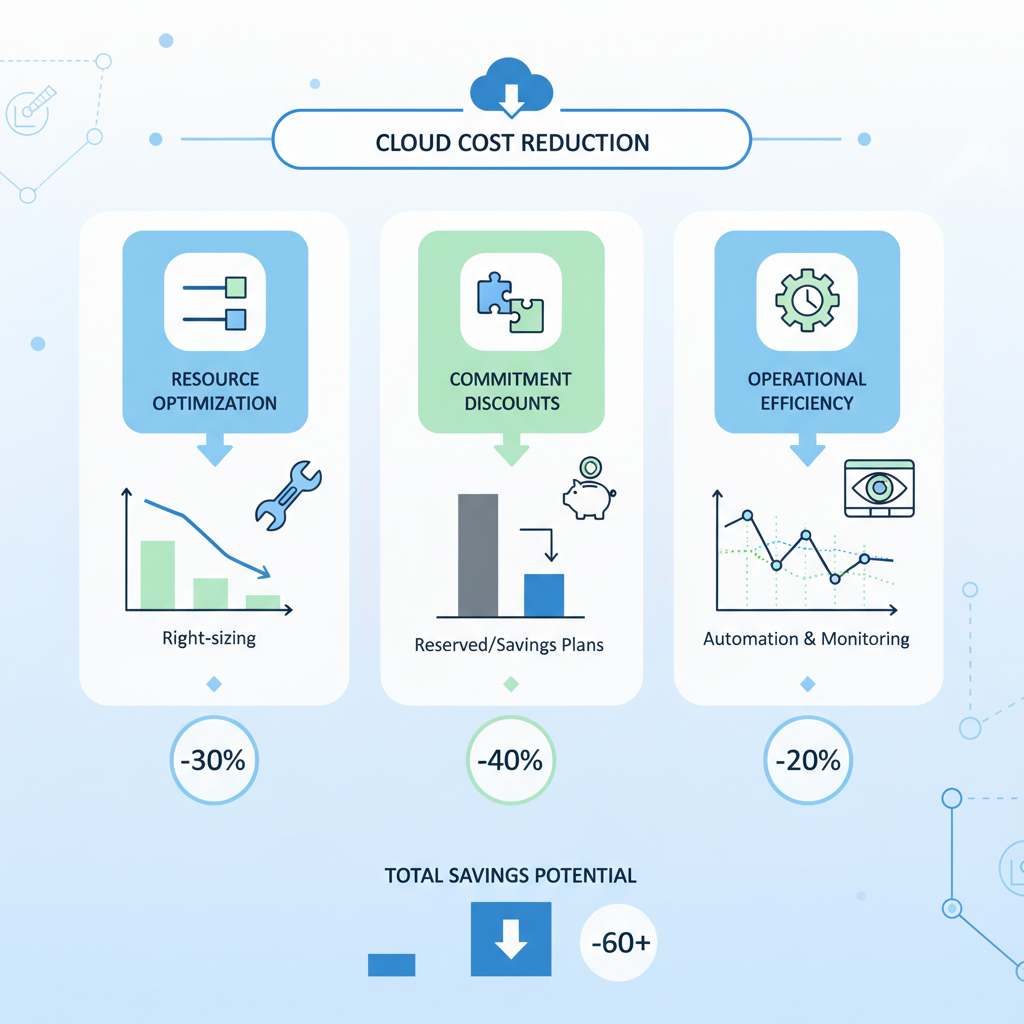
Migrating to AWS is not just about moving workloads; it’s also a prime opportunity for cost optimization. Implementing smart strategies from the outset can significantly reduce your overall cloud spending and improve your TCO. These approaches focus on efficient resource utilization and leveraging AWS’s flexible pricing models.
By proactively managing your cloud environment, you can ensure that the cost of aws migration translates into long-term savings. Ignoring these strategies can lead to inefficient spending, negating many of the cloud’s financial advantages. Let’s explore some effective methods.
Approaching migration in phases allows for better control over migration expenses and reduces risk. It helps identify early wins and lessons learned, which can be applied to subsequent phases.
Efficient resource management is a cornerstone of effective cost optimization. Avoid overprovisioning and ensure your resources align with actual demand.
AWS offers various pricing models designed to provide flexibility and cost savings. Understanding and utilizing these models can dramatically reduce your cloud spending.
A structured approach to budgeting is vital for managing the cost of aws migration effectively. This guide outlines the key steps to develop a realistic and comprehensive budget, ensuring you account for all potential migration expenses and future cloud spending. Following these steps helps minimize surprises and maintains financial control throughout the migration process.
Begin by thoroughly documenting your existing IT landscape. This includes servers, storage, networking, applications, and dependencies. Understand current resource utilization patterns, peak loads, and licensing agreements. This initial data forms the baseline for your cost analysis.
Based on your assessment, determine the appropriate migration strategy for each application (e.g., Rehost, Replatform, Refactor). Clearly define the scope of the migration, including which applications and data will move, and when. This clarity helps in accurately estimating the cost of aws migration for each phase.
Calculate the one-time costs associated with the actual migration. This includes data transfer costs, potential refactoring efforts, and the use of migration tools and services. Factor in any temporary dual-run costs where you’ll be paying for both on-premises and cloud environments.
Estimate your ongoing operational costs in AWS. Use the AWS Pricing Calculator or TCO Calculator to model resource usage (EC2, S3, RDS, etc.) based on your defined strategy. Consider different AWS pricing models like Reserved Instances or Savings Plans for significant cost optimization.
Include the costs associated with your internal team. This might involve training for new AWS skills, hiring cloud specialists, or engaging external consultants. Remember that managing cloud infrastructure requires specific expertise that impacts your total cost of ownership.
Always allocate a contingency budget, typically 10-20% of the total estimated cost. Unexpected challenges or unforeseen requirements can arise during migration, making a buffer essential to avoid budget overruns. A contingency plan is crucial for managing unexpected migration expenses.
Even with careful planning, certain mistakes can lead to significant cost overruns during an AWS migration. Recognizing these common pitfalls allows you to proactively mitigate risks and ensure your cost analysis remains accurate. Avoiding these errors is key to successful cost optimization and a positive TCO.
The cost of aws migration is generally structured into three main phases: pre-migration (assessment, planning, training), during migration (data transfer, refactoring, temporary dual-run), and post-migration (ongoing AWS resource usage, licensing, support, and management). Each phase has distinct migration expenses that contribute to the total cost.
Hidden migration expenses often include data egress costs from AWS, the true effort and cost of refactoring complex legacy applications, overlooked licensing changes, and insufficient budgeting for personnel training. Underestimating the time and resources needed for post-migration cost optimization is another common oversight.
Yes, effective cost optimization strategies can significantly reduce your total cost of ownership (TCO) in AWS. By right-sizing resources, leveraging AWS pricing models like Reserved Instances and Savings Plans, and continuously monitoring cloud spending, organizations can ensure they pay only for what they use, leading to substantial long-term savings.
To get an accurate cost analysis, start by thoroughly assessing your current on-premises environment and workload characteristics. Use tools like the AWS Migration Evaluator and the AWS Pricing Calculator to model your potential cloud spending. Engage with AWS solutions architects or migration partners for expert guidance and customized estimates based on your specific requirements.
Cloud spending constitutes the primary component of post-migration costs. This includes the recurring charges for AWS services (compute, storage, databases, networking), software licenses, and AWS support plans. Effective management of cloud spending through continuous monitoring and cost optimization efforts is crucial for maintaining a favorable total cost of ownership after migration.
Navigating the financial landscape of an AWS migration can seem daunting, but with a structured approach and a keen understanding of the various cost drivers, it’s a manageable endeavor. By meticulously planning for migration expenses, from the initial assessment to ongoing operational cloud spending, you can ensure a successful and financially sound transition.
Embracing robust cost analysis and implementing proactive cost optimization strategies are not just good practices; they are essential for realizing the full potential of your AWS investment. A well-managed cost of aws migration ultimately translates into reduced total cost of ownership and accelerated business innovation.




Experience power, efficiency, and rapid scaling with Cloud Platforms!