Effective Replatforming Risks Mitigation Strategies for Your Business
March 10, 2026|12:23 PM
Unlock Your Digital Potential
Whether it’s IT operations, cloud migration, or AI-driven innovation – let’s explore how we can support your success.
Home /
Work /
Blogs /
Effective Replatforming Risks Mitigation Strategies for Your Business
Understanding the Landscape of replatforming risks mitigation
Replatforming represents a significant strategic undertaking for any organization. It involves migrating an existing software application or infrastructure to a new platform. This process often promises enhanced performance, scalability, security, and reduced operational costs.
However, the journey is rarely without its complexities and potential pitfalls. Proactive replatforming risks mitigation is absolutely essential for a successful transition. Ignoring potential issues can lead to costly delays, data loss, business disruption, and a failure to achieve desired outcomes.
Effective replatforming risks mitigation ensures that an organization can confidently navigate these changes. It involves identifying, assessing, and systematically addressing every conceivable risk before, during, and after the migration. A well-executed mitigation strategy protects investments and secures future operational stability.
Identifying Key Replatforming Challenges and Risks
Embarking on a replatforming project introduces a myriad of potential replatforming challenges that demand careful attention. Understanding these risks is the first critical step in developing an effective risk management replatforming strategy. These challenges can span technical, operational, financial, and human elements, each carrying its own unique set of potential negative impacts.
Technical risks often arise from the inherent complexities of integrating new systems. Compatibility issues between legacy and target platforms can lead to unexpected performance problems or complete system failures. Data migration errors, including loss, corruption, or incomplete transfers, pose a significant threat to business continuity and data integrity.
Operational risks encompass disruptions to daily business activities. Downtime during the migration phase can halt critical operations, impacting revenue and customer satisfaction. Post-migration performance issues, such as slower response times or system instability, can also severely affect user experience and productivity.
Financial risks are a common concern in any large-scale project. Budget overruns are frequent due to unforeseen technical challenges, extended timelines, or unbudgeted resource requirements. There are also hidden costs associated with training, new licensing fees, and potential post-migration bug fixes.
Finally, human factors play a crucial role. Resistance to change from employees, a lack of necessary skills within the team, or poor communication can derail even the most meticulously planned replatforming efforts. These interpersonal and organizational challenges must be acknowledged and addressed proactively.
Developing a Robust Risk Management Replatforming Strategy
Creating an effective risk management replatforming strategy is foundational to a successful migration. This strategy goes beyond simply identifying potential problems; it involves a structured approach to prevent, minimize, and respond to risks. A comprehensive plan ensures that every stage of the replatforming process is secure and well-managed.
The initial phase requires a thorough pre-migration assessment, which includes extensive due diligence on both the existing and target platforms. This is where a clear replatforming risks mitigation guide truly begins to take shape. Detailed analysis helps in understanding system dependencies, data structures, and performance requirements.
Vendor selection is another critical component, as the right partner can significantly influence the success of the project. Their expertise and track record in replatforming risks mitigation are paramount. Look for vendors who offer robust support and transparent communication throughout the entire project lifecycle.
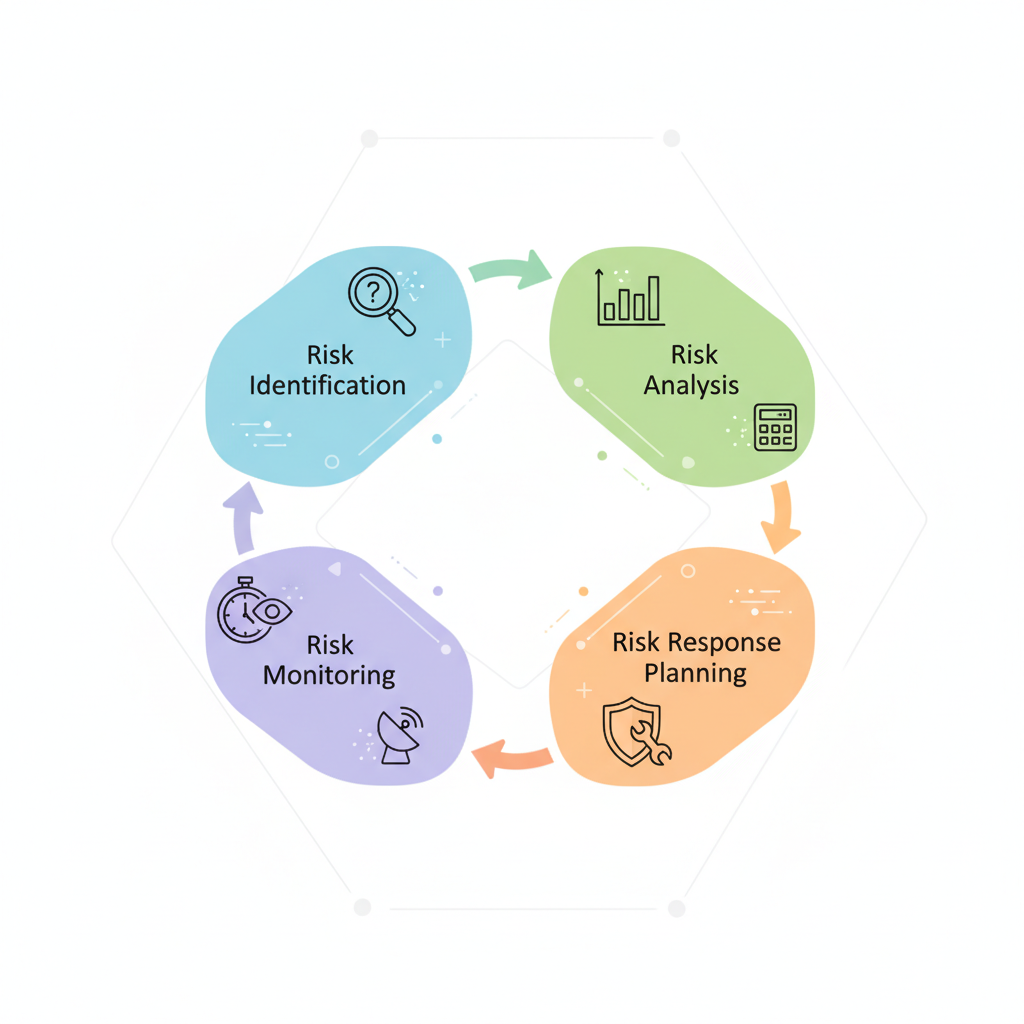
Risk identification should be an ongoing collaborative effort involving all stakeholders. Once identified, each risk must undergo a thorough analysis to determine its likelihood and potential impact. This assessment forms the basis for prioritizing risks and allocating resources effectively.
Response planning then details the actions to be taken for each significant risk. This could involve avoidance strategies, mitigation measures to reduce impact, transfer strategies (like insurance), or acceptance of minor, unavoidable risks. This structured approach helps in how to replatforming risks mitigation effectively.
A flowchart illustrating the stages of risk management: Risk Identification, Risk Analysis, Risk Response Planning, Risk Monitoring, with arrows connecting them in a loop.
✓ Free consultation ✓ No commitment required ✓ Trusted by experts
Practical Steps for Effective replatforming risks mitigation
Implementing practical steps is crucial for successful replatforming risks mitigation. These actionable strategies help organizations navigate the complexities of migration, ensuring a smoother transition and protecting critical assets. Adopting these best practices minimizes disruptions and enhances the overall success rate.
Comprehensive Data Migration Strategy
Data is the lifeblood of any organization, making data migration one of the most critical aspects of replatforming. Develop a meticulous plan that outlines how data will be extracted, transformed, and loaded into the new system. Prioritize data integrity and accuracy above all else throughout this process.
Consider a phased data migration if possible, moving non-critical data first to test the process. Implement robust validation checks at every stage to identify and correct errors before they propagate. Back up all data extensively before starting any migration process, providing a critical safety net.
Phased Rollout and Incremental Deployment
A full-scale, “big bang” migration carries immense risk; thus, a phased rollout is generally recommended. This approach involves deploying the new platform in smaller, manageable segments or to a limited user base first. It allows for thorough testing and identification of issues in a controlled environment.
This incremental deployment minimizes the blast radius of any potential problem, making replatforming risks mitigation far more manageable. It also provides valuable feedback from early adopters, allowing for adjustments before a wider rollout. This strategy significantly reduces overall project risk.
Rigorous Testing and Quality Assurance
Testing is not a single event but a continuous process throughout the replatforming journey. Implement a comprehensive testing strategy that includes unit testing, integration testing, performance testing, security testing, and user acceptance testing (UAT). Each phase identifies specific types of issues.
Automated testing tools can significantly enhance efficiency and coverage, allowing for repetitive and thorough checks. Ensure that testing scenarios cover all critical business functions and edge cases. Thorough testing is one of the best replatforming risks mitigation techniques.
Stakeholder Communication and Training
Clear, consistent communication is vital to manage expectations and garner support from all stakeholders. Regularly update teams, leadership, and end-users on progress, potential challenges, and timelines. Transparency builds trust and helps mitigate resistance to change.
Provide ample training for employees who will be using the new platform. This ensures they are proficient with the new system, minimizing post-migration productivity dips and frustration. Comprehensive training is an essential part of replatforming risks mitigation examples.
Robust Backup and Rollback Plans
Despite the most thorough planning, unforeseen issues can still arise. Therefore, having robust backup and rollback plans is non-negotiable. Ensure that all systems and data are backed up prior to migration, allowing for a complete restoration if necessary.
A detailed rollback strategy outlines the exact steps to revert to the old system quickly and efficiently. This plan should be tested and communicated to relevant teams. It provides a crucial safety net, mitigating the impact of severe migration failures.
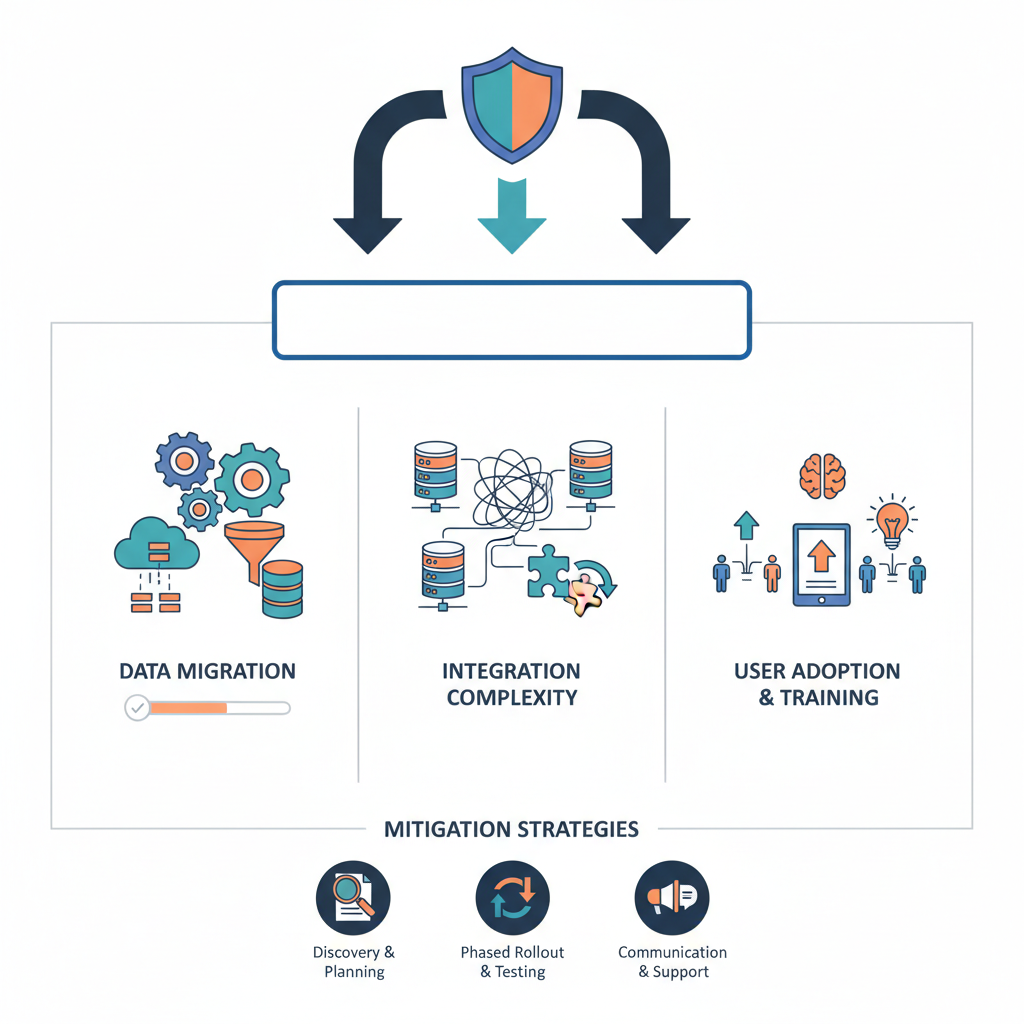
Professional visual illustration related to replatforming risks mitigation
Moving beyond basic precautions, advanced replatforming risks mitigation strategies offer deeper layers of protection and efficiency. These sophisticated approaches leverage modern tools and methodologies to enhance project resilience and accelerate successful transitions. Implementing these techniques showcases a mature approach to complex migrations.
Automated testing and validation, for instance, play a much larger role in advanced strategies. Instead of manual checks, continuous integration and continuous delivery (CI/CD) pipelines can automate the testing of code and configurations in the new environment. This significantly reduces human error and speeds up the identification of bugs.
Leveraging cloud-native tools and services can further bolster replatforming risks mitigation. Cloud platforms offer inherent redundancy, scalability, and managed services that can simplify infrastructure management. Utilizing features like infrastructure as code (IaC) allows for consistent and reproducible deployments, minimizing configuration drift issues.
Contingency planning should extend beyond simple rollback scenarios. Develop detailed disaster recovery plans specific to the new platform, considering regional outages or major service disruptions. This proactive thinking helps in maintaining business continuity even in extreme circumstances.
Continuous monitoring post-migration is another advanced strategy. Implement robust monitoring tools that track performance, security, and resource utilization in real-time. This allows for immediate detection of anomalies and proactive resolution before they escalate into major problems, embodying a dynamic replatforming risks mitigation tutorial.
Case Studies and Lessons Learned
Examining real-world replatforming risks mitigation examples provides invaluable insights into successful strategies and common pitfalls. These scenarios highlight the practical application of risk management principles and underscore the importance of preparation. Understanding past experiences can inform future decisions, reinforcing the concept of replatforming risks mitigation for beginners and seasoned professionals alike.
Consider a retail company that migrated its e-commerce platform. During testing, they discovered significant performance degradation under high load. Instead of pushing forward, they paused, re-architected critical components, and optimized their database queries. This proactive approach, though delaying launch, prevented a catastrophic customer experience on release.
Another example involves a financial institution facing strict regulatory compliance. Their replatforming strategy included a dedicated legal and compliance team from day one. They ensured every data migration and security protocol adhered to regulations, mitigating massive potential fines and reputational damage. This comprehensive team effort exemplifies thorough risk management.
Conversely, a common pitfall arises when organizations underestimate data migration complexity. A media company once neglected to adequately cleanse its historical customer data before moving it to a new CRM. The result was a corrupted, unusable database on the new system, requiring a costly and time-consuming manual cleanup. This highlights the critical need for a detailed data quality plan.
These examples underscore that effective replatforming risks mitigation strategies are multifaceted. They require not only technical prowess but also strong project management, inter-departmental collaboration, and a willingness to adapt based on insights gained during the process. Learning from these scenarios empowers teams to anticipate and circumvent similar issues.
Building an Expert Team for Successful Replatforming
The success of any replatforming initiative heavily relies on the expertise and collaboration of the project team. Building a strong, cross-functional team is paramount for effective replatforming risks mitigation. The right individuals with diverse skill sets can anticipate problems, innovate solutions, and ensure a smooth transition.
A successful replatforming team typically includes members from IT, development, operations, business units, legal, and security. Each department brings a unique perspective and essential knowledge that contributes to a holistic risk management replatforming approach. Clear roles and responsibilities must be defined from the project’s inception to avoid confusion and ensure accountability.
Team members should possess deep expertise in both the current legacy platform and the target platform. This dual understanding is critical for identifying potential compatibility issues, translating functionalities, and designing effective migration paths. Gaps in expertise should be addressed through training or by bringing in external consultants.
Continuous communication within the team and with external stakeholders is vital. Regular meetings, clear documentation, and transparent progress reports help keep everyone aligned and informed. Fostering an environment of open dialogue encourages early identification of replatforming challenges and collaborative problem-solving.
Ultimately, investing in your team’s capabilities and fostering a culture of preparedness is one of the most effective replatforming risks mitigation strategies. A well-equipped, knowledgeable, and cohesive team is your strongest asset against the inherent uncertainties of platform migration.
✓ Free consultation ✓ No commitment required ✓ Trusted by experts
Conclusion and Next Steps
Replatforming is a journey filled with both immense potential and significant peril. However, by embracing a proactive and systematic approach to replatforming risks mitigation, organizations can confidently navigate this complex landscape. The key lies in thorough planning, meticulous execution, and continuous vigilance. From identifying initial replatforming challenges to implementing advanced risk management replatforming strategies, every step contributes to a successful outcome.
Remember that replatforming risks mitigation is not a one-time event, but an ongoing process that demands attention throughout the project lifecycle and beyond. By prioritizing comprehensive data strategies, phased rollouts, rigorous testing, and clear communication, businesses can significantly reduce their exposure to risk. Cultivating an expert, well-informed team further strengthens an organization’s ability to overcome obstacles. Take these lessons, integrate them into your strategic planning, and ensure your next replatforming initiative is a resounding success, unlocking new levels of efficiency and innovation.
Frequently Asked Questions
What is replatforming?
Replatforming refers to the process of migrating an existing software application or entire technology infrastructure from one underlying platform to another. This can involve moving to a different operating system, database, cloud provider, or application framework to achieve better performance, scalability, or cost efficiency.
Why is replatforming risks mitigation crucial?
Replatforming risks mitigation is crucial because migrations inherently involve significant complexity and potential for disruption. Without proactive risk management, organizations face increased chances of data loss, extended downtime, budget overruns, security breaches, and overall project failure, impacting business continuity and reputation.
What are the biggest replatforming risks?
The biggest replatforming risks typically include data loss or corruption during migration, unexpected system downtime, performance degradation on the new platform, budget overruns due to unforeseen complexities, and security vulnerabilities introduced during the transition. Poor communication and lack of skilled personnel also pose significant threats.
How can data migration risks be minimized?
Data migration risks can be minimized through a multi-faceted approach. This includes creating a detailed data migration plan, performing extensive data cleansing and validation, implementing rigorous backup procedures, conducting phased migrations, and using automated tools for verification and integrity checks. Thorough testing of migrated data is also essential.
What is the role of communication in replatforming risks mitigation?
Communication plays a vital role in replatforming risks mitigation by managing expectations, fostering collaboration, and ensuring transparency. Clear, consistent communication among project teams, stakeholders, and end-users helps in early identification of issues, minimizes resistance to change, and ensures everyone is aligned on goals and progress.
Can replatforming be done without any risks?
No, replatforming cannot be done entirely without any risks. All complex technical projects carry inherent uncertainties. The goal of replatforming risks mitigation is not to eliminate all risks, but rather to identify, assess, and manage them effectively to minimize their likelihood and impact, ensuring the project’s overall success and stability.
Johan Carlsson is a cloud architecture specialist and frequent speaker focused on scalable workloads, AI/ML, and IoT innovation. At Opsio, he helps organizations harness cutting-edge technology, automation, and purpose-built services to drive efficiency and achieve sustainable growth. Johan is known for enabling enterprises to gain a competitive advantage by transforming complex technical challenges into powerful, future-ready cloud solutions.