Master Your digital replatforming strategy for Peak Performance
March 10, 2026|10:24 AM
Unlock Your Digital Potential
Whether it’s IT operations, cloud migration, or AI-driven innovation – let’s explore how we can support your success.
Home /
Work /
Blogs /
Master Your digital replatforming strategy for Peak Performance
Understanding Your digital replatforming strategy for Business Growth
In today’s rapidly evolving digital landscape, organizations frequently face the challenge of outdated or inefficient technology platforms. A robust digital replatforming strategy becomes essential for businesses aiming to stay competitive, enhance customer experience, and achieve operational excellence. This comprehensive guide will walk you through the intricacies of replatforming, offering practical insights and best practices.
Embarking on a digital replatforming strategy involves migrating an existing software application or entire technology stack to a new, often more modern, platform. This process is not merely a technical migration; it’s a strategic move designed to unlock new capabilities, improve performance, and reduce long-term costs. Understanding the scope and implications is crucial for any business contemplating such a significant transformation.
Why Your Business Needs a digital replatforming strategy
The decision to initiate a digital replatforming strategy is often driven by several compelling business needs. Legacy systems can become cumbersome, expensive to maintain, and a significant barrier to innovation. They might hinder scalability, compromise security, and fail to meet evolving customer demands, ultimately impacting revenue and market share.
Identifying the triggers for replatforming is the first step towards a successful transition. These triggers commonly include poor performance, high maintenance costs, lack of integration capabilities, inability to support new features, and security vulnerabilities. A proactive approach to replatforming can prevent these issues from severely impacting business operations and customer satisfaction.
Common Reasons for Replatforming:
Scalability Limitations: Current platforms struggle to handle increased traffic or data volumes.
High Operational Costs: Legacy systems require specialized, expensive maintenance and support.
Security Concerns: Outdated technology is more susceptible to cyber threats and data breaches.
Lack of Agility: Inability to quickly adapt to market changes or implement new business models.
Poor User Experience: Both customer-facing and internal tools suffer from slow performance and outdated interfaces.
Compliance Issues: Difficulty meeting new regulatory requirements with existing infrastructure.
Key Considerations Before Starting Your digital replatforming strategy
Before diving into the technical aspects, thorough preparation is paramount for any successful digital replatforming strategy. This initial phase requires careful assessment, goal setting, and stakeholder alignment. Rushing this stage can lead to costly delays, scope creep, and ultimately, project failure.
Defining clear objectives is foundational to the entire replatforming process. What specific problems are you trying to solve? What business outcomes do you expect? These questions must be answered with precision to guide decision-making and measure success. This is a critical step for replatforming best practices.
Assess Current State: Conduct a comprehensive audit of your existing platform, identifying pain points, dependencies, and opportunities.
Evaluate Future Needs: Research and select a target platform that aligns with your long-term business strategy and growth projections.
Stakeholder Alignment: Ensure all key stakeholders, from leadership to end-users, understand the rationale and benefits of the replatforming effort.
Budget and Resources: Allocate adequate financial resources, skilled personnel, and external expertise if necessary.
Risk Assessment: Identify potential risks, such as data migration challenges, downtime, and user resistance, and develop mitigation strategies.
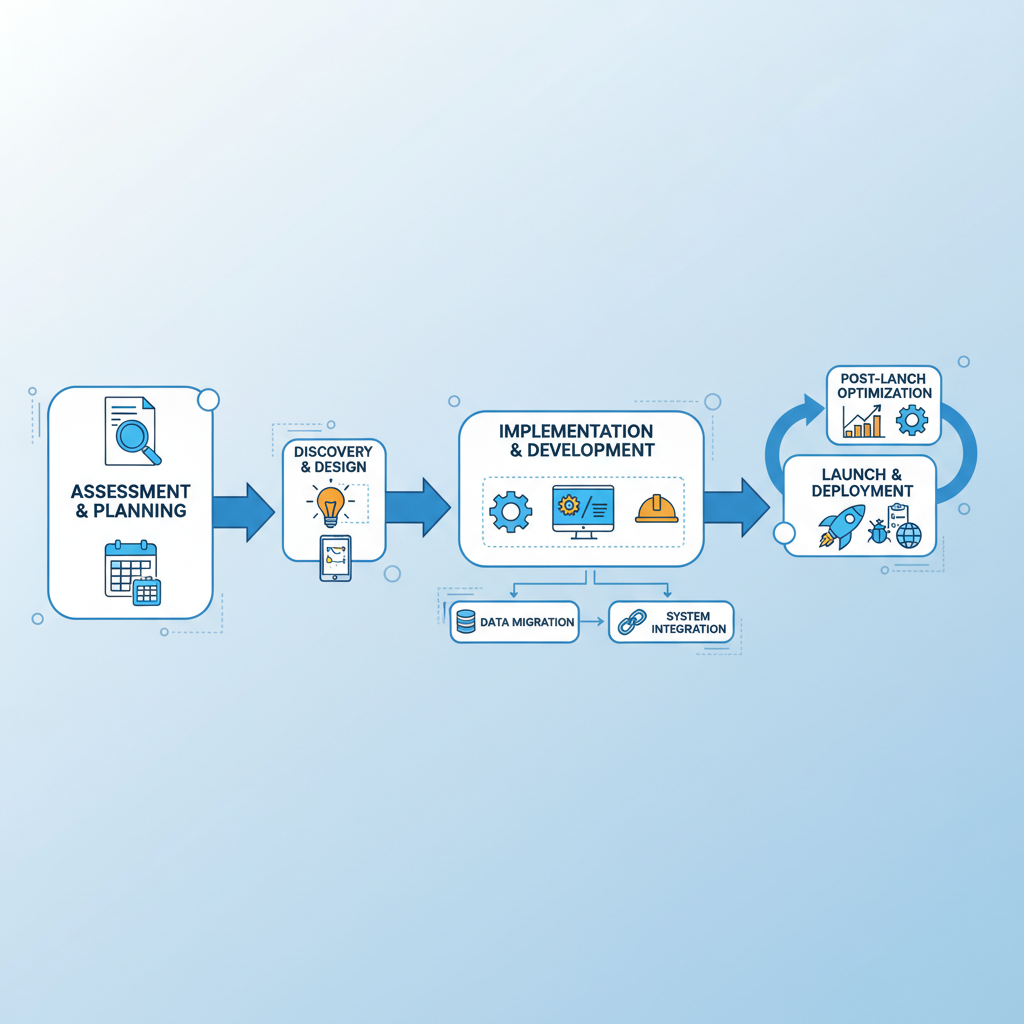
A flowchart illustrating the key phases of a digital replatforming strategy, from assessment and planning to execution and post-launch optimization, with arrows indicating the flow between stages.
✓ Free consultation ✓ No commitment required ✓ Trusted by experts
A Step-by-Step Guide to Your digital replatforming strategy
Executing a digital replatforming strategy is a complex undertaking that requires meticulous planning and execution. This section provides a detailed, step-by-step digital replatforming strategy tutorial to help guide your organization through the process. Following these steps can significantly increase your chances of replatforming success.
This guide outlines how to digital replatforming strategy effectively, covering everything from initial planning to post-migration activities. Each step is designed to build upon the last, ensuring a smooth and controlled transition. Organizations looking for digital replatforming strategy for beginners will find this framework particularly useful.
1. Strategic Planning and Discovery
The first phase involves deep dives into your existing systems and strategic goal setting. This is where you formulate the core of your digital replatforming strategy. It’s crucial to understand current limitations and define the desired future state comprehensively.
A. Comprehensive Audit: Document all existing applications, databases, integrations, and infrastructure. Identify what data needs to be migrated, what can be archived, and what needs to be re-engineered. This forms the backbone of your digital replatforming strategy guide.
B. Define Requirements: Gather detailed functional and non-functional requirements for the new platform. Consider performance, security, scalability, and user experience. Engage business users, IT teams, and other stakeholders.
C. Platform Selection: Based on your requirements, evaluate potential new platforms (e.g., cloud-native solutions, SaaS, custom builds). Consider factors like cost, vendor support, ecosystem, and future extensibility.
D. Roadmap Development: Create a phased roadmap for the replatforming project. Break down the project into manageable sprints or stages, prioritizing critical functionalities.
2. Design and Architecture
Once the strategic planning is complete, the focus shifts to designing the architecture of the new platform. This stage involves creating detailed blueprints for the technical implementation. This is where the digital replatforming strategy examples come into play as you can learn from others.
A. Solution Architecture: Design the overall architecture of the new system, including infrastructure, application components, data models, and integration points. Aim for a modular and scalable design.
B. Data Migration Strategy: Develop a detailed plan for migrating data from the old system to the new one. This includes data cleansing, transformation, validation, and reconciliation processes. Consider various digital replatforming strategy strategies for data handling.
C. Integration Design: Plan how the new platform will integrate with existing third-party systems, such as CRM, ERP, and payment gateways. Define APIs and data exchange protocols.
D. Security Design: Embed security from the ground up, designing robust authentication, authorization, data encryption, and network security measures.
3. Development and Testing
This is the phase where the new platform is built and rigorously tested to ensure it meets all defined requirements and performs optimally. This phase often benefits from agile methodologies, allowing for iterative development and continuous feedback.
A. Incremental Development: Build the new platform in iterative cycles, starting with core functionalities. This allows for early feedback and adjustments, which is a key part of replatforming best practices.
B. Data Migration Execution: Perform data migration according to the defined strategy. Start with smaller datasets for testing, then execute larger migrations during planned downtime.
C. Comprehensive Testing: Conduct various types of testing, including unit, integration, system, performance, security, and user acceptance testing (UAT). Ensure all functionalities work as expected and the system can handle anticipated loads.
D. User Training: Prepare training materials and conduct sessions for end-users to familiarize them with the new platform. This helps ensure a smooth transition post-launch.
4. Deployment and Go-Live
The deployment phase marks the transition to the new platform, making it live for users. Careful coordination and a robust rollback plan are essential to minimize disruption. The best digital replatforming strategy includes a well-orchestrated launch.
A. Phased Rollout: Consider a phased rollout where the new platform is introduced to a subset of users or regions first, allowing for fine-tuning before a full launch. This is a common digital replatforming strategy tip.
B. Cutover Plan: Develop a detailed cutover plan, outlining all steps required for the final migration and switchover to the new system, including specific timelines and responsibilities.
C. Monitoring and Support: Implement robust monitoring tools to track the performance and stability of the new platform post-launch. Establish a dedicated support team to address user issues promptly.
D. Rollback Strategy: Prepare a comprehensive rollback plan in case unforeseen critical issues arise. This ensures you can revert to the old system if necessary, minimizing business impact.
Common Pitfalls and How to Avoid Them
Even with the best intentions and meticulous planning, digital replatforming strategies can encounter obstacles. Recognizing and preparing for common pitfalls is vital for mitigating risks and ensuring project success. Avoiding these issues is central to replatforming best practices.
Many projects fail not due to technical challenges alone, but often because of inadequate planning, poor communication, or a lack of clear ownership. Understanding these common traps can help you proactively safeguard your digital replatforming strategy.
Pitfalls to Watch Out For:
Underestimating Complexity: Replatforming is often more complex than initially perceived. Always add buffer time and resources to your estimates.
Lack of Stakeholder Buy-in: Without strong support from leadership and key business users, the project can face resistance. Secure executive sponsorship and involve stakeholders early and often.
Poor Data Migration Strategy: Incomplete or corrupted data migration can render the new platform unusable. Invest in thorough data cleansing, validation, and testing.
Ignoring User Training: Users unfamiliar with the new system can lead to adoption issues and frustration. Prioritize comprehensive training and ongoing support.
Scope Creep: Uncontrolled expansion of project requirements can lead to budget overruns and delays. Establish clear scope boundaries and rigorous change control processes.
Insufficient Testing: Rushing the testing phase can result in critical bugs going undetected until after launch. Allocate ample time for all testing phases, including user acceptance testing.
Lack of a Rollback Plan: Without a clear plan to revert if things go wrong, an unsuccessful launch can have catastrophic consequences. Always have a well-defined and tested rollback strategy.
Measuring Success and Optimization
The successful launch of your new platform is not the end of your digital replatforming strategy; it’s merely a new beginning. Continuous monitoring, evaluation, and optimization are crucial to ensure the platform delivers ongoing value and meets evolving business needs. Measuring success is key to refining future digital replatforming strategy strategies.
Establishing clear Key Performance Indicators (KPIs) before launch allows you to objectively assess the impact of your replatforming effort. These metrics should align with the initial objectives set during the strategic planning phase. Post-launch, regular reviews and adjustments will maintain the platform’s efficacy.
Key Metrics for Success:
Performance Metrics: System uptime, page load times, transaction processing speed, and response times.
Cost Savings: Reduction in infrastructure costs, maintenance expenses, and operational overhead compared to the legacy system.
User Adoption & Satisfaction: Number of active users, user engagement rates, and feedback scores from surveys or support tickets.
Scalability & Flexibility: The new platform’s ability to handle increased load and adapt to new features or integrations with ease.
Security Posture: Improvement in security audit scores, reduction in vulnerabilities, and compliance with industry standards.
Business Impact: Improvements in conversion rates, customer retention, employee productivity, and new revenue streams enabled by the platform.
Regularly collect feedback from users and stakeholders to identify areas for improvement. Utilize analytics tools to gain insights into platform usage and performance. This iterative approach to optimization ensures your digital replatforming strategy continues to deliver maximum value.
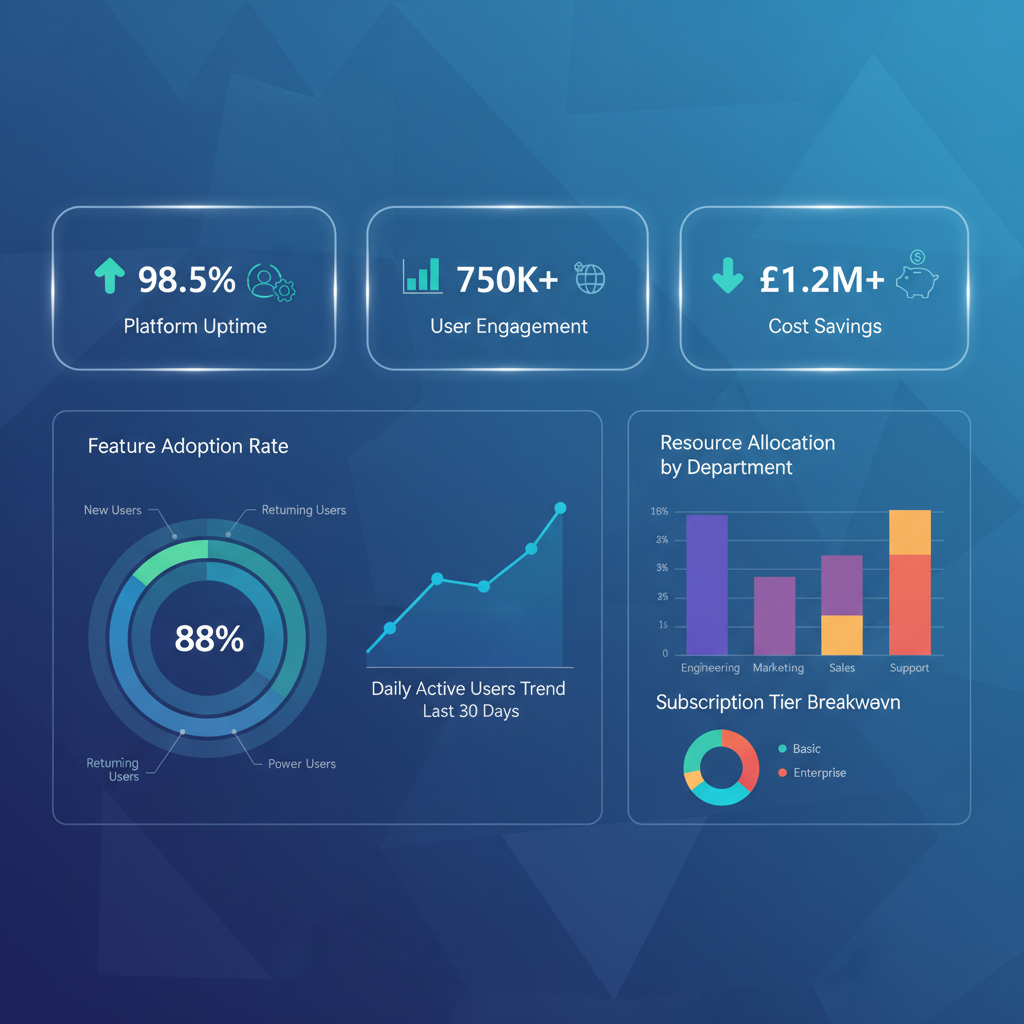
A dashboard displaying various KPIs related to platform performance, user engagement, and cost savings, with charts and graphs illustrating trends over time.
Future-Proofing Your digital replatforming strategy
A well-executed digital replatforming strategy should not just solve immediate problems; it should also lay a foundation for future growth and innovation. Future-proofing your platform involves designing for adaptability, scalability, and maintainability. This is a vital digital replatforming strategy tip.
Considering future trends and technological advancements during the planning phase ensures your new platform remains relevant and efficient for years to come. This forward-thinking approach prevents the need for another costly replatforming effort in the near future.
Strategies for Future-Proofing:
Cloud-Native Architecture: Embrace cloud-native principles, utilizing microservices, containers, and serverless computing for greater agility and scalability.
API-First Approach: Design your platform with APIs at its core, making it easier to integrate with future services and third-party applications.
Modular Design: Build components that are independent and loosely coupled, allowing for easier updates, replacements, and expansions without affecting the entire system.
Data Strategy: Implement a robust data strategy that supports advanced analytics, machine learning, and AI capabilities, enabling data-driven decision-making.
Embrace DevOps: Adopt DevOps practices to foster continuous integration, continuous delivery (CI/CD), and automated deployment, speeding up innovation cycles.
Security by Design: Continuously update and enhance security measures to protect against emerging threats and ensure compliance.
Scalability Planning: Plan for horizontal and vertical scaling from the outset, ensuring the platform can grow seamlessly with your business.
By incorporating these future-proofing elements into your digital replatforming strategy, you create a resilient, adaptable, and high-performing technology ecosystem. This proactive stance ensures your investment continues to yield significant returns, supporting your business objectives well into 2026 and beyond.
Frequently Asked Questions
What is a digital replatforming strategy?
A digital replatforming strategy involves migrating an existing software application, website, or entire technology infrastructure to a new, often more modern and efficient platform. This process aims to improve performance, scalability, security, and user experience, while also reducing operational costs and enabling future innovation. It’s a strategic business decision to modernize core digital capabilities.
Why is a digital replatforming strategy important for businesses?
A digital replatforming strategy is crucial because it helps businesses overcome the limitations of outdated legacy systems, which can hinder growth, increase maintenance costs, and pose security risks. It enables companies to adopt new technologies, improve customer experiences, enhance operational efficiency, and remain competitive in a fast-evolving digital marketplace. It provides a foundation for future digital transformation.
What are the main challenges in executing a digital replatforming strategy?
Executing a digital replatforming strategy comes with several challenges, including data migration complexities, potential system downtime during transition, managing integration with existing third-party systems, ensuring stakeholder buy-in, and mitigating the risks of scope creep. Underestimating the project’s complexity, inadequate testing, and insufficient user training are also common pitfalls that can derail success.
How long does a typical digital replatforming strategy take?
The duration of a digital replatforming strategy varies significantly based on the complexity and size of the existing system, the scope of the migration, and the resources allocated. Smaller projects might take a few months, while large-scale enterprise replatforming efforts can extend over a year or more. Careful planning and a phased approach can help manage timelines effectively.
What are some digital replatforming strategy examples?
Digital replatforming strategy examples include moving an on-premise e-commerce platform to a cloud-based SaaS solution, migrating a custom-built legacy application to a modern microservices architecture, or upgrading a content management system (CMS) to a more scalable and user-friendly platform. These examples highlight the diverse applications of replatforming across various digital assets.
How can I ensure replatforming success?
To ensure replatforming success, it’s essential to define clear objectives, conduct a thorough assessment of your current and future needs, involve all key stakeholders, and develop a detailed project plan with a strong focus on data migration and testing. Adopting agile methodologies, providing comprehensive user training, and establishing a robust post-launch monitoring and optimization strategy are also critical steps.
✓ Free consultation ✓ No commitment required ✓ Trusted by experts
Conclusion
Embarking on a digital replatforming strategy is a significant undertaking, but one that offers immense rewards for businesses willing to invest the time and resources. From enhancing operational efficiency to unlocking new avenues for growth and innovation, the benefits of a well-executed replatforming project are undeniable. By following this digital replatforming strategy guide, your organization can navigate the complexities with confidence.
Remember, a successful digital replatforming strategy isn’t just about replacing old technology; it’s about strategically positioning your business for the future. By prioritizing careful planning, meticulous execution, and continuous optimization, you can ensure your new platform serves as a powerful engine for sustained success. This comprehensive digital replatforming strategy tutorial empowers you with the knowledge to make informed decisions and achieve your digital transformation goals.
Johan Carlsson is a cloud architecture specialist and frequent speaker focused on scalable workloads, AI/ML, and IoT innovation. At Opsio, he helps organizations harness cutting-edge technology, automation, and purpose-built services to drive efficiency and achieve sustainable growth. Johan is known for enabling enterprises to gain a competitive advantage by transforming complex technical challenges into powerful, future-ready cloud solutions.