Master Cloud SLA Monitoring Best Practices for Optimal Uptime
March 6, 2026|2:37 PM
Unlock Your Digital Potential
Whether it’s IT operations, cloud migration, or AI-driven innovation – let’s explore how we can support your success.
Home /
Work /
Blogs /
Master Cloud SLA Monitoring Best Practices for Optimal Uptime
The Importance of Cloud SLA Monitoring
In today’s dynamic digital landscape, cloud services are fundamental to business operations, enabling agility and scalability. However, relying on external providers necessitates clear agreements to ensure performance and reliability. This is where Service Level Agreements (SLAs) become crucial, outlining the expected level of service.
Effective Cloud sla monitoring best practices are essential for any organization leveraging cloud infrastructure. Without robust monitoring, businesses risk unforeseen downtime, performance degradation, and potential financial penalties. Proactive monitoring ensures that services meet agreed-upon standards, preventing costly disruptions and maintaining user satisfaction.
Implementing a comprehensive monitoring strategy allows businesses to verify that their cloud providers are upholding their contractual obligations. It provides the necessary visibility into service performance, security, and availability. Ultimately, it empowers organizations to hold providers accountable and make informed decisions about their cloud investments.
Key Components of a Robust Cloud SLA
A strong Cloud SLA forms the backbone of any successful cloud deployment, clearly defining expectations and responsibilities. It is a legal document that specifies the level of service a customer can expect from a cloud provider. Understanding its key components is the first step towards effective monitoring.
A robust SLA typically covers critical metrics such as uptime, response times, data durability, and disaster recovery objectives. These metrics provide measurable targets against which service performance can be assessed. It also details the penalties or remedies for failing to meet these agreed-upon service levels.
Crucially, an SLA should also delineate the responsibilities of both the provider and the customer, especially within the shared responsibility model inherent in cloud computing. This clarity helps prevent disputes and ensures that all parties understand their role in maintaining service quality. Without this clear delineation, effective SLA monitoring guidelines become difficult to implement.
Setting Up Your Cloud SLA Monitoring Framework
Establishing an effective Cloud sla monitoring best practices guide begins with a methodical approach to framework setup. This involves defining the scope, selecting appropriate tools, and setting realistic benchmarks. A well-designed framework provides the visibility needed to assess service performance continually.
The initial phase requires a thorough understanding of your specific business needs and the critical services running in the cloud. Identify which metrics are most vital for your operations, such as application availability, network latency, or data transaction speed. Prioritizing these helps tailor your monitoring efforts.
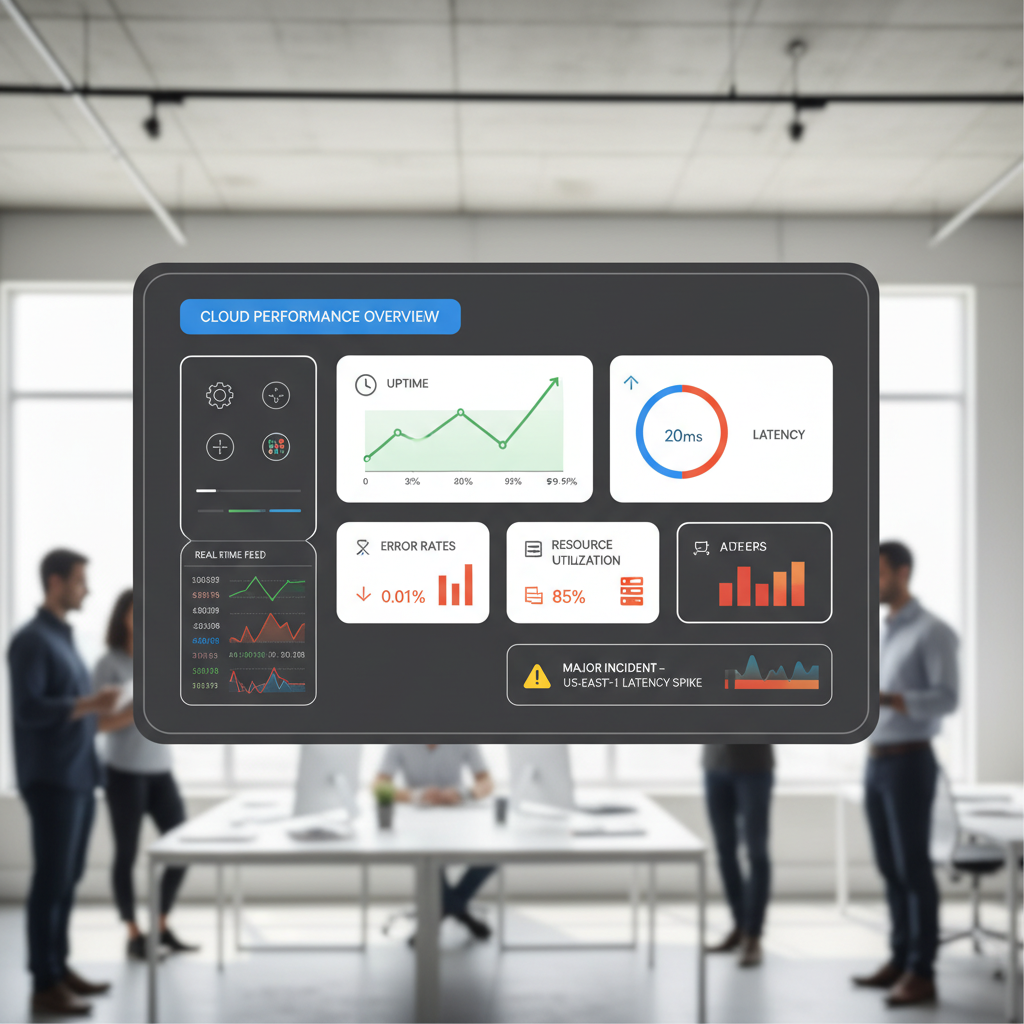
Next, choose monitoring tools that can collect, aggregate, and analyze data across your cloud environment. Many effective SLA tracking methods rely on specialized platforms that integrate with various cloud providers. These tools should offer real-time data visualization and customizable alerting capabilities to ensure timely responses.
A dashboard showing various cloud performance metrics and alerts, including uptime, latency, error rates, and resource utilization, with customizable widgets and real-time data feeds.
Establishing baselines for normal service performance is a critical step in your setup. These baselines serve as reference points against which current performance can be compared. Define thresholds that, when breached, trigger alerts, indicating a potential SLA violation or performance issue.
Regularly reviewing and refining your monitoring configuration is also vital. As your cloud environment evolves, so too should your monitoring framework. This iterative process ensures that your Cloud sla monitoring best practices remain relevant and effective over time, adapting to new services and changing business requirements.
ENSURE UNINTERRUPTED SERVICE
Ensure uninterrupted service delivery and proactively prevent costly SLA breaches. Leverage our automated, real
✓ Free consultation ✓ No commitment required ✓ Trusted by experts
Essential Cloud sla monitoring best practices
Adopting essential Cloud sla monitoring best practices is crucial for ensuring service reliability and accountability. These practices transform raw data into actionable insights, helping organizations maintain optimal cloud performance. Proactive strategies are far more effective than reactive problem-solving.
One of the foremost best Cloud sla monitoring best practices tips is to implement continuous, real-time monitoring across all critical cloud services. This allows for immediate detection of performance deviations or outages. Timely alerts are paramount, ensuring that issues can be addressed before they significantly impact users or operations.
Centralizing your monitoring data onto a unified platform simplifies management and provides a holistic view of your cloud ecosystem. This approach helps in correlating events across different services and providers, offering a comprehensive understanding of performance. It eliminates silos and provides a single source of truth for all SLA-related data.
Leverage automated reporting and analytics to gain deeper insights into historical performance and trends. These tools can highlight recurring issues, predict potential future problems, and provide evidence for SLA adherence or violation discussions. They are indispensable for documenting compliance and identifying areas for improvement.
Regularly review and adjust your SLAs and monitoring parameters as your business needs or cloud landscape changes. Cloud environments are dynamic, and what was optimal yesterday might not be today. This iterative process ensures your optimal cloud performance monitoring remains relevant and effective.
Another key practice involves clearly defining roles and responsibilities within your team for responding to alerts and managing incidents. A well-structured incident response plan ensures quick and efficient resolution of issues. This proactive approach significantly minimizes downtime and mitigates potential service disruptions.
Furthermore, ensure that your monitoring infrastructure itself is resilient and highly available. If your monitoring system goes down, you lose visibility into your cloud services. Redundant monitoring solutions provide assurance that you will always be aware of your service status.
Addressing Common Challenges in Cloud SLA Monitoring
While establishing Cloud sla monitoring best practices offers significant benefits, organizations often encounter various challenges. Understanding and proactively addressing these hurdles is key to maintaining effective oversight. Navigating these complexities requires strategic planning and adaptable solutions.
One common challenge is the complexity introduced by multi-cloud or hybrid cloud environments. Monitoring services across different providers, each with its own APIs and metrics, can be daunting. Integrating data from disparate sources into a unified view requires robust tooling and careful architecture.
Another significant issue is managing alert fatigue, where an overwhelming number of notifications desensitizes operations teams. This can lead to critical alerts being missed or delayed. Implementing intelligent alerting with clear thresholds and prioritization rules is essential to combat this.
Ensuring data consistency and integrity across multiple cloud services and monitoring platforms also presents a challenge. Verifying that the data collected accurately reflects service performance is vital for credible SLA reporting. Robust data validation and auditing processes are necessary.
Interpreting complex and often verbose SLA documents can be difficult, making it hard to translate contractual terms into measurable monitoring parameters. Businesses need expertise to decipher these legal agreements and define specific, actionable metrics for monitoring. This requires a strong understanding of both technical and legal aspects.
Finally, the dynamic nature of cloud environments, with continuous updates and new services, means monitoring strategies must constantly evolve. What works today might not be sufficient tomorrow. A flexible and scalable monitoring infrastructure is crucial to adapt to these ongoing changes.
Achieving SLA Compliance and Optimization
Achieving and maintaining SLA compliance is a primary objective of Cloud sla monitoring best practices. It’s not just about identifying violations; it’s about proactively managing services to meet or exceed agreed-upon levels. This proactive stance drives both reliability and cost-effectiveness.
Implementing robust SLA compliance best practices involves continuous verification against predefined service targets. This means regularly comparing observed performance data with the metrics stipulated in your SLAs. Automated reporting tools are invaluable for generating compliance reports and demonstrating adherence.
Beyond compliance, effective monitoring also opens avenues for optimization. By analyzing performance trends and resource utilization, organizations can identify inefficiencies. This data can inform decisions on scaling resources up or down, thereby optimizing cloud spending.
Performance tuning is another significant benefit derived from detailed monitoring data. Identifying bottlenecks or underperforming components allows for targeted improvements. This ensures that applications run smoothly, enhancing user experience and supporting business objectives.
Furthermore, leveraging industry standards for cloud SLA, such as those related to security or data privacy, helps benchmark your performance against best-in-class solutions. Adhering to these standards strengthens your negotiating position with providers and enhances your overall risk posture. These benchmarks are often incorporated into recommended cloud SLA strategies.
To future-proof your monitoring strategy, consider the evolving needs of your business and the cloud market. Building flexibility into your monitoring framework allows for easy integration of new services or changes in provider offerings. This adaptability ensures long-term effectiveness of your SLA monitoring guidelines.
The Future of Cloud SLA Monitoring
The landscape of Cloud sla monitoring best practices is continually evolving, driven by advancements in technology and increasing cloud adoption. Future trends promise even more intelligent, predictive, and integrated monitoring solutions. Organizations must stay abreast of these developments to maintain a competitive edge.
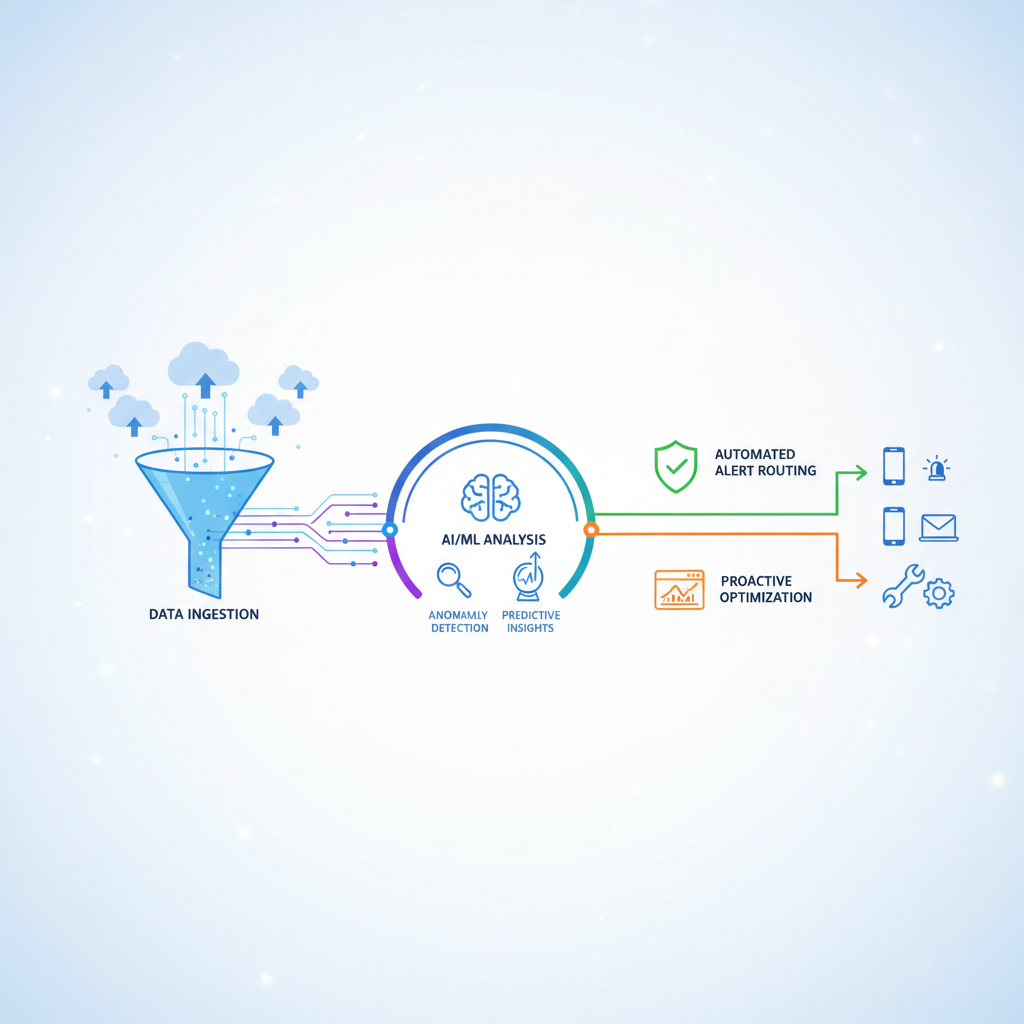
One of the most significant upcoming trends is the widespread integration of Artificial Intelligence (AI) and Machine Learning (ML) into monitoring platforms. AI/ML will enable predictive analytics, allowing systems to anticipate potential SLA breaches before they occur. This shift from reactive to proactive monitoring will minimize disruptions and optimize resource allocation.
The rise of serverless computing and containerized environments introduces new complexities and opportunities for monitoring. Future monitoring solutions will need to provide granular visibility into these ephemeral and highly distributed architectures. This will require new approaches to collecting and analyzing performance data.
A conceptual diagram illustrating proactive AI-driven cloud monitoring with predictive analytics, showing data ingestion, AI/ML analysis for anomaly detection, predictive insights, and automated alert routing.
Moreover, the emphasis on end-to-end service delivery will grow, moving beyond individual component monitoring to a holistic view of user experience. This means monitoring will encompass the entire service chain, from the underlying cloud infrastructure to the end-user application. Such comprehensive monitoring will be crucial for delivering superior service.
Integration with other IT operations management (ITOM) tools, such as incident management and IT service management (ITSM) platforms, will become more seamless. This will create a more unified operational workflow, improving communication and accelerating problem resolution. The goal is a truly intelligent and automated operations center.
Ultimately, the future of Cloud sla monitoring best practices points towards highly intelligent, self-optimizing systems. These systems will not only report on compliance but will also recommend and even automate actions to maintain optimal service levels. This evolution will empower businesses to fully leverage the potential of cloud computing with greater confidence.
Frequently Asked Questions
What is a Cloud SLA?
A Cloud Service Level Agreement (SLA) is a contractual agreement between a cloud service provider and a customer. It specifies the minimum level of service, performance, and availability that the customer can expect. It outlines measurable metrics, responsibilities, and remedies for non-compliance.
Why is Cloud sla monitoring best practices important?
Implementing Cloud sla monitoring best practices is crucial for ensuring that cloud services meet contractual obligations and business expectations. It helps identify performance issues, prevent downtime, optimize costs, and maintain user satisfaction. Effective monitoring provides the necessary visibility and accountability.
What metrics should be included in Cloud SLA monitoring?
Key metrics for Cloud SLA monitoring typically include uptime and availability, latency and response times, error rates, data durability, and disaster recovery objectives. Security measures and compliance with regulatory standards are also increasingly important metrics to track.
How can I ensure SLA compliance?
To ensure SLA compliance, implement continuous, real-time monitoring of all critical cloud services and compare performance against agreed-upon metrics. Utilize automated reporting, establish clear baselines and thresholds, and regularly review and adjust your SLAs. Proactive incident management and defined response plans are also essential.
What are some common tools for Cloud SLA monitoring?
Common tools for Cloud SLA monitoring include cloud-native monitoring services (e.g., AWS CloudWatch, Azure Monitor), third-party application performance monitoring (APM) tools (e.g., Datadog, New Relic), and infrastructure monitoring platforms (e.g., Grafana, Prometheus). These tools offer features like data collection, visualization, and alerting.
How often should I review my Cloud SLAs?
Cloud SLAs should be reviewed periodically, at least annually, or whenever there are significant changes to your cloud environment, business needs, or service provider contracts. Regular reviews ensure that your SLAs remain relevant and accurately reflect current expectations and service offerings.
ENSURE UNINTERRUPTED SERVICE
Ensure uninterrupted service delivery and proactively prevent costly SLA breaches. Leverage our automated, real
✓ Free consultation ✓ No commitment required ✓ Trusted by experts
Conclusion
Embracing robust Cloud sla monitoring best practices is no longer optional but a strategic imperative for any organization operating in the cloud. By meticulously defining SLAs, implementing comprehensive monitoring frameworks, and adhering to industry-leading guidelines, businesses can ensure service reliability, maintain compliance, and optimize their cloud investments. The journey involves continuous vigilance, adaptability, and a commitment to leveraging advanced tools and methodologies.
As cloud environments continue to evolve, so too must our approach to monitoring. Proactive, intelligent, and integrated monitoring solutions will define success in the years to come. By prioritizing effective SLA monitoring guidelines, organizations can build resilient cloud infrastructures that consistently deliver exceptional performance and value.
Jacob Stålbro is a seasoned digitalization and transformation leader with over 20 years of experience, specializing in AI-driven innovation. As Head of Innovation and Co-Founder at Opsio, he drives the development of advanced AI, ML, and IoT solutions. Jacob is a sought-after speaker and webinar host known for translating emerging technologies into real business value and future-ready strategies.