Expert Cloud SLA Monitoring Review: Enhance Your Service Performance
March 6, 2026|2:34 PM
Unlock Your Digital Potential
Whether it’s IT operations, cloud migration, or AI-driven innovation – let’s explore how we can support your success.
Home /
Work /
Blogs /
Expert Cloud SLA Monitoring Review: Enhance Your Service Performance
Understanding Cloud SLA Monitoring: What It Is and Why It Matters
In today’s cloud-centric world, businesses rely heavily on the performance and availability of their cloud services. Service Level Agreements (SLAs) define the critical parameters that cloud providers promise to uphold regarding uptime, performance, and support. Monitoring these SLAs is paramount to ensuring business continuity and meeting customer expectations.
Cloud SLA monitoring involves continuously tracking various metrics to verify that a cloud provider is delivering on its contractual obligations. This proactive approach helps identify potential issues before they impact end-users or violate an agreement. Effective monitoring provides visibility into the health and performance of your cloud infrastructure.
Without proper monitoring, organizations are left in the dark about actual service delivery versus promised performance. This lack of insight can lead to unexpected downtime, performance bottlenecks, and costly compliance failures. Therefore, a robust Cloud sla monitoring review process is indispensable for any enterprise leveraging cloud services.
The Critical Need for a Cloud SLA Monitoring Review
Embarking on a Cloud sla monitoring review is not just a best practice; it is a strategic imperative for modern businesses. As cloud environments grow more complex, merely having an SLA in place is insufficient without a mechanism to verify its adherence. This comprehensive review ensures that your monitoring strategy aligns with your operational needs and contractual agreements.
A thorough review helps evaluate the effectiveness of your current monitoring tools and processes, or aids in selecting new ones. It involves scrutinizing performance data, alert mechanisms, and reporting capabilities to ensure they accurately reflect your cloud service levels. Ultimately, this effort protects your business from service degradation and potential financial penalties associated with SLA breaches.
Why Conduct a Review?
Several compelling reasons underscore the importance of a Cloud sla monitoring review. These reviews help organizations maintain control over their cloud expenditure and service quality. They also provide leverage in discussions with cloud providers regarding performance and pricing adjustments.
Validate Provider Performance: Ensures your cloud provider meets agreed-upon uptime, latency, and throughput commitments.
Identify Gaps: Uncovers weaknesses in existing monitoring tools or blind spots in your visibility.
Optimize Costs: Helps avoid overpaying for services that consistently underperform or fail to deliver on promises.
Improve User Experience: Proactive identification of issues prevents service disruptions that could negatively impact end-users.
Ensure Compliance: Assists in meeting regulatory and internal compliance standards related to data availability and performance.
Key Features to Prioritize in SLA Monitoring Software
When undertaking an SLA monitoring software review, identifying the essential features is crucial for selecting the right solution. Not all tools are created equal, and their capabilities can vary significantly. Focusing on key functionalities will ensure the chosen software effectively addresses your specific cloud environment and business requirements.
A high-quality monitoring solution should offer a blend of technical prowess and user-friendly design. It needs to provide actionable insights rather than just raw data. Prioritizing these features will lead to a more effective and efficient Cloud sla monitoring strategy.
Comprehensive Performance Metrics
The foundation of any good SLA monitoring tool lies in its ability to collect and analyze a wide array of performance metrics. This includes tracking uptime, response times, error rates, and resource utilization across all your cloud services. Granular data collection is vital for a detailed Cloud sla monitoring review.
The software should support various cloud platforms, such as AWS, Azure, and Google Cloud, or your specific hybrid environment. It must also provide insights into application-specific metrics beyond infrastructure health. This holistic view is critical for understanding the true user experience.
Real-time Alerts and Notifications
Timely awareness of performance degradation or potential SLA breaches is paramount. An effective SLA monitoring tool must offer robust real-time alerting capabilities. These alerts should be customizable, allowing for different thresholds and notification channels.
Configurable alerts ensure that the right team members are informed immediately when an issue arises. This enables quick remediation, minimizing the impact of any service disruption. The best solutions offer multi-channel notifications, including email, SMS, and integration with incident management systems.
Reporting and Analytics Capabilities
Beyond raw data and alerts, powerful reporting and analytics are indispensable for a thorough Cloud sla monitoring review. The software should generate clear, comprehensive reports that demonstrate SLA compliance over time. These reports are invaluable for internal stakeholders and for discussions with cloud providers.
Advanced analytics can help identify trends, root causes of issues, and areas for improvement. Dashboards that visualize key performance indicators (KPIs) provide an at-a-glance overview of your cloud service health. These features transform data into actionable insights, making the `SLA monitoring software review` process more meaningful.
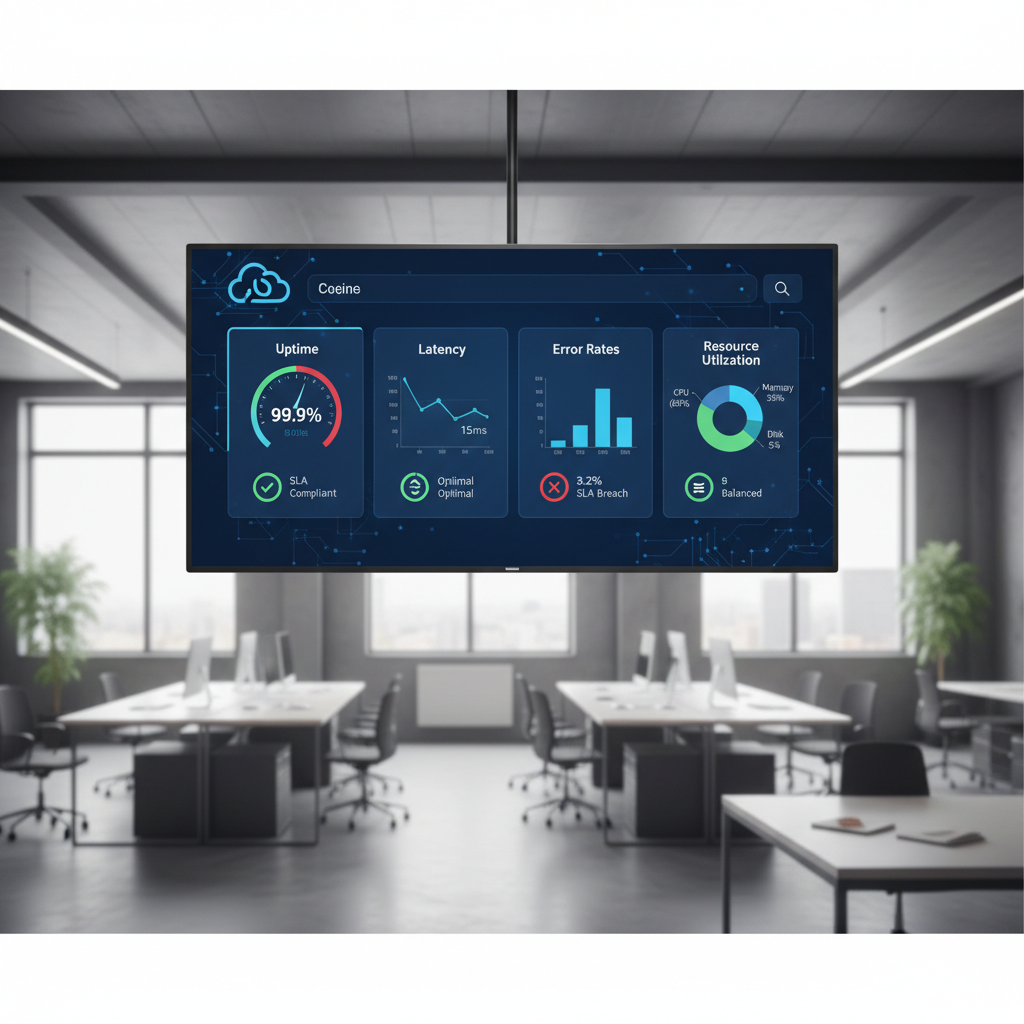
A dashboard displaying various cloud performance metrics such as uptime, latency, error rates, and resource utilization with green and red indicators for SLA compliance.
Conducting a Thorough Cloud Performance Monitoring Assessment
A structured `cloud performance monitoring assessment` is vital for any organization committed to maintaining optimal service levels. This systematic evaluation helps determine if your current monitoring setup is adequate or if improvements are necessary. It’s an integral part of an ongoing `Cloud sla monitoring review guide`.
The assessment process should involve a multi-faceted approach, encompassing technical capabilities, operational workflows, and business objectives. It helps ensure that your monitoring efforts are not only reactive but also provide predictive insights. A well-executed assessment strengthens your ability to uphold service quality and user satisfaction.
Defining Your Monitoring Needs
Before evaluating any tools, clearly define what specific aspects of your cloud services require monitoring. This involves understanding your critical applications, user expectations, and contractual SLA terms. What metrics are most important for your business operations and what thresholds trigger an SLA breach?
Consider the scope of your cloud environment, whether it’s public, private, or hybrid, and the specific services utilized. Documenting these needs forms the baseline for any `SLA tool evaluation`. Without a clear understanding of your requirements, selecting the right solution becomes a guessing game.
Data Collection and Analysis
The next step involves assessing how data is collected, aggregated, and analyzed by your monitoring solution. Ensure that the tool captures relevant metrics from all necessary endpoints and services. The accuracy and granularity of this data are paramount for effective performance evaluation.
Beyond raw data, evaluate the tool’s capabilities for correlating different metrics and identifying dependencies. Can it provide a unified view across various cloud components? The ability to visualize trends and anomalies is crucial for proactive problem-solving and for a meaningful `Cloud sla monitoring review`.
ENSURE UNINTERRUPTED SERVICE
Ensure uninterrupted service delivery and proactively prevent costly SLA breaches. Leverage our automated, real
✓ Free consultation ✓ No commitment required ✓ Trusted by experts
Navigating SLA Tool Evaluation: User Reviews and Expert Analysis
When performing an `SLA tool evaluation`, relying solely on vendor claims is insufficient. A balanced approach incorporates both `user reviews of cloud SLA` tools and `expert analysis of SLA monitoring` solutions. These diverse perspectives offer invaluable insights into real-world performance and practical applicability.
User reviews provide a ground-level view of how a tool performs in day-to-day operations, highlighting common pain points and unexpected benefits. Expert analyses, on the other hand, often delve into architectural considerations, scalability, and integration capabilities. Combining these perspectives paints a comprehensive picture for your `Cloud sla monitoring review`.
Leveraging User Reviews
User reviews offer unfiltered feedback from individuals who actively use the monitoring software. They can reveal information about ease of use, customer support responsiveness, and actual performance under load. Look for recurring themes in multiple reviews to identify consistent strengths or weaknesses.
Pay attention to reviews that discuss specific use cases similar to your own environment. While individual experiences vary, a consensus among users regarding a particular feature or flaw is highly informative. These insights are crucial for understanding the practical implications of adopting a specific solution.
Incorporating Expert Analysis
Expert analysis often comes from industry analysts, technical consultants, and seasoned IT professionals. These evaluations typically offer a more technical and strategic perspective on `SLA monitoring software review`. They can assess a tool’s architecture, security features, and long-term viability.
Experts might also provide insights into a tool’s integration ecosystem and its alignment with emerging cloud technologies. Their opinions can help validate or challenge the claims made in user reviews and vendor marketing materials. A well-rounded `Cloud sla monitoring review` integrates both viewpoints for a more informed decision.
Benefits Derived from an Effective Cloud SLA Monitoring Review
Executing an effective `Cloud sla monitoring review` yields significant advantages beyond simply ensuring compliance. These benefits permeate various aspects of an organization, from operational efficiency to strategic decision-making. Recognizing these positive outcomes underscores the value of this ongoing process.
Such a review empowers businesses to operate with greater confidence and agility in their cloud environments. It transforms reactive problem-solving into proactive management, leading to a more stable and predictable service delivery model. The long-term impact on business reputation and customer trust is invaluable.
Improved Operational Efficiency
With robust SLA monitoring in place, IT teams can quickly identify and address performance bottlenecks or service disruptions. This reduces the mean time to resolution (MTTR) for incidents, thereby improving overall operational efficiency. Fewer outages mean less time spent firefighting and more time on strategic initiatives.
Automated alerts and comprehensive dashboards streamline the monitoring process, reducing manual oversight. This efficiency gain frees up valuable resources, allowing staff to focus on innovation rather than constant vigilance. A streamlined `cloud performance monitoring assessment` directly contributes to this.
Enhanced Business Relationships
Effective SLA monitoring fosters better relationships with cloud service providers. When you have clear data demonstrating compliance or non-compliance, discussions become fact-based and productive. This transparency can lead to more favorable contract terms and improved service quality over time.
For internal stakeholders and external customers, consistent SLA adherence builds trust and confidence in your services. This reliability enhances your brand’s reputation and supports customer retention. A strong `Cloud sla monitoring review guide` directly contributes to positive business relationships.
Challenges and Best Practices in Cloud SLA Monitoring
Implementing and maintaining effective cloud SLA monitoring is not without its challenges. The dynamic nature of cloud environments, the complexity of multi-cloud strategies, and the sheer volume of data can be daunting. However, by adhering to best practices, organizations can overcome these hurdles.
A successful `Cloud sla monitoring review` identifies these challenges upfront and incorporates strategies to mitigate them. Proactive planning and continuous refinement are key to sustaining high levels of service quality. These `Cloud sla monitoring review tips` are crucial for long-term success.
Addressing Data Volume and Noise
Cloud environments generate an immense amount of monitoring data, often leading to “alert fatigue” if not managed properly. A significant challenge is distinguishing critical alerts from false positives or low-priority notifications. Effective filtering and intelligent correlation are essential.
Implement intelligent alerting thresholds and baselines based on historical data. This helps to reduce noise and ensures that teams focus on truly actionable alerts. Leverage machine learning capabilities within your `SLA monitoring software review` to automatically identify anomalies and predict potential issues.
Overcoming Multi-Cloud Complexity
Many organizations operate in multi-cloud or hybrid environments, which adds layers of complexity to SLA monitoring. Each cloud provider has its own set of monitoring tools and metrics, making a unified view challenging. The key is to find solutions that offer broad compatibility.
Choose monitoring tools that provide a single pane of glass for all your cloud deployments. This integrated approach simplifies monitoring and reporting across diverse platforms. A comprehensive `comparison and review of SLA tools` should prioritize multi-cloud capabilities.
Best Practices for Continuous Monitoring
Effective cloud SLA monitoring is an ongoing process, not a one-time setup. It requires continuous review, adjustment, and optimization to remain effective. Regular `Cloud sla monitoring review guide` sessions should be scheduled to assess performance and adapt to changes.
Regularly audit your monitoring configurations and alert rules. Ensure they remain relevant as your cloud infrastructure evolves and business needs change. Continuously train your teams on the monitoring tools and best practices for interpreting data. This ensures that insights are consistently actionable.
A Comparison and Review of SLA Tools: What to Consider
Undertaking a `comparison and review of SLA tools` is a critical step in fortifying your cloud operations. The market offers a diverse range of solutions, from broad observability platforms to specialized SLA compliance tools. Your choice will significantly impact your ability to meet service level commitments.
This `Cloud sla monitoring review guide` aims to help you navigate the landscape by focusing on general considerations rather than specific product names. Understanding the nuances between tool categories and their typical offerings will inform your decision-making process. The goal is to find the `best Cloud sla monitoring review` solution for your unique setup.
Integration Capabilities
A primary differentiator among SLA monitoring tools is their ability to integrate with your existing technology stack. This includes integration with your cloud providers, incident management systems, collaboration platforms, and other IT operations tools. Seamless integration streamlines workflows and enhances data correlation.
Consider tools that offer extensive APIs and pre-built integrations to minimize custom development efforts. The ease with which a monitoring tool can share data and trigger actions in other systems is a major factor in its overall utility. A lack of integration can create data silos and hinder effective incident response.
Scalability and Flexibility
As your cloud footprint grows, your monitoring solution must be able to scale alongside it without significant performance degradation or cost spikes. Evaluate the tool’s capacity to handle increasing data volumes and monitor a growing number of services and metrics. Scalability ensures the longevity of your investment.
Flexibility refers to the tool’s ability to adapt to changing monitoring requirements, new cloud services, or evolving SLA definitions. Can you easily customize dashboards, reports, and alert rules? Solutions that offer high degrees of configurability are often more future-proof.
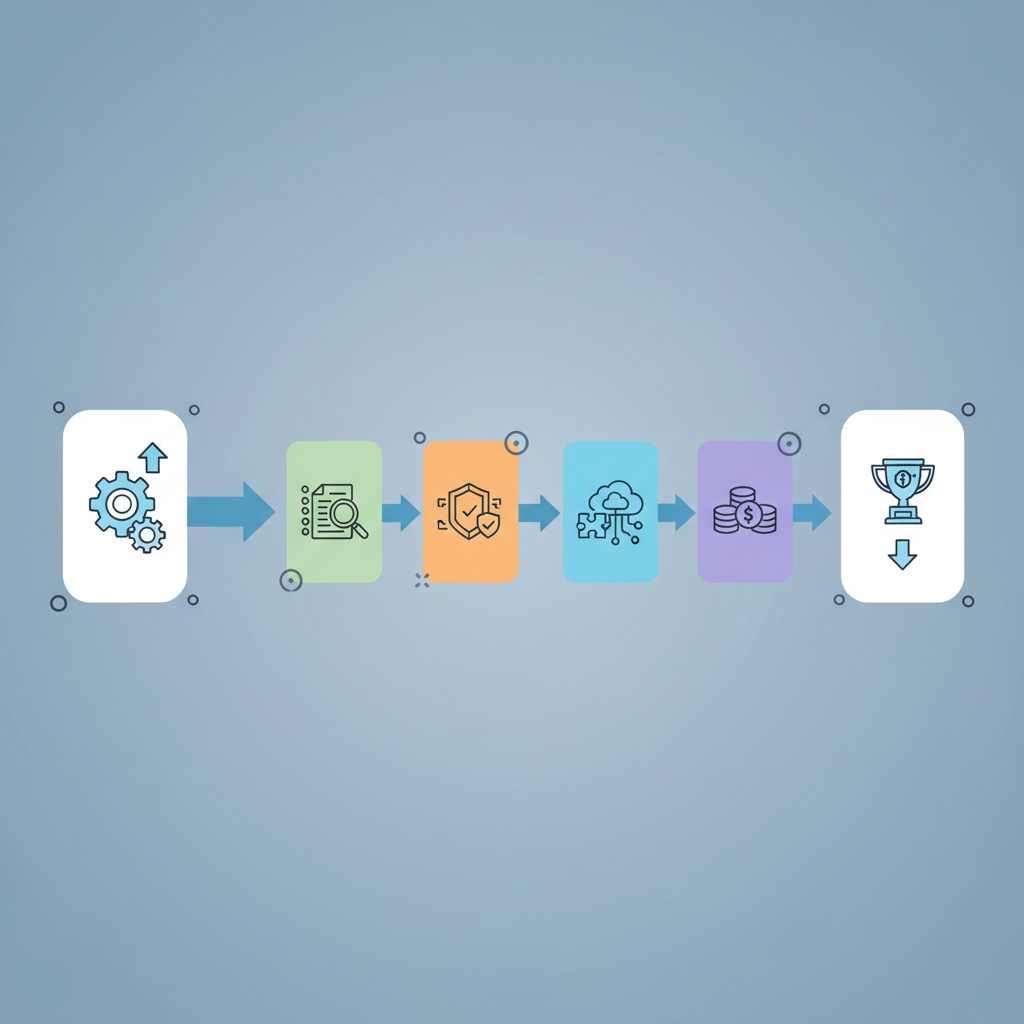
A flowchart illustrating the steps in selecting a cloud SLA monitoring tool, including defining requirements, evaluating features, comparing integrations, and reviewing costs.
Cost-Effectiveness and Pricing Models
The total cost of ownership (TCO) is a crucial aspect of any `Cloud sla monitoring review`. This includes not just the licensing fees but also implementation costs, ongoing maintenance, and the resources required to operate the tool. Understand the pricing model – is it based on data volume, number of monitored services, or users?
While a comprehensive tool might have a higher upfront cost, its advanced features and efficiency gains could lead to greater long-term savings. Conversely, a cheaper tool might lack critical functionalities, leading to hidden costs in manual effort or missed SLA breaches. Seek a balance between features, performance, and budget.
Frequently Asked Questions (FAQ)
What is a Cloud SLA Monitoring Review?
A Cloud SLA monitoring review is a systematic process of evaluating and assessing the tools, processes, and data used to track compliance with Service Level Agreements for cloud services. It ensures that cloud providers are meeting their contractual obligations regarding uptime, performance, and availability, and helps businesses optimize their monitoring strategy.
Why is Cloud SLA Monitoring Important?
Cloud SLA monitoring is crucial because it provides visibility into the actual performance of cloud services against promised levels. It helps prevent service disruptions, identifies performance bottlenecks, ensures compliance with contracts and regulations, and ultimately safeguards business continuity and user experience.
What are the key components of an effective SLA monitoring tool?
Key components of an effective SLA monitoring tool include comprehensive performance metric collection (uptime, response time), real-time alerting and notification capabilities, robust reporting and analytics features, and strong integration capabilities with existing IT ecosystems. Scalability and flexibility are also vital considerations for long-term effectiveness.
How often should I conduct a Cloud SLA Monitoring Review?
The frequency of a Cloud SLA monitoring review can vary based on your organization’s needs and the dynamism of your cloud environment. However, it’s generally recommended to perform a thorough review at least annually, or whenever there are significant changes to your cloud infrastructure, service providers, or critical business applications. Regular, smaller checks should be ongoing.
Can Cloud SLA monitoring help reduce costs?
Yes, effective Cloud SLA monitoring can help reduce costs in several ways. By identifying underperforming services, it can provide data to renegotiate contracts with cloud providers. It also minimizes costs associated with downtime and lost productivity due to service outages. Furthermore, by optimizing resource utilization, it helps ensure you’re not overpaying for unused or inefficient cloud resources.
ENSURE UNINTERRUPTED SERVICE
Ensure uninterrupted service delivery and proactively prevent costly SLA breaches. Leverage our automated, real
✓ Free consultation ✓ No commitment required ✓ Trusted by experts
Conclusion: Making an Informed Decision for Your Cloud SLA
Navigating the complexities of cloud service delivery requires more than just signing an SLA; it demands continuous vigilance and a strategic approach to monitoring. A comprehensive `Cloud sla monitoring review` is an indispensable exercise that empowers organizations to take control of their cloud performance and ensure provider accountability. By thoroughly evaluating tools, processes, and data, businesses can achieve unparalleled visibility and predictability.
Implementing the `best Cloud sla monitoring review` practices, leveraging `Cloud sla monitoring review tips`, and carefully considering `Cloud sla monitoring review examples` from industry insights ensures that your cloud infrastructure consistently meets defined service levels. This proactive stance not only mitigates risks but also fosters trust, optimizes operational efficiency, and ultimately drives better business outcomes. Make informed decisions about your cloud SLA monitoring strategy today to secure your digital future.
Jacob Stålbro is a seasoned digitalization and transformation leader with over 20 years of experience, specializing in AI-driven innovation. As Head of Innovation and Co-Founder at Opsio, he drives the development of advanced AI, ML, and IoT solutions. Jacob is a sought-after speaker and webinar host known for translating emerging technologies into real business value and future-ready strategies.