Discover Top Cloud SLA Monitoring Solutions for Your Business
March 6, 2026|2:13 PM
Unlock Your Digital Potential
Whether it’s IT operations, cloud migration, or AI-driven innovation – let’s explore how we can support your success.
Home /
Work /
Blogs /
Discover Top Cloud SLA Monitoring Solutions for Your Business
Navigating the Landscape of Cloud SLA Monitoring Solutions
In today’s dynamic digital environment, organizations heavily rely on cloud services to power their operations. Ensuring these services consistently meet performance expectations is paramount for business continuity and customer satisfaction. This is precisely where the ability to get Cloud sla monitoring solution becomes indispensable for modern enterprises.
A robust cloud SLA monitoring solution allows businesses to track, analyze, and report on the performance of their cloud service providers against predefined Service Level Agreements (SLAs). It offers crucial visibility into uptime, response times, and various other metrics, providing tangible data for compliance and accountability. Understanding how to acquire cloud SLA monitoring effectively can significantly impact an organization’s operational efficiency and strategic decision-making.
The Imperative Need for Cloud SLA Monitoring
Without effective monitoring, businesses operate with a significant blind spot regarding their cloud infrastructure performance. Unforeseen downtime or slow application response times can lead to lost revenue, decreased productivity, and reputational damage. A reliable solution provides the necessary tools to prevent these costly disruptions.
Implementing a cloud service monitoring system allows organizations to proactively identify issues before they escalate into major problems. It ensures that contractual obligations with cloud providers are being met, fostering a relationship built on transparency and trust. This proactive approach safeguards business operations and helps maintain a high standard of service delivery.
Furthermore, cloud SLA monitoring is crucial for compliance with various industry regulations and internal policies. Many regulatory frameworks mandate specific uptime and data availability standards, which can only be verified through continuous monitoring. Having a system to track these metrics provides auditable evidence of adherence, reducing compliance risks.
Essential Features for an Effective Cloud SLA Monitoring Solution
When you decide to get Cloud sla monitoring solution, certain features are non-negotiable for comprehensive oversight. These capabilities ensure that you can effectively track, report, and manage your cloud service performance. Selecting a solution with these core functionalities will deliver maximum value and insight.
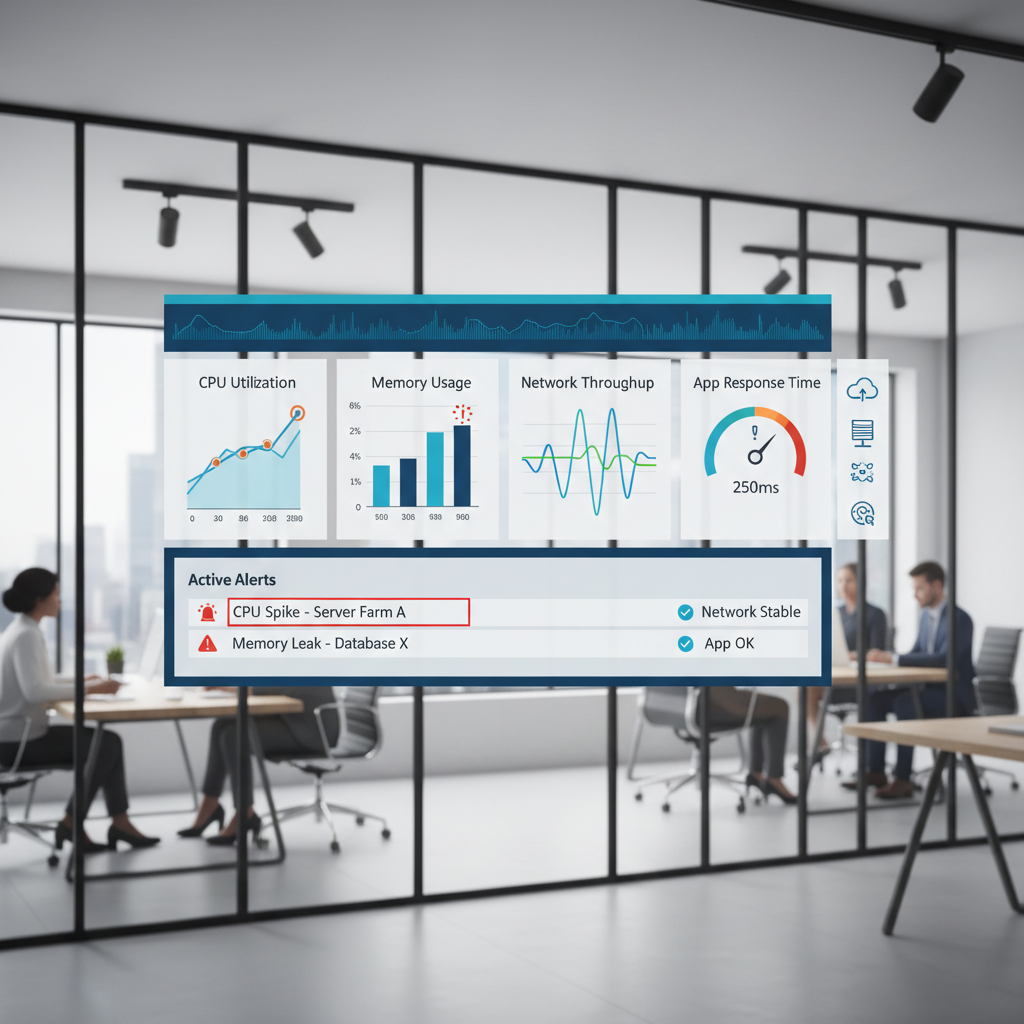
Look for solutions that offer real-time performance dashboards, providing an immediate overview of key metrics. These dashboards should be customizable, allowing users to focus on the data most relevant to their specific services and business objectives. Granular data collection is essential for in-depth analysis.
Key features to consider include:
Multi-Cloud and Hybrid Cloud Support: The ability to monitor services across various cloud providers (AWS, Azure, Google Cloud) and on-premise infrastructure from a single pane of glass. This is vital for complex, distributed environments.
Comprehensive Metric Collection: Monitoring a wide range of metrics, including CPU utilization, memory usage, network latency, disk I/O, and application-specific performance indicators. The solution should offer deep visibility into all layers.
Customizable Alerting and Notifications: Configurable alerts based on predefined thresholds or deviations from baseline performance, delivered through various channels (email, SMS, Slack). These alerts facilitate rapid response to emerging issues.
SLA Reporting and Analytics: Automated generation of detailed reports demonstrating SLA adherence, trend analysis, and performance over time. These reports are crucial for vendor negotiations and internal audits.
Root Cause Analysis Tools: Features that help pinpoint the underlying cause of performance issues quickly, reducing mean time to resolution (MTTR). This often includes log integration and correlation capabilities.
Integration Capabilities: Seamless integration with existing IT service management (ITSM) tools, incident management systems, and other operational platforms. This streamlines workflows and enhances overall operational efficiency.
Historical Data Retention and Baselining: Storing historical performance data to establish baselines, identify long-term trends, and facilitate capacity planning. This helps in understanding normal behavior versus anomalous activity.
A dashboard displaying various real-time cloud performance metrics, including graphs for CPU, memory, network, and application response times, with alert notifications highlighted.
Your Comprehensive Guide to get Cloud sla monitoring solution
Embarking on the journey to get Cloud sla monitoring solution requires a systematic approach. This guide will walk you through the necessary steps to successfully implement cloud service monitoring within your organization. Following these stages will ensure you select and deploy the best possible system for your specific needs.
Defining Your Specific Monitoring Requirements
Before you acquire cloud SLA monitoring, clearly articulate what you need to monitor. Consider your critical applications, infrastructure components, and the specific SLAs you have with your cloud providers. This initial step forms the foundation for your entire selection process.
Identify the key performance indicators (KPIs) that directly impact your business operations and customer experience. Determine the frequency of monitoring required and the types of alerts that are most critical. A thorough understanding of your requirements will streamline the subsequent steps in finding an SLA solution provider.
Researching and Identifying Potential Solution Providers
Once your requirements are clear, begin researching available cloud SLA monitoring solutions on the market. Look for vendors with a strong reputation, extensive experience in cloud environments, and a track record of reliable service. Consider both established enterprise solutions and innovative newcomers.
Explore industry reviews, analyst reports, and peer recommendations to compile a shortlist of potential providers. Focus on solutions that align closely with your defined technical needs and budgetary constraints. This thorough research helps you to purchase SLA tracking software that is truly fit for purpose.
Evaluating Solutions and Making an Informed Choice
After identifying potential candidates, delve into a detailed evaluation of each solution. Request demonstrations, participate in trial periods, and engage with vendor support teams to assess usability, features, and overall performance. Compare their capabilities against your specific requirements.
Pay close attention to scalability, security features, and the ease of integration with your existing IT ecosystem. Consider the total cost of ownership (TCO), including licensing fees, implementation costs, and ongoing maintenance. This rigorous evaluation ensures you make the best decision for your organization when choosing to purchase SLA tracking software.
Implementing and Integrating the Chosen System
Once you’ve selected your ideal cloud SLA monitoring solution, the next phase involves implementation and integration. Develop a detailed deployment plan, outlining the steps required to install cloud SLA tools across your cloud infrastructure. Ensure your team is properly trained to manage and utilize the new system effectively.
Work closely with the vendor’s support team to ensure a smooth transition and proper configuration. Integrate the monitoring solution with your incident management, ticketing, and reporting systems to create a unified operational workflow. Successful integration is key to fully deploy an SLA management system.
Sustaining and Optimizing Your SLA Monitoring
Deployment is not the end; continuous optimization is vital for long-term success. Regularly review your monitoring configurations, adjusting thresholds and alerts as your cloud environment evolves. Gather feedback from users and stakeholders to identify areas for improvement.
Stay informed about updates and new features released by your solution provider to leverage the latest advancements. Periodically re-evaluate your chosen solution against new market offerings to ensure it continues to meet your business needs effectively. This ongoing management ensures you continue to get Cloud sla monitoring solution that performs optimally.
ENSURE UNINTERRUPTED SERVICE
Ensure uninterrupted service delivery and proactively prevent costly SLA breaches. Leverage our automated, real
✓ Free consultation ✓ No commitment required ✓ Trusted by experts
Demystifying Service Level Agreements in Cloud Environments
Service Level Agreements (SLAs) are formal contracts between a service provider and a customer, outlining the expected level of service. In the context of cloud computing, these agreements typically cover crucial aspects such as uptime, performance, and data availability. Understanding the specifics of your cloud SLAs is the first step towards effective monitoring.
SLAs define metrics like mean time to recover (MTTR), error rates, and response times for cloud services. They often specify penalties or remedies if the provider fails to meet the agreed-upon standards. It’s essential for organizations to thoroughly review and comprehend these agreements to ensure their monitoring efforts are aligned with contractual obligations.
Effective cloud SLA monitoring provides the objective data required to verify provider compliance with these agreements. It moves beyond anecdotal evidence, offering concrete proof of service levels delivered. This data empowers businesses to hold their cloud providers accountable and ensures they receive the quality of service they are paying for.
Overcoming Common Challenges in Cloud SLA Monitoring
Despite the clear benefits, implementing cloud SLA monitoring can present several challenges. The dynamic and distributed nature of cloud environments, coupled with the complexity of multi-cloud strategies, often complicates monitoring efforts. Addressing these challenges head-on is crucial for success.
One significant challenge is data overload; cloud services generate vast amounts of performance data, making it difficult to pinpoint critical information. A robust solution must offer intelligent filtering, aggregation, and visualization capabilities to present actionable insights. Without these, teams can become overwhelmed by raw metrics.
Another hurdle is the consistent interpretation of SLAs across different providers, as each vendor may define metrics slightly differently. Your chosen monitoring solution should be flexible enough to normalize these variations and provide a unified view. This ensures accurate comparisons and consistent reporting across your entire cloud footprint.
Best Practices for Cloud SLA Monitoring Success in 2026
To truly maximize the value when you get Cloud sla monitoring solution, adopting best practices is essential. These tips will help you establish a resilient and effective monitoring strategy, ensuring your cloud services consistently meet their performance targets in 2026 and beyond. Implementing these guidelines will lead to better operational outcomes.
Define Clear and Measurable SLAs Internally: Before focusing on external providers, establish internal service level objectives (SLOs) for your own applications and services. This creates a benchmark for performance expectations across your entire IT landscape. This foundational step is often overlooked but critical.
Automate Monitoring and Alerting: Relying on manual checks is inefficient and prone to error. Automate the collection of performance data and the generation of alerts to ensure continuous vigilance. This frees up your team to focus on resolution rather than detection.
Regularly Review and Update Monitoring Configurations: Cloud environments are constantly evolving. Periodically review your monitoring rules, thresholds, and dashboards to ensure they remain relevant to your current services and business priorities. Outdated configurations can lead to missed issues or alert fatigue.
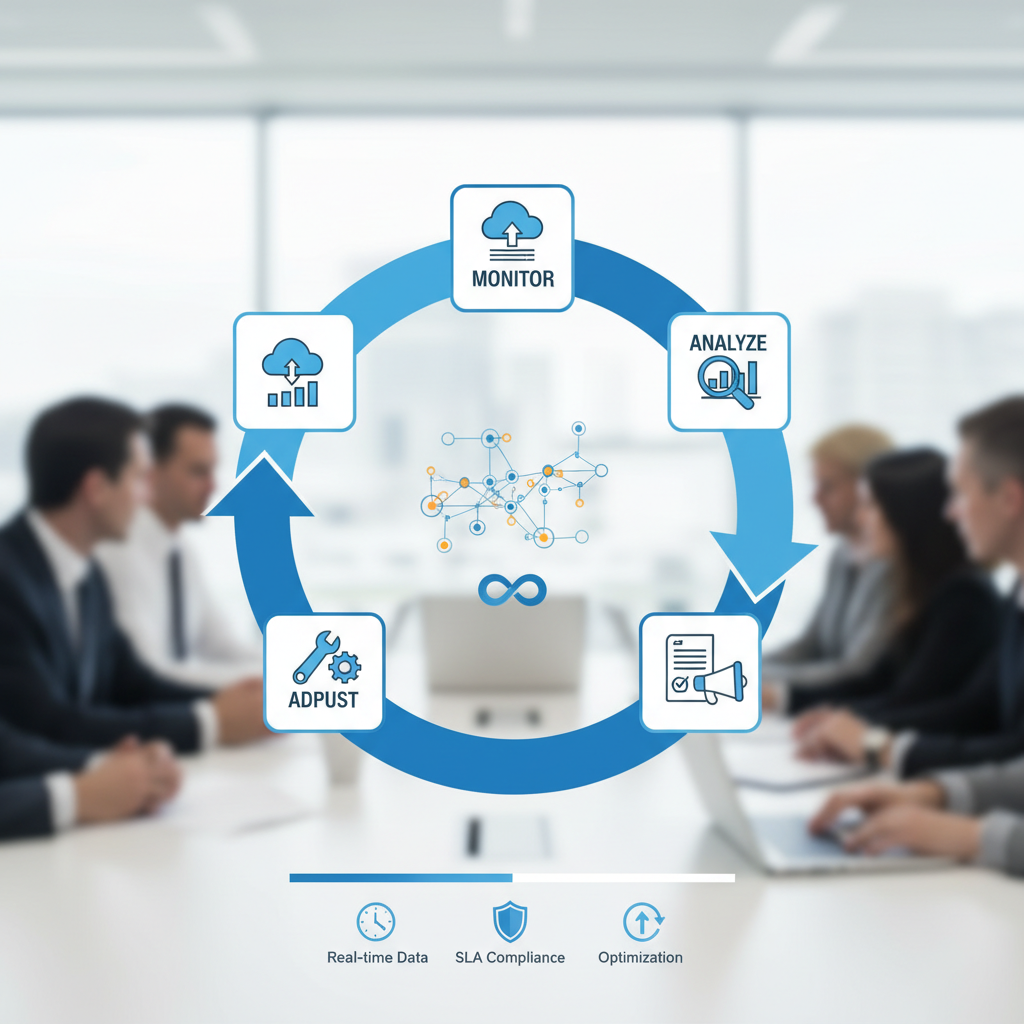
A flowchart illustrating the process of continuous improvement for cloud SLA monitoring, showing steps like “Monitor,” “Analyze,” “Adjust,” and “Report” in a loop.
Integrate Monitoring with Incident Management: For swift issue resolution, ensure your cloud SLA monitoring solution is tightly integrated with your incident management system. This enables automated ticket creation and streamlines the response process when performance issues arise. Seamless integration improves efficiency.
Leverage AI and Machine Learning for Anomaly Detection: In 2026, advanced monitoring solutions utilize AI and ML to identify subtle performance anomalies that might be missed by static thresholds. Implement solutions that incorporate these intelligent capabilities to detect emerging problems proactively. This leads to more predictive issue resolution.
Foster Collaboration Between Teams: Effective SLA monitoring is a shared responsibility. Promote collaboration between development, operations, and business teams to ensure everyone understands the impact of service performance. This holistic approach strengthens accountability and improves communication.
Choosing Your Approach: Self-Managed vs. Vendor-Provided Solutions
When you decide to deploy SLA management system, you generally have two primary approaches: building and managing your own monitoring infrastructure, or leveraging a vendor-provided, often SaaS-based, solution. Each path has distinct advantages and considerations that influence the get Cloud sla monitoring solution guide.
A self-managed approach offers maximum customization and control over every aspect of your monitoring system. It requires significant internal resources, including dedicated personnel for development, maintenance, and support. This path is often chosen by organizations with very specific, unique requirements and extensive in-house expertise.
Conversely, a vendor-provided solution, such as a SaaS platform, offers quicker deployment, reduced operational overhead, and access to specialized expertise. These solutions typically handle infrastructure, updates, and scalability, allowing your team to focus on interpreting data rather than managing tools. For many organizations looking to find an SLA solution provider, this managed service model is increasingly attractive due to its efficiency and cost-effectiveness.
The Evolving Horizon of Cloud SLA Monitoring
The future of cloud SLA monitoring is continuously shaped by advancements in cloud technology and evolving business needs. We anticipate even greater integration with AI-driven analytics, predictive capabilities, and self-healing infrastructure. The best get Cloud sla monitoring solution in the coming years will be highly autonomous and intelligent.
Expect monitoring solutions to provide deeper insights into business outcomes, correlating IT performance directly with business KPIs. The focus will shift from merely reporting on metrics to offering actionable intelligence that drives strategic decisions. Organizations will increasingly seek comprehensive platforms that seamlessly blend security, performance, and cost optimization, moving towards truly unified observability.
Frequently Asked Questions (FAQ)
What does “get Cloud sla monitoring solution” truly mean for my business?
To get Cloud sla monitoring solution means to implement a system that continuously tracks and reports on the performance of your cloud services against agreed-upon Service Level Agreements (SLAs). This provides crucial visibility, ensures provider accountability, and helps maintain business continuity by identifying performance issues promptly. It gives you the data needed to make informed decisions.
Why is it important to implement cloud service monitoring?
Implementing cloud service monitoring is vital for ensuring your cloud-dependent operations run smoothly and meet performance expectations. It helps prevent costly downtime, identifies bottlenecks, aids in capacity planning, and provides objective evidence for compliance and vendor accountability. Proactive monitoring protects your business reputation and finances.
What are the key metrics to monitor for cloud SLAs?
Key metrics to monitor for cloud SLAs typically include uptime percentage, response times for applications and infrastructure, error rates, network latency, and resource utilization (CPU, memory, disk I/O). The specific metrics often depend on the nature of the cloud service and the terms outlined in your SLA with the provider.
How does a cloud SLA monitoring solution ensure vendor accountability?
A cloud SLA monitoring solution ensures vendor accountability by providing unbiased, real-time, and historical data on service performance against contractual agreements. This objective evidence allows organizations to verify if providers are meeting their obligations and serves as a basis for discussions, renegotiations, or penalty enforcement if SLAs are breached.
Can I monitor hybrid cloud environments with a single SLA solution?
Yes, many modern cloud SLA monitoring solutions are designed to monitor hybrid cloud environments. They offer capabilities to track performance across various public cloud providers (like AWS, Azure, Google Cloud) and on-premises infrastructure from a unified dashboard. This provides a holistic view of your entire distributed IT landscape.
ENSURE UNINTERRUPTED SERVICE
Ensure uninterrupted service delivery and proactively prevent costly SLA breaches. Leverage our automated, real
✓ Free consultation ✓ No commitment required ✓ Trusted by experts
Conclusion: Secure Your Cloud Future with the Right SLA Monitoring
The journey to get Cloud sla monitoring solution is a critical step for any organization leveraging cloud services. From defining precise requirements to selecting the best solution and implementing it effectively, each stage plays a vital role in ensuring optimal performance and accountability. A well-chosen system empowers your business with the visibility and control needed to thrive in a cloud-centric world.
By embracing a comprehensive cloud SLA monitoring strategy, businesses can proactively manage risks, optimize resource utilization, and uphold the highest standards of service delivery. Investing in the right tools and practices is not just about meeting contractual obligations; it’s about securing a resilient and high-performing future for your digital operations. Make informed choices to truly get Cloud sla monitoring solution that serves your strategic goals.
Jacob Stålbro is a seasoned digitalization and transformation leader with over 20 years of experience, specializing in AI-driven innovation. As Head of Innovation and Co-Founder at Opsio, he drives the development of advanced AI, ML, and IoT solutions. Jacob is a sought-after speaker and webinar host known for translating emerging technologies into real business value and future-ready strategies.