Choose the Best Cloud SLA Monitoring Tools for Your Business
March 6, 2026|2:05 PM
Unlock Your Digital Potential
Whether it’s IT operations, cloud migration, or AI-driven innovation – let’s explore how we can support your success.
Home /
Work /
Blogs /
Choose the Best Cloud SLA Monitoring Tools for Your Business
Understanding the Criticality of Cloud SLA Monitoring
In today’s fast-paced digital landscape, cloud services are the backbone of countless businesses. Ensuring these services consistently meet performance, availability, and reliability standards is paramount for operational success and customer satisfaction. This is precisely why organizations must actively find Cloud sla monitoring tools to safeguard their digital infrastructure.
Service Level Agreements (SLAs) are formal commitments between a cloud provider and a customer, outlining the expected level of service. These agreements typically cover uptime percentages, performance metrics, and incident response times. Monitoring these SLAs is not merely a technical task; it’s a strategic imperative that directly impacts business continuity and user trust.
Why You Need Cloud SLA Monitoring Tools
The adoption of cloud services introduces complexities that traditional on-premise monitoring solutions often cannot address. Cloud environments are dynamic, distributed, and often involve multiple providers. This inherent complexity makes it challenging to maintain consistent service quality without specialized tools.
Implementing robust cloud SLA monitoring tools provides numerous advantages. They offer real-time visibility into the performance of cloud resources, helping to proactively identify and resolve issues before they impact end-users. Such tools are indispensable for any organization leveraging public, private, or hybrid cloud infrastructures.
Businesses need these tools to ensure compliance with contractual obligations and internal performance benchmarks. They also aid in optimizing resource utilization, identifying potential cost savings, and enhancing overall system reliability. Without effective monitoring, organizations risk experiencing costly outages and eroding customer confidence.
Key Features to Look for When You find Cloud sla monitoring tools
When you set out to find Cloud sla monitoring tools, understanding the essential features is crucial for making an informed decision. The right solution should offer a comprehensive suite of functionalities tailored to the intricacies of cloud environments. Prioritizing these features will help you discover SLA monitoring software that truly meets your needs.
Real-time Visibility and Proactive Alerting
A fundamental capability is the provision of real-time performance data across your entire cloud estate. This includes metrics for CPU utilization, memory consumption, network latency, and application response times. Effective tools should offer customizable dashboards that present this data in an easily digestible format, providing an immediate overview of system health.
Crucially, these tools must also feature intelligent alerting mechanisms. Configurable thresholds and multi-channel notifications (email, SMS, Slack) ensure that teams are immediately informed of any deviations from SLA targets or critical performance issues. Proactive alerts enable rapid incident response, minimizing potential downtime.
Comprehensive Reporting and Analytics
Beyond real-time data, robust reporting and analytical capabilities are vital. These features allow organizations to review historical performance trends, identify recurring issues, and predict potential future problems. Detailed reports are also essential for demonstrating SLA compliance to stakeholders and for internal audits.
Look for tools that offer customizable report templates, allowing you to focus on the metrics most relevant to your business objectives. Predictive analytics, often powered by machine learning, can also provide valuable insights, helping teams to anticipate performance bottlenecks and resource exhaustion before they occur. This is where you can truly search for SLA tracking solutions that offer future-proof insights.
Multi-Cloud and Hybrid Cloud Support
Many enterprises operate in multi-cloud or hybrid cloud environments, utilizing services from various providers like AWS, Azure, and Google Cloud, alongside on-premise infrastructure. A truly effective SLA monitoring tool must seamlessly integrate with and monitor all these diverse platforms. This unified approach simplifies management and provides a single pane of glass for all your cloud services.
The ability to locate cloud performance tools that offer consistent monitoring across heterogeneous environments is a significant advantage. It eliminates the need for multiple, disparate monitoring solutions, reducing complexity and operational overhead. This unified view is essential for comprehensive SLA management.
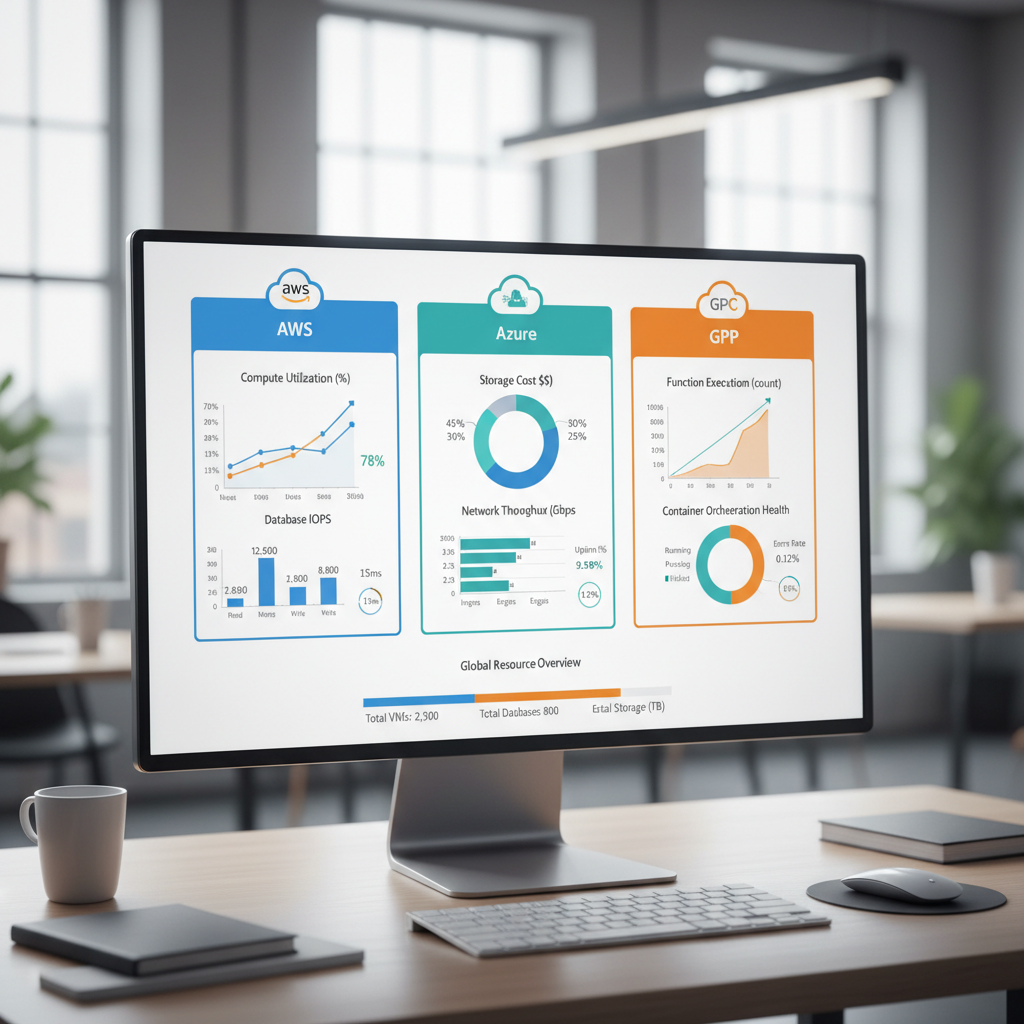
A dashboard showing various cloud performance metrics from different providers (AWS, Azure, GCP) on a single screen with graphs and real-time data.
Integration Capabilities with Existing IT Ecosystem
The chosen monitoring solution should not operate in isolation. It needs to integrate smoothly with your existing IT operations management (ITOM) and IT service management (ITSM) tools. This includes integration with incident management systems, ticketing platforms, and CI/CD pipelines. Seamless integration enhances workflow efficiency and automation.
Tools that can easily share data and trigger actions in other systems create a more cohesive and responsive IT environment. This interconnectedness allows for automated incident creation, faster resolution times, and better overall operational control. It streamlines the process when you identify SLA monitoring vendors.
ENSURE UNINTERRUPTED SERVICE
Ensure uninterrupted service delivery and proactively prevent costly SLA breaches. Leverage our automated, real
✓ Free consultation ✓ No commitment required ✓ Trusted by experts
A Step-by-Step Guide to find Cloud sla monitoring tools
Embarking on the journey to find Cloud sla monitoring tools requires a structured approach. Following these steps will help ensure you select a solution that aligns perfectly with your business needs and technical requirements. This methodical process empowers you to make an informed decision and implement a valuable asset.
Step 1: Define Your Specific SLA Requirements
Before evaluating any tools, clearly articulate what you need to monitor. Review your existing cloud service agreements and internal performance benchmarks. Identify critical applications, services, and associated performance indicators (KPIs) that are directly tied to your business operations.
Consider metrics such as application uptime, response times, transaction success rates, and resource utilization for various cloud components. Understanding these specific requirements will narrow down your search and help you explore cloud SLA platforms effectively. This initial definition forms the foundation for your selection process.
Step 2: Assess Your Current Cloud Infrastructure
Gain a comprehensive understanding of your existing cloud architecture. Document the types of cloud services you use (IaaS, PaaS, SaaS), the cloud providers involved, and the geographical distribution of your resources. Also, consider any hybrid cloud components or on-premise integrations.
This assessment will highlight the specific monitoring capabilities needed. For instance, if you operate across multiple cloud providers, multi-cloud support will be a non-negotiable feature. A clear picture of your infrastructure helps you look for the best find Cloud sla monitoring tools.
Step 3: Research Potential Tools and Vendors
Once your requirements are clear, begin researching available cloud SLA monitoring solutions. Utilize online reviews, industry reports, and expert recommendations to compile a list of potential candidates. Focus on vendors known for reliability and innovation in the cloud monitoring space.
Look for providers that offer solutions specifically designed for the complexities of cloud environments. Investigate their reputation for customer support and ongoing development. This research phase is crucial to discover SLA monitoring software that aligns with industry best practices.
Step 4: Evaluate Features and Capabilities Against Your Needs
With a shortlist of tools, delve into their feature sets. Compare each solution’s capabilities against the specific SLA requirements you defined in Step 1. Pay close attention to real-time monitoring, alerting, reporting, and integration options. Conduct demonstrations or trial periods whenever possible.
During this evaluation, consider how easily the tool can scale with your evolving cloud usage. Assess the user interface for intuitiveness and ease of use, as this impacts operational efficiency. This detailed comparison helps you locate cloud performance tools that are truly effective.
Step 5: Consider Scalability, Security, and Cost
Beyond features, evaluate the scalability of the monitoring solution. Can it grow with your cloud infrastructure? Investigate the vendor’s security practices, ensuring data privacy and compliance standards are met. This is paramount for protecting sensitive operational data.
Finally, analyze the total cost of ownership (TCO), including licensing fees, implementation costs, and ongoing maintenance. Compare pricing models (e.g., subscription, pay-per-use) to find one that fits your budget. A comprehensive find Cloud sla monitoring tools guide will always emphasize these practical considerations.
Step 6: Pilot and Test Selected Solutions
Before full deployment, conduct a pilot program with your top two or three choices. Implement the tools in a non-production environment or with a subset of your critical services. This hands-on testing allows you to assess the tool’s performance, accuracy, and ease of integration in your specific environment.
Gather feedback from your operations and development teams during this pilot phase. Their practical experience will be invaluable in identifying the best fit. This final testing step helps ensure the chosen solution meets real-world demands.
Evaluating Cloud SLA Monitoring Vendors and Solutions
The market for cloud SLA monitoring is robust, with numerous vendors offering a variety of solutions. To effectively compare SLA monitoring products, it’s essential to look beyond just the feature list. A holistic evaluation considers the vendor’s reputation, support, and long-term vision.
Start by examining customer reviews and case studies. These provide insights into real-world experiences with the product and the vendor’s responsiveness. Understanding common user challenges and successes can significantly influence your decision when you identify SLA monitoring vendors.
Consider the vendor’s commitment to innovation and future development. Cloud technologies evolve rapidly, so you need a partner that consistently updates their solution to meet new challenges. A proactive vendor ensures your monitoring capabilities remain cutting-edge, protecting your investment.
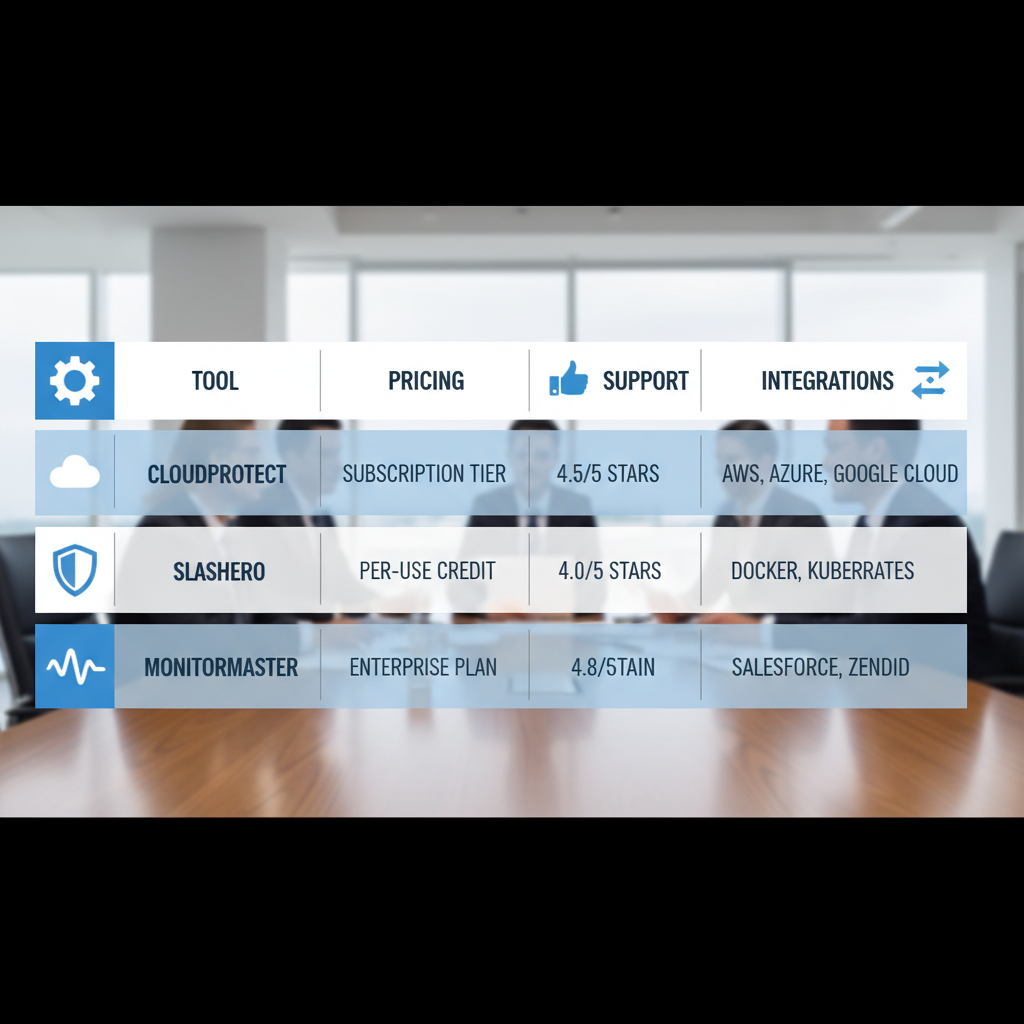
A comparison table showing key criteria like features, pricing models, customer support ratings, and integration capabilities for different cloud SLA monitoring tools.
Best Practices for Implementing Cloud SLA Monitoring
Once you find Cloud sla monitoring tools, successful implementation requires more than just deploying the software. Adopting best practices ensures you maximize the value derived from your investment. These tips will help you leverage your chosen solution to its fullest potential.
Start with Clear Objectives: Define what success looks like for your monitoring initiative. Whether it’s reducing downtime, improving customer satisfaction, or ensuring compliance, clear objectives guide your configuration and reporting.
Establish Meaningful Metrics: Don’t just monitor everything; focus on metrics that directly correlate with your business SLAs and user experience. Over-monitoring can lead to data overload and distract from critical issues.
Automate Where Possible: Leverage the tool’s automation capabilities for alerts, incident creation, and even some remediation tasks. This reduces manual effort and speeds up response times significantly.
Regularly Review and Refine: Cloud environments are dynamic. Periodically review your monitoring configurations, thresholds, and alerts to ensure they remain relevant. Adjust them as your infrastructure and business needs evolve.
Train Your Teams: Ensure that all relevant personnel, from operations to development, are proficient in using the monitoring tool. Effective training leads to quicker adoption and more efficient problem-solving. This is one of the most effective find Cloud sla monitoring tools tips.
Integrate with Existing Workflows: Fully integrate the monitoring solution with your existing IT ecosystem. This includes ticketing systems, collaboration platforms, and incident management tools, creating a seamless operational flow.
Common Challenges and How to Overcome Them
Even with the best find Cloud sla monitoring tools, organizations can face challenges during implementation and ongoing management. Anticipating these hurdles allows for proactive strategies to overcome them, ensuring a smoother monitoring journey. Addressing these issues is vital for long-term success.
One common challenge is data overload. Cloud environments generate vast amounts of data, and sifting through it can be overwhelming. To overcome this, focus on consolidating data from various sources, utilizing intelligent filtering, and relying on dashboards that highlight key performance indicators (KPIs) only. Leverage anomaly detection features to pinpoint issues amidst the noise.
Another obstacle is integrating with diverse cloud services and legacy systems. Different cloud providers have unique APIs and data formats, making unified monitoring complex. Choose tools with broad integration capabilities and consider using API gateways or middleware to normalize data. This ensures comprehensive coverage across your entire infrastructure.
Defining meaningful and actionable alert thresholds can also be difficult. Setting thresholds too low can lead to alert fatigue, while setting them too high can result in missed critical events. Use historical data to establish baselines, and continuously refine thresholds based on actual operational experience and incident patterns. A data-driven approach is key here.
Finally, ensuring organizational buy-in and skill development is crucial. Teams accustomed to traditional monitoring might resist new cloud-native tools. Provide comprehensive training and demonstrate the value proposition of the new system through clear find Cloud sla monitoring tools examples. Foster a culture of continuous learning and adaptation to new technologies.
Frequently Asked Questions (FAQ)
What is a Cloud SLA monitoring tool?
A Cloud SLA monitoring tool is a specialized software solution designed to track, measure, and report on the performance, availability, and reliability of cloud services against predefined Service Level Agreements (SLAs). These tools provide visibility into cloud infrastructure and application performance. They help ensure that cloud providers meet their contractual obligations and that businesses maintain operational excellence.
Why is it important to monitor Cloud SLAs?
Monitoring Cloud SLAs is crucial for several reasons. It ensures that critical business applications and services maintain expected performance levels, preventing costly downtime and service degradation. It also helps businesses verify compliance with contractual agreements, optimize cloud resource utilization, and proactively identify and resolve potential issues. This vigilance safeguards business continuity and customer satisfaction.
What are the key metrics monitored by these tools?
Key metrics commonly monitored by Cloud SLA monitoring tools include uptime percentages, network latency, application response times, transaction success rates, CPU utilization, memory consumption, and disk I/O. These metrics provide a comprehensive view of the health and performance of cloud services. They allow organizations to detect anomalies and performance bottlenecks effectively.
Can these tools monitor multi-cloud environments?
Yes, many modern Cloud SLA monitoring tools are specifically designed to monitor multi-cloud and hybrid cloud environments. They offer integrations with various cloud providers like AWS, Azure, and Google Cloud, providing a unified view of performance across different platforms. This capability is essential for organizations operating diverse cloud infrastructures.
How do Cloud SLA monitoring tools help with cost optimization?
Cloud SLA monitoring tools contribute to cost optimization by providing insights into resource utilization. By identifying underutilized resources or instances that are consistently over-provisioned, businesses can right-size their cloud infrastructure, reducing unnecessary expenditure. Proactive monitoring also prevents costly outages that can lead to lost revenue.
What is the difference between cloud performance monitoring and SLA monitoring?
Cloud performance monitoring broadly observes the health and metrics of cloud resources, applications, and networks. SLA monitoring, while leveraging performance data, specifically focuses on whether these metrics meet predefined Service Level Agreements. It ties performance directly to contractual obligations and business impact. SLA monitoring provides a layer of accountability over general performance insights.
ENSURE UNINTERRUPTED SERVICE
Ensure uninterrupted service delivery and proactively prevent costly SLA breaches. Leverage our automated, real
✓ Free consultation ✓ No commitment required ✓ Trusted by experts
Conclusion
Effectively managing cloud services is non-negotiable for modern businesses, and the ability to find Cloud sla monitoring tools is a foundational step in this process. By understanding the critical features, following a structured evaluation process, and adhering to best practices, organizations can secure a solution that ensures their cloud infrastructure consistently meets performance and reliability targets. Investing in the right cloud SLA monitoring solution empowers businesses to maintain operational excellence, enhance customer trust, and drive continuous improvement in their digital operations. The journey to discover SLA monitoring software is an investment in your organization’s future resilience.
Jacob Stålbro is a seasoned digitalization and transformation leader with over 20 years of experience, specializing in AI-driven innovation. As Head of Innovation and Co-Founder at Opsio, he drives the development of advanced AI, ML, and IoT solutions. Jacob is a sought-after speaker and webinar host known for translating emerging technologies into real business value and future-ready strategies.