Top Cloud SLA Monitoring Alternatives for Unmatched Performance
March 6, 2026|1:56 PM
Unlock Your Digital Potential
Whether it’s IT operations, cloud migration, or AI-driven innovation – let’s explore how we can support your success.
Home /
Work /
Blogs /
Top Cloud SLA Monitoring Alternatives for Unmatched Performance
Understanding the Need for Cloud SLA Monitoring Alternatives
In today’s dynamic digital landscape, maintaining optimal performance and reliability for cloud services is paramount. Service Level Agreements (SLAs) are crucial contracts that define the expected level of service from cloud providers. Monitoring these SLAs ensures that businesses receive the performance they pay for, impacting customer satisfaction and operational efficiency.
However, many organizations find that standard cloud SLA monitoring tools have limitations, prompting a search for more robust or specialized solutions. This comprehensive guide explores the best Cloud sla monitoring alternatives available, offering insights into enhancing your oversight capabilities. We delve into various approaches that can provide more granular control and deeper visibility than out-of-the-box offerings.
Why Explore Alternatives to Traditional Cloud SLA Monitoring?
Traditional cloud SLA monitoring, while foundational, often presents several limitations for complex or evolving cloud environments. These native tools might offer broad metrics but sometimes lack the depth needed for specific business critical applications. Businesses require comprehensive data to diagnose issues swiftly and accurately.
Many organizations encounter challenges with insufficient customization options, limiting their ability to tailor alerts and reports to unique operational needs. Furthermore, the rising adoption of multi-cloud or hybrid-cloud strategies complicates monitoring efforts, as native tools are typically siloed within a single provider’s ecosystem. This fragmentation can lead to blind spots and increased operational overhead.
Seeking alternative SLA monitoring solutions becomes essential for overcoming these common hurdles. By exploring other options for cloud SLA, businesses can gain richer insights, improve incident response times, and achieve greater transparency across their entire cloud infrastructure. These competitors to cloud SLA monitoring often provide more specialized capabilities tailored to modern IT demands.
Diverse Categories of Alternative SLA Monitoring Solutions
The market for cloud performance oversight offers a rich array of alternative SLA monitoring solutions, each designed to address specific needs and challenges. These different approaches to SLA management extend beyond basic uptime checks, providing deeper visibility into application and infrastructure health. Understanding these categories is the first step in finding the best fit for your organization.
One prominent category includes Application Performance Management (APM) tools, which offer end-to-end transaction tracing and code-level diagnostics. These solutions monitor applications from the user interface down to the database, ensuring that application performance meets defined thresholds. They are invaluable for understanding how application behavior impacts user experience and ultimately, SLAs.
Another significant area involves synthetic monitoring platforms, which simulate user interactions with applications and services from various global locations. This proactive approach helps identify performance degradation before real users are affected. Synthetic monitoring provides objective data on response times, availability, and transaction success rates, serving as effective SLA monitoring substitutes.
Infrastructure and network monitoring tools also play a vital role, focusing on the underlying components that support cloud services. These tools track metrics like CPU utilization, memory consumption, disk I/O, and network latency across virtual machines, containers, and serverless functions. By monitoring these foundational elements, they help pinpoint root causes of performance issues that could violate SLAs.
Finally, log management and analytics platforms provide critical insights by collecting and analyzing vast amounts of log data from cloud resources. These systems can correlate events across different services, revealing patterns and anomalies that indicate potential SLA breaches. Advanced analytics and machine learning capabilities further enhance their ability to detect subtle performance shifts.
ENSURE UNINTERRUPTED SERVICE
Ensure uninterrupted service delivery and proactively prevent costly SLA breaches. Leverage our automated, real
✓ Free consultation ✓ No commitment required ✓ Trusted by experts
Key Features to Look for in best Cloud SLA Monitoring Alternatives
When evaluating the best Cloud sla monitoring alternatives, a comprehensive feature set is crucial for maximizing their effectiveness. The right solution should offer capabilities that go beyond basic checks, providing actionable insights into your cloud environment. This ensures you can proactively manage performance and uphold your service commitments.
Look for tools that offer robust multi-cloud and hybrid-cloud support, allowing you to monitor services across various providers and on-premises infrastructure from a single pane of glass. This unified view is essential for organizations with diverse cloud deployments. It simplifies management and eliminates the need for multiple, disparate monitoring solutions.
Real-time analytics and customizable dashboards are another critical feature, enabling immediate visibility into performance metrics and trends. The ability to create tailored dashboards allows stakeholders to focus on the data most relevant to their roles, from developers to business leaders. This facilitates quick decision-making and rapid issue resolution.
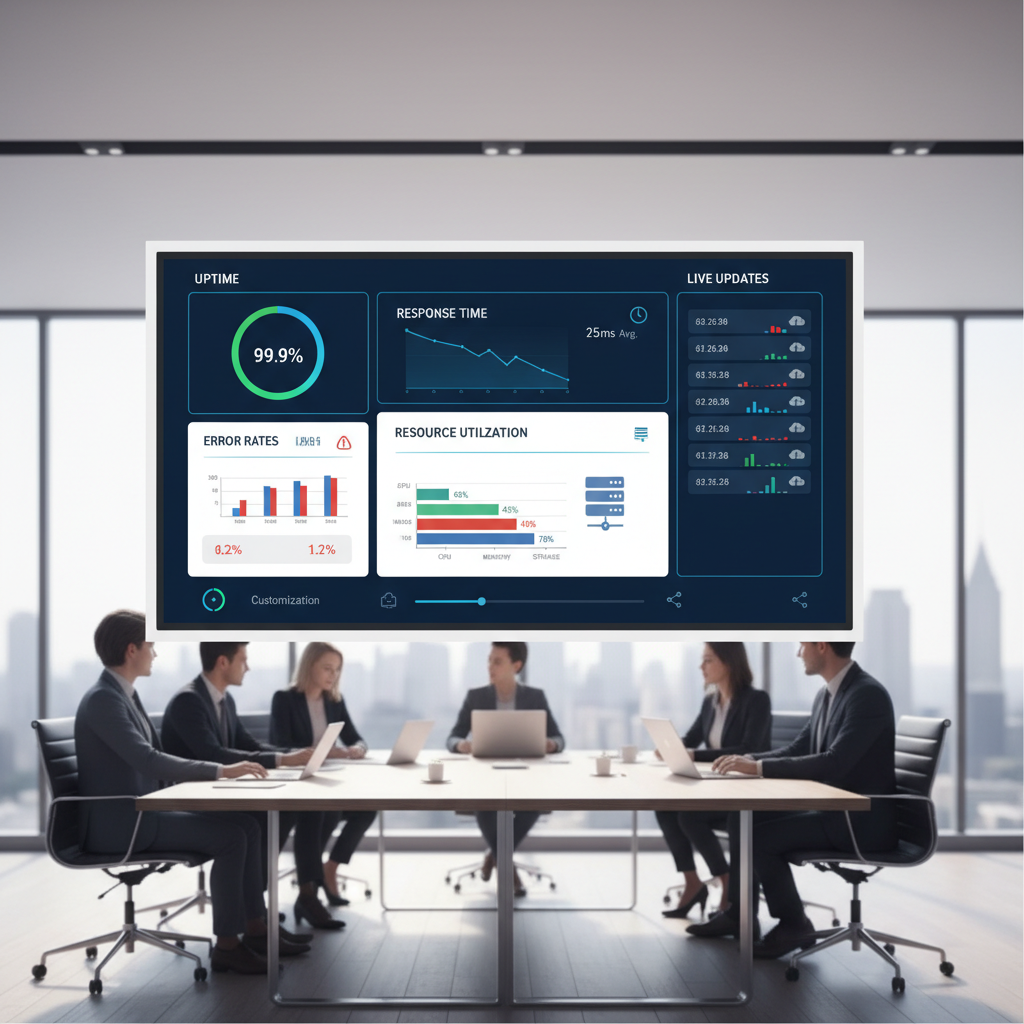
A dashboard showing various cloud performance metrics, including uptime, response times, error rates, and resource utilization, with customizable widgets and real-time data updates.
Effective alerting mechanisms are indispensable for any top cloud performance tracking alternatives. The solution should offer flexible alert configurations, allowing you to set thresholds based on specific metrics and receive notifications through multiple channels like email, SMS, or collaboration tools. Escalation policies ensure that critical issues are addressed promptly.
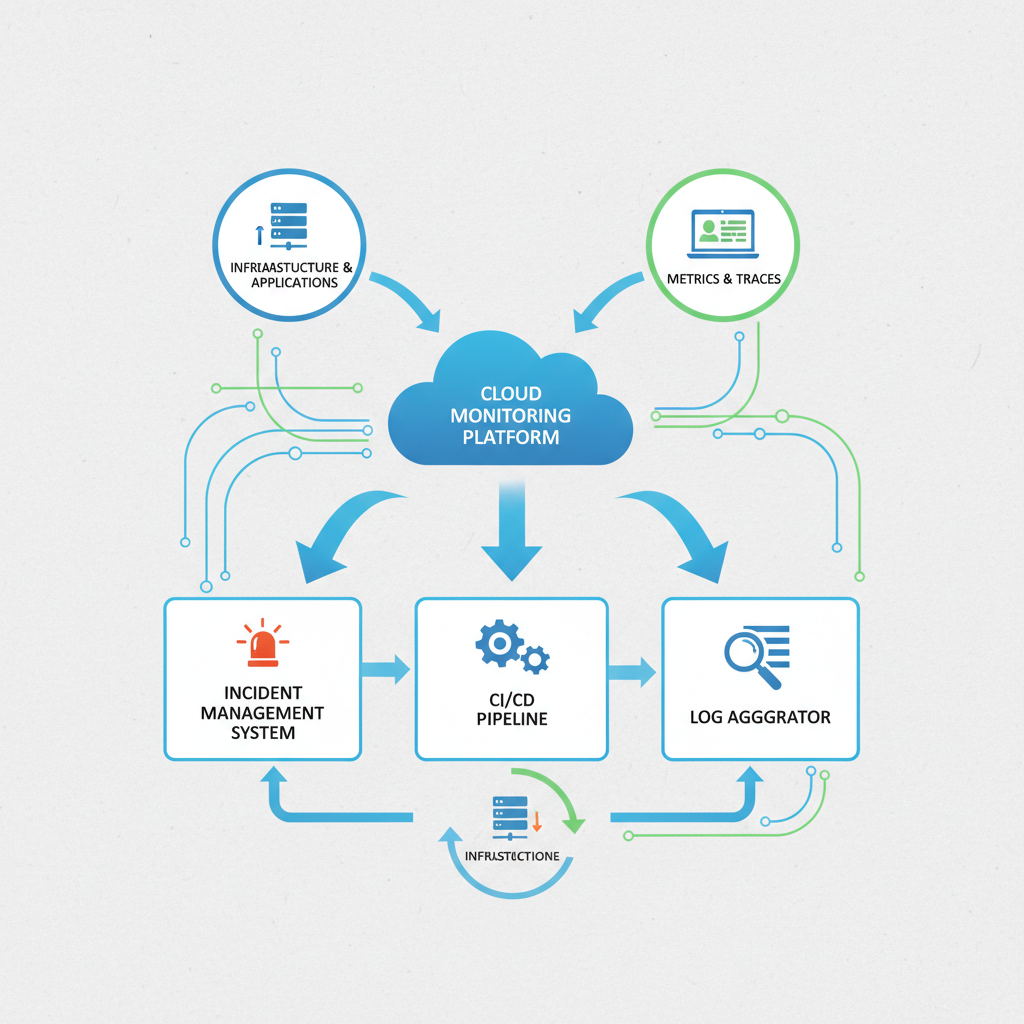
Integration capabilities are paramount; the chosen alternative should seamlessly integrate with your existing IT ecosystem. This includes integration with incident management systems, CI/CD pipelines, and configuration management databases. Such integrations streamline workflows and ensure that monitoring data feeds into your broader operational processes.
Finally, consider solutions that provide comprehensive reporting and historical data retention. The ability to generate detailed reports on SLA compliance, performance trends, and incident histories is vital for auditing, capacity planning, and demonstrating value. These reporting features are key best Cloud sla monitoring alternatives tips for ongoing optimization.
Top best Cloud SLA Monitoring Alternatives in Practice
Identifying the best Cloud sla monitoring alternatives involves understanding how different types of solutions can be effectively applied to real-world scenarios. Many organizations benefit from a combination of tools to achieve comprehensive oversight, moving beyond the capabilities of basic cloud provider dashboards. This approach allows for a more granular and proactive management of service levels.
For applications with complex interdependencies, a dedicated APM suite often stands out among top cloud performance tracking alternatives. These tools not only track response times but also trace transactions across microservices, identifying bottlenecks at the code or infrastructure level. They provide deep insights into application health and user experience, which directly impact SLA adherence.
Synthetic monitoring platforms are excellent SLA monitoring substitutes for measuring external availability and performance from an end-user perspective. By simulating user journeys from various geographic locations, they can detect issues like slow page loads or broken functionalities before customers report them. This proactive detection is crucial for maintaining high service quality.
When infrastructure stability is a primary concern, robust infrastructure monitoring tools offer invaluable other options for cloud SLA. These solutions can monitor hundreds of metrics from virtual machines, containers, and serverless functions, providing alerts on resource exhaustion or unusual activity. They help ensure the underlying cloud resources consistently meet performance expectations.
Log management and analytics platforms, when integrated with AI/ML capabilities, act as powerful competitors to cloud SLA monitoring. They can automatically detect anomalies in log patterns that signify emerging problems, correlating events across disparate systems to identify root causes faster. This predictive capability helps prevent SLA breaches before they occur.
Ultimately, the most effective approach often involves a blend of these alternative SLA monitoring solutions. Combining synthetic checks with deep APM insights and robust infrastructure monitoring provides a holistic view. This comprehensive strategy ensures that all aspects of your cloud services are continuously observed, allowing for optimal performance and reliable SLA compliance.
Implementing Your Chosen Alternative SLA Monitoring Solution
Implementing your chosen best Cloud sla monitoring alternatives requires a structured approach to ensure maximum benefit and seamless integration. The process involves careful planning, deployment, configuration, and ongoing optimization. This systematic methodology will help you leverage the full potential of these advanced tools.
Begin by defining clear monitoring objectives based on your specific business and technical requirements. Identify which KPIs are most critical for your SLAs and what level of detail you need for troubleshooting. This initial step helps in selecting the right features and configuring the solution effectively.
Next, plan the deployment strategy, considering whether the solution will run as an agent on your cloud instances, a SaaS offering, or a hybrid model. Ensure that the deployment process accounts for security best practices and network configurations. Proper planning minimizes disruption and integrates the tool smoothly into your existing infrastructure.
Configuration is a crucial phase where you set up alerts, thresholds, and dashboards tailored to your environment. Establish baselines for normal performance and configure alerts for deviations that could indicate an impending SLA breach. Utilize the best Cloud sla monitoring alternatives tips to optimize alert sensitivity and avoid alert fatigue.
Integrate the new monitoring solution with your existing incident management, ticketing, and collaboration tools. This ensures that detected issues are automatically routed to the appropriate teams for prompt resolution. Automation streamlines the incident response workflow and reduces mean time to resolution.
Finally, continuously review and refine your monitoring strategy. Cloud environments are dynamic, so your monitoring configurations should evolve accordingly. Regularly analyze reports, adjust thresholds, and explore new features to ensure your alternative SLA monitoring solutions remain effective and aligned with your evolving business needs.
Overcoming Challenges with Alternative Cloud SLA Monitoring
While exploring the best Cloud sla monitoring alternatives offers numerous benefits, organizations may encounter certain challenges during implementation and ongoing management. Addressing these proactively is essential to maximize the value derived from these advanced solutions. A well-prepared approach can mitigate potential roadblocks effectively.
One common challenge is data overload, as comprehensive monitoring tools can generate vast amounts of metrics, logs, and traces. It becomes difficult to sift through this data to identify critical insights. Implement intelligent filtering, aggregation, and visualization techniques to focus on actionable information.
Integration complexity can also pose a hurdle, especially in diverse multi-cloud or hybrid environments. Ensuring seamless connectivity between the new monitoring solution and existing IT systems, like CMDBs or incident management platforms, requires careful planning and execution. Utilize APIs and connectors where available to simplify this process.
A diagram illustrating the integration of a cloud monitoring tool with various other IT systems like incident management, CI/CD, and log aggregators, showing data flow between them.
The cost of advanced alternative SLA monitoring solutions can be a concern, particularly for smaller organizations or those with extensive cloud footprints. It is important to conduct a thorough cost-benefit analysis, considering both the direct subscription fees and the potential savings from improved performance and reduced downtime. Focus on solutions that offer scalable pricing models.
Furthermore, managing alert fatigue is critical; too many false positives can lead to ignored warnings and missed critical events. Fine-tune alert thresholds, implement intelligent correlation rules, and use dynamic baselining features to ensure alerts are meaningful and actionable. This ensures your team responds only to genuine issues.
Finally, ensuring that your team has the necessary skills to operate and interpret data from sophisticated monitoring tools is vital. Invest in training and documentation to empower your team to effectively leverage the full capabilities of your chosen best Cloud sla monitoring alternatives. Continuous learning fosters a more proactive and efficient operations team.
Frequently Asked Questions
What are the primary reasons to seek best Cloud sla monitoring alternatives?
Organizations often seek best Cloud sla monitoring alternatives because native cloud provider tools may lack granular detail, cross-cloud visibility, or advanced analytics. These limitations can hinder proactive issue detection and precise SLA compliance measurement, especially in complex or multi-cloud environments. Alternative solutions typically offer more depth and customization.
How do alternative SLA monitoring solutions improve performance?
Alternative SLA monitoring solutions enhance performance by providing deeper insights into application and infrastructure behavior. Tools like APM can pinpoint code-level bottlenecks, while synthetic monitoring proactively identifies user experience issues. This detailed visibility enables faster root cause analysis and proactive optimization, preventing performance degradation and SLA breaches.
Can best Cloud sla monitoring alternatives support multi-cloud environments?
Yes, many of the best Cloud sla monitoring alternatives are specifically designed to support multi-cloud and hybrid-cloud environments. They offer centralized dashboards and consolidated data views, allowing you to monitor services across various cloud providers and on-premises infrastructure from a single platform. This capability is a key advantage over native tools.
What is the role of synthetic monitoring in alternative cloud SLA management?
Synthetic monitoring plays a crucial role as an effective SLA monitoring substitute by simulating user interactions with your applications and services. It provides proactive, objective data on availability, response times, and transaction success from various locations, often detecting performance issues before real users are impacted. This helps ensure continuous service delivery.
Are there open-source options among the best Cloud sla monitoring alternatives?
Yes, there are several open-source options that serve as competitors to cloud SLA monitoring, offering flexible and cost-effective solutions. Tools like Prometheus for metrics collection, Grafana for visualization, and various log aggregators can be combined to build a powerful, custom monitoring stack. These require more expertise but offer high customization.
How do I choose the right alternative SLA monitoring solution for my business?
Choosing the right alternative SLA monitoring solution involves assessing your specific needs regarding scale, complexity, budget, and desired level of detail. Evaluate solutions based on their multi-cloud support, real-time analytics, alerting capabilities, integration options, and reporting features. Consider a combination of tools for comprehensive coverage, using this best Cloud sla monitoring alternatives guide.
ENSURE UNINTERRUPTED SERVICE
Ensure uninterrupted service delivery and proactively prevent costly SLA breaches. Leverage our automated, real
✓ Free consultation ✓ No commitment required ✓ Trusted by experts
Conclusion
Navigating the complexities of modern cloud environments necessitates robust and comprehensive monitoring beyond basic provider offerings. Exploring the best Cloud sla monitoring alternatives is a strategic imperative for organizations aiming to uphold stringent SLAs, optimize performance, and ensure exceptional user experiences. These specialized solutions provide the depth, flexibility, and insights required to thrive in a dynamic digital landscape.
By embracing diverse categories of tools, from APM to synthetic monitoring and log analytics, businesses can gain unparalleled visibility into their cloud operations. The careful selection and strategic implementation of these advanced platforms, guided by the best Cloud sla monitoring alternatives tips, will empower your teams to proactively manage service levels and respond swiftly to any challenges. Ultimately, investing in sophisticated monitoring alternatives safeguards your cloud investments and strengthens your commitment to reliability.
Jacob Stålbro is a seasoned digitalization and transformation leader with over 20 years of experience, specializing in AI-driven innovation. As Head of Innovation and Co-Founder at Opsio, he drives the development of advanced AI, ML, and IoT solutions. Jacob is a sought-after speaker and webinar host known for translating emerging technologies into real business value and future-ready strategies.