

Best Cloud SLA Monitoring Tools Comparison Guide

March 6, 2026|1:50 PM
Unlock Your Digital Potential
Whether it’s IT operations, cloud migration, or AI-driven innovation – let’s explore how we can support your success.
March 6, 2026|1:50 PM
Whether it’s IT operations, cloud migration, or AI-driven innovation – let’s explore how we can support your success.
Managing cloud services effectively requires a deep understanding of Service Level Agreements (SLAs). These agreements define the performance, availability, and reliability expectations for your cloud infrastructure and applications. Unmet SLAs can lead to significant business disruption, financial penalties, and reputational damage.
Effective monitoring is not just about observing; it’s about validating that your cloud providers deliver on their promises. This guide provides a comprehensive Cloud sla monitoring tools comparison, offering insights into various solutions designed to ensure your cloud services consistently meet agreed-upon benchmarks. Understanding the nuances of these tools is crucial for any organization relying on cloud infrastructure.
Cloud SLA monitoring tools are specialized software solutions designed to track, measure, and report on the performance of cloud services against predefined Service Level Agreements. They go beyond basic uptime checks, providing detailed insights into critical metrics. These tools are indispensable for maintaining service quality and operational efficiency.
Their primary function is to offer visibility into the health and performance of cloud-based applications and infrastructure. By continuously collecting data, they help organizations identify potential SLA breaches proactively. This allows for timely intervention, mitigating risks before they impact end-users or business operations.
These sophisticated tools monitor a wide array of metrics essential for validating SLA compliance. They continuously collect data points from various cloud environments and services. This data forms the basis for performance analysis and reporting.
Key areas include application response times, network latency, resource utilization, and error rates. They also track database performance, server uptime, and storage I/O, among other critical indicators. Comprehensive monitoring ensures no aspect of your cloud service goes unchecked.
Selecting the right Cloud SLA monitoring solution involves evaluating several critical criteria. A thorough SLA tool comparison matrix should consider how each tool aligns with your specific operational needs and technical requirements. This systematic approach ensures an informed decision.
Focusing on these criteria will help you identify the solution that best supports your business objectives. Each aspect plays a vital role in the overall effectiveness and suitability of a monitoring tool.
The depth and breadth of a tool’s monitoring capabilities are paramount. It’s essential to assess what types of cloud services the tool can monitor, whether IaaS, PaaS, or SaaS. High data granularity allows for precise troubleshooting and detailed performance analysis.
Look for tools that offer real-time data collection and historical analysis features. This combination provides both immediate insights and long-term trend identification. Robust monitoring extends to synthetic transactions and real user monitoring (RUM) for a complete picture.
Seamless integration with your current IT ecosystem is a significant advantage. A good SLA monitoring tool should integrate effortlessly with incident management, ticketing, and configuration management databases (CMDBs). This prevents data silos and streamlines workflows.
Verify compatibility with your specific cloud providers, whether AWS, Azure, Google Cloud, or multi-cloud environments. The ability to pull data from various sources and present it cohesively is vital for unified visibility.
Effective alerting mechanisms are crucial for immediate incident response. Tools should offer customizable alerts based on various thresholds and conditions, delivered through multiple channels like email, SMS, or collaboration platforms. Sophisticated alerting prevents minor issues from escalating.
Reporting features should provide clear, actionable insights into SLA compliance and performance trends. Customizable dashboards with intuitive visualizations help stakeholders quickly grasp complex data. The ability to generate compliance reports for auditors is also a key consideration.
The chosen tool must be able to scale alongside your evolving cloud infrastructure. As your cloud footprint grows, the monitoring solution should maintain its performance and accuracy without becoming a bottleneck. This ensures consistent oversight regardless of scale.
Assess the tool’s ability to handle large volumes of data and a high number of monitored endpoints. Performance degradation in the monitoring system itself can undermine its effectiveness.
Understanding the cost structure is vital for budgeting and ROI calculations. Different tools employ various licensing models, such as per-instance, per-user, or based on data volume. Compare these models against your expected usage.
Consider not just the direct software costs but also potential hidden expenses like data ingress/egress charges, support fees, or professional services. A comprehensive financial assessment helps avoid unexpected expenditures.
Reliable vendor support is critical, especially when dealing with complex cloud environments. Evaluate the availability and quality of technical support channels. Access to documentation, knowledge bases, and user communities can also be invaluable.
A strong vendor commitment to ongoing development and regular updates ensures the tool remains relevant and secure. Active community forums can offer peer-to-peer assistance and insights into common challenges.
The market for cloud SLA monitoring tools is diverse, featuring a range of solutions from broad application performance management (APM) suites to specialized SLA compliance platforms. A proper SLA monitoring vendor comparison involves understanding the strengths and focus areas of these different providers. Each vendor brings a unique approach to cloud service oversight.
Some tools excel in deep code-level tracing, while others focus on infrastructure metrics or business transaction monitoring. Your choice will depend heavily on your primary pain points and monitoring objectives. It’s not a one-size-fits-all scenario, making a thoughtful best cloud SLA monitoring tools review essential.
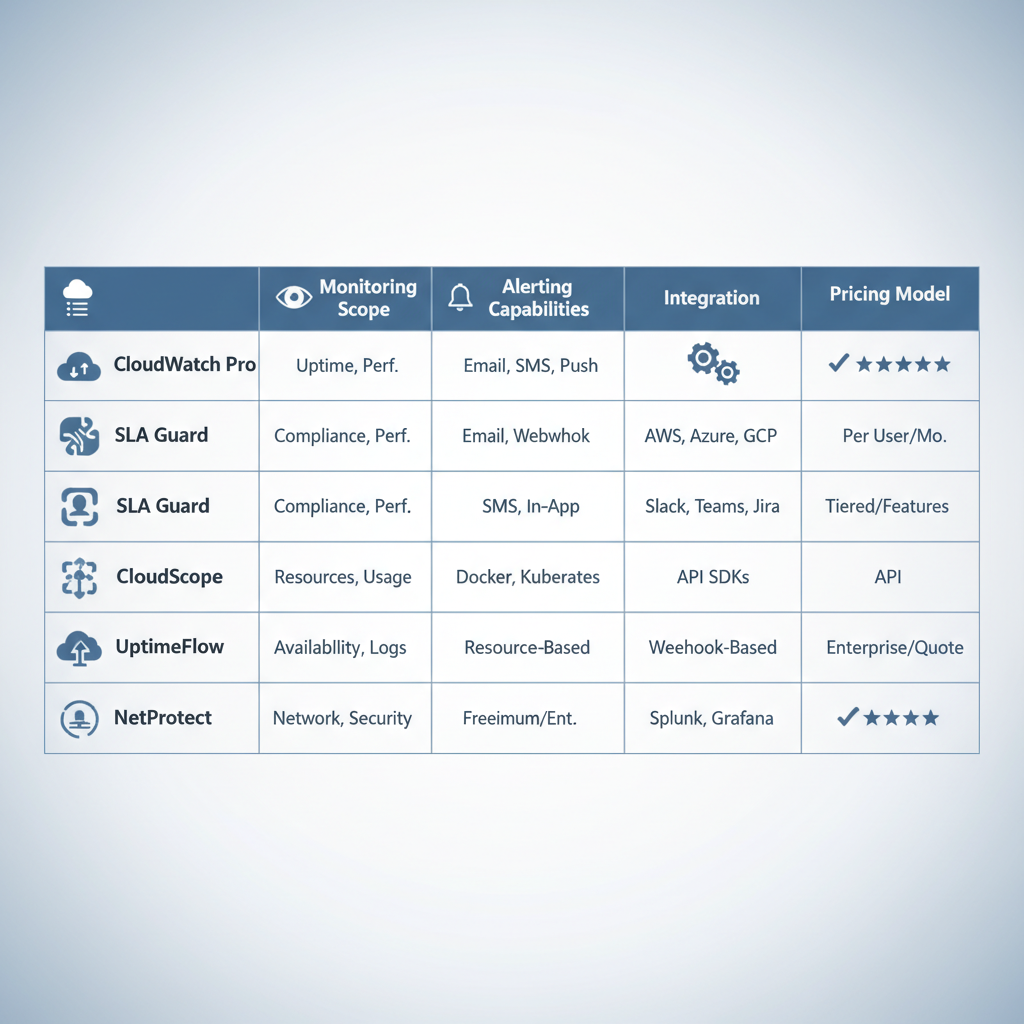
Broadly, cloud SLA monitoring tools can be grouped into a few categories. General-purpose APM tools, like Datadog, Dynatrace, and New Relic, offer extensive performance monitoring across applications and infrastructure, often including robust SLA reporting. These comprehensive platforms are popular for their end-to-end visibility.
Infrastructure monitoring tools, such as LogicMonitor or Zabbix, focus more on the underlying cloud resources, providing detailed metrics on VMs, networks, and storage. Dedicated SLA management platforms, though fewer, offer specialized features for contract management and compliance reporting. Many APM tools now incorporate these specialized SLA features.
A detailed feature comparison of SLA tools reveals significant differences in their capabilities and strengths. Understanding these nuances is critical for selecting a tool that precisely meets your operational needs. This granular examination helps distinguish between seemingly similar offerings.
Each feature contributes uniquely to the overall effectiveness of an SLA monitoring solution. Prioritizing features based on your specific requirements will guide you toward the most appropriate choice.
Synthetic monitoring simulates user interactions with your applications from various geographical locations. It proactively detects performance issues before real users are affected, providing consistent, controlled data for SLA validation. This is excellent for baseline performance checks.
Real User Monitoring (RUM), conversely, collects data from actual user sessions. It provides insights into how real users experience your application, including page load times, interaction delays, and geographical performance variations. Combining both synthetic and RUM offers a holistic view of user experience against SLA targets.
Modern SLA monitoring tools leverage advanced analytics, often incorporating AI and machine learning, to process vast amounts of data. These capabilities help identify patterns, anomalies, and potential performance trends that might impact SLAs. This proactive insight is invaluable for preventing issues.
Root cause analysis (RCA) features automatically trace performance deviations back to their origin. This accelerates troubleshooting and reduces downtime, ensuring quick resolution of problems that could breach service level objectives. Tools with strong RCA reduce mean time to resolution (MTTR) significantly.
Given the prevalence of multi-cloud and hybrid cloud strategies, robust support for diverse environments is crucial. A superior tool can seamlessly monitor resources and applications across different cloud providers (e.g., AWS, Azure, Google Cloud) and on-premises infrastructure. This unified view simplifies management.
The ability to aggregate metrics and provide a consistent reporting framework across these disparate environments is a key differentiator. It eliminates the need for multiple, specialized monitoring solutions, streamlining your Cloud sla monitoring tools comparison.
The flexibility to customize dashboards, alerts, and reports is essential for tailoring the tool to your specific business needs. Organizations often have unique metrics and reporting requirements that standard templates cannot fully address. Customizable options allow for precise alignment.
Extensibility through APIs and integrations enables the tool to connect with other services and platforms within your ecosystem. This fosters a more integrated operational environment, supporting automated workflows and data exchange.
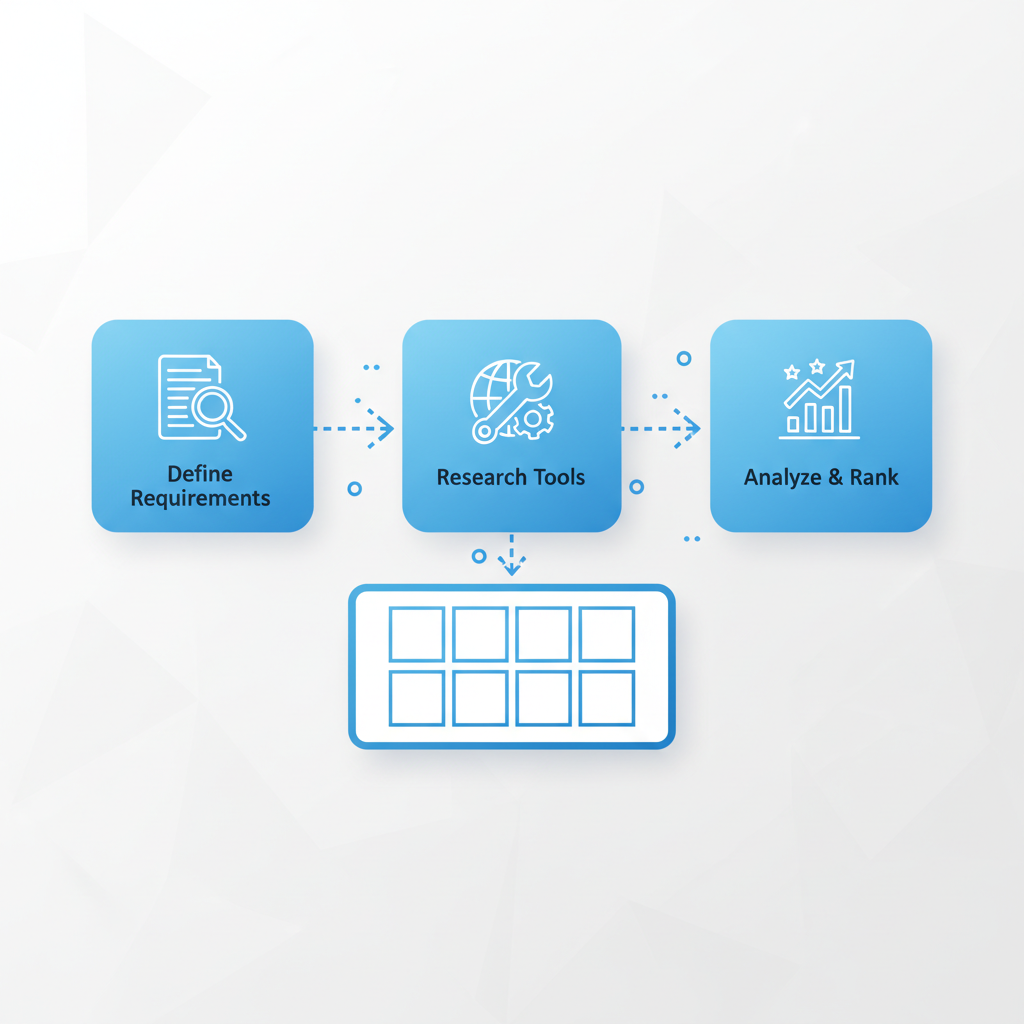
Creating an effective SLA tool comparison matrix is a structured approach to evaluate potential monitoring solutions. This systematic process helps you objectively compare SLA monitoring software and make an informed decision. It ensures that all critical aspects are considered against your specific needs.
A well-designed matrix will highlight the strengths and weaknesses of each tool relative to your requirements. This makes the choosing cloud SLA monitoring process clearer and more data-driven.
1. Define Your Requirements: Begin by clearly outlining your business and technical needs. What specific SLAs do you need to monitor? What cloud environments are in scope? What is your budget, and what existing tools must integrate? 2. Identify Key Criteria: Based on your requirements, list the most important evaluation criteria. These might include monitoring scope, integration capabilities, alerting flexibility, reporting, scalability, security, and vendor support. 3. Research Potential Tools: Identify a shortlist of leading cloud SLA monitoring tools. Look at offerings from established vendors and emerging players based on best Cloud sla monitoring tools comparison reviews and industry reputation. 4. Gather Information: Collect detailed information on each tool against your criteria. Leverage vendor documentation, trial versions, product demos, and independent reviews. Pay attention to Cloud sla monitoring tools comparison examples to see real-world applications. 5. Populate the Matrix: Create a spreadsheet or table with tools as rows and criteria as columns. Systematically fill in how each tool performs against each criterion. Use a scoring system (e.g., 1-5, or Yes/No/Partial) for objective comparison. 6. Analyze and Rank: Review the completed matrix to identify top contenders. Look for tools that score highly on your most critical criteria. This visual representation simplifies the decision-making process, highlighting the pros and cons clearly.
The process of choosing cloud SLA monitoring requires a strategic approach beyond just feature comparison. Adhering to best practices ensures that your chosen solution not only meets current needs but also supports future growth and evolving cloud strategies. This long-term perspective is crucial for maximizing your investment.
These Cloud sla monitoring tools comparison tips will help you avoid common pitfalls and select a solution that truly empowers your organization to uphold its service commitments. A thoughtful selection process leads to more effective operations.
Ensure the monitoring tool’s capabilities directly align with your business objectives and specific SLA targets. Prioritize features that directly impact your ability to meet critical service levels for revenue-generating applications or essential customer services. Monitoring irrelevant metrics can lead to noise and misdirection.
Focus on what matters most to your stakeholders and end-users. A tool that provides actionable insights into business-critical performance indicators will yield the greatest value.
Before making a final decision, conduct proofs of concept (POCs) with your top two or three shortlisted tools. Implement them in a representative segment of your cloud environment to observe their performance in real-world conditions. This hands-on experience is invaluable.
POCs allow you to evaluate ease of deployment, configuration complexity, accuracy of alerts, and the clarity of reports. They provide practical insights that a Cloud sla monitoring tools comparison guide alone cannot.
If your organization uses or plans to use a multi-cloud or hybrid cloud strategy, choose a tool with robust support for these environments. A unified monitoring solution for disparate cloud platforms simplifies management and provides a consistent view of performance. This helps with future-proofing your monitoring strategy.
Avoid solutions that lock you into a single cloud provider, as this can limit your flexibility down the line. Look for vendor-agnostic capabilities.
Security is paramount when dealing with sensitive performance data. Ensure the chosen tool adheres to industry-standard security protocols for data encryption, access control, and vulnerability management. Compliance with regulations like GDPR, HIPAA, or SOC 2 may also be critical for your business.
Verify the vendor’s security certifications and practices. A secure monitoring solution protects both your data and your operational integrity.
Examining Cloud sla monitoring tools comparison examples from different organizational contexts helps illustrate the practical application of these solutions. Various scenarios demonstrate how diverse needs influence the selection of the “best” tool. These examples highlight the adaptability required in the decision-making process.
Understanding how different organizations approach their best Cloud sla monitoring tools comparison provides valuable insights. It shows that the ideal tool is always relative to specific use cases and priorities.
An e-commerce platform relies heavily on uptime and rapid transaction processing, with strict SLAs on page load times and checkout completion rates. They would prioritize a tool strong in Real User Monitoring (RUM) and synthetic transaction monitoring. A solution like Dynatrace or New Relic, with their deep insights into user experience and application performance, would be a strong contender.
These platforms provide real-time dashboards for critical business transactions and offer automated root cause analysis. This ensures that any performance degradation impacting sales can be quickly identified and resolved, thereby protecting revenue and customer satisfaction.
A large enterprise running mission-critical applications across AWS, Azure, and private data centers requires a tool offering comprehensive multi-cloud and hybrid cloud support. Their primary concern is unified visibility and consistent SLA reporting across disparate environments. Datadog, with its extensive integrations and unified observability platform, would be an excellent choice.
This tool would allow their operations team to consolidate metrics, logs, and traces from all sources into a single pane of glass. It simplifies the task of monitoring complex interdependencies and ensures SLAs are met regardless of where the workload resides.
A SaaS provider with a microservices architecture needs a tool that offers deep code-level visibility and integrates well with their CI/CD pipelines. They have internal SLAs for service response times and error rates, crucial for developer productivity and quick incident resolution. AppDynamics, or even New Relic’s APM capabilities, would be highly relevant.
These tools provide detailed trace data, allowing developers to pinpoint performance bottlenecks within specific services or code segments. This accelerates debugging and ensures new deployments don’t inadvertently breach SLAs, supporting agile development practices.
Cloud Service Level Agreements (SLAs) are formal contracts between a cloud service provider and a customer. They define the minimum acceptable level of service, including aspects like uptime, performance, data availability, and response times for support. Adhering to these agreements is crucial for business continuity.
SLA monitoring in the cloud is vital for several reasons. It ensures that cloud providers uphold their contractual obligations, validates service quality, helps identify performance issues proactively, and provides data for accountability. Without it, organizations risk downtime, financial penalties, and a negative impact on user experience.
When choosing a Cloud SLA monitoring tool, look for comprehensive monitoring capabilities across your specific cloud services, robust integration with existing systems, customizable alerting and reporting, and scalability. Also, consider the tool’s ability to provide advanced analytics and support for multi-cloud environments.
To compare SLA monitoring software effectively, create a detailed comparison matrix based on your specific business and technical requirements. Evaluate tools against criteria such as monitoring scope, integration, alerting features, cost, and vendor support. Conducting proofs of concept is also highly recommended.
Yes, many leading Cloud SLA monitoring tools are specifically designed to monitor multi-cloud and hybrid cloud environments. They offer integrations with various cloud providers like AWS, Azure, and Google Cloud, providing a unified view of performance across all your deployed resources and applications. This consolidated view is increasingly important for complex setups.
Application Performance Management (APM) tools offer broad visibility into application health, performance, and user experience, often including SLA reporting as a feature. Dedicated SLA monitoring, while sometimes integrated into APM, specifically focuses on tracking, validating, and reporting on contractual service level adherence. APM is broader, while dedicated SLA monitoring is more focused on compliance.
Choosing the right cloud SLA monitoring tool is a strategic decision that significantly impacts your operational efficiency and customer satisfaction. A comprehensive Cloud sla monitoring tools comparison involves a meticulous evaluation of features, integration capabilities, and alignment with your specific business needs. The market offers a diverse range of powerful solutions, each with unique strengths.
By carefully defining your requirements, utilizing a comparison matrix, and conducting thorough proofs of concept, you can select a tool that ensures your cloud services consistently meet their performance and availability commitments. Invest time in this critical decision to safeguard your business operations and maintain trust with your stakeholders.


Experience power, efficiency, and rapid scaling with Cloud Platforms!