Whether it’s IT operations, cloud migration, or AI-driven innovation – let’s explore how we can support your success.
Home /
Work /
Blogs /
Affordable Cloud SLA Monitoring: Cost-Effective Solutions
Navigating the World of cheap Cloud sla monitoring
In today’s fast-paced digital landscape, businesses increasingly rely on cloud services to power their operations. Ensuring these services meet agreed-upon performance standards is crucial, which is where Service Level Agreement (SLA) monitoring comes into play. Many organizations, however, are concerned about the associated costs. This comprehensive guide explores how to achieve cheap Cloud sla monitoring without compromising on critical insights or service reliability.
Understanding how to implement affordable cloud SLA monitoring is not just about saving money; it’s about optimizing resources and ensuring business continuity. We will delve into various strategies, tools, and best practices to help you find the best cheap Cloud sla monitoring solutions available. Our goal is to equip you with the knowledge to make informed decisions for budget-friendly cloud performance monitoring.
Understanding Cloud SLA Monitoring Fundamentals
Before diving into cost-effective solutions, it is essential to grasp the core concepts of cloud SLA monitoring. This foundational understanding will help you identify what truly matters for your specific needs, enabling a more targeted and economic approach. Monitoring ensures that your cloud providers deliver on their promises.
It’s about tracking key performance indicators to verify service availability, performance, and reliability. This proactive approach helps prevent costly downtime and maintains user satisfaction.
What are Service Level Agreements (SLAs)?
Service Level Agreements (SLAs) are formal contracts between a service provider and a customer, defining the level of service expected. They specify various metrics, such as uptime, response times, and problem resolution targets. These agreements are crucial for setting expectations and providing a basis for accountability.
In the cloud context, SLAs typically cover the availability of virtual machines, database services, network connectivity, and storage. Understanding the specifics of your cloud provider’s SLA is the first step toward effective monitoring. Without clear SLAs, it’s impossible to measure performance effectively.
Why Monitor Cloud SLAs?
Monitoring cloud SLAs is paramount for several reasons, directly impacting business operations and customer trust. It provides visibility into the performance of your cloud services, allowing you to quickly identify and address issues. Proactive monitoring helps you avoid service disruptions and potential financial penalties.
Beyond operational stability, monitoring ensures compliance with contractual obligations and internal performance benchmarks. It empowers you to verify that you are receiving the service quality you pay for, leading to better resource utilization. This also helps in negotiating future contracts with providers.
Key Metrics to Track for SLA Compliance
Effective SLA monitoring hinges on tracking the right metrics that directly reflect service performance. These metrics vary depending on the cloud service but generally include availability, latency, and error rates. Prioritizing these helps in low-cost SLA tracking.
Common metrics include:
Uptime/Availability: The percentage of time a service is operational and accessible.
Latency/Response Time: The delay between a request and a response from the service.
Throughput: The amount of data or number of requests processed per unit of time.
Error Rate: The percentage of failed requests or transactions.
Resource Utilization: CPU, memory, and disk usage to prevent bottlenecks.
A dashboard showing various cloud performance metrics like uptime percentage, latency graphs, and error rates, with clear green (good) and red (alert) indicators.
The Challenge of Cost in Cloud Monitoring
While critical, comprehensive cloud monitoring can quickly become expensive, especially for businesses with extensive cloud footprints. Many traditional monitoring solutions are designed for large enterprises and come with hefty price tags. This creates a significant challenge for smaller organizations or those with tighter budgets.
The cost typically escalates with the number of monitored instances, data volume, and features like advanced analytics or long-term data retention. Finding a balance between robust monitoring and affordability is key. This is precisely why the search for cheap Cloud sla monitoring is so prevalent.
Cloud providers themselves offer monitoring tools, but these can also add up, particularly if you use multiple providers or need cross-cloud visibility. Organizations must carefully evaluate their needs against the cost structures of various inexpensive SLA solutions. The goal is to maximize monitoring value while minimizing expenditure.
Strategies for Finding cheap Cloud sla monitoring Solutions
Achieving cheap Cloud sla monitoring requires a strategic approach that combines smart tool selection with optimized practices. You don’t necessarily need to compromise on quality to find budget-friendly cloud performance monitoring. Several avenues exist for reducing monitoring costs without sacrificing essential insights.
Exploring different options and understanding their implications is vital. This section outlines actionable strategies to help you implement low-cost SLA tracking effectively. It’s about being intelligent with your choices and leveraging what’s already available.
Leveraging Built-in Cloud Provider Tools
Most major cloud providers like AWS, Azure, and Google Cloud offer their own suite of monitoring services. AWS CloudWatch, Azure Monitor, and Google Cloud Operations (formerly Stackdriver) provide basic to advanced monitoring capabilities for services running within their respective ecosystems. These tools are often cost-effective, especially for basic use cases.
While they may incur some charges, they are generally optimized for their specific platforms and can provide deep insights without the overhead of third-party integrations. For businesses primarily operating within a single cloud environment, utilizing these native tools is a strong candidate for inexpensive SLA solutions. They often have a generous free tier or are included in service costs up to a certain usage limit.
Open-Source Monitoring Options
Open-source tools present a powerful alternative for cheap Cloud sla monitoring, offering flexibility and often no direct licensing costs. Tools like Prometheus, Grafana, and Zabbix are widely adopted and can be configured to monitor various cloud services and applications. These require technical expertise for setup and maintenance but provide unparalleled customization.
While free from licensing fees, remember that open-source solutions still involve indirect costs for infrastructure, configuration, and ongoing support. However, for organizations with the right in-house talent, they offer excellent economic SLA monitoring options. They can be tailored precisely to your specific low-cost SLA tracking requirements.
Freemium and Tiered Pricing Models
Many commercial monitoring solutions offer freemium models or tiered pricing structures that can be very beneficial for cheap Cloud sla monitoring. Freemium plans typically provide essential features for a limited number of monitored entities or data volume at no cost. This allows businesses to start monitoring without upfront investment.
As your needs grow, you can upgrade to a paid tier that offers more features, scale, and support. These models provide a scalable path for budget-friendly cloud performance monitoring. Carefully evaluate the features included in each tier to ensure they meet your core requirements for affordable cloud SLA monitoring.
Consolidating Tools and Platforms
Using multiple, disparate monitoring tools can lead to increased costs and complexity. Each tool might have its own licensing fees, data ingestion charges, and learning curve. Consolidating your monitoring efforts into a single, comprehensive platform can significantly reduce overall expenses.
Look for platforms that offer broad integration capabilities across different cloud providers and application types. A unified dashboard simplifies management and provides a holistic view of your cloud performance. This strategic consolidation is a key component of effective cheap Cloud sla monitoring tips.
Focusing on Critical Metrics and Services
Not every metric or service requires the same level of intensive monitoring. To achieve inexpensive SLA solutions, prioritize what truly matters for your business’s core operations and SLA commitments. Identify the mission-critical applications and services whose performance directly impacts revenue or customer satisfaction.
Allocate your monitoring resources accordingly, focusing more granularly on high-priority items and using a lighter touch for less critical components. This targeted approach helps optimize data ingestion costs and reduces the complexity of your monitoring setup. It’s a smart way to implement low-cost SLA tracking.
ENSURE UNINTERRUPTED SERVICE
Ensure uninterrupted service delivery and proactively prevent costly SLA breaches. Leverage our automated, real
✓ Free consultation ✓ No commitment required ✓ Trusted by experts
Key Features to Look for in budget-friendly cloud performance monitoring
When selecting a solution for cheap Cloud sla monitoring, certain features are non-negotiable, even on a tight budget. These features ensure you gain the necessary insights and can respond effectively to performance deviations. Prioritizing these will help you choose the best cheap Cloud sla monitoring tool.
The goal is to find a solution that offers robust capabilities without an exorbitant price tag. This section highlights the essential functionalities that contribute to effective and economic SLA monitoring options.
Real-time Alerts and Notifications
Timely awareness of performance issues is critical for maintaining SLA compliance. Your chosen cheap Cloud sla monitoring solution must offer robust real-time alerting capabilities. This includes customizable thresholds and various notification channels, such as email, SMS, Slack, or webhook integrations.
Prompt alerts enable your team to react quickly to incidents, minimizing downtime and mitigating potential business impact. Look for tools that allow granular control over alert conditions to prevent alert fatigue. Efficient alerting is a cornerstone of any effective low-cost SLA tracking strategy.
Customizable Dashboards
A clear, intuitive dashboard that visualizes your key performance metrics is invaluable. Customizable dashboards allow you to tailor the display to your specific needs, focusing on the data most relevant to your SLAs. This helps in quickly assessing the health of your cloud services.
The ability to create and share custom views among team members fosters collaboration and provides quick insights for various stakeholders. Visualizing data effectively is crucial for understanding trends and identifying potential issues before they escalate. It simplifies budget-friendly cloud performance monitoring.
Comprehensive Reporting Capabilities
Beyond real-time monitoring, the ability to generate detailed reports is essential for SLA compliance and performance review. Your cheap Cloud sla monitoring solution should provide customizable reports that can be scheduled or generated on demand. These reports should ideally cover historical performance, availability trends, and compliance against defined SLAs.
Reports are vital for internal reviews, provider accountability, and demonstrating compliance to auditors or stakeholders. They offer a historical perspective that real-time dashboards cannot fully provide. Look for solutions that make it easy to export and share these vital insights.
Integration with Existing Systems
To streamline operations and enhance efficiency, your monitoring solution should integrate seamlessly with your existing IT infrastructure and tools. This includes integration with incident management systems, collaboration platforms, and configuration management databases. Such integrations automate workflows and reduce manual effort.
Look for tools with open APIs or pre-built connectors that allow easy data exchange. Good integration capabilities ensure that monitoring data can feed into your broader operational processes, making your cheap Cloud sla monitoring more effective and cohesive. This prevents data silos and streamlines issue resolution.
Scalability and Flexibility
Cloud environments are dynamic, with resources scaling up and down based on demand. Your inexpensive SLA solutions must be equally scalable and flexible, able to adapt to changes in your cloud infrastructure. This means supporting new services, increasing workloads, and expanding your monitoring scope without significant reconfigurations or prohibitive cost increases.
A scalable solution ensures that your investment in cheap Cloud sla monitoring continues to provide value as your cloud footprint evolves. It allows for growth without needing to overhaul your entire monitoring strategy. Flexibility in deployment, whether agent-based or agentless, is also a plus.
Implementing effective low-cost SLA tracking
Once you’ve identified suitable tools and strategies, the next step is to implement them effectively. Successful low-cost SLA tracking isn’t just about choosing the right software; it’s about establishing smart processes and continually optimizing your approach. These cheap Cloud sla monitoring tips will guide you through practical implementation steps.
By following these structured guidelines, you can ensure that your monitoring efforts are efficient, targeted, and truly cost-effective. Each step plays a crucial role in maintaining service reliability within your budget.
Step 1: Defining Your Monitoring Scope
The initial and most critical step is to clearly define what services and metrics you need to monitor. This involves reviewing your cloud provider SLAs and identifying the key performance indicators that directly impact your business operations and customer experience. Don’t try to monitor everything; focus on what truly matters.
Start by listing all cloud services you use and then prioritize them based on their criticality. For each critical service, identify the specific metrics that indicate its health and SLA compliance. This targeted approach prevents over-monitoring and reduces unnecessary costs.
Step 2: Setting Realistic Thresholds
Once you know what to monitor, the next step is to set appropriate thresholds for each metric. These thresholds define the acceptable performance limits before an alert is triggered. Setting thresholds too tightly can lead to alert fatigue, while setting them too loosely might cause you to miss critical issues.
Base your thresholds on your SLA commitments, historical performance data, and business requirements. Regularly review and adjust these thresholds as your cloud environment evolves or as you gain more performance data. Realistic thresholds are vital for effective and inexpensive SLA solutions.
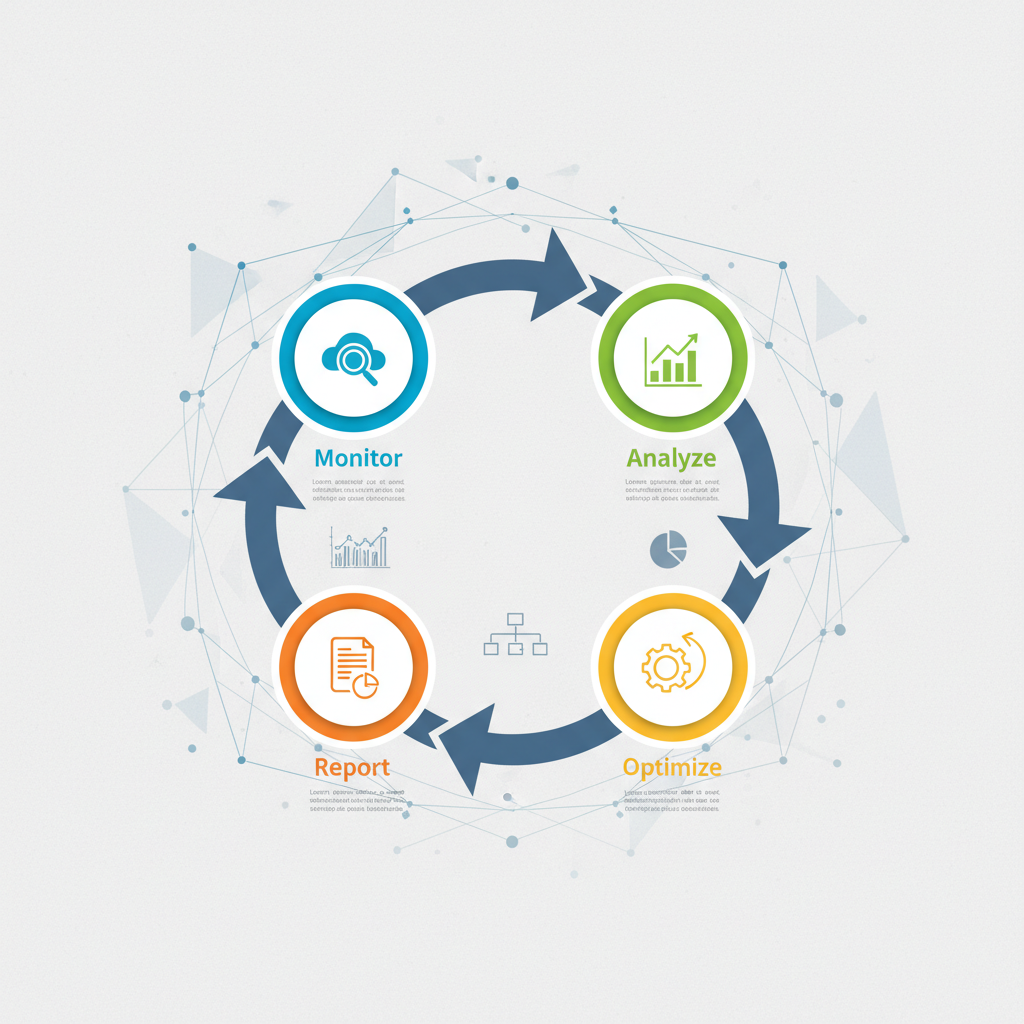
Step 3: Regular Review and Optimization
Monitoring is not a “set it and forget it” task. To maintain effective cheap Cloud sla monitoring, regular review and optimization of your monitoring strategy are essential. Periodically assess the relevance of your monitored metrics, the effectiveness of your alerts, and the overall cost of your monitoring solution.
Conduct quarterly or bi-annual reviews to identify opportunities for further cost savings or improved efficiency. This might involve deprecating unused monitors, refining alert logic, or exploring new, more economic SLA monitoring options as they emerge. Continuous improvement is key to sustainable budget-friendly cloud performance monitoring.
Real-World cheap Cloud sla monitoring examples and scenarios
Understanding cheap Cloud sla monitoring is best solidified through practical examples. These scenarios illustrate how various strategies and tools can be applied to real-world cloud environments, providing tangible insights into low-cost SLA tracking. They showcase how businesses can implement economic SLA monitoring options.
These examples highlight common challenges and how thoughtful application of inexpensive SLA solutions can overcome them. From startups to mid-sized businesses, the need for affordable cloud SLA monitoring is universal.
Example 1: Startup Utilizing Freemium Tiers
A small startup relies heavily on a few critical AWS services (EC2, RDS, S3). To ensure SLA compliance without significant upfront costs, they start with the free tiers of AWS CloudWatch for basic infrastructure monitoring. They also integrate a freemium SaaS monitoring tool for application performance monitoring (APM) with a generous free limit on transactions.
This combination provides essential visibility into service health and application responsiveness. As the startup grows, they selectively upgrade to paid tiers for specific services where advanced features or higher data volumes are needed, keeping costs managed. This is a classic cheap Cloud sla monitoring example.
Example 2: Mid-sized Company with Multi-Cloud Presence
A mid-sized company uses both Azure and Google Cloud for different workloads. To avoid vendor lock-in and high costs from multiple monitoring solutions, they implement an open-source stack using Prometheus for metric collection and Grafana for dashboarding. Custom exporters are developed to pull data from Azure Monitor and Google Cloud Operations.
This centralized, open-source approach offers cross-cloud visibility and deep customization at a fraction of the cost of commercial multi-cloud solutions. The upfront investment is in development and maintenance, but long-term operational costs are significantly lower, making it a powerful economic SLA monitoring option. This demonstrates intelligent low-cost SLA tracking.
Example 3: E-commerce Business Focused on Core Services
An e-commerce business identifies that their website’s availability and database response times are the most critical metrics affecting sales and customer experience. They use a paid, but cost-effective, external synthetic monitoring service to check their website’s uptime and performance from various global locations, ensuring consistent availability.
For internal database monitoring, they leverage cloud provider-specific tools and only enable detailed logging and metrics for their primary database instances. Non-critical services receive basic availability checks. This focused approach provides essential affordable cloud SLA monitoring where it matters most, avoiding unnecessary expenses on less critical components.
Benefits of economic SLA monitoring options
Adopting economic SLA monitoring options offers a multitude of benefits beyond mere cost savings. These advantages contribute significantly to operational efficiency, business resilience, and overall competitive advantage. Implementing the best cheap Cloud sla monitoring solutions positively impacts various aspects of your organization.
From improved decision-making to enhanced customer satisfaction, the value of smart, budget-friendly cloud performance monitoring extends far. Let’s explore some of the key benefits.
Enhanced Service Reliability: By continuously tracking key performance indicators, you can proactively identify and address issues before they impact your users. This ensures higher uptime and consistent service quality. Proactive cheap Cloud sla monitoring reduces incidents.
Improved Operational Efficiency: Streamlined monitoring processes and consolidated tools reduce the complexity and manual effort associated with managing cloud performance. Automated alerts and reporting free up valuable IT resources. This leads to more efficient low-cost SLA tracking.
Cost Optimization: Beyond direct monitoring cost savings, effective SLA monitoring helps optimize cloud resource usage. By understanding performance bottlenecks and idle resources, businesses can make informed decisions to scale resources appropriately, avoiding over-provisioning. This is a crucial aspect of affordable cloud SLA monitoring.
Better Vendor Accountability: With clear performance data, you can hold your cloud providers accountable to their SLA commitments. This data serves as objective evidence in discussions about service credits or contract renewals. It strengthens your position in negotiations.
Informed Decision-Making: Comprehensive data from your cheap Cloud sla monitoring setup provides valuable insights into service trends and potential capacity issues. This data supports strategic planning and helps in making data-driven decisions about future cloud investments.
Customer Satisfaction and Trust: Reliable services translate directly to satisfied customers. Proactive resolution of issues, driven by effective monitoring, enhances user experience and builds greater trust in your brand. This reinforces the importance of budget-friendly cloud performance monitoring.
ENSURE UNINTERRUPTED SERVICE
Ensure uninterrupted service delivery and proactively prevent costly SLA breaches. Leverage our automated, real
✓ Free consultation ✓ No commitment required ✓ Trusted by experts
Conclusion
Achieving cheap Cloud sla monitoring is not just a possibility; it’s a strategic imperative for businesses aiming to maximize their cloud investments. By understanding your SLAs, prioritizing critical metrics, and intelligently leveraging a combination of built-in cloud tools, open-source solutions, and budget-friendly commercial offerings, you can maintain robust oversight without breaking the bank. The journey towards affordable cloud SLA monitoring is an ongoing process of review and optimization.
Embrace the cheap Cloud sla monitoring tips outlined in this guide to build a resilient and cost-effective monitoring strategy. Focusing on economic SLA monitoring options allows you to ensure high service reliability, drive operational efficiency, and ultimately, foster greater trust with your customers and stakeholders. The best cheap Cloud sla monitoring approach is one that evolves with your business needs and cloud landscape.
Jacob Stålbro is a seasoned digitalization and transformation leader with over 20 years of experience, specializing in AI-driven innovation. As Head of Innovation and Co-Founder at Opsio, he drives the development of advanced AI, ML, and IoT solutions. Jacob is a sought-after speaker and webinar host known for translating emerging technologies into real business value and future-ready strategies.