Automate Cloud SLA Monitoring: Yes, You Can Boost Uptime
March 6, 2026|1:19 PM
Unlock Your Digital Potential
Whether it’s IT operations, cloud migration, or AI-driven innovation – let’s explore how we can support your success.
Home /
Work /
Blogs /
Automate Cloud SLA Monitoring: Yes, You Can Boost Uptime
Understanding Cloud SLA Monitoring and its Automation Potential
In today’s dynamic cloud environments, ensuring service reliability and performance is paramount for businesses. Service Level Agreements (SLAs) are crucial contracts that define the expected levels of service quality. A fundamental question many organizations face is, can you automate Cloud SLA monitoring? The definitive answer is yes, and leveraging automation is not just possible but essential for modern cloud operations.
Automating Cloud SLA monitoring transforms a complex, manual task into an efficient, continuous process. This shift allows organizations to proactively identify performance deviations and uphold their commitments to users and stakeholders. It’s about moving beyond reactive problem-solving to predictive insights and consistent service delivery.
The Imperative for Automated Cloud SLA Monitoring
The complexity and scale of cloud infrastructure make manual SLA tracking nearly impossible to manage effectively. Cloud environments are constantly evolving, with resources spinning up and down, and performance metrics fluctuating. This inherent dynamism demands a monitoring approach that can keep pace without extensive human intervention.
Automating this process provides critical advantages, addressing the challenges posed by distributed systems and microservices architectures. It ensures that agreed-upon performance metrics, uptime guarantees, and response times are continuously observed against defined benchmarks. This constant vigilance is vital for maintaining customer trust and operational integrity.
One of the most significant aspects of automated SLA monitoring feasibility is its ability to process vast amounts of data in real-time. Manual checks simply cannot provide the same level of granularity or speed. Automated systems can collect, analyze, and report on metrics from various cloud services simultaneously, offering a comprehensive view of compliance.
Core Components of an Automated Cloud SLA Monitoring System
An effective automated Cloud SLA monitoring system relies on several key components working in concert. These elements ensure comprehensive coverage and accurate reporting against established service levels. Understanding these parts is crucial for anyone exploring how to automate SLA tracking effectively.
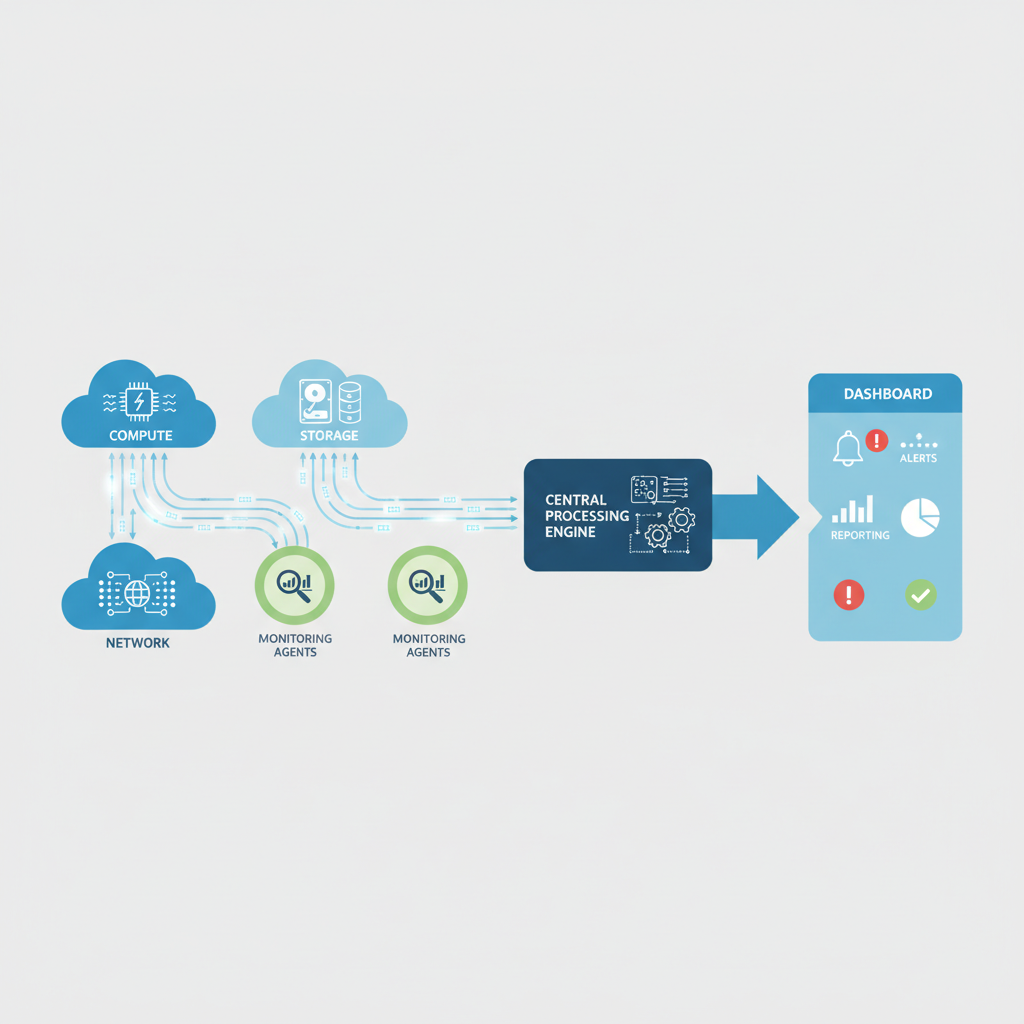
The foundation includes robust data collection agents that gather metrics from various cloud services, APIs, and infrastructure components. This raw data forms the basis for all subsequent analysis and reporting. Without reliable data ingestion, any monitoring effort will be compromised from the outset.
A diagram showing data flow from multiple cloud services (compute, storage, network) through monitoring agents, a central processing engine, and finally to a dashboard for alerts and reporting.
Next, a powerful analytics engine processes this data, applying predefined rules and thresholds to identify deviations from SLA terms. This engine is where the intelligence of the system resides, flagging potential issues before they escalate. It acts as the brain, interpreting the vast amounts of incoming information.
Finally, an alerting and reporting module notifies relevant teams when thresholds are breached or anomalies are detected. This component also generates detailed reports, providing historical trends and compliance summaries. Effective communication of these insights is key to timely remediation and continuous improvement.
Exploring Tools and Technologies for Automated Cloud Monitoring
A wide array of tools and technologies are available to facilitate automated Cloud SLA monitoring, ranging from cloud-native services to third-party platforms. Choosing the right set of tools is essential for building a robust and scalable monitoring solution. These tools simplify the process of gathering and interpreting performance data.
Cloud providers themselves offer comprehensive suites for monitoring their services. For example, AWS CloudWatch, Azure Monitor, and Google Cloud Monitoring provide native capabilities to collect metrics, logs, and traces. These services are deeply integrated into their respective ecosystems, making them a natural starting point for many organizations. They offer a good baseline for is cloud SLA monitoring automatic when leveraging native features.
Beyond native offerings, numerous third-party observability platforms specialize in multi-cloud and hybrid environments. Tools like Datadog, New Relic, Dynatrace, and Splunk provide advanced features for real-time monitoring, anomaly detection, and custom dashboarding. These platforms often offer more flexibility and deeper insights across heterogeneous infrastructures, making them excellent tools for automated cloud monitoring.
For more specialized or unique monitoring requirements, scripting cloud SLA checks using languages like Python, PowerShell, or Node.js can be highly effective. These scripts can interact with cloud provider APIs to fetch specific metrics, perform custom calculations, and integrate with notification systems. This approach offers unparalleled customization and control for tailored SLA validation.
ENSURE UNINTERRUPTED SERVICE
Ensure uninterrupted service delivery and proactively prevent costly SLA breaches. Leverage our automated, real
✓ Free consultation ✓ No commitment required ✓ Trusted by experts
A Step-by-Step Guide to Automating Cloud SLA Tracking
Implementing automated Cloud SLA tracking involves a structured approach to ensure comprehensive coverage and accurate reporting. This guide outlines the essential steps for organizations looking to gain better control over their cloud service performance. Following these steps can help you build a robust monitoring framework.
1. Define Your SLAs and Key Performance Indicators (KPIs): Begin by clearly documenting your Service Level Agreements (SLAs) with your cloud providers and internal service consumers. Identify the critical Key Performance Indicators (KPIs) that directly reflect these agreements, such as uptime percentage, latency, error rates, and resource utilization. Specific, measurable metrics are fundamental to any monitoring strategy.
2. Select Appropriate Monitoring Tools: Based on your cloud environment (single cloud, multi-cloud, hybrid) and the specific KPIs identified, choose the right monitoring tools. This might involve a combination of cloud-native services, third-party observability platforms, or custom scripts. Ensure the chosen tools can integrate with your existing operational workflows. Evaluate capabilities like data retention, alerting options, and dashboarding features.
3. Configure Data Collection and Metrics: Set up your chosen tools to collect the necessary data from all relevant cloud services and infrastructure components. Configure agents, API integrations, and log forwarding as required. Ensure that data is collected at a sufficient frequency and granularity to detect SLA breaches in a timely manner. This step is crucial for accurate insights.
4. Establish Thresholds and Baselines: Define specific thresholds for each KPI that align with your SLA commitments. Configure alerts to trigger when these thresholds are breached. Where possible, establish performance baselines during normal operating conditions to better identify anomalies and potential issues. Dynamic baselining can significantly improve the accuracy of your alerts.
5. Implement Alerting and Notification Workflows: Integrate your monitoring system with your preferred notification channels, such as email, SMS, Slack, or PagerDuty. Create clear escalation paths for different severity levels of alerts. Ensure that the right teams are notified promptly when an SLA is at risk or breached, enabling rapid response and remediation. This is a critical aspect of effective incident management.
6. Develop Dashboards and Reports: Create intuitive dashboards that provide a real-time view of your cloud service performance against your SLAs. Design reports that summarize compliance over various periods, highlighting trends and areas for improvement. Visualizations make complex data easily understandable, aiding in decision-making and stakeholder communication.
7. Regularly Review and Refine: Cloud environments and business requirements evolve, so your automated SLA monitoring system must also adapt. Regularly review your SLAs, KPIs, thresholds, and monitoring configurations. Adjust them as needed to reflect changes in your infrastructure or service expectations. Continuous refinement ensures the system remains relevant and effective.
Best Practices for Effective Automated Cloud SLA Monitoring
Achieving optimal results with automated Cloud SLA monitoring requires adherence to certain best practices. These recommendations help ensure that your monitoring efforts are robust, accurate, and truly beneficial. By incorporating these tips, organizations can significantly enhance their operational resilience and service quality.
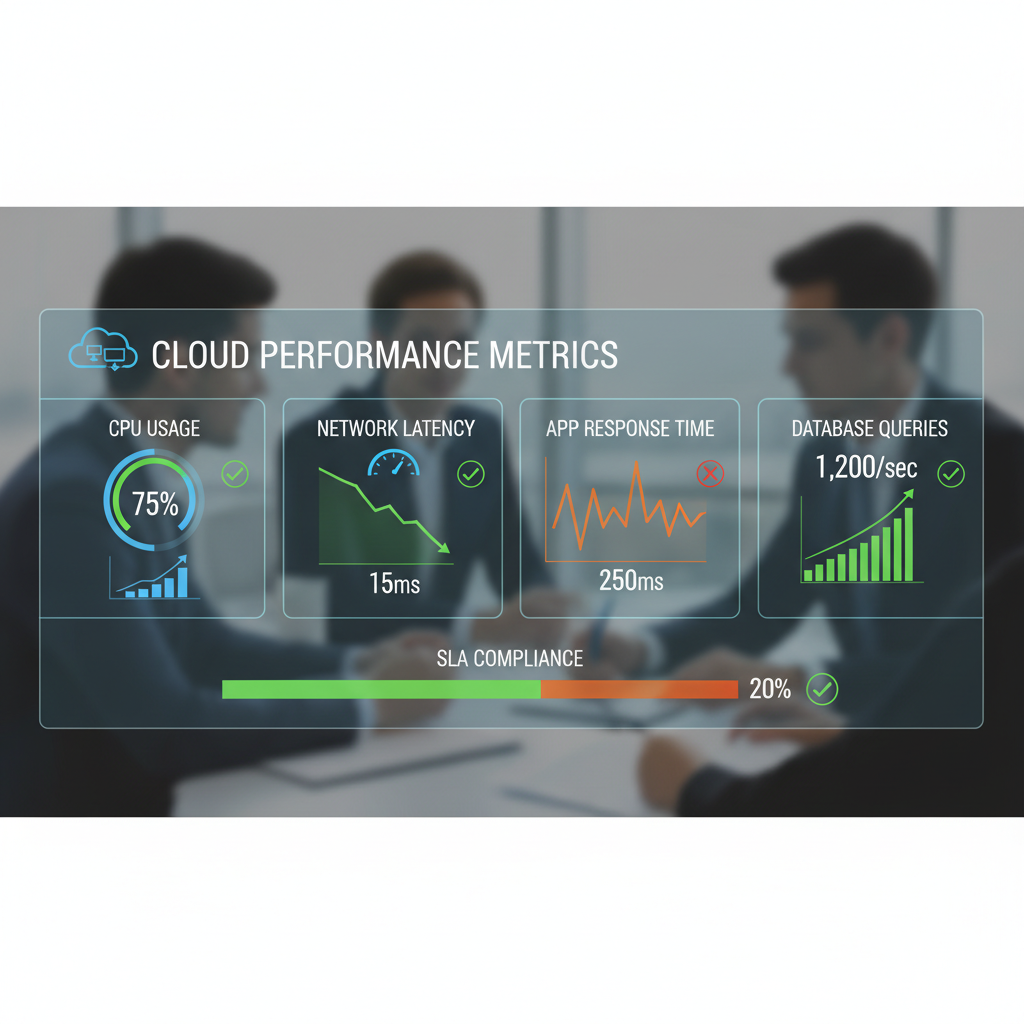
One crucial tip for the best can you automate Cloud sla monitoring is to align monitoring closely with business outcomes. Don’t just monitor technical metrics; connect them to how they impact user experience and business operations. Understanding this direct link helps prioritize monitoring efforts and alert responses.
A dashboard showing various cloud performance metrics like CPU usage, network latency, application response time, and database queries, with clear green/red indicators for SLA compliance.
Another key practice is to implement robust alert fatigue management. Too many non-actionable alerts can lead to teams ignoring critical notifications. Fine-tune your thresholds and notification rules to minimize noise and ensure that every alert is meaningful and requires attention. This improves the efficiency of your operations team.
Consider implementing synthetic monitoring in addition to real user monitoring (RUM). Synthetic transactions simulate user interactions with your applications, providing a consistent baseline for performance from various geographic locations. This proactive approach can detect issues before actual users are impacted, bolstering your `can you automate Cloud sla monitoring tips`.
Regularly audit your monitoring configurations to ensure they remain relevant and accurate. As services are deployed, modified, or decommissioned, update your monitoring rules accordingly. Outdated configurations can lead to blind spots or generate irrelevant data, undermining the integrity of your SLA compliance reports.
Finally, ensure your teams are well-trained on the monitoring tools and the defined incident response procedures. An automated system is only as effective as the people who manage it and respond to its alerts. Empowering your team with knowledge and clear processes is a significant `can you automate Cloud sla monitoring guide` element.
Real-World Applications and Benefits of Automated SLA
The practical application of automated Cloud SLA monitoring spans various industries and operational scenarios, delivering tangible benefits. Understanding these real-world `can you automate Cloud sla monitoring examples` helps illustrate its value across different business contexts. This approach is no longer a luxury but a necessity for competitive advantage.
In e-commerce, automated SLA monitoring ensures that online storefronts remain responsive and available during peak shopping seasons. Real-time alerts on page load times or payment gateway availability can prevent significant revenue loss and customer dissatisfaction. This proactive oversight is critical for maintaining high conversion rates.
For SaaS providers, automated monitoring validates that their service delivery consistently meets contractual uptime and performance guarantees. It helps identify underlying infrastructure issues that could impact multiple customers, allowing for swift resolution. This directly contributes to customer retention and brand reputation, highlighting the clear `benefits of automating SLA`.
Financial services leverage automated SLA monitoring to maintain compliance with strict regulatory requirements regarding system availability and transaction processing speeds. Any deviation can have severe legal and financial repercussions, making continuous, automated oversight indispensable. The integrity of financial transactions relies heavily on consistent performance.
The benefits of automating SLA are extensive. It significantly reduces the manual effort involved in tracking service levels, freeing up engineering teams for more strategic tasks. This efficiency gain translates into cost savings and improved resource allocation. Furthermore, it enhances reliability by enabling faster detection and resolution of performance issues.
Automated monitoring also provides objective data for performance reviews with cloud providers, facilitating more informed discussions about service credits or optimization opportunities. It replaces subjective assessments with hard evidence, strengthening negotiation positions. This transparency builds a foundation of trust and accountability.
Overcoming Challenges in Cloud SLA Automation
While the benefits of automated Cloud SLA monitoring are clear, implementing and managing these systems can present certain challenges. Addressing these proactively is key to a successful deployment and sustained operational excellence. Acknowledging these hurdles allows for better planning and strategy.
One common challenge is the complexity of integrating diverse monitoring tools across multi-cloud or hybrid environments. Each cloud provider has its own set of APIs and monitoring services, requiring careful planning to create a unified view. Developing a consolidated observability strategy is essential to avoid data silos.
Another hurdle involves managing alert fatigue, where too many non-critical alerts can desensitize operations teams. It is crucial to fine-tune alert thresholds, implement intelligent correlation rules, and establish clear escalation policies. This ensures that only actionable alerts demand immediate attention, improving response efficiency.
The cost of advanced monitoring solutions can also be a consideration, especially for smaller organizations. While cloud-native tools offer a cost-effective starting point, comprehensive third-party platforms can incur significant expenses. Balancing desired features with budget constraints requires careful evaluation and strategic planning.
Ensuring data privacy and security within the monitoring pipeline is paramount, particularly when dealing with sensitive business or customer information. All monitoring tools and configurations must comply with relevant data protection regulations and internal security policies. This includes secure data transmission and storage practices.
Finally, keeping up with the rapid pace of change in cloud technologies and services can be demanding. Monitoring configurations and tools need continuous updates and adjustments to remain effective. Regular training for staff and a flexible monitoring architecture are vital for adapting to evolving cloud landscapes.
Frequently Asked Questions About Automated Cloud SLA Monitoring
What exactly is automated Cloud SLA monitoring?
Automated Cloud SLA monitoring involves using specialized software and tools to continuously track, measure, and report on the performance of cloud services against predefined Service Level Agreements (SLAs). It helps ensure that cloud resources and applications meet agreed-upon uptime, performance, and reliability standards without manual intervention. This system automatically collects data, analyzes it, and triggers alerts when deviations occur.
Is cloud SLA monitoring automatic by default with cloud providers?
While major cloud providers like AWS, Azure, and Google Cloud offer extensive monitoring services (e.g., CloudWatch, Azure Monitor), these are not fully automatic for SLA compliance out-of-the-box. Users must configure specific metrics, set up alarms, and define dashboards to track their SLAs. These services provide the building blocks, but automation and SLA mapping require user configuration.
How does automation improve SLA compliance?
Automation significantly improves SLA compliance by providing real-time visibility into performance metrics and enabling proactive issue detection. It eliminates human error, allows for continuous 24/7 monitoring, and speeds up the response to potential breaches. This immediate feedback loop helps organizations maintain service quality, avoid penalties, and enhance customer satisfaction.
What are common metrics tracked in automated Cloud SLA monitoring?
Common metrics include uptime and availability percentage, latency (network, application, database), error rates (e.g., HTTP 5xx errors), throughput, resource utilization (CPU, memory, disk I/O), and response times for key application functionalities. The specific metrics tracked depend on the services being monitored and the terms defined in the SLA.
Can custom applications hosted in the cloud also be monitored automatically?
Yes, absolutely. Automated Cloud SLA monitoring tools can extend beyond infrastructure to monitor custom applications. This often involves instrumenting the application code with agents or APIs to collect performance data, log events, and track specific business transactions. Synthetic monitoring can also simulate user interactions with the custom application to ensure its availability and responsiveness.
What skill sets are needed to implement automated Cloud SLA monitoring?
Implementing automated Cloud SLA monitoring typically requires a mix of skills, including cloud architecture knowledge, understanding of specific cloud provider services, experience with monitoring tools and platforms, and scripting abilities (e.g., Python, PowerShell) for custom checks. A solid grasp of SRE (Site Reliability Engineering) principles and incident management is also highly beneficial for effective deployment and operation.
ENSURE UNINTERRUPTED SERVICE
Ensure uninterrupted service delivery and proactively prevent costly SLA breaches. Leverage our automated, real
✓ Free consultation ✓ No commitment required ✓ Trusted by experts
Conclusion: The Future is Automated
The question of “can you automate Cloud SLA monitoring” is unequivocally answered with a resounding yes. Automation is not merely a possibility but a necessity for organizations navigating the complexities of modern cloud environments. It provides the essential capability to ensure continuous service quality, uphold contractual obligations, and maintain user trust in an ever-evolving digital landscape.
By embracing automated solutions, businesses can transform their approach to service management, moving from reactive problem-solving to proactive optimization. This strategic shift empowers teams with real-time insights, accelerates incident response, and ultimately contributes to enhanced operational efficiency and customer satisfaction. The journey towards automated Cloud SLA monitoring is an investment in future resilience and competitive advantage.
Jacob Stålbro is a seasoned digitalization and transformation leader with over 20 years of experience, specializing in AI-driven innovation. As Head of Innovation and Co-Founder at Opsio, he drives the development of advanced AI, ML, and IoT solutions. Jacob is a sought-after speaker and webinar host known for translating emerging technologies into real business value and future-ready strategies.