Real-Time Cloud SLA Monitoring: Is It Possible Today?
March 6, 2026|1:14 PM
Unlock Your Digital Potential
Whether it’s IT operations, cloud migration, or AI-driven innovation – let’s explore how we can support your success.
Home /
Work /
Blogs /
Real-Time Cloud SLA Monitoring: Is It Possible Today?
Understanding Cloud SLA Monitoring in the Modern Enterprise
In today’s fast-paced digital landscape, businesses heavily rely on cloud services to power their operations. Ensuring these services meet agreed-upon performance standards is critical for business continuity and customer satisfaction. This is where Service Level Agreement (SLA) monitoring plays an indispensable role.
SLA monitoring involves tracking key performance indicators (KPIs) to verify that cloud providers deliver services as promised in their contracts. These agreements typically cover aspects like uptime, availability, response times, and data security. Effective monitoring helps identify deviations quickly, allowing for proactive intervention.
Traditionally, SLA monitoring might have involved periodic checks or delayed reporting. However, the demand for immediate insights has grown exponentially. Enterprises now require a more dynamic approach to ensure their cloud environments are performing optimally at all times, leading to the crucial question: is real-time Cloud sla monitoring possible?
The Feasibility of Real-Time Cloud SLA Monitoring
Many organizations wonder, “can cloud SLA be monitored in real-time?” The short answer is yes, real-time Cloud SLA monitoring is indeed possible and increasingly becoming a standard expectation for robust cloud deployments. Modern monitoring solutions leverage advanced technologies to provide instant insights into cloud service performance against defined SLAs.
The feasibility of real-time SLA monitoring hinges on several technological advancements and strategic implementations. It moves beyond simple alerts to offer continuous data streams and immediate analysis. This capability allows businesses to react almost instantaneously to performance degradation or service disruptions, minimizing potential impact.
Achieving this requires a combination of sophisticated tools, well-defined metrics, and integrated data pipelines. The ability to collect, process, and visualize performance data as it happens transforms how organizations manage their cloud relationships. This proactive stance is fundamental to maintaining high service quality and operational efficiency in cloud environments.
Key Components and Technologies for Real-Time SLA Monitoring
To truly understand how is real-time Cloud sla monitoring possible, it’s essential to explore the underlying components and technologies. These elements work in concert to provide live SLA tracking capabilities, delivering instant cloud performance visibility. A robust real-time monitoring system integrates various tools and methodologies.
The foundation often involves agent-based or agentless monitoring tools deployed across cloud infrastructure. These tools continuously collect data on performance metrics such as latency, throughput, error rates, and resource utilization. This raw data forms the basis for all subsequent analysis and reporting.
Furthermore, advanced analytics and machine learning play a significant role in processing vast quantities of incoming data. They can identify patterns, detect anomalies, and predict potential issues before they escalate into full-blown service outages. This predictive power is a hallmark of sophisticated real-time systems.
Key technologies and components include:
Cloud-Native Monitoring Tools: Solutions offered by cloud providers (e.g., AWS CloudWatch, Azure Monitor, Google Cloud Monitoring) provide deep integration and granular data collection specific to their platforms.
Third-Party APM (Application Performance Monitoring) Tools: These tools offer end-to-end visibility across hybrid and multi-cloud environments, tracking application performance and user experience.
Log Management and Analytics Platforms: Centralized logging helps in consolidating and analyzing logs from various cloud services, providing insights into system health and potential issues.
Synthetic Monitoring: Simulating user interactions and transactions to proactively test the availability and performance of services from various locations.
Real User Monitoring (RUM): Capturing actual user interactions and performance data from end-users to understand their real-world experience.
API Monitoring: Ensuring the performance and availability of critical APIs that connect different services and applications.
Data Streaming and Processing Engines: Technologies like Apache Kafka or AWS Kinesis enable the ingestion and real-time processing of high volumes of monitoring data.
Alerting and Notification Systems: Configurable alerts based on predefined thresholds ensure that relevant teams are notified immediately when SLA breaches or performance anomalies occur.
Dashboards and Visualization Tools: Providing intuitive, real-time dashboards that offer a consolidated view of service health, performance trends, and SLA compliance.
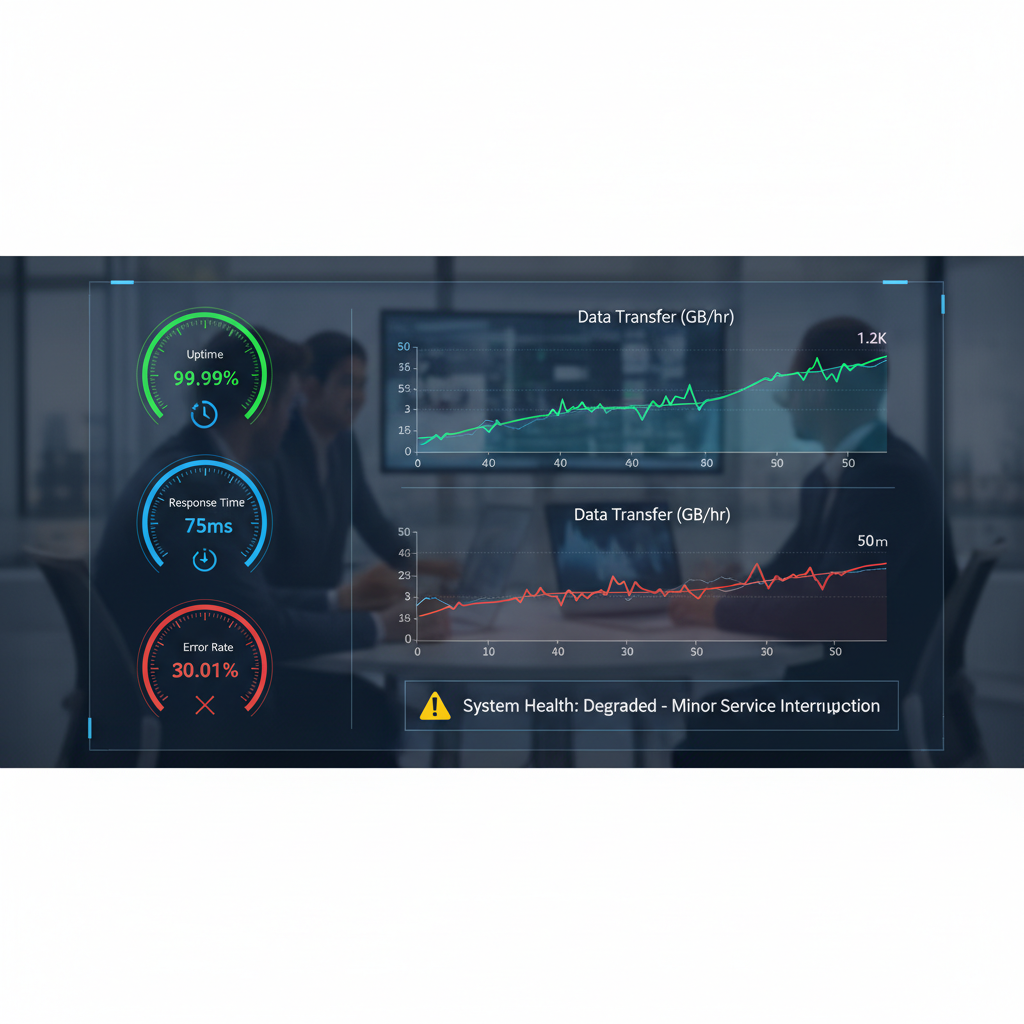
A dashboard displaying real-time cloud performance metrics with gauges for uptime, response time, and error rates, alongside trending graphs and alert notifications.
These technologies collectively enable immediate service level updates and empower organizations to maintain stringent control over their cloud environments. Without them, understanding “is real-time Cloud sla monitoring possible” would remain a theoretical concept rather than a practical reality.
ENSURE UNINTERRUPTED SERVICE
Ensure uninterrupted service delivery and proactively prevent costly SLA breaches. Leverage our automated, real
✓ Free consultation ✓ No commitment required ✓ Trusted by experts
Benefits of Immediate Service Level Updates
Implementing solutions that answer “is real-time Cloud sla monitoring possible” yields a multitude of advantages for businesses. The ability to receive immediate service level updates fundamentally transforms operational resilience and strategic decision-making. These benefits extend across various aspects of an organization’s interaction with cloud services.
One primary benefit is significantly improved incident response times. When an SLA deviation is detected instantly, IT teams can be notified and begin troubleshooting much faster. This rapid response helps in mitigating potential service disruptions, reducing downtime, and minimizing the impact on end-users and business operations.
Furthermore, real-time monitoring fosters greater transparency and accountability with cloud providers. Having definitive, up-to-the-minute data on service performance allows organizations to hold providers accountable to their contractual obligations. This data serves as undeniable evidence in discussions regarding service credits or performance improvements.
Other key benefits include:
Proactive Problem Resolution: Identifying subtle performance degradations before they escalate into major outages, enabling preemptive action.
Enhanced User Experience: Ensuring that applications and services consistently meet performance expectations, leading to higher customer satisfaction.
Optimized Resource Utilization: Gaining insights into resource consumption patterns in real-time allows for more efficient scaling and cost management.
Improved Compliance and Governance: Providing continuous evidence of adherence to regulatory requirements and internal governance policies.
Data-Driven Decision Making: Empowering operations teams and management with accurate, current data to make informed decisions about cloud investments and strategy.
Reduced Operational Costs: By preventing prolonged outages and optimizing resource use, businesses can avoid costly disruptions and unnecessary expenditure.
These advantages highlight why an is real-time Cloud sla monitoring possible guide is essential for any enterprise leveraging cloud infrastructure. The shift from reactive to proactive management delivers tangible value across the entire business ecosystem.
Challenges in Achieving Live SLA Tracking
While the answer to “is real-time Cloud sla monitoring possible” is affirmative, achieving effective live SLA tracking capabilities is not without its challenges. Cloud environments are inherently dynamic, complex, and distributed, which can complicate monitoring efforts. Organizations must be prepared to address these hurdles for successful implementation.
One significant challenge is the sheer volume and velocity of data generated by cloud services. Processing and analyzing this massive stream of data in real-time requires robust infrastructure and sophisticated analytical capabilities. Without adequate processing power, monitoring systems can become overwhelmed, leading to delays and missed alerts.
Another complexity arises from the multi-cloud or hybrid cloud strategies adopted by many enterprises. Monitoring across diverse platforms, each with its own APIs, metrics, and monitoring tools, creates fragmentation. Integrating these disparate systems into a unified, real-time view demands significant effort and specialized expertise.
Specific challenges include:
Data Silos: Different cloud providers and monitoring tools often create isolated data sets, making a unified view difficult.
Alert Fatigue: Improperly configured alerting can lead to an overwhelming number of notifications, causing teams to miss critical alerts.
Dynamic Cloud Environments: Auto-scaling, serverless functions, and ephemeral resources make it challenging to maintain consistent monitoring coverage.
Defining Meaningful SLAs: Translating business requirements into measurable technical SLAs for cloud services can be complex, especially with third-party components.
Cost of Monitoring: Comprehensive real-time monitoring solutions can incur significant costs, especially for large-scale cloud deployments.
Security and Data Privacy: Ensuring that monitoring data collection and storage adhere to security best practices and compliance regulations.
Tooling Integration: Integrating various monitoring tools, analytics platforms, and ITSM systems for a cohesive operational workflow.
Addressing these challenges requires a strategic approach, careful planning, and often, investment in specialized tools and skilled personnel. However, overcoming them is crucial to realizing the full potential of real-time cloud SLA monitoring.
Best Practices for Effective Real-Time Cloud SLA Monitoring
Achieving robust real-time SLA monitoring feasibility requires adherence to several best practices. These guidelines ensure that monitoring efforts are not only possible but also effective, efficient, and aligned with business objectives. Implementing these tips can significantly enhance an organization’s ability to maintain high service levels.
Start by clearly defining what constitutes an SLA for each critical cloud service. This includes setting specific, measurable, achievable, relevant, and time-bound (SMART) metrics for availability, performance, and reliability. Vague or undefined SLAs make real-time tracking meaningless.
Next, invest in a comprehensive monitoring solution that offers broad coverage across your cloud environment. Look for tools that can integrate with your existing infrastructure and provide deep insights into various layers of your technology stack. A holistic view is paramount for effective monitoring.
Here are some essential tips for a best is real-time Cloud sla monitoring possible approach:
1. Define Clear and Actionable SLAs: Establish precise performance metrics (e.g., “99.9% uptime,” “response time under 200ms”) with your cloud providers and internally. These must be technically measurable. 2. Centralize Monitoring: Utilize a unified monitoring platform that can aggregate data from different cloud providers, services, and applications into a single pane of glass. This combats data silos. 3. Automate Alerting and Remediation: Configure automated alerts for SLA breaches and critical thresholds. Where possible, implement automated remediation actions to resolve common issues instantly. 4. Leverage AIOps Capabilities: Employ Artificial Intelligence for IT Operations (AIOps) to analyze vast amounts of monitoring data, detect anomalies, predict outages, and reduce alert noise. 5. Implement Synthetic and Real User Monitoring: Combine synthetic transactions for proactive testing with RUM to understand actual user experiences. This provides a comprehensive view of performance. 6. Regularly Review and Refine SLAs: Cloud environments and business needs evolve. Periodically review your SLAs and monitoring strategy to ensure they remain relevant and effective. 7. Ensure Scalability of Monitoring Infrastructure: Your monitoring system itself must be able to scale with the growth of your cloud environment and the volume of data it processes. 8. Educate and Train Teams: Ensure that IT operations, development, and business teams understand the SLAs, the monitoring tools, and the procedures for responding to alerts. 9. Utilize Baseline Performance Data: Establish baselines for normal cloud service performance. This allows for easier identification of deviations that might indicate an impending SLA breach. 10. Regularly Test Monitoring and Alerting: Periodically test your monitoring configurations and alerting mechanisms to ensure they are functioning correctly and notifying the right personnel.
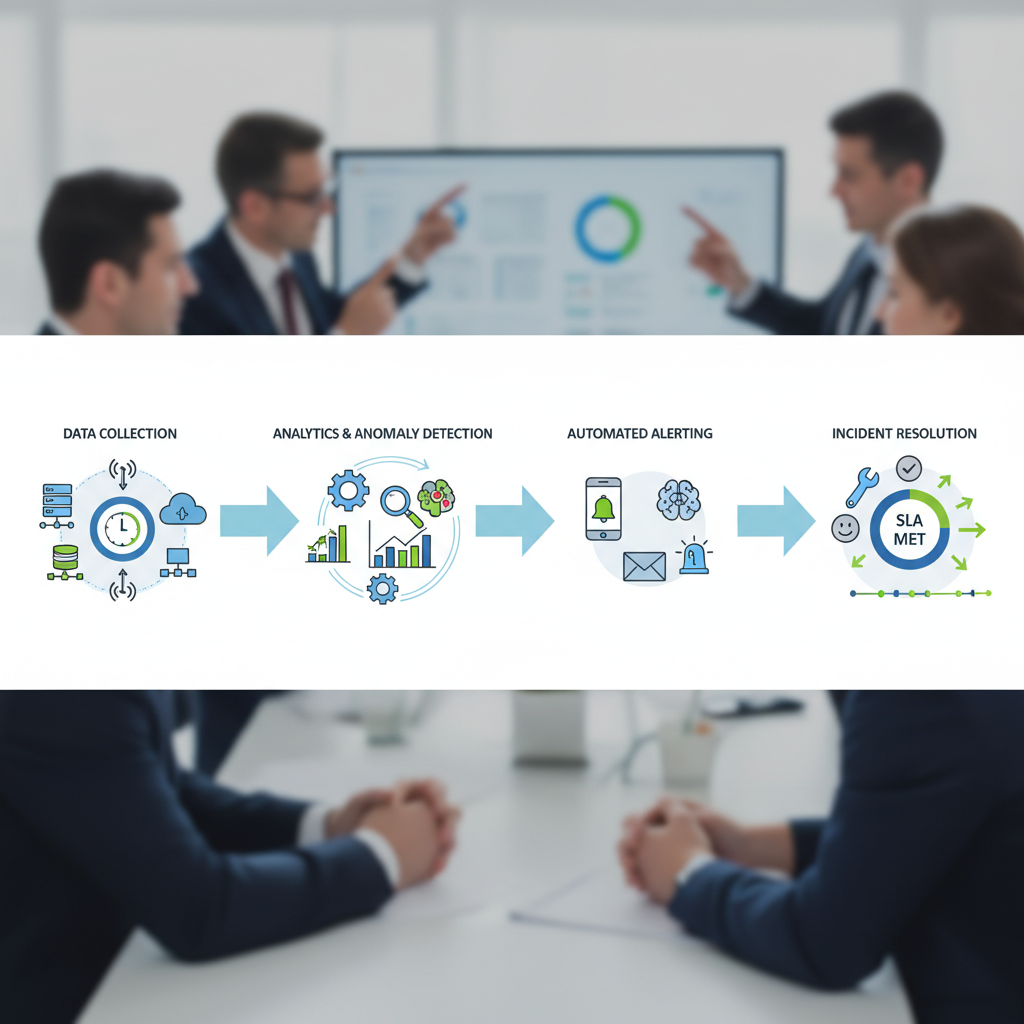
A flowchart illustrating the real-time SLA monitoring process, starting from data collection, through analytics and anomaly detection, to automated alerting and incident resolution.
Following these is real-time Cloud sla monitoring possible tips will help organizations build a robust and responsive system. It transforms the capability from a mere possibility into a strategic asset that protects business continuity and enhances user satisfaction.
is real-time Cloud sla monitoring possible: Practical Examples
Understanding “is real-time Cloud sla monitoring possible” becomes clearer when looking at practical applications. Numerous scenarios demonstrate how organizations leverage live SLA tracking capabilities to maintain operational excellence. These real-world instances highlight the tangible benefits of immediate cloud performance visibility.
Consider a large e-commerce platform that experiences peak traffic during seasonal sales. Their cloud provider guarantees 99.99% uptime for their web servers and a response time of under 300ms for their API gateways. With real-time SLA monitoring in place, they can continuously track these metrics. If response times begin to creep up to 250ms consistently, the system triggers a warning. This allows the operations team to proactively scale up resources or investigate potential bottlenecks before the SLA is officially breached and customers start experiencing slow service.
Another example involves a financial services company using a SaaS application for customer transactions. The SLA with the SaaS vendor specifies data processing latency and transactional success rates. Real-time monitoring allows the financial company to observe these metrics instantly. If the success rate drops or processing times increase, immediate alerts are generated. This enables them to contact the SaaS provider with precise data, demanding an immediate resolution, ensuring regulatory compliance and customer trust are not compromised. These are excellent is real-time Cloud sla monitoring possible examples.
Further practical applications include:
Media Streaming Services: Monitoring content delivery network (CDN) performance in real-time to ensure buffer-free playback and fast content loading for viewers across different geographies.
Healthcare Providers: Tracking the availability and performance of Electronic Health Record (EHR) systems hosted in the cloud. Instant alerts for any downtime or latency ensure critical patient data is always accessible.
IoT Platforms: Monitoring the latency and success rate of data ingestion from millions of IoT devices. Real-time insights help ensure the integrity and responsiveness of the entire IoT ecosystem.
DevOps Pipelines: Integrating real-time monitoring into CI/CD pipelines to ensure new deployments do not negatively impact service performance or breach existing SLAs, providing instant feedback to development teams.
These examples underscore that not only is real-time Cloud SLA monitoring possible, but it is also an indispensable tool for maintaining competitive advantage and delivering reliable services in diverse industries. The immediate insights derived from such systems are invaluable for proactive management.
Frequently Asked Questions
This section addresses common inquiries about real-time Cloud SLA monitoring, offering quick and clear answers to help further understand its implications and implementation.
What is a Cloud SLA?
A Cloud Service Level Agreement (SLA) is a contractual agreement between a cloud service provider and its customer. It defines the minimum level of service the provider guarantees, covering aspects like uptime, performance, security, and support. These agreements are crucial for managing expectations and outlining responsibilities.
Why is Real-Time SLA Monitoring Important?
Real-time SLA monitoring is important because it provides immediate insights into the performance and availability of cloud services. This allows organizations to detect and respond to issues instantly, minimizing downtime, preventing service degradation, and ensuring continuous compliance with contractual obligations. It shifts operations from reactive to proactive.
What Metrics Are Typically Monitored in Real-Time for SLAs?
Common metrics include uptime and availability percentages, response times (e.g., API latency, page load times), error rates, throughput, and resource utilization (CPU, memory, network I/O). Specific business-critical metrics like transaction success rates or data processing speeds can also be monitored.
Can All Cloud Services Be Monitored in Real-Time?
Most modern cloud services are designed with APIs and integration points that facilitate real-time monitoring. However, the depth and ease of real-time monitoring can vary depending on the service, the cloud provider, and the chosen monitoring tools. Legacy systems or highly specialized niche services might present more challenges.
How Does Real-Time Monitoring Help with Cloud Cost Management?
Real-time monitoring helps by providing immediate visibility into resource consumption. This allows organizations to identify over-provisioned resources that are underutilized, leading to unnecessary costs. It also helps detect inefficient processes or services that consume excessive resources, enabling optimization and cost savings.
ENSURE UNINTERRUPTED SERVICE
Ensure uninterrupted service delivery and proactively prevent costly SLA breaches. Leverage our automated, real
✓ Free consultation ✓ No commitment required ✓ Trusted by experts
Conclusion
The question “is real-time Cloud sla monitoring possible” has moved from a complex challenge to an achievable and essential operational standard for businesses leveraging cloud infrastructure. Modern technologies and sophisticated monitoring practices have made immediate service level updates a tangible reality. Organizations can now gain instant cloud performance visibility, ensuring their critical applications and services consistently meet the demanding expectations of today’s digital landscape.
Embracing real-time SLA monitoring is not merely about tracking metrics; it’s about enabling proactive management, enhancing customer satisfaction, fostering accountability with cloud providers, and driving informed decision-making. While challenges exist, the benefits of live SLA tracking capabilities far outweigh the complexities, positioning it as a cornerstone of resilient cloud operations. By following best practices and leveraging advanced tools, any organization can transform its cloud management strategy.
Jacob Stålbro is a seasoned digitalization and transformation leader with over 20 years of experience, specializing in AI-driven innovation. As Head of Innovation and Co-Founder at Opsio, he drives the development of advanced AI, ML, and IoT solutions. Jacob is a sought-after speaker and webinar host known for translating emerging technologies into real business value and future-ready strategies.