Cloud SLA Monitoring: Understanding Its Vital Importance for Businesses
March 6, 2026|1:07 PM
Unlock Your Digital Potential
Whether it’s IT operations, cloud migration, or AI-driven innovation – let’s explore how we can support your success.
Home /
Work /
Blogs /
Cloud SLA Monitoring: Understanding Its Vital Importance for Businesses
Understanding the Criticality of Cloud SLA Monitoring
In today’s fast-paced digital landscape, businesses increasingly rely on cloud services to power their operations. This shift brings immense flexibility and scalability, but it also introduces new complexities in managing service performance and reliability. Therefore, understanding why is Cloud sla monitoring important has become a cornerstone of effective cloud strategy.
Cloud Service Level Agreements (SLAs) are formal commitments between a cloud service provider and a customer. These agreements define the expected level of service, including uptime, performance, security, and support. Monitoring these SLAs ensures that the services delivered meet the promised standards. Without proper vigilance, organizations risk significant operational disruptions and financial losses.
The Core Reasons: why is Cloud sla monitoring important
The question of why is Cloud sla monitoring important is multifaceted, touching upon operational efficiency, financial prudence, and strategic business alignment. It serves as the bedrock for maintaining reliable and high-performing cloud environments. Effective monitoring provides the visibility needed to uphold contractual obligations and customer expectations.
It establishes a critical feedback loop, allowing businesses to verify that their cloud investments are delivering tangible value. Neglecting this crucial aspect can lead to unforeseen outages and compliance issues. The continuous oversight that monitoring provides is indispensable for any cloud-centric organization.
Ensuring Performance and Availability
Cloud services are integral to many business processes, meaning their performance directly impacts productivity and revenue. Constant monitoring helps verify that applications and infrastructure meet defined performance metrics, such as latency, throughput, and error rates. This vigilance helps prevent service degradation before it impacts end-users.
Ensuring high availability is another paramount reason for cloud SLA monitoring. Downtime can lead to lost sales, damaged reputation, and significant operational costs. Proactive monitoring identifies potential availability issues, allowing teams to intervene quickly and maintain uninterrupted service. It’s a vital component of robust operational health.
Meeting Business Objectives
Every business adopts cloud services with specific objectives in mind, whether it’s enhancing customer experience, accelerating product delivery, or optimizing costs. Cloud SLA monitoring directly contributes to these goals by verifying that the underlying infrastructure supports them effectively. It ensures that cloud services perform as expected, aligning with strategic business outcomes.
This alignment means that the technology stack is consistently enabling, rather than hindering, business growth. The importance of SLA tracking cannot be overstated when considering the impact on critical workflows. By keeping a close eye on performance, businesses can confirm that their cloud investments are genuinely supportive of their overarching mission.
Financial Accountability
Cloud services often involve complex pricing models and usage-based billing. Monitoring cloud SLAs helps organizations verify that they are receiving the service levels they pay for. This financial accountability ensures that investments are justified and that there are no hidden costs associated with underperforming or unavailable services. It directly impacts the bottom line.
In cases where SLA breaches occur, comprehensive monitoring provides the necessary evidence to claim compensation or renegotiate terms with providers. This makes a strong case for why is Cloud sla monitoring important from a fiscal perspective. Without detailed records, proving a breach becomes challenging, potentially leading to unrecoverable losses.
Key Benefits of Cloud SLA Monitoring
Beyond the core reasons, robust cloud SLA monitoring offers a spectrum of tangible advantages that bolster an organization’s operational resilience and strategic agility. These benefits collectively contribute to a more stable, secure, and cost-effective cloud environment. They empower businesses to make informed decisions and optimize their service delivery.
The advantages of cloud performance monitoring extend far beyond simple uptime checks. They encompass improved relationships, enhanced security, and a clearer path to continuous improvement. Embracing these benefits is crucial for any organization aiming for excellence in their cloud operations.
Enhanced Transparency and Trust
Effective cloud SLA monitoring fosters greater transparency between cloud service providers and their customers. It provides clear, data-driven insights into service performance, removing ambiguity and building trust. When both parties can access the same performance metrics, it creates a foundation for honest dialogue and collaborative problem-solving.
This transparency also extends internally, giving various departments a clear understanding of service health. Stakeholders can confidently rely on critical applications knowing that their performance is consistently tracked and verified. This level of insight reinforces the overall confidence in cloud deployments.
Proactive Issue Resolution
One of the most significant benefits of cloud SLA monitoring is its ability to enable proactive issue resolution. By continuously tracking performance metrics, deviations from expected service levels can be detected early. This allows IT teams to identify and address potential problems before they escalate into major outages or significant performance degradation.
This foresight minimizes downtime and reduces the impact on end-users, leading to higher satisfaction levels. Rather than reacting to failures, organizations can take preventative measures, often fixing issues before users even notice them. This capability is a hallmark of sophisticated cloud operations.
Optimized Resource Utilization
Cloud services offer elastic scalability, but without proper monitoring, organizations might over-provision resources, leading to unnecessary costs. Cloud SLA monitoring provides insights into actual resource usage against performance requirements. This data helps optimize resource allocation, ensuring that services run efficiently without wasteful expenditure.
By understanding precisely what resources are consumed to meet specific SLA targets, businesses can fine-tune their cloud environments. This optimization not only saves money but also contributes to a more sustainable and efficient IT infrastructure. It helps avoid both under-provisioning, which causes performance issues, and over-provisioning, which leads to excessive spending.
Improved Vendor Relationship Management
Cloud SLA monitoring provides objective data that can be used to evaluate provider performance accurately. This data is invaluable for managing relationships with cloud vendors. It facilitates constructive discussions based on facts, whether it’s for contract renewals, dispute resolution, or service improvements. This forms a core part of maintaining cloud service levels effectively.
Having concrete evidence of performance helps in negotiating better terms or identifying the need for alternative providers if service levels are consistently unmet. It transforms the vendor relationship from one based on perception to one driven by verifiable metrics. This empowers businesses in their partnerships.
Data-Driven Decision Making
With comprehensive monitoring in place, organizations gain access to a wealth of performance data over time. This historical data is crucial for identifying trends, understanding peak usage patterns, and forecasting future resource needs. It supports data-driven decision making for capacity planning, architectural changes, and budgeting.
This analytical capability allows businesses to refine their cloud strategy continuously, ensuring that technology investments yield maximum returns. It moves the conversation beyond anecdotal evidence to concrete performance indicators. This approach is essential for long-term strategic planning.
ENSURE UNINTERRUPTED SERVICE
Ensure uninterrupted service delivery and proactively prevent costly SLA breaches. Leverage our automated, real
✓ Free consultation ✓ No commitment required ✓ Trusted by experts
Strategies for Effective Cloud SLA Monitoring
Implementing effective cloud SLA monitoring requires a structured approach that encompasses clear definitions, appropriate tools, and established processes. A well-defined strategy ensures that monitoring efforts are purposeful and yield actionable insights. This section provides a practical why is Cloud sla monitoring important guide for organizations.
By following these strategies, businesses can build a robust monitoring framework that supports their cloud objectives. It moves beyond simply tracking metrics to actively leveraging them for continuous improvement. These actionable insights form the foundation for maintaining cloud service levels consistently.
Defining Clear Metrics and KPIs
The first step in effective monitoring is to clearly define what needs to be measured. Organizations must identify key performance indicators (KPIs) and metrics that directly relate to their cloud SLAs. These might include uptime percentage, response times, error rates, data durability, and security compliance scores.
It is crucial to align these metrics with business impact. For instance, a 99.9% uptime for a critical e-commerce platform means something very different than for an internal testing environment. Specific, measurable, achievable, relevant, and time-bound (SMART) metrics are essential for precise evaluation and reporting.
Implementing Robust Monitoring Tools
Choosing the right monitoring tools is paramount for efficient cloud SLA monitoring. These tools should offer comprehensive visibility across the cloud stack, including infrastructure, applications, and networks. They should also support integration with various cloud providers and services, especially in multi-cloud or hybrid environments.
Modern monitoring solutions often incorporate AI and machine learning capabilities for anomaly detection and predictive analytics. These advanced features can significantly enhance the ability to identify potential issues before they impact services, providing the best why is Cloud sla monitoring important solutions. Look for tools that offer customizable dashboards, real-time alerts, and detailed historical reporting.
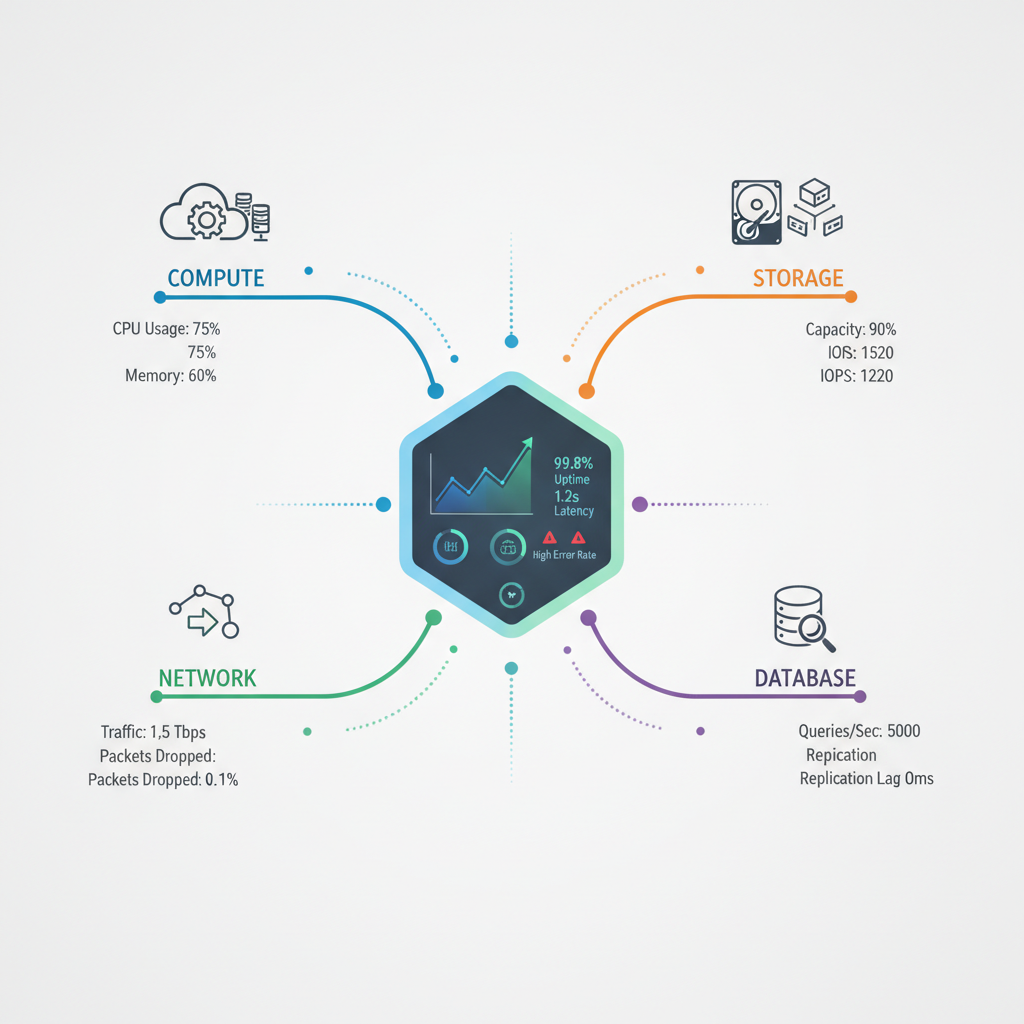
An infographic showing various metrics being monitored across different cloud services (e.g., compute, storage, network, database) with lines connecting them to a central dashboard displaying real-time performance data and alerts.
Regular Review and Reporting
Cloud SLA monitoring is not a set-it-and-forget-it task. Regular review meetings and performance reporting are essential to ensure ongoing compliance and identify areas for improvement. These reviews should involve relevant stakeholders from both the business and IT sides. This helps in maintaining cloud service levels and fostering transparency.
Reports should clearly present performance against agreed-upon SLAs, highlight any breaches, and outline corrective actions taken or planned. This continuous cycle of monitoring, reporting, and review is fundamental to adapting to evolving business needs and cloud landscapes. It reinforces the importance of SLA tracking as an ongoing process.
Establishing Communication Protocols
Clear communication protocols are vital for responding to SLA breaches or performance issues. This includes defining who needs to be notified, through which channels, and within what timeframe when a critical event occurs. Effective communication minimizes confusion and ensures a coordinated response.
Both internal teams and external cloud providers should be part of these communication frameworks. Having pre-defined escalation paths and contact information readily available can significantly reduce resolution times during critical incidents. This ensures everyone is on the same page when performance deviations occur.
Challenges in Cloud SLA Monitoring
While the benefits of cloud SLA monitoring are clear, implementing and maintaining it effectively comes with its own set of challenges. Organizations must be aware of these hurdles to develop robust strategies for overcoming them. Addressing these challenges is crucial for a successful cloud journey.
Understanding these complexities is part of developing a comprehensive why is Cloud sla monitoring important guide. Without acknowledging these difficulties, organizations risk incomplete visibility or inaccurate performance assessments, which can undermine the entire monitoring effort. Proactive planning is key to navigating these obstacles.
Data Complexity and Volume
Cloud environments generate an enormous volume of performance data from various sources—logs, metrics, traces, and events. Managing, correlating, and analyzing this vast amount of diverse data can be incredibly complex. Extracting meaningful insights from this data deluge requires sophisticated tools and analytical capabilities.
The sheer variety of data formats and the distributed nature of cloud services add layers of complexity. Developing a unified view of performance across different services and regions is a significant undertaking. This challenge underscores the need for robust data aggregation and visualization platforms.
Multi-Cloud and Hybrid Environments
Many organizations operate in multi-cloud or hybrid cloud environments, utilizing services from multiple providers (e.g., AWS, Azure, Google Cloud) and combining them with on-premises infrastructure. Monitoring SLAs across these disparate environments introduces significant challenges. Each provider has its own monitoring tools, APIs, and metrics.
Achieving a consistent, end-to-end view of service performance across such heterogeneous setups requires advanced integration strategies and specialized monitoring solutions. It demands a unified approach that transcends individual vendor-specific dashboards. This complexity is a major consideration for risk management cloud services.
Dynamic Nature of Cloud Resources
Cloud resources are inherently dynamic; they can be scaled up or down, deployed, and decommissioned rapidly. This elasticity, while beneficial for agility, makes traditional, static monitoring approaches ineffective. Monitoring systems must be able to discover and track these ephemeral resources in real-time.
The constantly changing landscape of IP addresses, container instances, and serverless functions requires intelligent monitoring agents that can adapt quickly. Ensuring that all relevant components are continuously monitored as the environment shifts is a persistent challenge. This dynamic aspect is central to why is Cloud sla monitoring important in modern cloud setups.
Real-World Examples and Use Cases
Understanding why is Cloud sla monitoring important examples helps illustrate its practical application across various industries. These scenarios demonstrate how effective monitoring translates into tangible business value and risk mitigation. They showcase the diverse ways organizations leverage SLA insights.
From ensuring seamless customer experiences to meeting stringent regulatory requirements, cloud SLA monitoring plays a vital role. These examples highlight the versatility and necessity of a comprehensive monitoring strategy. Each scenario underscores a different facet of its critical importance.
E-commerce Platform Uptime
An online retail company relies heavily on its cloud-hosted e-commerce platform for sales. Any downtime or performance degradation during peak shopping seasons can result in significant revenue loss and customer dissatisfaction. Cloud SLA monitoring is crucial here.
The company monitors uptime, page load times, and transaction processing speeds against their cloud provider’s SLA. If response times start to lag or an outage occurs, alerts trigger immediate action from the IT team, often leading to swift resolution and preventing severe financial impact. This proactive approach saves millions.
Financial Services Compliance
A financial institution uses cloud services for data storage and transaction processing. They are subject to strict regulatory compliance standards that demand high levels of data security, availability, and auditability. Ensuring cloud compliance is non-negotiable in this sector.
Cloud SLA monitoring helps verify that the cloud provider meets contractual obligations related to data encryption, access controls, disaster recovery, and audit logs. Continuous monitoring provides evidence of compliance, which is critical during regulatory audits, showcasing strong risk management cloud services.
Healthcare Data Accessibility
A healthcare provider stores patient records and runs critical diagnostic applications in the cloud. Ensuring constant and secure access to this sensitive data is paramount for patient care. Downtime could have life-threatening consequences.
SLA monitoring tracks data accessibility, application response times, and data integrity. It verifies that data backups are performed as per the SLA and that recovery point objectives (RPOs) and recovery time objectives (RTOs) are met. This safeguards patient safety and ensures continuity of care.
SaaS Application Performance
A Software-as-a-Service (SaaS) company delivers its application to thousands of customers globally via a public cloud. The performance and availability of their application directly impact customer satisfaction and retention. Maintaining cloud service levels is core to their business model.
They implement comprehensive cloud SLA monitoring to track application uptime, API response times, user login speeds, and database query performance. This allows them to proactively identify bottlenecks, optimize their application, and demonstrate consistent performance to their customers, fulfilling the importance of SLA tracking.
Future Trends in Cloud SLA Monitoring
The landscape of cloud computing is constantly evolving, and so too are the methods and technologies for cloud SLA monitoring. Future trends point towards more intelligent, automated, and predictive approaches. These advancements will further enhance the ability of organizations to ensure optimal cloud service delivery.
Embracing these emerging technologies will be key for businesses looking to stay ahead in cloud management. They promise to transform monitoring from a reactive task to a proactive, strategic advantage. The development of more sophisticated tools underpins the continuing evolution of the best why is Cloud sla monitoring important practices.
AI and Machine Learning Integration
Artificial intelligence (AI) and machine learning (ML) are increasingly being integrated into cloud SLA monitoring solutions. These technologies can analyze vast datasets, identify subtle patterns, and detect anomalies that human operators might miss. AI/ML enables more intelligent alerting and reduces false positives.
Predictive analytics, powered by AI, can forecast potential performance issues based on historical trends and current conditions. This allows organizations to take preventive measures before any actual SLA breach occurs, further enhancing proactive issue resolution capabilities.
Predictive and Proactive Analytics
Moving beyond real-time alerts, the future of monitoring emphasizes predictive analytics. Tools will leverage machine learning models to anticipate service degradation or outages before they happen. This means identifying subtle shifts in performance metrics that indicate an impending issue.
This capability significantly improves an organization’s ability to maintain high service levels. It shifts the focus from reacting to problems to actively preventing them, embodying a truly proactive approach to risk management cloud services. Such foresight is invaluable in complex cloud environments.
Autonomous Monitoring and Remediation
The ultimate goal for many cloud operations is autonomous monitoring and remediation. This involves systems that can not only detect issues but also automatically trigger corrective actions without human intervention. This could range from auto-scaling resources to restarting failed services.
While full autonomy is still evolving, advancements in automation platforms and intelligent agents are making this vision a reality. Autonomous capabilities promise to significantly reduce operational overhead and improve recovery times, cementing why is Cloud sla monitoring important for future-proof cloud strategies.
Frequently Asked Questions
This section addresses common questions regarding cloud SLA monitoring, providing concise answers to clarify its various aspects and benefits.
What exactly is a Cloud SLA?
A Cloud Service Level Agreement (SLA) is a contract between a cloud service provider and a customer, defining the minimum acceptable performance standards and service expectations. It specifies metrics like uptime, data durability, response times, and security measures. The SLA also outlines remedies or penalties if these agreed-upon levels are not met.
How does cloud SLA monitoring differ from traditional monitoring?
Cloud SLA monitoring extends beyond traditional infrastructure monitoring by focusing specifically on the performance and availability commitments outlined in a cloud service contract. It often involves tracking distributed services across shared infrastructure, potentially from multiple providers, which adds layers of complexity not always present in traditional, on-premises monitoring. It also emphasizes financial and contractual compliance.
What are common metrics monitored in Cloud SLAs?
Common metrics include uptime percentage (e.g., 99.9% availability), latency (response times), throughput (data transfer rates), error rates, and data durability (probability of data loss). Security metrics, such as compliance with specific standards or incident response times, are also frequently part of comprehensive Cloud SLAs. These metrics are crucial for maintaining cloud service levels.
Can cloud SLA monitoring help with cost optimization?
Yes, cloud SLA monitoring significantly aids in cost optimization. By tracking actual resource usage against performance requirements, organizations can identify over-provisioned resources and eliminate unnecessary spending. It also provides data to negotiate better terms with cloud providers and helps avoid financial penalties for unmet internal or external commitments.
What tools are essential for effective cloud SLA monitoring?
Essential tools for effective cloud SLA monitoring often include cloud-native monitoring services (e.g., AWS CloudWatch, Azure Monitor), third-party Application Performance Monitoring (APM) solutions, infrastructure monitoring platforms, and log management systems. These tools provide comprehensive visibility, alerting, and reporting capabilities across various cloud components.
How often should Cloud SLAs be reviewed?
Cloud SLAs should be reviewed regularly, typically annually, or whenever there are significant changes in business requirements, cloud service usage, or provider offerings. Performance reports should be reviewed much more frequently, often monthly or quarterly, to ensure continuous compliance and identify trends or persistent issues. This forms a critical part of ensuring cloud compliance.
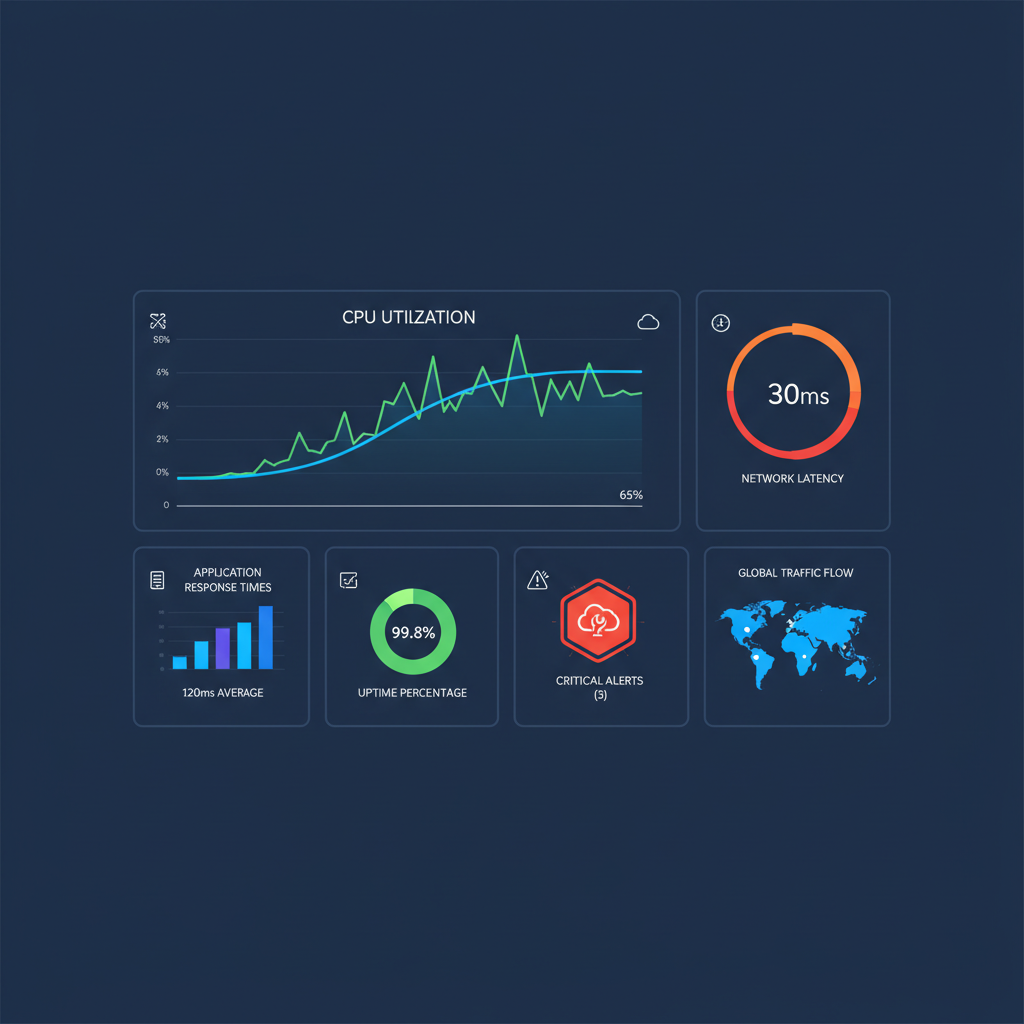
A complex dashboard displaying various cloud monitoring metrics such as CPU utilization, network latency, application response times, and uptime percentages, with different colored graphs and alert indicators.
ENSURE UNINTERRUPTED SERVICE
Ensure uninterrupted service delivery and proactively prevent costly SLA breaches. Leverage our automated, real
✓ Free consultation ✓ No commitment required ✓ Trusted by experts
Conclusion
In conclusion, the inquiry into why is Cloud sla monitoring important reveals its indispensable role in the modern digital landscape. It’s not merely about tracking uptime; it encompasses ensuring business continuity, upholding financial accountability, fostering transparency, and driving data-driven strategic decisions. Effective cloud SLA monitoring safeguards investments, mitigates risks, and builds trust with both internal stakeholders and external customers.
By meticulously defining metrics, leveraging advanced tools, and adhering to robust review processes, organizations can transform their cloud operations from reactive to proactive. Embracing the benefits of cloud SLA monitoring means cultivating an environment where cloud services consistently meet or exceed expectations. As cloud environments continue to evolve, the necessity for sophisticated, intelligent SLA monitoring will only grow, cementing its position as a critical pillar of successful cloud adoption.
Jacob Stålbro is a seasoned digitalization and transformation leader with over 20 years of experience, specializing in AI-driven innovation. As Head of Innovation and Co-Founder at Opsio, he drives the development of advanced AI, ML, and IoT solutions. Jacob is a sought-after speaker and webinar host known for translating emerging technologies into real business value and future-ready strategies.