Expert Managed Cloud Services for Business Growth & Efficiency
March 5, 2026|1:00 PM
Unlock Your Digital Potential
Whether it’s IT operations, cloud migration, or AI-driven innovation – let’s explore how we can support your success.
Home /
Work /
Blogs /
Expert Managed Cloud Services for Business Growth & Efficiency
Understanding managed cloud: What It Is and Why It Matters
In today’s fast-evolving digital landscape, businesses are increasingly leveraging the power of cloud computing to drive innovation and efficiency. However, managing complex cloud environments can be challenging, demanding specialized skills and continuous attention. This is where managed cloud services step in, offering a strategic solution for organizations aiming to optimize their cloud operations.
A managed cloud service essentially involves a third-party provider overseeing the daily management of a client’s cloud infrastructure and applications. This encompasses a broad spectrum of responsibilities, ranging from setup and configuration to ongoing maintenance, monitoring, and security. It allows businesses to harness the benefits of cloud technology without the burden of extensive in-house management.
The core value proposition of managed cloud is to offload the operational complexities associated with cloud deployments. Businesses can focus on their core competencies and strategic initiatives, leaving the intricate details of infrastructure management to experts. This partnership ensures that cloud resources are optimized, secure, and always performing at their best.
Choosing a managed cloud approach can significantly impact an organization’s bottom line and operational agility. It transforms the way businesses interact with their digital backbone, fostering growth and resilience. Understanding its full scope is the first step towards unlocking its potential.
The Core Benefits of Embracing managed cloud Services
Adopting a managed cloud model offers a multitude of advantages that can transform a business’s operational efficiency and strategic focus. These benefits extend beyond simple cost savings, encompassing improved security, enhanced performance, and access to specialized expertise. Organizations gain a competitive edge by streamlining their cloud operations.
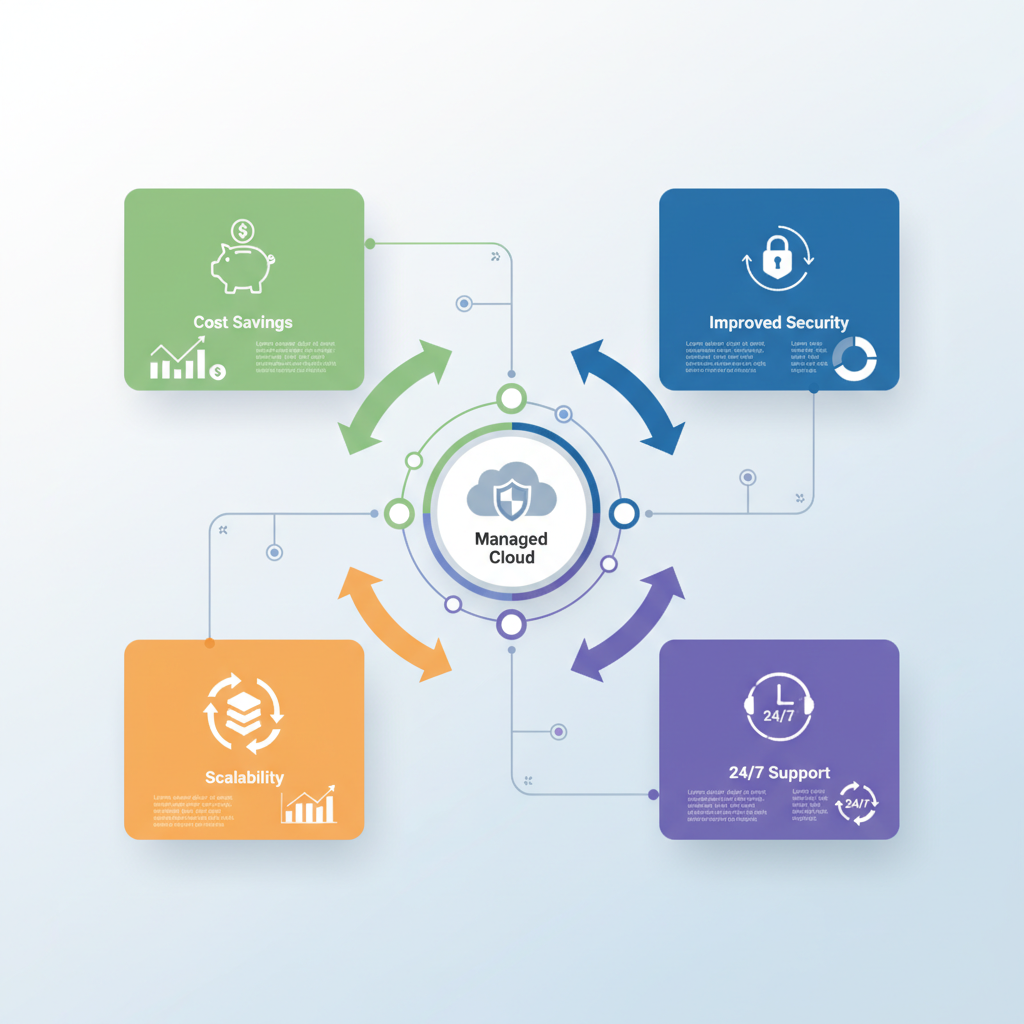
One of the primary benefits is significant cost reduction. By outsourcing infrastructure management and operational support, businesses can minimize the need for large in-house IT teams dedicated solely to cloud tasks. This shifts capital expenditure to operational expenditure, providing more predictable budgeting for cloud services.
Enhanced security is another critical advantage of managed cloud. Providers typically offer robust security protocols, compliance expertise, and continuous monitoring to protect sensitive data and applications. They stay abreast of the latest threats and implement advanced measures, often surpassing what individual businesses can achieve on their own. This proactive approach safeguards against vulnerabilities.
Scalability is inherent to cloud computing, but a managed cloud service optimizes this capability. Providers ensure that resources can be rapidly scaled up or down based on demand, preventing overprovisioning or under-provisioning. This dynamic adjustment leads to efficient resource utilization and avoids unnecessary expenditure.
Businesses also gain access to deep technical expertise and round-the-clock operational support. Managed cloud providers employ certified professionals with specialized knowledge across various cloud services and platforms. This constant availability means issues are addressed swiftly, minimizing downtime and ensuring business continuity.
A diagram showing various benefits of managed cloud services, such as cost savings, improved security, scalability, and 24/7 support, all emanating from a central “Managed Cloud” icon.
Key Services Offered by a managed cloud Provider
A comprehensive managed cloud offering extends far beyond basic server maintenance, encompassing a wide array of services designed to ensure optimal cloud performance and security. These services are tailored to meet the diverse needs of businesses operating in various cloud environments. Understanding them is crucial for selecting the right cloud provider.
Typical services often include:
Proactive Monitoring and Alerting: Continuous oversight of cloud infrastructure, applications, and network performance. This ensures potential issues are identified and addressed before they impact operations, providing constant vigilance.
Security Management: Implementing and managing firewalls, intrusion detection systems, vulnerability scanning, and identity and access management. This comprehensive approach protects against cyber threats and maintains compliance.
Backup and Disaster Recovery: Establishing robust data backup strategies and recovery plans to minimize data loss and ensure business continuity during unforeseen events. Data integrity and availability are paramount.
Patching and Updates: Regular application of software patches, updates, and firmware upgrades to maintain system security and performance. This keeps the environment secure and up-to-date.
Performance Optimization: Analyzing resource usage and adjusting configurations to enhance application performance, reduce latency, and improve user experience. Efficiency is continuously sought.
Cost Management and Optimization: Helping clients understand and control their cloud spending by identifying inefficiencies and recommending cost-saving strategies. This ensures maximum ROI from cloud services.
Network Management: Configuration and optimization of virtual networks, VPNs, and direct connections to ensure secure and efficient data flow. Connectivity is carefully managed.
Compliance Assistance: Guiding businesses through complex regulatory landscapes and ensuring their cloud deployments meet specific industry compliance standards. This is vital for many sectors.
Many managed cloud providers also offer specialized support for complex architectures like hybrid cloud and multi-cloud environments. They bring expertise in integrating disparate systems and ensuring seamless operation across different platforms. This advanced capability is essential for modern enterprises.
How to Choose the Right managed cloud Partner
Selecting the ideal managed cloud provider is a critical decision that can significantly impact your organization’s future operations and success. It requires careful consideration of various factors beyond just pricing. A well-chosen partner becomes an extension of your IT team, offering strategic guidance and reliable operational support.
First, assess the provider’s expertise and certifications. Look for a cloud provider with a strong track record and certifications relevant to your chosen cloud platform, whether it’s AWS, Azure, Google Cloud, or others. Their team should demonstrate deep knowledge of infrastructure management and modern cloud practices.
Consider their service level agreements (SLAs). The SLA should clearly define uptime guarantees, response times for incidents, and resolution metrics. A robust SLA provides assurance and accountability, detailing the commitment of your third-party management partner.
Evaluate their security posture and compliance capabilities. Ensure the provider adheres to industry best practices for security and can help your organization meet specific regulatory compliance requirements. Ask about their data protection measures, auditing processes, and incident response plans.
Scalability and flexibility are also crucial. Your chosen managed cloud provider should be able to scale their services up or down as your business needs evolve. They should also offer flexible contract terms that align with your growth trajectory and changing demands.
Furthermore, investigate their experience with complex environments like hybrid cloud and multi-cloud. If your organization uses or plans to use a combination of public and private clouds, or multiple public clouds, their ability to manage these intricate setups is paramount. A provider with this specialized knowledge can simplify complex integrations.
Finally, consider their customer support and communication channels. A good managed cloud partner offers 24/7 operational support and maintains transparent communication. Look for a provider that acts as a true partner, offering proactive advice and insights rather than just reactive support.
MAXIMIZE YOUR CLOUDS
Maximize your cloud’s potential with expert management. Discover custom cloud solutions
✓ Free consultation ✓ No commitment required ✓ Trusted by experts
Implementing managed cloud: A Step-by-Step Guide
Implementing managed cloud services involves a structured approach to ensure a smooth transition and optimal integration with your existing operations. This process typically requires close collaboration between your internal teams and the chosen third-party management provider. Following these steps can help mitigate risks and accelerate time to value.
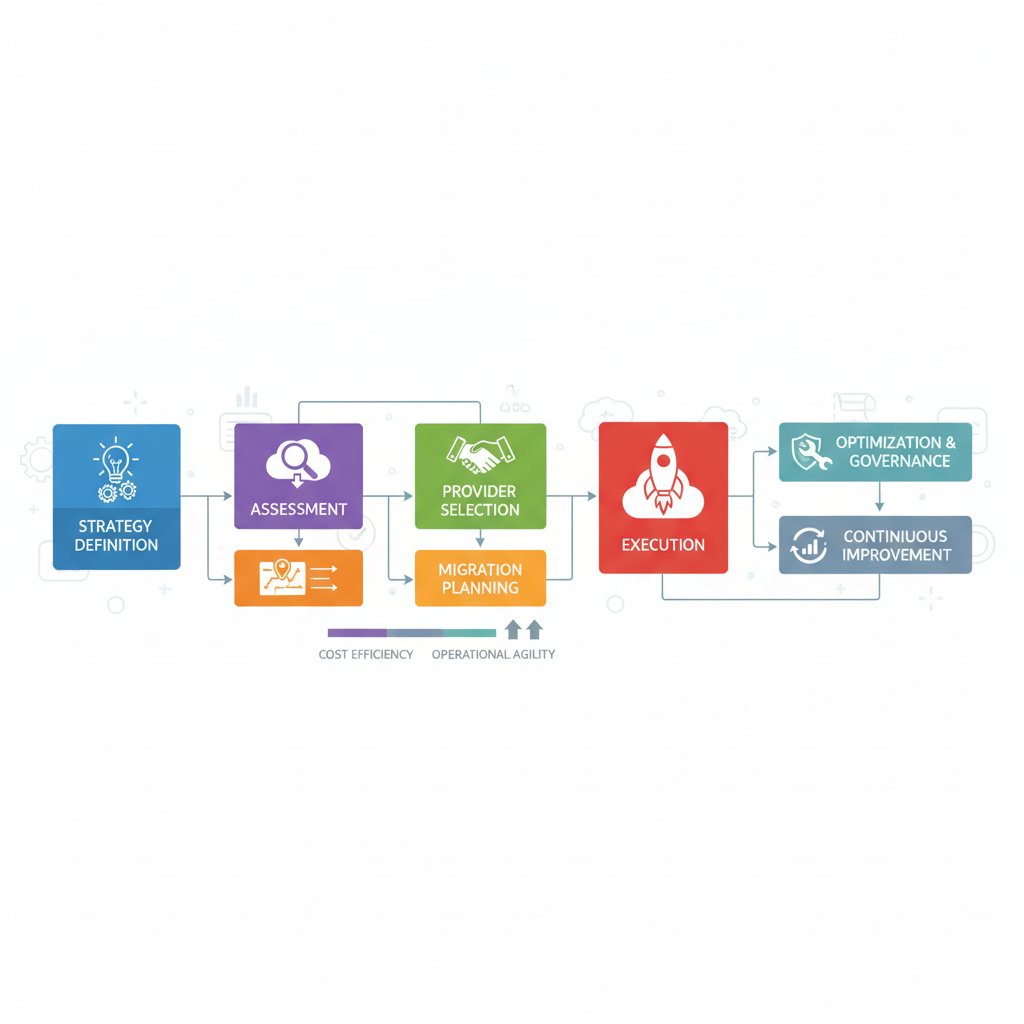
Step 1: Define Your Cloud Strategy and Objectives
Begin by clearly outlining your business goals for moving to or optimizing your cloud environment. What specific problems are you trying to solve? Are you aiming for cost reduction, improved scalability, enhanced security, or accelerated innovation? These objectives will guide your provider selection and service scope.
Step 2: Assess Your Current Infrastructure and Applications
Conduct a thorough audit of your existing IT infrastructure, applications, and data. Understand their interdependencies, performance requirements, and security needs. This assessment helps determine what needs to be migrated or re-architected within the managed cloud environment.
Step 3: Select Your managed cloud Provider
Based on your strategy and assessment, choose a managed cloud provider that best aligns with your technical requirements, budget, and business objectives. Refer back to the criteria for selecting a partner, focusing on their expertise, SLAs, and security practices. Ensure they can support your specific cloud services needs.
Step 4: Develop a Migration Plan
Work with your chosen cloud provider to create a detailed migration plan. This plan should include timelines, resource allocation, data transfer strategies, testing procedures, and rollback plans. For complex systems, a phased migration approach is often recommended to minimize disruption.
A flowchart illustrating the steps of implementing managed cloud, starting from strategy definition, through assessment, provider selection, migration planning, and execution.
Step 5: Execute the Migration and Integration
Once the plan is finalized, begin the migration process. This involves transferring data, deploying applications, and configuring the new cloud environment according to the agreed-upon architecture. The managed cloud provider will handle the technical aspects of infrastructure management and ensure seamless integration.
Step 6: Test and Optimize
After migration, rigorously test all applications and services in the managed cloud environment to ensure functionality, performance, and security. Work with your provider to identify any bottlenecks or areas for optimization. Continuous optimization is key to maximizing the benefits of managed cloud.
Step 7: Ongoing Management and Review
With the managed cloud fully operational, your provider takes over operational support and ongoing management. Regularly review performance reports, service usage, and cost analytics with your provider. Continuously refine your cloud strategy based on these insights to ensure sustained efficiency and value.
Best Practices for Maximizing Your managed cloud Investment
To truly unlock the full potential of your managed cloud investment, it’s essential to adopt certain best practices that foster a collaborative and strategic partnership with your provider. These practices ensure long-term success and continuous optimization of your cloud services.
Foster Strong Communication: Establish clear and consistent communication channels with your managed cloud provider. Regular meetings and detailed reporting help both parties stay aligned on performance, upcoming needs, and any potential challenges. Transparency is key for effective third-party management.
Define Clear KPIs: Set measurable Key Performance Indicators (KPIs) to track the success of your managed cloud services. These might include uptime percentages, incident response times, cost efficiencies, or performance improvements. Regularly evaluate these metrics against your defined SLAs.
Embrace Automation: Leverage the automation capabilities offered by your cloud provider to streamline routine tasks and deployments. Automation not only reduces human error but also enhances efficiency and allows your internal teams to focus on more strategic initiatives.
Prioritize Security and Compliance: Even with a managed cloud provider, security remains a shared responsibility. Ensure your internal teams understand their role in data governance and access control. Continuously review security reports and compliance adherence provided by your partner.
Plan for Future Growth: Engage in proactive planning with your managed cloud partner to anticipate future scalability needs and technological advancements. Discuss potential expansion into hybrid cloud or multi-cloud environments, ensuring your strategy remains agile and forward-looking. This collaborative foresight helps in preparing for evolving demands.
Navigating Challenges and Considerations in managed cloud
While managed cloud services offer numerous advantages, organizations must also be aware of potential challenges and important considerations. Addressing these proactively will ensure a more successful partnership and optimize your return on investment in cloud services. Understanding these nuances is crucial for informed decision-making.
One significant consideration is vendor lock-in. While a managed cloud provider offers convenience, becoming too deeply integrated with a single provider’s proprietary tools or services can make it difficult to switch later. Mitigate this by ensuring portability and discussing exit strategies upfront with your third-party management partner.
Cost management, though a benefit, can also be a challenge if not carefully monitored. Cloud costs can grow unexpectedly if resources are not properly optimized or if there’s a lack of transparency in billing from the cloud provider. Work closely with your provider on cost optimization strategies and regular reviews.
Security remains a shared responsibility. While the managed cloud provider handles much of the infrastructure security, your organization is still responsible for securing its data and applications within the cloud environment. Clear definitions of roles and responsibilities are vital to avoid security gaps.
Integrating managed cloud services with existing legacy systems, especially in hybrid cloud scenarios, can present technical complexities. Ensure your provider has extensive experience with integration projects and can offer solutions that bridge disparate environments effectively.
Finally, managing the transition and cultural shift within your organization can be challenging. Employees accustomed to on-premise infrastructure might need training and support to adapt to the new managed cloud paradigm. Clear communication about the benefits and changes is essential for smooth adoption.
The Future Landscape of managed cloud
The future of managed cloud is dynamic, driven by continuous innovation in cloud technology and evolving business needs. As organizations increasingly embrace complex multi-cloud and hybrid cloud strategies, the demand for sophisticated third-party management and operational support will only grow. This evolution promises even greater efficiency and strategic value.
Artificial intelligence (AI) and machine learning (ML) are set to play a more significant role in managed cloud services. These technologies will enhance predictive analytics, automate more complex infrastructure management tasks, and improve incident resolution times. This proactive approach will further optimize performance and reliability.
Furthermore, managed cloud providers will continue to specialize, offering tailored services for specific industries and niche technologies. This deeper expertise will allow businesses to leverage highly optimized cloud services that are precisely aligned with their unique operational requirements. The focus will be on vertical-specific solutions.
Edge computing is another trend that will influence managed cloud. As more data processing moves closer to the source, providers will extend their management capabilities to these distributed environments. This will ensure seamless integration and consistent operational support across various computing locations.
Overall, the emphasis will shift from mere infrastructure maintenance to strategic partnership and innovation. Managed cloud providers will become even more instrumental in helping businesses navigate the complexities of digital transformation, allowing them to fully capitalize on the power of advanced cloud services.
Frequently Asked Questions About managed cloud
What exactly is managed cloud?
**managed cloud** refers to the outsourcing of day-to-day management and operational responsibilities for a business’s cloud infrastructure and applications to a third-party provider. This includes tasks like monitoring, security, patching, and **operational support**, allowing the client to focus on core business functions.
How does managed cloud differ from traditional cloud services?
Traditional **cloud services** provide the infrastructure, but the client is responsible for managing it. **managed cloud** adds a layer of **third-party management** and expertise, where the **cloud provider** handles the active administration, optimization, and security of the client’s cloud environment.
What are the main benefits of using a managed cloud provider?
The primary benefits include reduced operational costs, enhanced security and compliance, improved **scalability**, access to specialized expertise, and 24/7 **operational support**. Businesses can also achieve better performance and reliability for their **cloud services**.
Is managed cloud suitable for all types of businesses?
**managed cloud** can benefit businesses of all sizes, from startups to large enterprises, particularly those lacking in-house cloud expertise or wanting to free up their IT teams. It’s especially valuable for organizations with complex **hybrid cloud** or **multi-cloud** environments requiring specialized **infrastructure management**.
What should I look for in a managed cloud partner?
When choosing a partner, consider their technical expertise and certifications, their service level agreements (SLAs), security measures, compliance capabilities, and experience with complex environments. Excellent customer support and transparent communication are also crucial for effective **third-party management**.
Can managed cloud help with cost optimization?
Yes, a good **managed cloud** provider actively works to optimize your cloud spending. They monitor resource usage, identify inefficiencies, and recommend strategies to reduce unnecessary costs, ensuring you get the most value from your **cloud services** investment.
MAXIMIZE YOUR CLOUDS
Maximize your cloud’s potential with expert management. Discover custom cloud solutions
✓ Free consultation ✓ No commitment required ✓ Trusted by experts
Conclusion
Embracing managed cloud services represents a strategic decision for businesses seeking to maximize their efficiency, security, and innovation in the digital age. By partnering with a specialized third-party management provider, organizations can offload the complexities of infrastructure management and operational support. This allows internal teams to focus on strategic initiatives that drive business growth.
From enhancing scalability and bolstering security to navigating the intricacies of hybrid cloud and multi-cloud environments, managed cloud offers a comprehensive solution. Making an informed choice about your cloud provider and adopting best practices will ensure a successful and rewarding transformation. Take the next step to unlock the full potential of your cloud investments and achieve unparalleled operational excellence.
Fredrik Karlsson
- Chief Operating Officer (Group) & Chief Information Security Officer, Opsio
Fredrik Karlsson is the Group Chief Operating Officer and Chief Information Security Officer at Opsio in Sweden. With extensive experience in operations, governance, and information security, he focuses on aligning business objectives with risk management, compliance, and scalable IT operations. Fredrik works closely with leadership and delivery teams to ensure resilient, secure, and efficient cloud and hybrid technology environments.